
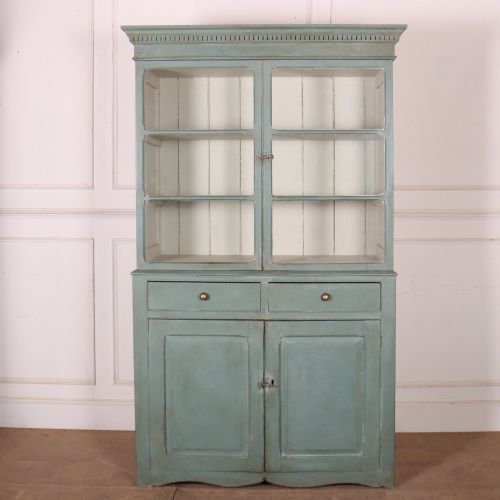
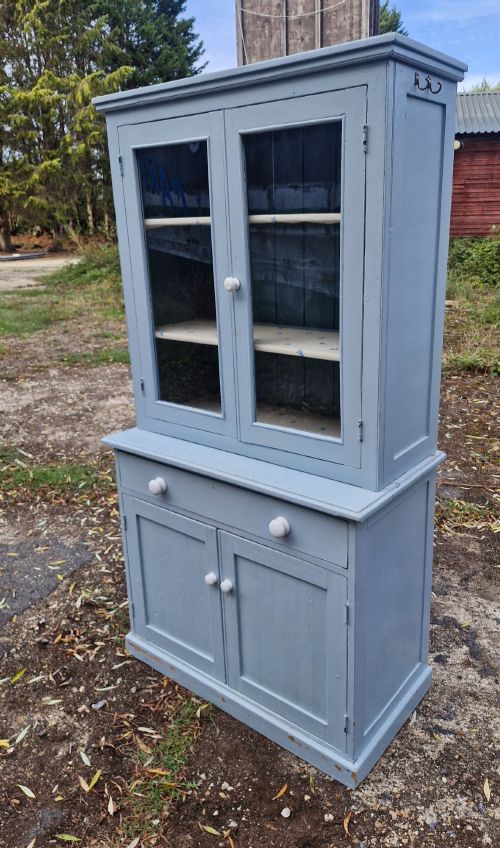
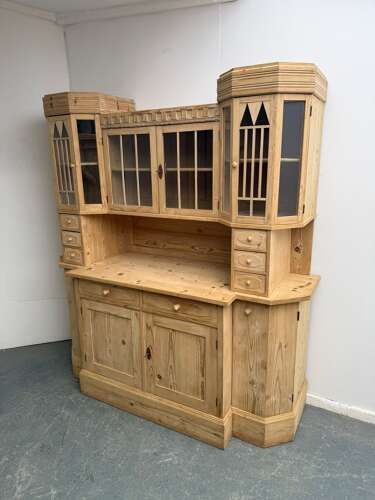
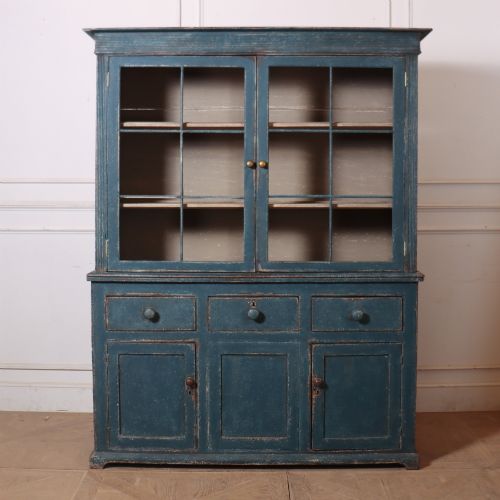
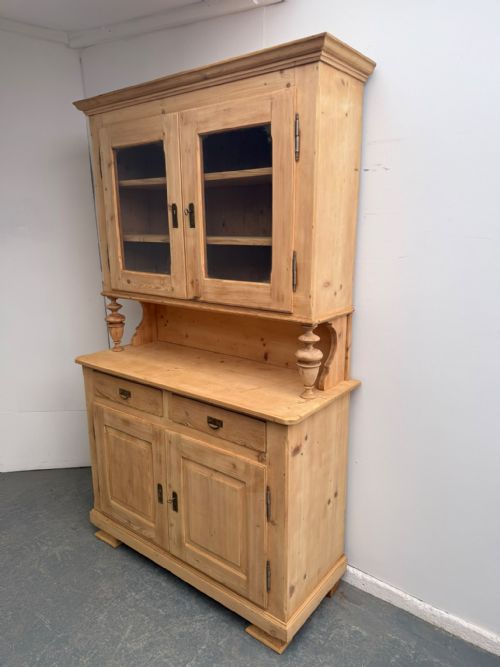
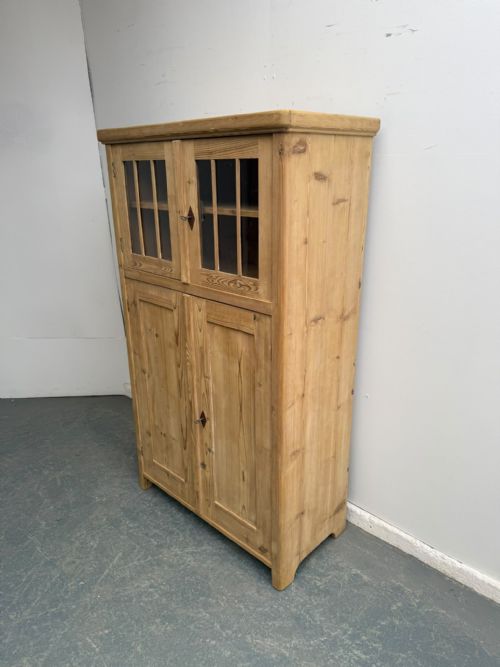
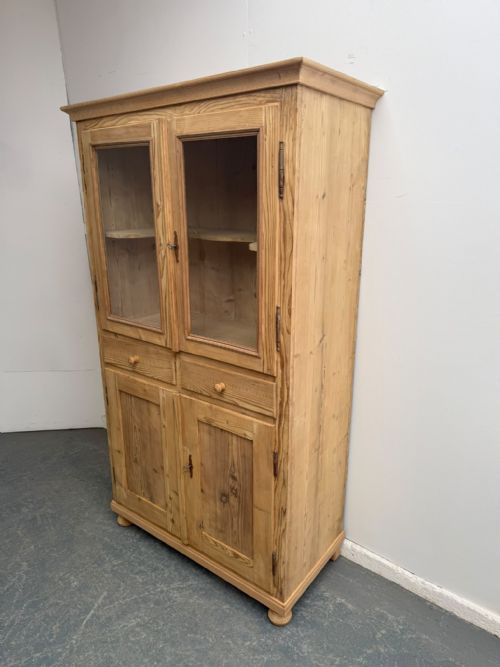
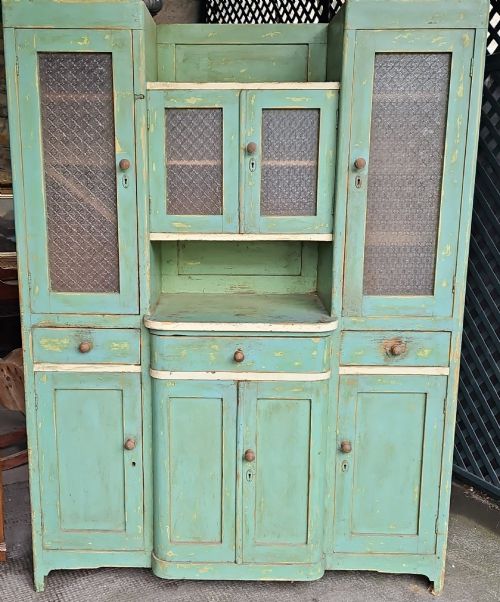


Glazed Pine Larder Cupboard
A glazed pine larder cupboard is a utilitarian kitchen storage piece built for keeping provisions cool and visible, combining sturdy softwood framing with glass doors.
Glazed Pine Larder Cupboard
A glazed pine larder cupboard serves as a practical storage unit found in domestic kitchens across various regional styles. When searching for a glazed pine larder cupboard, you encounter regional variations from English, Scottish, Irish, and continental traditions spanning the nineteenth and early twentieth centuries.
The construction typically involves a tall upright carcass divided into sections, often featuring two or four glass doors above solid lower doors or drawers. Pieces range from large four-door storage cabinets to smaller two-door display units and two-part dressers intended for food storage.
The form developed to meet household needs for storing provisions while keeping contents visible through glass panes. These cabinets originate from periods including the Victorian era, the Edwardian years, and the 1920s and 1930s.
Materials and construction
Makers built these pieces primarily using pine timber, selected for its workability and availability in domestic and regional workshops. Surfaces frequently show a painted finish or a waxed treatment applied to protect the softwood.
Glazing forms a central part of the construction, utilising clear or textured glass secured within wooden frames on the upper doors. Iron, brass, and other metal components provide hardware such as hinges and latches for the opening sections.
Factors of quality
Proportion and scale dictate the visual presence of a cabinet, with very tall examples requiring careful balance in their joinery. The weight and stability of the pine carcass depend on the thickness of the timber and the integrity of the original construction.
The quality of the glazing bars and the condition of the glass panes contribute significantly to the overall character of the piece. Finish application, whether original paint or traditional wax, affects how well the softwood has aged through the Victorian and Edwardian periods.
The Glazed Pine Larder Cupboard Glossary
- Pine
- A softwood commonly used for domestic furniture due to its abundance and ease of working. It takes paint and wax finishes readily.
- Glazing
- The fitting of glass into windows or cabinet doors to allow visibility of the interior contents while protecting them from dust.
- Dresser
- A piece of furniture featuring shelving, cupboards, or drawers designed for storing and displaying kitchenware or food provisions.
- Carcass
- The main structural body or framework of a cabinet without doors or drawers attached.
- Textured glass
- Glass manufactured with a patterned surface that obscures the view slightly while letting light pass through.
Glazed Pine Larder Cupboard: Frequently Asked Questions
What is a glazed pine larder cupboard?
A glazed pine larder cupboard is a tall wooden storage unit constructed from pine featuring glass-fronted doors for keeping provisions.
These pieces originate from nineteenth and early twentieth-century domestic settings, serving as functional kitchen furniture for food storage.
How were these cupboards used?
Households utilised these cabinets in kitchens and pantries to store food items, dry goods, and kitchenware.
The glass doors allowed cooks to inspect provisions without opening the cabinet and letting in warm air.
How do I date a pine cupboard?
Dating relies on examining construction methods, hardware types, and timber characteristics typical of periods like the Victorian era or the 1930s.
Stylistic cues such as Arts and Crafts influences or regional building traits also help establish the approximate age.
Can I paint a waxed pine cabinet?
Many historical examples show layers of old paint or wax applied over the softwood during their working lives.
Preparing the surface properly allows owners to apply either a painted finish or a traditional wax according to preference.