


Antique Pine Dresser Top
An antique pine dresser top brings warmth and practical display space to a room, holding everything from everyday crockery to collected books.
Antique Pine Dresser Top
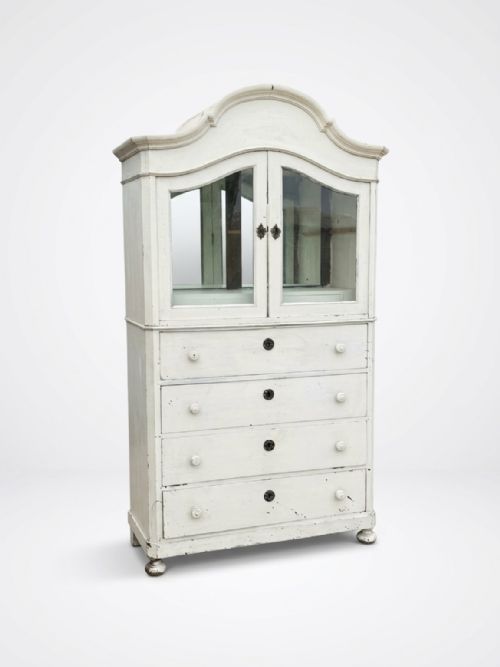
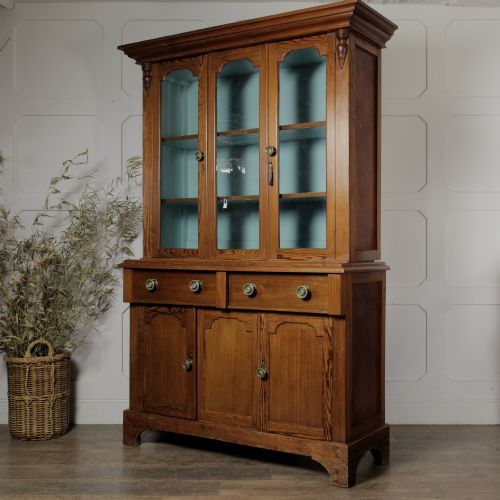
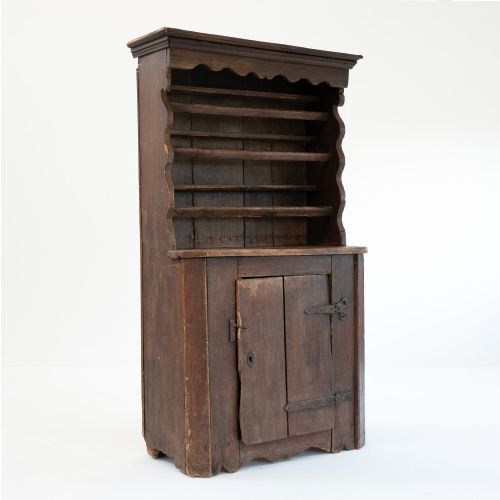
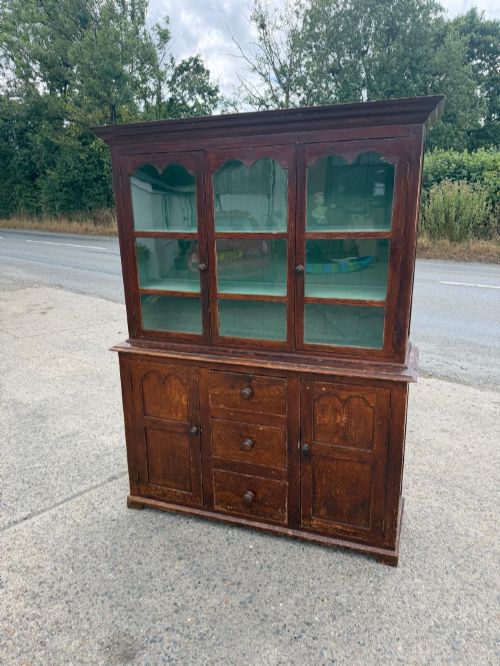
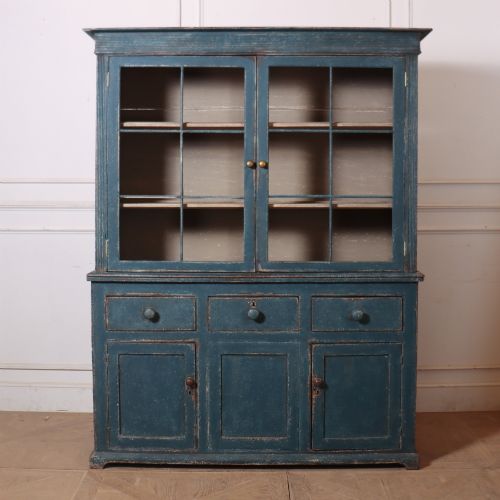
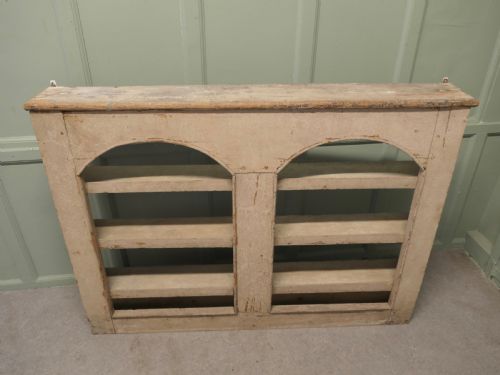
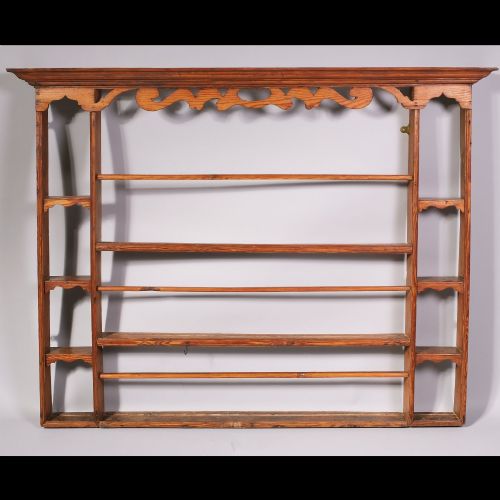
When searching for an antique pine dresser top, buyers encounter upper display sections, glazed cupboards, and plate racks designed to sit atop a base cabinet or serve as wall-mounted shelving.
The evidence shows these pieces span the 18th century through the Victorian era, originating from English, Scottish, Irish, Welsh, and continental workshops.
Most examples found here feature either open shelving, glass-fronted doors, or shaped bonnet tops intended for provincial kitchens and dining spaces.
Materials and construction
Makers utilised solid pine timber for the main carcass and shelving, frequently pairing it with glass panes for glazed doors and brass hardware for hinges and latches.
Surface treatments recorded in the archive range from stripped natural finishes and traditional wax to original paintwork and painted timber.
Joinery methods reflect regional country furniture traditions, incorporating pegged joints and tongue-and-groove backing boards.
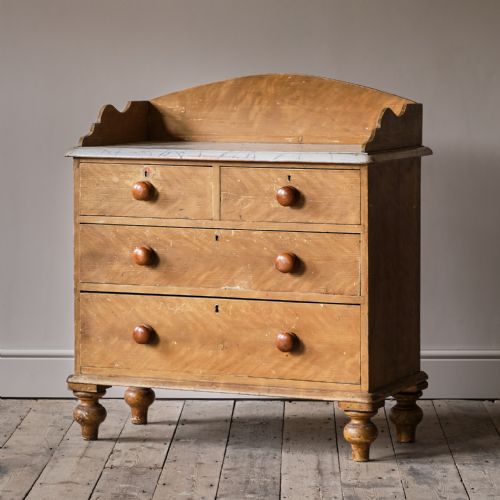
One cheerful Victorian pine chest carries hand-signwritten lettering naming the Bluecoat School in Liverpool.
Factors determining quality
Quality rests upon the integrity of the timber selection, the proportion of the moulding and cornice work, and whether the glass and hardware remain original to the piece.
Surviving original paint or historic waxed patination elevates a piece above later stripped examples.
The sophistication of regional details, such as shaped cornices or delicate glazing bars, distinguishes finer provincial cabinet-making from utilitarian workshop output.
The Antique Pine Dresser Top Glossary
- Glazed cupboard
- A storage cabinet fitted with glass panes in the doors to display contents while protecting them from dust.
- Plate rack
- Open wooden shelving specifically constructed with grooves or rails to hold plates upright.
- Bonnet top
- An arched or curved upper cornice that gives the top of a cabinet a soft, hooded silhouette.
- Cornice
- The decorative moulded projection that crowns the top of a piece of case furniture.
- Pitch pine
- A dense, resinous variety of pine timber known for pronounced grain patterns and durability.
Antique Pine Dresser Top: Frequently Asked Questions
How do I mount a dresser top?
Most dresser tops were originally built to rest directly upon a matching sideboard or dresser base, secured with simple fixing brackets or gravity.
For wall mounting standalone racks or glazed sections, consult a professional joiner to ensure the wall fixings safely bear the combined weight of the pine and your displayed items.
Can I use a dresser top independently?
Many glazed cupboards and plate racks function effectively as wall-hung shelving units without their original lower bases.
Ensure the wall structure is sufficiently strong to support the solid timber frame and any heavy ceramics you place on the shelves.
How do I care for antique pine?
Maintain waxed pine surfaces by applying a traditional beeswax polish sparingly and buffing with a soft cloth to preserve the sheen.
Keep wooden furniture away from direct heat sources and sudden humidity changes to prevent the timber from splitting or warping.
What periods do these come from?
The pieces span the late eighteenth century through the Victorian period and into the early twentieth century.
Construction details, hardware types, and moulding profiles help distinguish earlier provincial country pieces from later Victorian workshop items.