
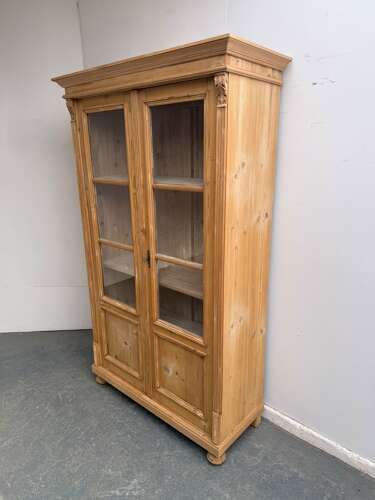
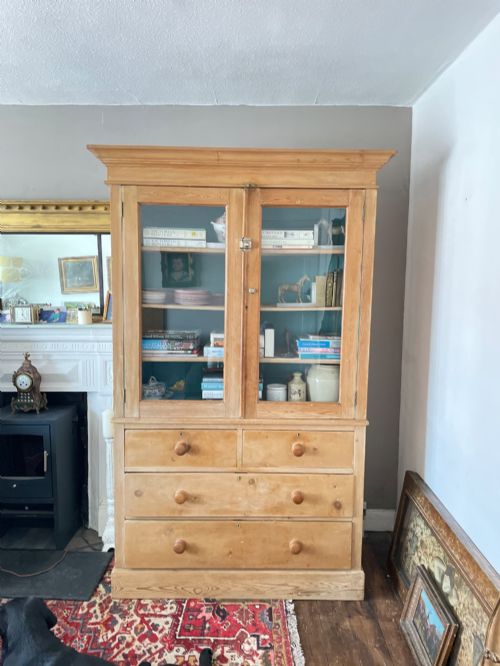
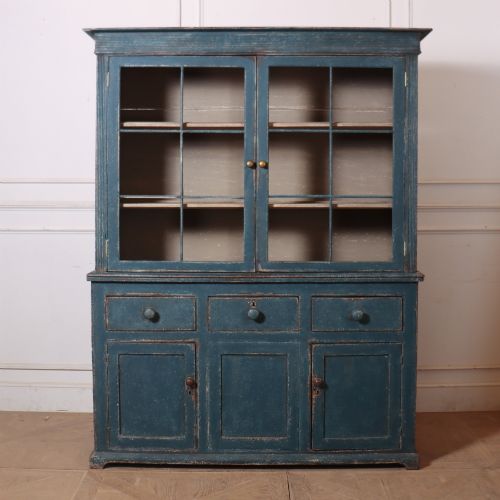
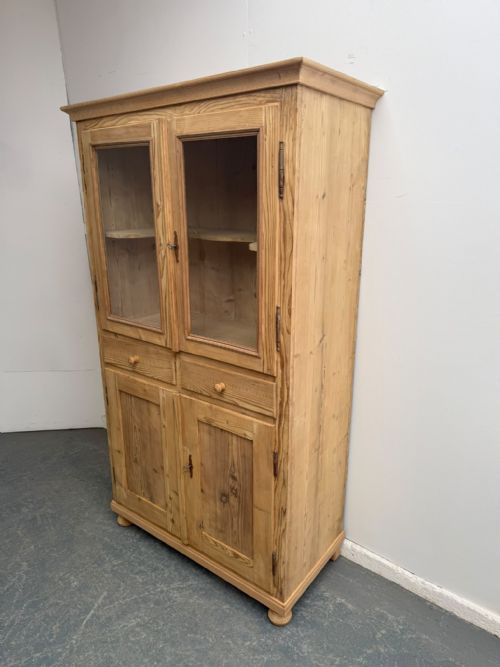
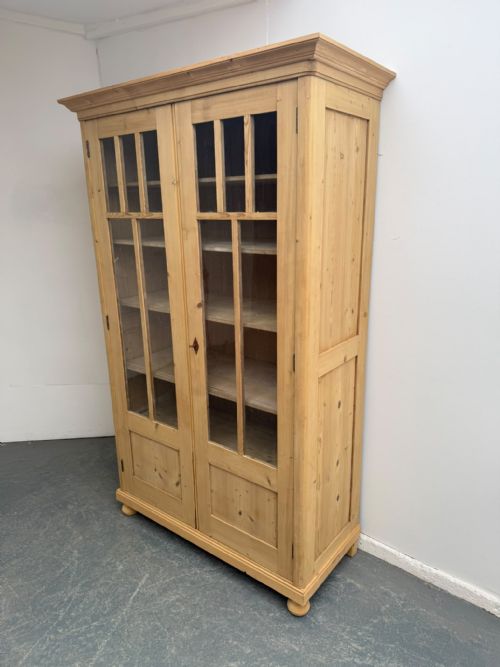


Two Door Pine Bookcase
A two door pine bookcase brings honest utility and warmth to a room, holding volumes behind glass while anchoring the walls with the quiet grain of nineteenth-century timber.
Two Door Pine Bookcase
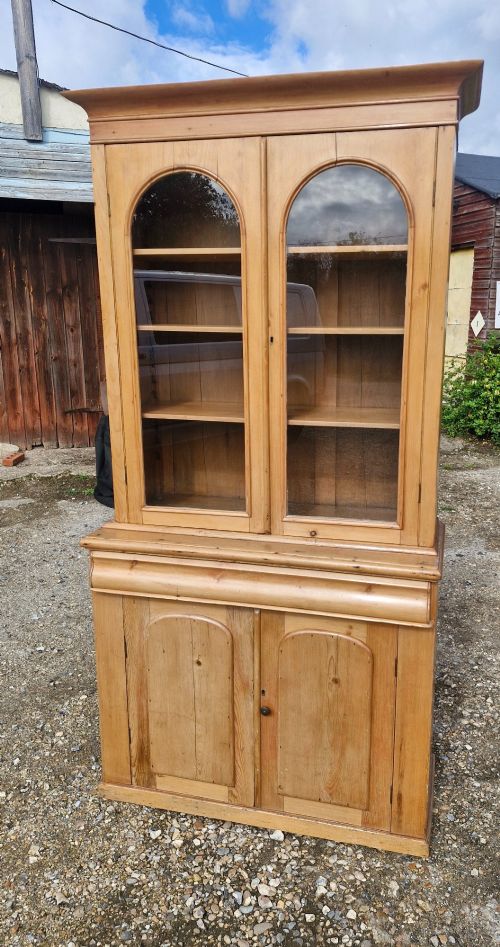
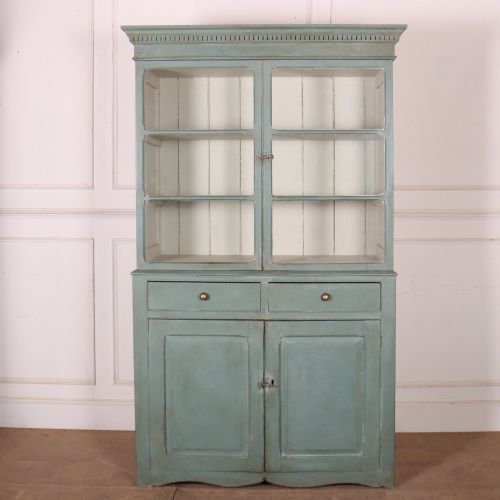
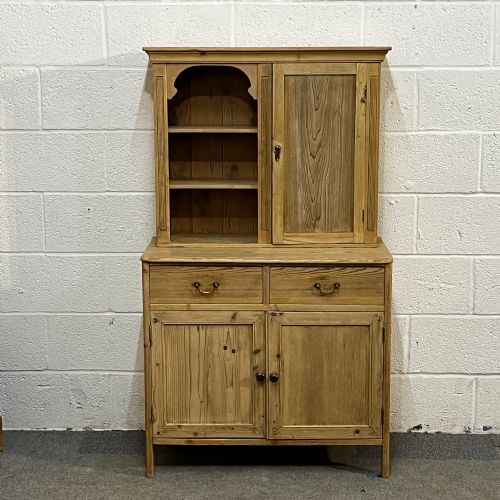
A two door pine bookcase serves as a substantial yet unassuming storage piece, frequently encountered in Victorian country and rustic farmhouse guises across the nineteenth and early twentieth centuries. These pieces combine lower timber cupboards with upper glazed display sections, functioning equally well as kitchen dressers, architectural display cabinets, and traditional libraries.
The regional variety spans English West Country workshops and Scottish country kitchens, showing how different localities adapted the form for domestic storage. Pieces range from knockdown variants designed for easier transport to monumental floor-standing cupboards with painted interiors.
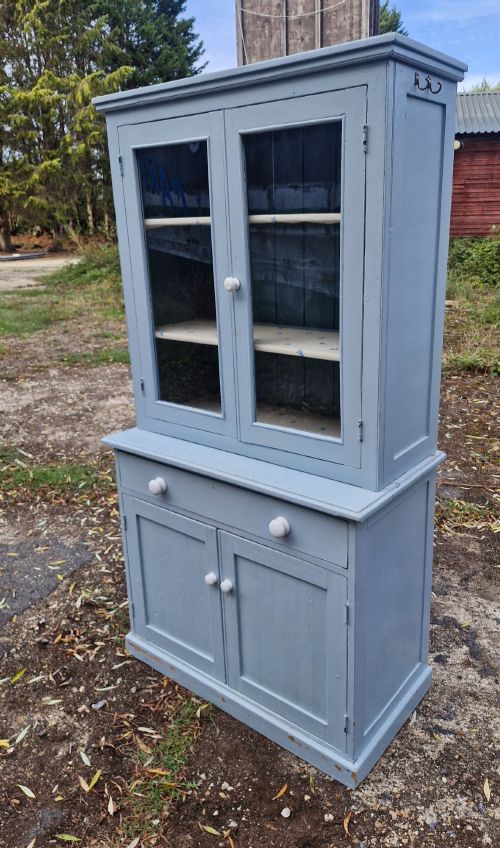
Buyers meet examples finished in warm wax or treated with painted surfaces, reflecting both original domestic schemes and later decorative choices. The proportions vary from very small compact dressers to huge architectural glazed cabinets that dominate a wall.
Materials and construction
Makers relied on solid pine for the main carcass, shelves, and doors, choosing a softwood that proved responsive to both plain waxing and layered paint finishes. This timber was frequently worked by hand in regional joinery shops to create sturdy domestic furniture.
Glass panels were fitted into wooden frames for the upper doors, allowing books and household wares to be displayed while remaining protected from dust. Brass, iron, and ceramic hardware such as handles and latches completed the functional assembly of the doors and drawers.
Some glazed bookcases preserve unexpected splashes of interior paint behind the books, proving that past owners loved a hidden colour pop.
Judging quality and proportion
Quality reveals itself in the restraint of the joinery and the balance of the architectural proportions, where simpler regional adaptations carry as much integrity as more formal Victorian pieces. The thickness of the pine boards and the integrity of the original glazing bars set the better examples apart.
The treatment of the timber surface dictates the visual weight of the piece, with well-preserved waxed finishes showing the natural grain alongside honest signs of age. Painted interiors and architectural cornices add layers of design depth that distinguish finer workshop production from utilitarian storage.
The Two Door Pine Bookcase Glossary
- Pine
- A softwood widely utilised in British vernacular furniture making for its accessibility and workability. It accepts both clear wax finishes and decorative paint remarkably well.
- Glazed
- Fitted with glass panes, typically in the upper doors to protect books or ceramics while keeping them visible. Glazing bars divide the glass into smaller panes.
- Knockdown
- Constructed so the main sections can be dismantled for transport and reassembled on site. This technique was particularly useful for large country cupboards and bookcases.
- Cornice
- The ornamental moulding running around the top edge of a cabinet or bookcase. Architectural examples feature distinct classical profiles derived from larger joinery traditions.
Two Door Pine Bookcase: Frequently Asked Questions
How do I care for a waxed pine bookcase?
Maintain the finish by applying a traditional beeswax polish sparingly with a soft cloth, buffing gently to preserve the natural sheen of the timber. Avoid placing the bookcase near direct heat sources or strong sunlight, which can dry out nineteenth-century pine.
Dust regularly with a dry, lint-free cloth to keep the surface clean. Occasional light waxing protects the wood from moisture and highlights the grain without building up heavy residues.
Are these bookcases suitable for low ceilings?
Proportions vary significantly across the period, ranging from very small compact cupboards to huge architectural display cabinets that require generous room clearance. Checking the specific height dimensions ensures the piece fits comfortably beneath standard domestic ceilings.
Shorter dressers and smaller glazed cabinets provide ample storage without overwhelming more intimate spaces. Measuring both the floor footprint and total height prevents placement issues upon delivery.
Can the shelves be adjusted for modern books?
Many nineteenth-century pieces feature fixed internal shelving built into the structural carcass to support heavy volumes of books and kitchen wares. Alterations are sometimes found in pieces that have been adapted over their working lives for modern utility.
Reviewing the interior layout ensures the shelf heights accommodate your specific collection. Traditional fixed shelves contribute to the overall stability of the bookcase frame.