
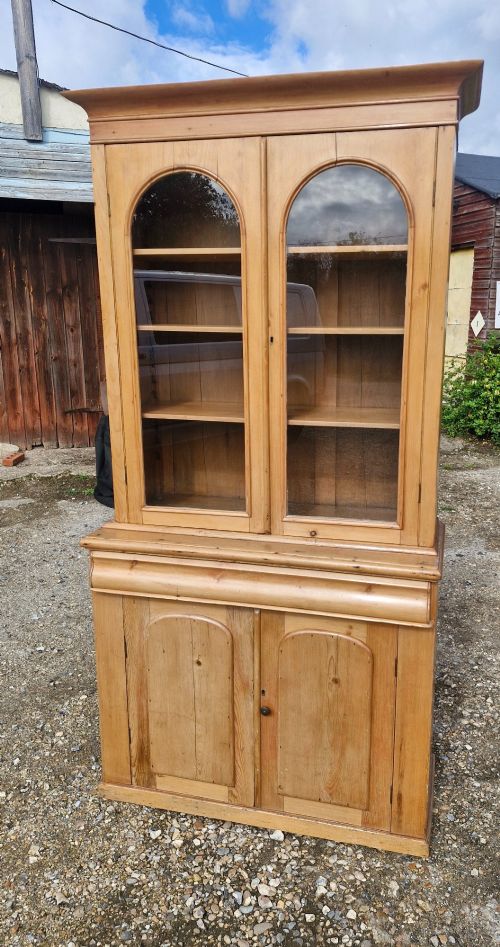
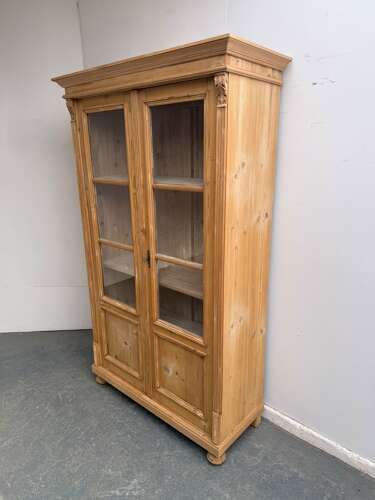
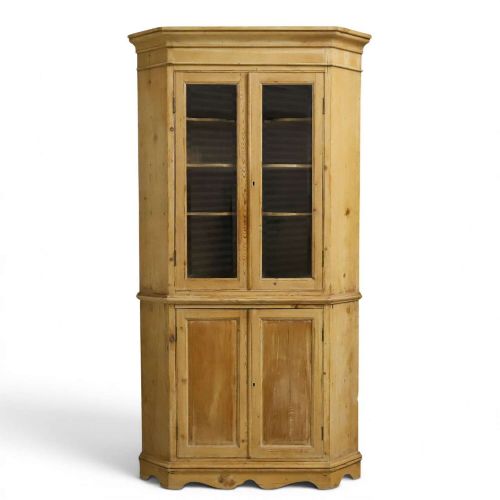
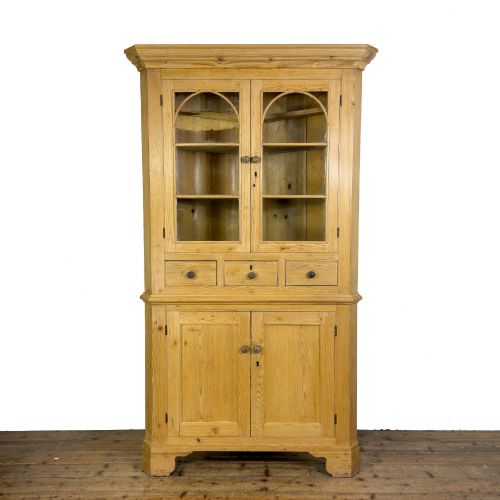
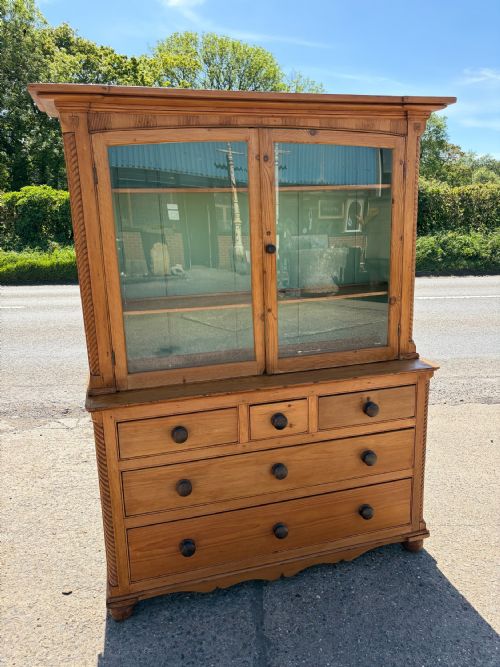


Honey Pine Glazed Cupboard
A honey pine glazed cupboard brings warmth and utility to a room, offering glass doors to display contents while keeping everyday items stored away.
Honey Pine Glazed Cupboard
When you search for a honey pine glazed cupboard, you are looking at practical storage pieces designed for the home, typically featuring glazed upper sections and wooden lower doors.
The versions you are most likely to meet on this page hail from the Victorian period, including pieces dated around eighteen-fifty, nineteen hundred and twenty, and the broader nineteenth century.
These items take various forms such as corner cabinets, kitchen dressers, bookcases, and display cabinets, reflecting their original domestic roles in holding kitchenware or books.
How they were made
Construction relies heavily on pine timber, frequently paired with glass panes set into doors to create the glazed upper display areas characteristic of these cabinets.
Hardware such as brass and iron appears on hinges, handles, and latches, whilst some examples incorporate ceramic elements or internal fabric details.
Finish techniques recorded across the pieces include traditional waxing and paint, alongside stripped timber surfaces that expose the natural grain of the pine.
Listings span the Victorian period, including specific dates like eighteen-fifty and nineteen-twenty, alongside the wider nineteenth century.
What varies in quality
Quality differences in these cupboards hinge upon the scale and proportion of the piece, ranging from small, compact corner cabinets to substantial two-part forms and kitchen dressers.
The method of finishing alters the character of the timber, distinguishing pieces that retain traces of old paint from those stripped to reveal the warm honey tone of the pine.
The joinery and configuration of the glazing bars shape the visual refinement of the cabinet doors, marking the distinction between simpler kitchen storage and formal display furniture.
The Honey Pine Glazed Cupboard Glossary
- Glazed cupboard
- A cabinet fitted with glass panelling in the doors to protect contents while keeping them visible. This style is frequently found in kitchen dressers and display cases.
- Corner cabinet
- A storage unit specifically built with an angled back to fit neatly into the corner of a room. These save floor space whilst providing useful shelving.
- Knockdown
- A piece of furniture constructed to be dismantled into sections for easier transport and movement. This technique was practical for large items in older houses.
- Two-part form
- A piece built in separate upper and lower sections that sit one upon the other. This construction method assists with moving heavy dressers and bookcases.
- Cornish dresser
- A regional variation of the traditional kitchen dresser associated with Cornwall. These typically feature open shelving or enclosed glazed cupboards above a base unit.
Honey Pine Glazed Cupboard: Frequently Asked Questions
What is a honey pine glazed cupboard?
A honey pine glazed cupboard is a wooden storage unit made from pine timber with glass-fronted doors. These pieces date primarily from the Victorian era and the early twentieth century.
They were designed for domestic utility, serving as kitchen dressers, bookcases, and corner cabinets to hold household provisions or books.
How were these cupboards used originally?
In nineteenth-century homes, these cabinets served practical functions in kitchens, dining rooms, and parlours. The glazed upper sections allowed owners to display tableware or books while keeping them free from dust.
The lower wooden cupboards stored heavier pots, linens, or dry goods out of sight.
How do I identify a Victorian pine cabinet?
Victorian pine furniture is identified through period construction methods, timber characteristics, and hardware such as iron or brass fittings. Pieces from this era often feature hand-cut joints and timber aged to a warm honey tone.
Many examples survive in forms like corner cupboards, two-part dressers, and kitchen cabinets dating from around eighteen-fifty onwards.
Where should I place a corner cabinet?
A corner cabinet fits directly into the ninety-degree angle of a room, making efficient use of otherwise empty space. They work well in dining rooms or hallways to provide display storage without crowding the floor area.
Matching the scale of the cabinet to the height of the corner ensures the piece sits comfortably in the room.