
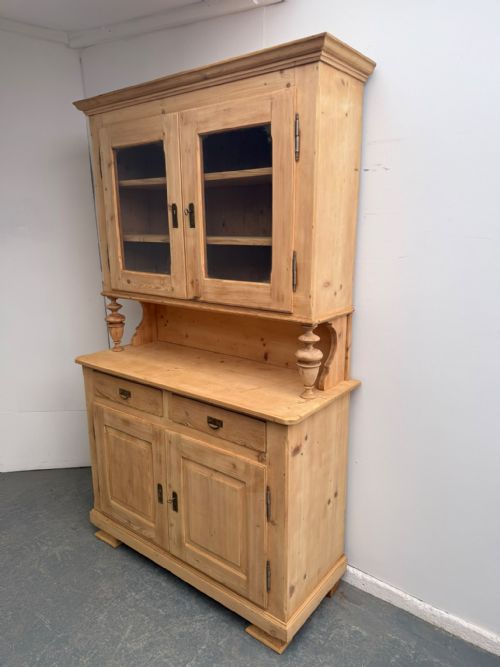
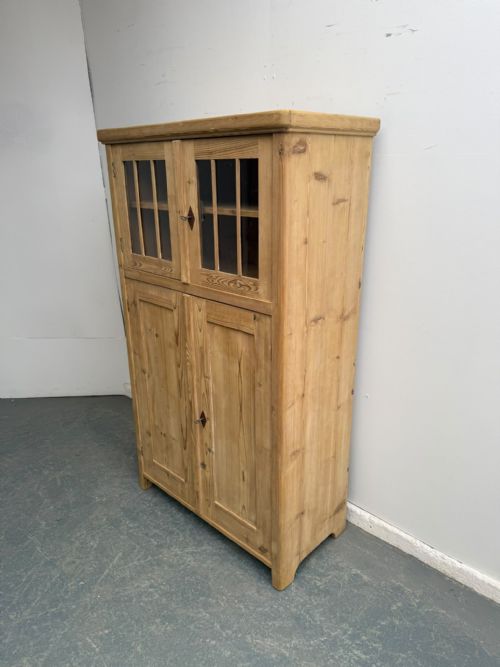
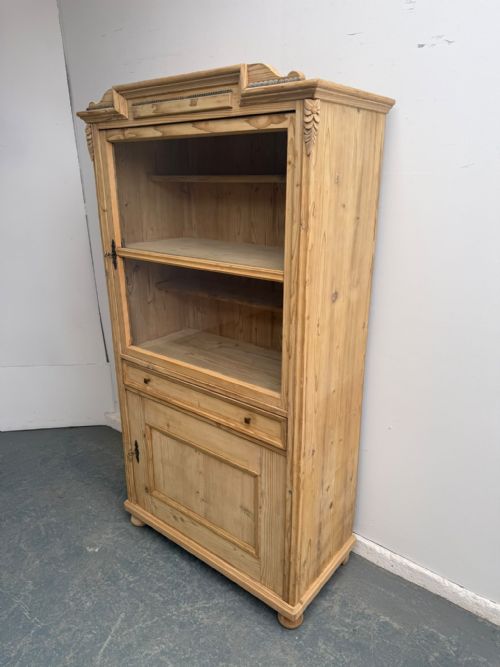
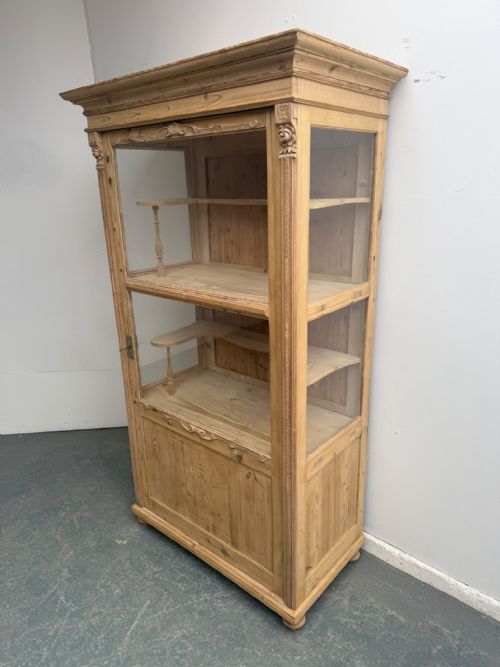
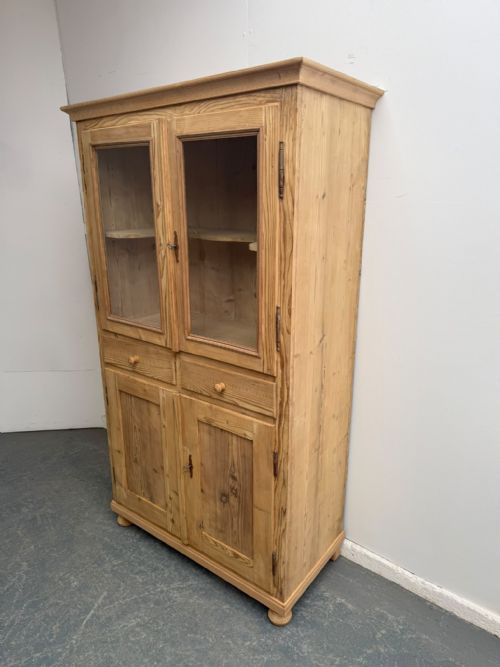
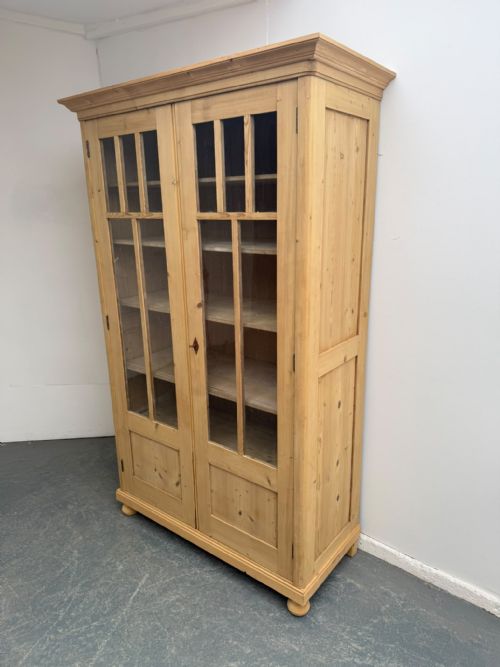
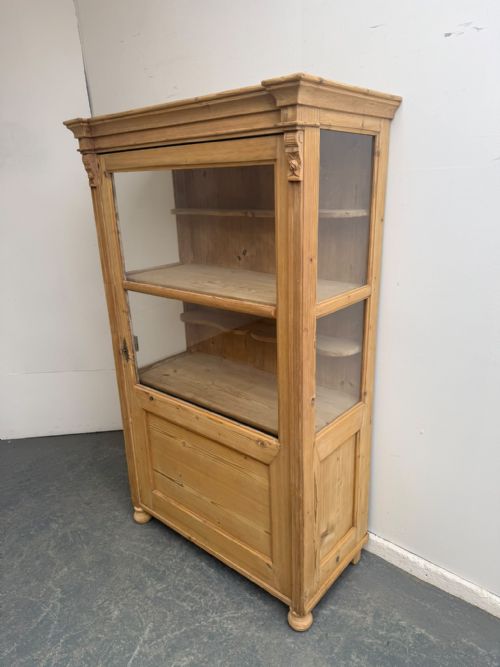


Waxed Pine Display Cabinet
These waxed pine display cabinet pieces offer practical storage and glazed visibility, spanning Victorian, Georgian, and later periods.
Waxed Pine Display Cabinet
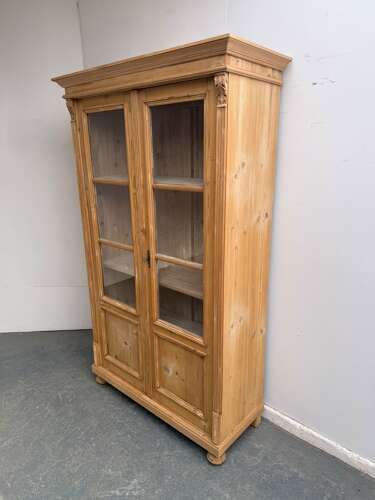
A waxed pine display cabinet brings together utility and timber warmth, appearing primarily in Victorian and Georgian forms across these listings. Buyers seek these items to house books, china, or provisions while adding traditional character to a room.
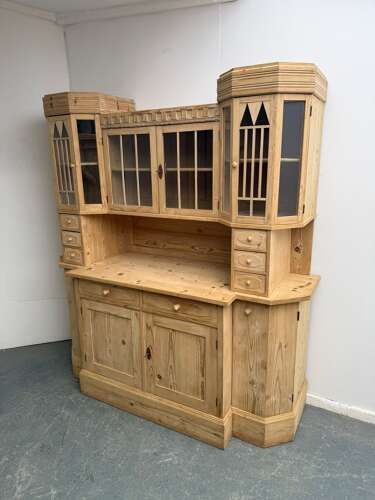
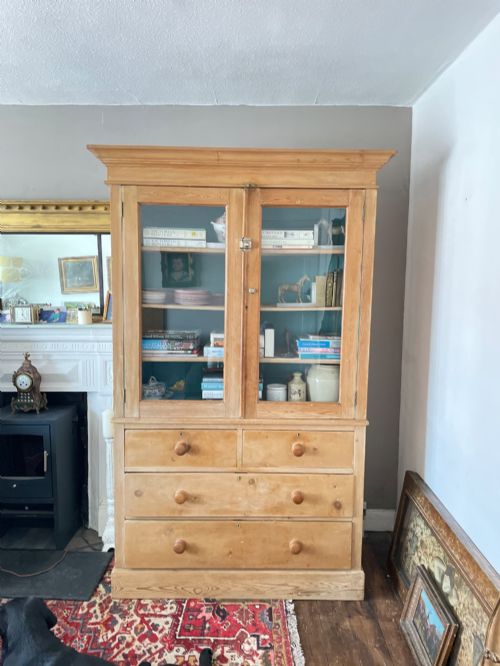
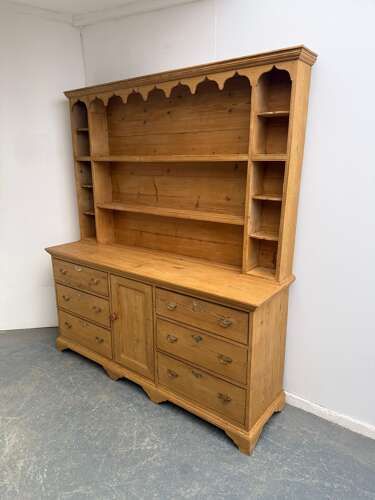
The selection here encompasses various configurations, from two-door glazed bookcases and flat display cabinets to large kitchen dressers and corner units. Most examples originate from the Victorian period, though earlier Georgian country pieces and later twentieth-century cupboards also appear.
Materials and construction methods
Makers utilised pine as the primary timber, applying wax finishes to protect the wood while accentuating its natural grain and colour. Iron and brass hardware, such as hinges and handles, support the heavy wooden doors and drawers.
Glazing forms a central part of construction, incorporating glass panels to keep dust from contents while allowing visibility. Astral glazing bars feature in earlier examples to divide the window panes into smaller geometric sections.
The inventory spans Victorian, Georgian, nineteen ten, and nineteen twenty periods.
Judging quality in pine cabinetry
Quality rests on the integrity of the timber joints, the clarity of the glass, and the retention of original hardware like brass handles and iron hinges. Simpler country pieces sit at one end, while architectural Georgian barrel-back designs represent higher joinery standards.
The condition of the wax finish and the proportion of the carcass influence overall appeal. Pieces that retain their original configurations without extensive modern alterations hold greater interest for traditional interiors.
The Waxed Pine Display Cabinet Glossary
- Astral glazing
- Wooden bars that hold small panes of glass within a sash door. This technique dates back to eighteenth-century joinery.
- Barrel back
- A curved interior back to a cabinet, often found in corner cupboards to fit snugly into a room. It creates a semi-circular display space.
- Kitchen dresser
- A dual-purpose piece featuring lower cupboards or drawers beneath open shelves or a glazed upper cabinet. They originated for storing and displaying domestic tableware.
- Knockdown
- Furniture designed to be disassembled for easier transport and reassembly. This method suited large pieces of vernacular furniture.
Waxed Pine Display Cabinet: Frequently Asked Questions
What periods do these cabinets come from?
The listings include pieces from the Georgian and Victorian eras, alongside items from nineteen ten and nineteen twenty.
Victorian examples form the majority of the current selection, showing various door configurations and glazed fronts.
How do I clean waxed pine?
Maintain the surface by dusting with a dry cloth and applying a matching beeswax polish periodically. Avoid using harsh chemical cleaners that can strip the wax finish.
Regular polishing helps to nourish the timber and preserves the soft lustre of the wood.
Are the glass panels original?
Glass condition varies across items, with some retaining older panes showing slight surface imperfections. Inspect individual listings to see if the glazing dates to the original period of manufacture.
Older glass often displays minor bubbles or waviness typical of early production methods.
Can these cabinets be painted?
Several pieces are described as suitable to wax or paint, allowing customisation to match specific interior schemes. Original timber surfaces can be prepared for modern paint finishes if desired.
Applying paint over pine was a traditional method used in country homes to update furniture.