



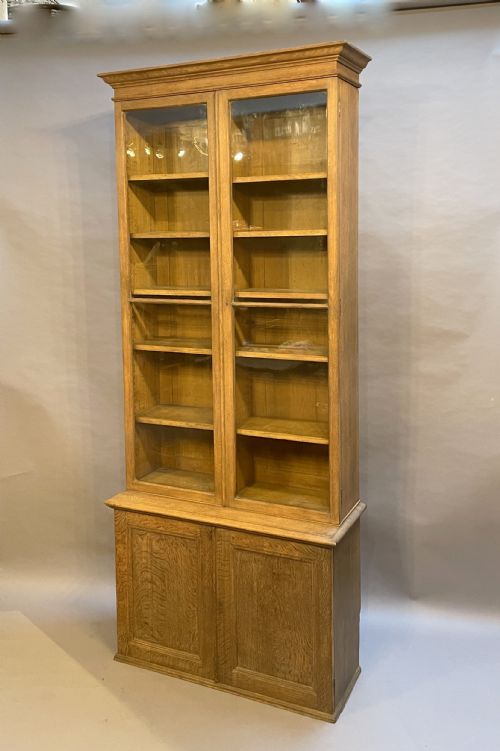
Glazed Oak Library Bookcase
A glazed oak library bookcase brings architectural presence and visible utility into a room, combining solid timber frames with protective glass doors.
Glazed Oak Library Bookcase
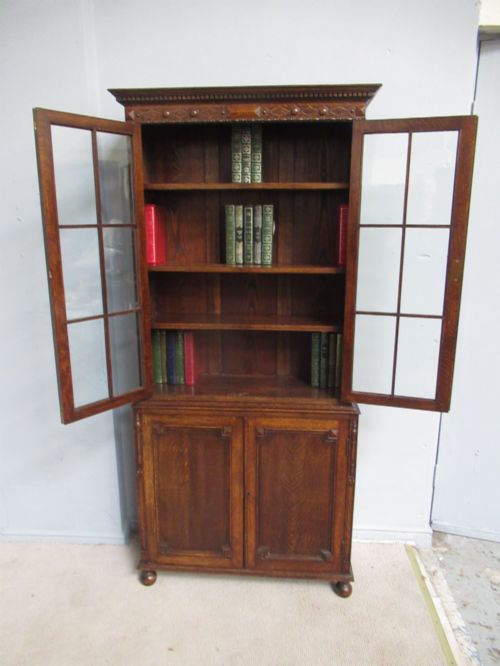
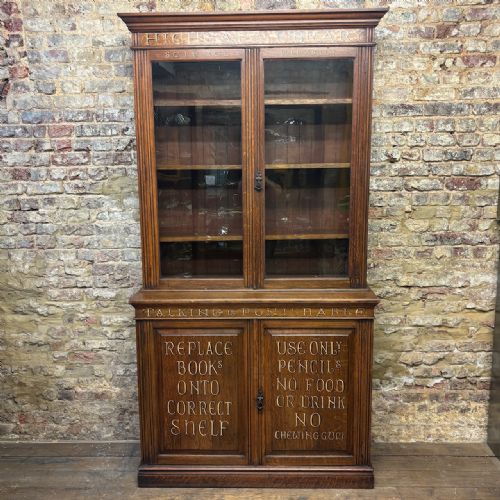
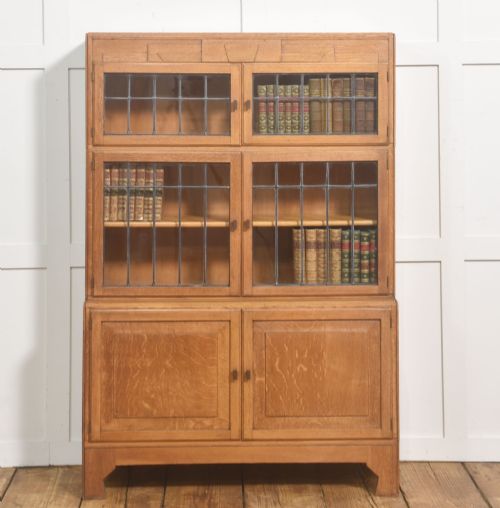
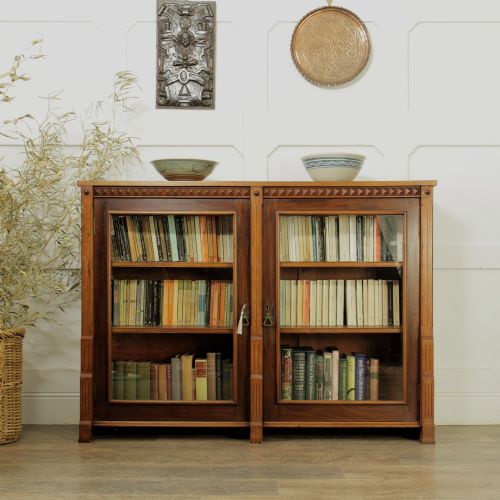
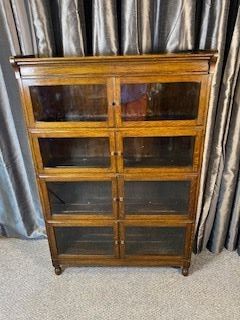
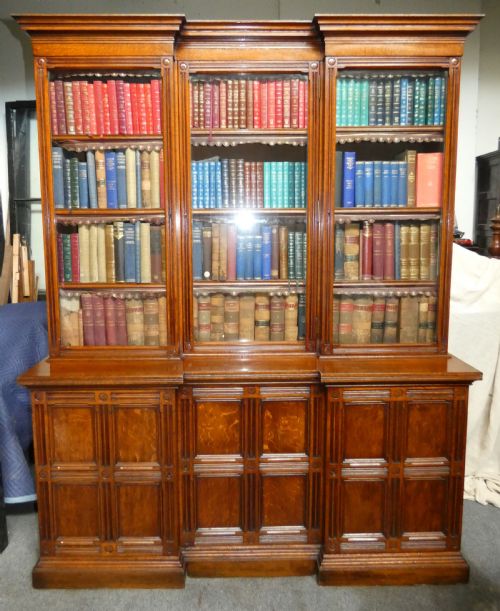
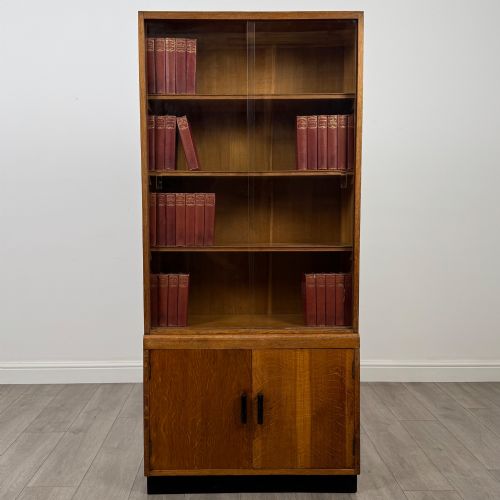
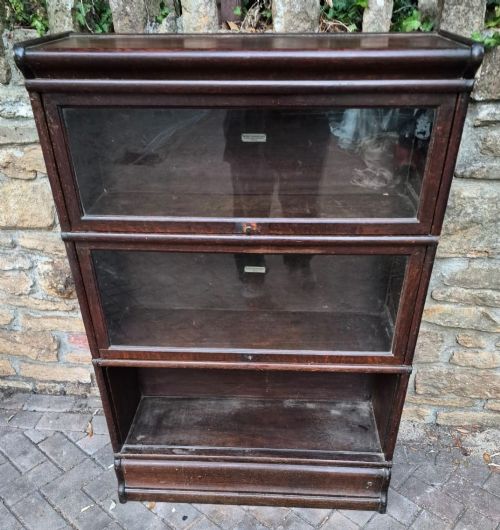
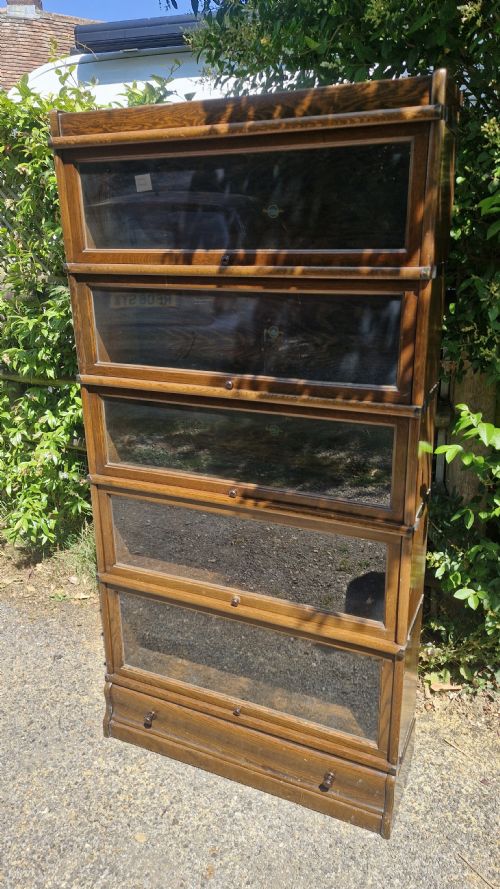
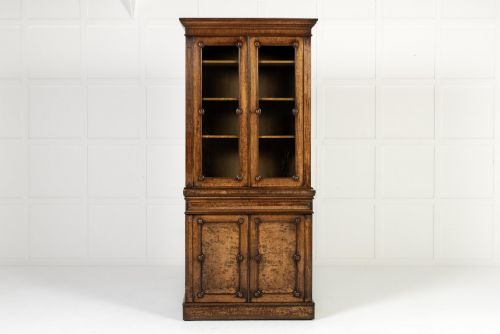
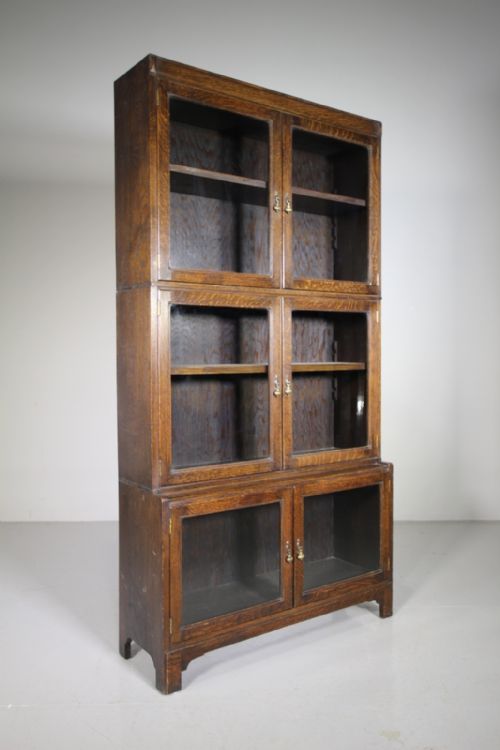
When you search for a glazed oak library bookcase, you encounter substantial storage furniture designed to house and display volumes behind glass. The pieces seen here span from the mid-nineteenth century through the Edwardian era and into the 1920s, encompassing both monumental breakfront library pieces and modular stacking variants.
You are most likely to meet Victorian and Edwardian examples on this page, ranging from grand carved architectural cupboards to practical sectional barrister cabinets. These sturdy constructions utilise timber framing fitted with glazed panels, protecting collections while keeping bindings visible.
The origin of these pieces sits firmly within domestic studies, institutional libraries, and school rooms of past centuries. They vary from large multi-door architectural units designed for permanent room placement to adaptable modular systems created for flexible office and home storage.
How they were made
Cabinet makers built these pieces primarily using solid oak and pollard oak, often accented with brass hardware and iron fittings. Timber frames were joined using traditional carpentry techniques to support the heavy weight of books and glass doors.
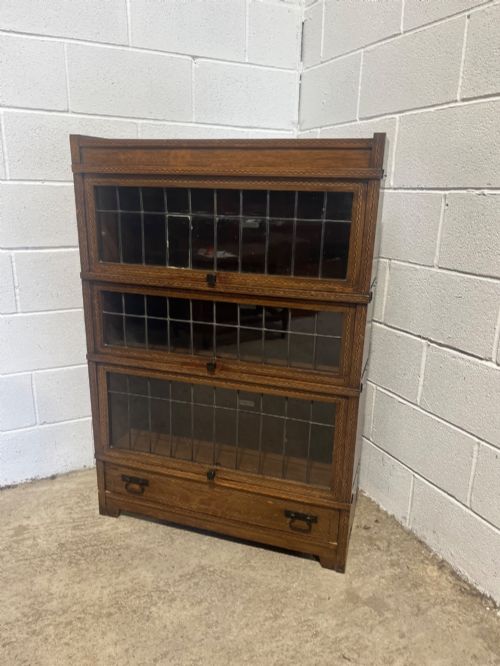
Glazing techniques involved plain glass, leaded panes, and stained glass set into wooden doors or individual stacking sections. Brass mechanisms were utilised for hinges, handles, and the lifting arms characteristic of sectional barrister designs.
School libraries and legal chambers contributed just as many sturdy oak volumes to this heritage as stately manor houses.
What varies in quality
The standard of carving and the selection of timber separate basic utilitarian items from exceptional commissions. Figured pollard oak and intricate hand-carved detailing indicate superior workshop production, whereas plain quarter-sawn oak serves functional, everyday storage.
Construction methods also define the tier of a piece, distinguishing standard fixed shelving units from sophisticated modular stacking systems with smoothly operating glazed doors. Original brass hardware, intact glass panels, and retention of maker labels elevate the integrity of individual examples.
Howard & Sons·Lebus·Maple & Co·Minty·Globe Wernicke
The Glazed Oak Library Bookcase Glossary
- Pollard oak
- Timber taken from trees that have been pollarded, producing a highly figured, knotted grain pattern. It was often selected for high-status Victorian library furniture.
- Sectional bookcase
- A modular storage unit comprising multiple stacking tiers with glazed up-and-over doors. Brands like Globe Wernicke and Lebus popularised this format for offices and homes.
- Breakfront
- A cabinet design where the central section projects forward from the flanking wings. This architectural form creates depth and shadow on large library pieces.
- Leaded glass
- Small panes of glass held together by strips of lead cames to form geometric or decorative patterns. It frequently appears on Arts and Crafts and Gothic Revival doors.
Glazed Oak Library Bookcase: Frequently Asked Questions
What is a barrister bookcase?
A barrister bookcase is a modular stacking cabinet featuring glazed doors that lift and slide inward above each shelf. This design allowed legal professionals to transport and expand their libraries easily.
Today, these stacking units function effectively in modern rooms for displaying books while protecting them from dust.
How do I date an oak bookcase?
Dating relies on architectural styles, hardware, and construction methods visible across different eras. Victorian pieces often display heavy carved ornamentation, while Edwardian and 1920s variants favour cleaner lines or modular sectional formats.
Examining the backboards, joint types, and glass characteristics helps narrow down the period of manufacture.
Can adjustable shelves be found?
Many library bookcases include internal systems allowing shelves to be moved to different heights. This practical feature accommodated volumes of varying sizes.
Original brass rack-and-pinion supports or wooden peg holes indicate mid-to-late nineteenth-century cabinet making.
Where should I place a large bookcase?
Large architectural bookcases require stable wall placement and adequate floor clearance to support their substantial weight. Placing them away from direct sunlight protects both the timber bindings and the oak finish.
Modular stacking versions offer more flexibility for room layouts because they can be separated into individual tiers.