


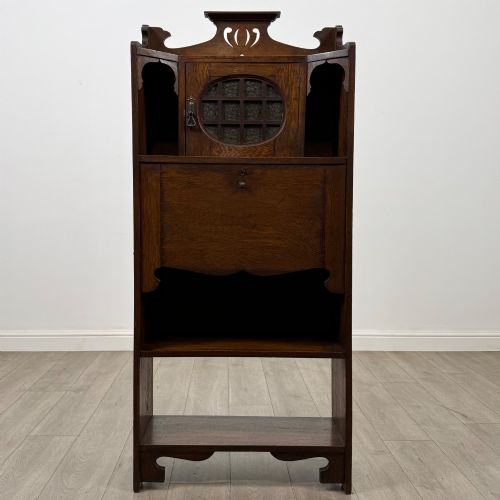


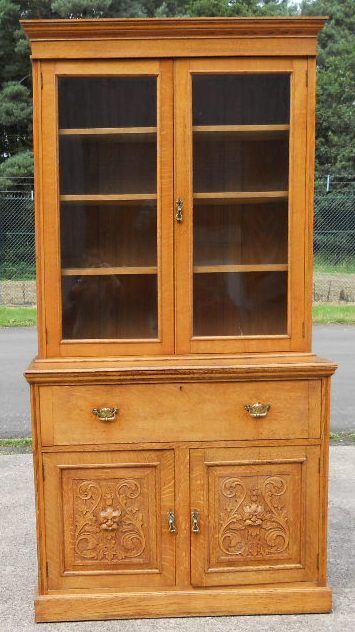

Glazed Oak Bookcase Desk
A glazed oak bookcase desk combines a writing surface and shelving behind glass doors, offering both workspace and storage.
Glazed Oak Bookcase Desk
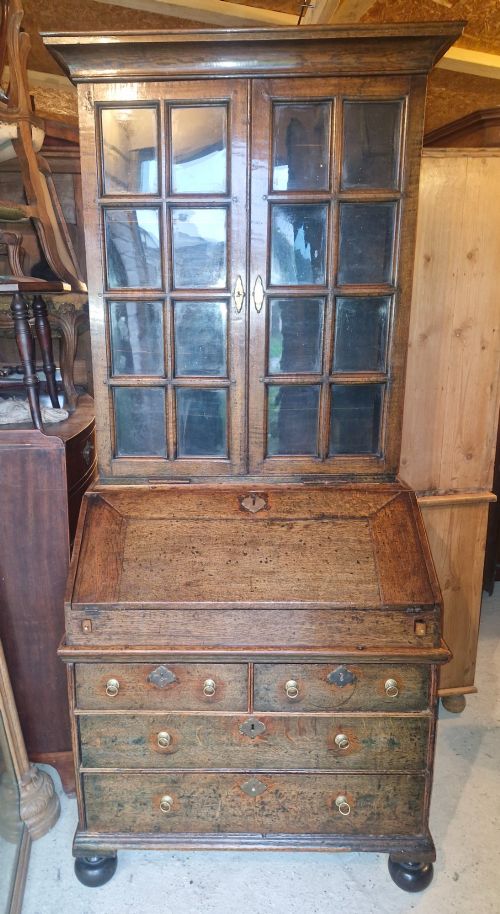
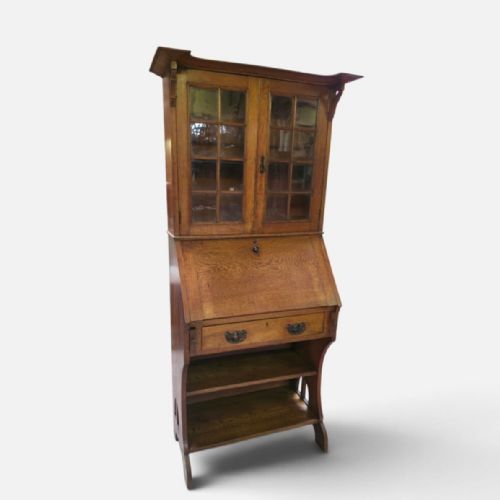
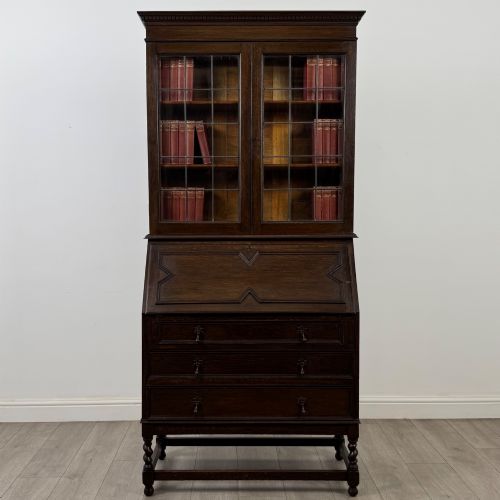
A glazed oak bookcase desk brings together a practical writing cabinet and a display area for books, spanning periods from the eighteenth century through the Edwardian era to the Art Deco decades. You will encounter forms ranging from two-part bureau bookcases with candle slides and bun handles to Arts and Crafts golden oak cabinets and Jacobean revival styles featuring barley twist legs.
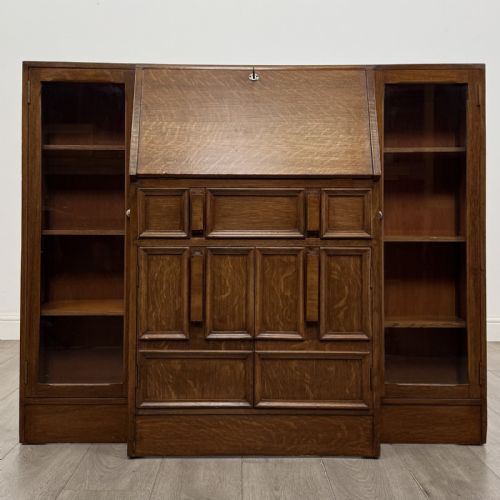
The most common examples on this page date from the Edwardian period and the early twentieth century, constructed in solid oak or golden oak with fitted interior stationery compartments. Alongside standard bureau bookcases, the selection includes cabinet desks, side-by-side configurations, and roll-top variants designed for home office use.
Origins vary from eighteenth-century Georgian and George II workshops to late Victorian and 1930s production, reflecting changing domestic requirements for storage and study. These pieces serve as functional furniture that houses volumes while providing a dedicated fold-down or pull-out writing surface.
Materials and construction
Construction relies primarily on oak and golden oak, occasionally incorporating pollard oak veneers for decorative effect, alongside glass panes fitted into door frames. Brass panels, brass hardware, and iron fittings appear across various periods, while lead is utilised in specific glazing configurations.
Joinery methods range from eighteenth-century cabinet-making techniques to the structural detailing seen in Arts and Crafts and Jacobean revival pieces. Fitted interiors include stationary compartments, pigeonholes, and drawers, matched with functional elements such as candle slides, keys, and bun handles.
Glazed Oak Bookcase Desk Retail Price Guide 2026
Typical asking prices for glazed oak bookcase desk among the pieces listed under this phrase on Sellingantiques today, from the lower quarter to the upper quarter. They describe what is for sale here now, not the wider market.
Listings span from the 16th century through the 18th century, Victorian, Edwardian, 1920s, and Art Deco periods, utilising oak, glass, brass, lead, iron, and pollard oak.
Assessing quality and craftsmanship
Quality shows in the selection of timber grain, the handling of golden or pollard oak veneers, and the precision of the fitted interior compartments. Superior pieces demonstrate careful joinery in the bureau drawers, housing, and the alignment of the glass doors.
Design ambition separates standard items from exceptional ones, particularly in Arts and Crafts or revival pieces that integrate specialised hardware like brass panels or turned elements such as barley twist legs.
Morris & Co·George W Jack·Harris Lebus
The Glazed Oak Bookcase Desk Glossary
- Bureau bookcase
- A combination furniture form featuring a sloping desk flap that opens for writing above drawers, topped by a glazed shelving cabinet. This dual-purpose piece organises correspondence and houses a library.
- Secretaire bookcase
- A cabinet containing a pull-out drawer with a drop-front writing surface, paired with an upper bookcase section. It offers a concealed desk space without the sloping front of a traditional bureau.
- Candle slide
- A pull-out wooden board mounted beneath the writing flap to hold a candle for illumination. These appear on eighteenth-century examples before the adoption of gas and electric lighting.
- Golden oak
- A bright, warm finish and timber tone popular during the late Victorian and Edwardian periods. It highlights the natural flake and grain of the wood.
- Pollard oak
- Timber taken from trees that have been pollarded, producing a dense, highly figured grain pattern. Cabinet makers used this decorative wood for superior-quality panels.
Glazed Oak Bookcase Desk: Frequently Asked Questions
What is a glazed oak bookcase desk?
It is a hybrid furniture piece that combines a cabinet with glass doors for books and a desk section for writing. The lower portion typically includes drawers and a fold-down or pull-out writing surface.
These pieces were designed to serve as both a personal workstation and a bookcase for a home library or study.
How do I date an oak bureau bookcase?
Dating relies on stylistic clues, construction methods, and materials such as golden oak or pollard oak veneers. Eighteenth-century examples often feature different proportions and candle slides compared to Edwardian or 1930s versions.
Details like brass hardware, bun handles, and interior layout help place a piece within periods from Georgian to Art Deco.
How should I care for an antique oak desk?
Protect the wood from direct sunlight and sudden temperature changes to prevent the oak from drying out or splitting. Dust regularly with a soft, dry cloth and avoid silicone-based polishes.
Keep the glass clean using standard non-abrasive methods and ensure the interior fitted compartments are kept ventilated.