



Glazed Hanging Corner Cupboard
A glazed hanging corner cupboard turns an awkward empty junction into a display space for glass and porcelain.
Glazed Hanging Corner Cupboard
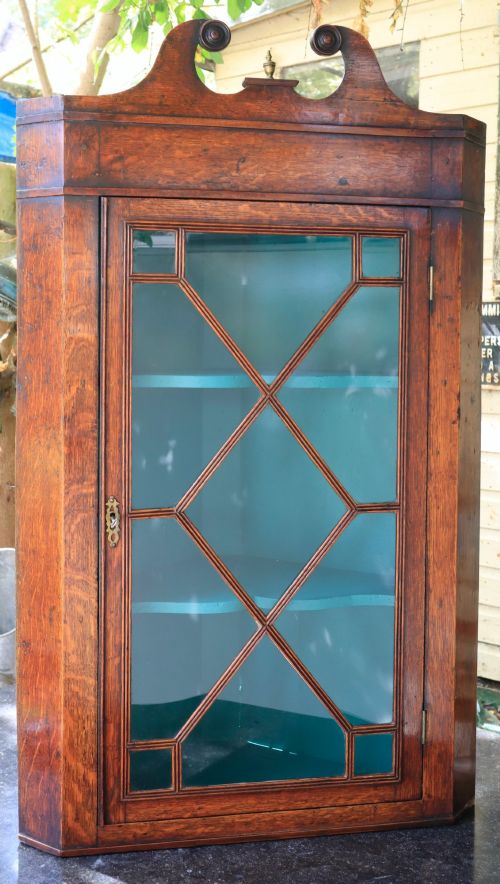
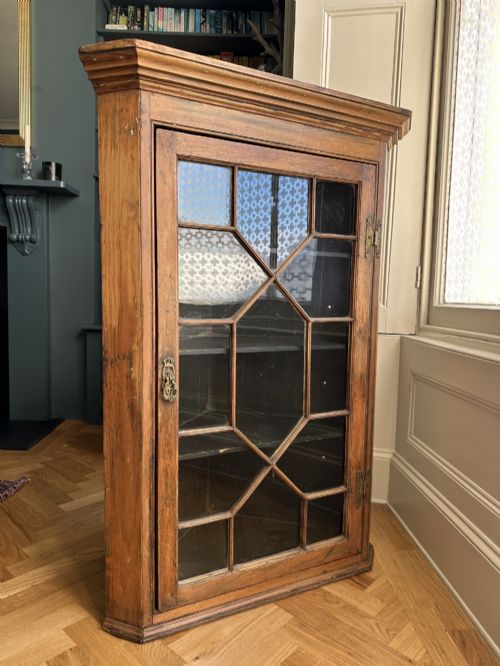
A glazed hanging corner cupboard is a wall-mounted cabinet designed to fit neatly into a ninety-degree room junction, making clever use of dead space. When you search for glazed hanging corner cupboard, you encounter wall-mounted display furniture spanning the eighteenth, nineteenth and twentieth centuries.
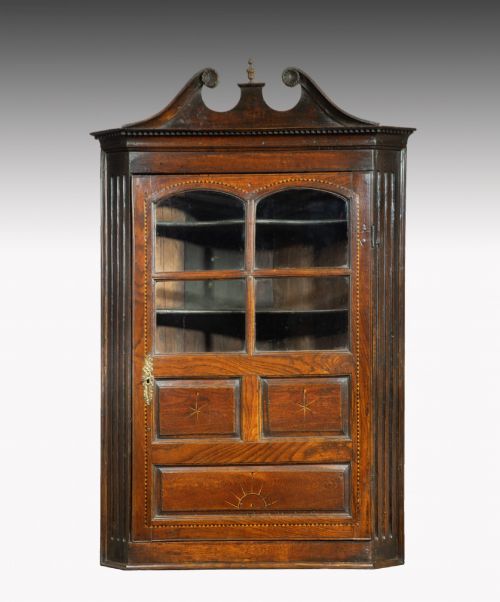
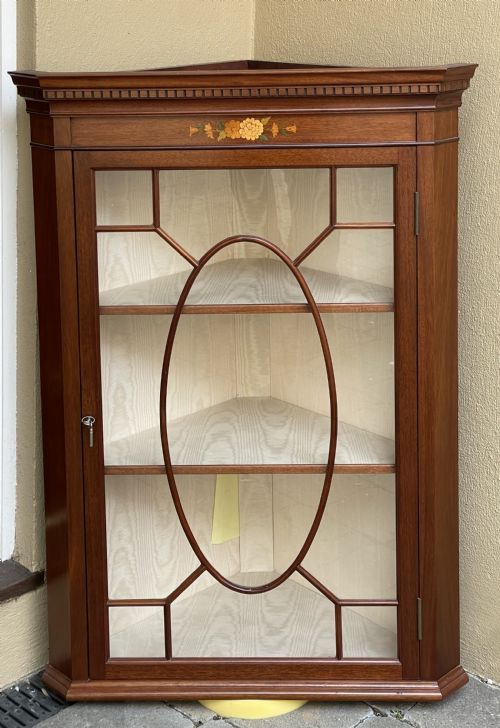
The prevailing form on this page is the mahogany or oak single-door cabinet, often built with architectural cornices and glass panels to exhibit tableware or bottles. Pieces range from straightforward country pine and oak versions to refined Georgian and Regency specimens featuring satinwood inlay and bow fronts.
How they were made
Cabinetmakers built these carcases primarily using solid timber frames of oak, mahogany, walnut or pine, frequently applying fine veneers and contrasting satinwood inlay to the exterior surfaces. Glass panes are held within wooden glazing bars, sometimes arranged in geometric or astragal patterns across the single door.
Brass hardware such as hinges, escutcheons and working locks secure the doors, while internal timber shelving often sits within fixed housings. Backboards are constructed from overlapping deals or panels, designed to be screwed directly to domestic wall studs through internal fixing points.
The selection includes pieces spanning the Georgian, Victorian and Edwardian eras, constructed from mahogany, oak, walnut and pine.
What varies in quality
Quality rests in the crispness of the timber mouldings, the selection of figured mahogany or clean oak veneers, and the delicacy of the glazing bars. Superior cabinets display thoughtful proportions where the cornice and door frame relate harmoniously to the depth of the corner.
The integrity of the original glass, the retention of working brass locks with matching keys, and the condition of the interior painted or polished surfaces mark the distinction between ordinary utility cupboards and finer parlor pieces.
The Glazed Hanging Corner Cupboard Glossary
- Astragal glazed
- A window or door division where slender moulded wooden bars hold small individual panes of glass in a grid pattern. This traditional method creates a lighter framework than a single heavy sash.
- Bow front
- A convex curved cabinet face that projects forward from the corner walls. This curved joinery requires specialised skill to shape both the solid wood frame and the fitted glass door.
- Cornice
- The decorative moulded projection running along the top edge of the cabinet. It crowns the structure and often echoes contemporary architectural room mouldings.
- Escutcheon
- A small protective brass plate surrounding the keyhole on the cupboard door. It prevents the surrounding wood from wearing away through repeated use of the key.
- Satinwood inlay
- Contrasting decorative woodwork inserted into recesses cut into the primary mahogany or walnut surface. This technique adds pale, golden linear borders and geometric motifs.
Glazed Hanging Corner Cupboard: Frequently Asked Questions
How do I hang a heavy antique corner cupboard safely?
These cabinets rely on robust internal screw fixings passing through the thick backboards directly into solid wall studs or masonry anchors. Professional installation is essential to bear the combined weight of the hardwood carcase and interior glassware.
Distributing the load across multiple anchor points prevents the wall fixings from shearing over time. Modern heavy-duty brackets hidden inside the cabinet provide additional peace of mind.
Can I use these cabinets for storing heavy items?
Interior shelves in older wall cabinets are usually supported by fixed timber glides or simple wooden battens nailed to the sides. They suit lighter decorative ceramics, glassware and small display items rather than heavy books or dense tableware.
Overloading antique shelving risks pulling the housing joints apart or bowing the thin timber boards. Keep the heaviest display pieces on the lowest shelf where support is most direct.
How do I tell an 18th-century cabinet from a later revival piece?
Eighteenth-century examples typically feature hand-sawn secondary timbers, pegged frame joints, and hand-blown glass containing subtle surface ripples and bubbles. Drawer linings on models with internal drawers show hand-cut dovetails rather than uniform machine work.
Twentieth-century revival styles or Victorian copies often use standardised machine-planed boards and modern flat float glass. Examining the backboards and interior construction usually reveals the true age of the timber.
Do original keys usually come with these cupboards?
Many surviving cabinets retain their original working brass locks and matching barrel keys, though replacements are also common. Working locks add to the daily utility and historical completeness of the piece.
If a key is missing, a specialist locksmith can often fit a period-appropriate replacement mechanism without altering the surrounding wood. The presence of a working lock ensures the door stays securely shut against the wall.