
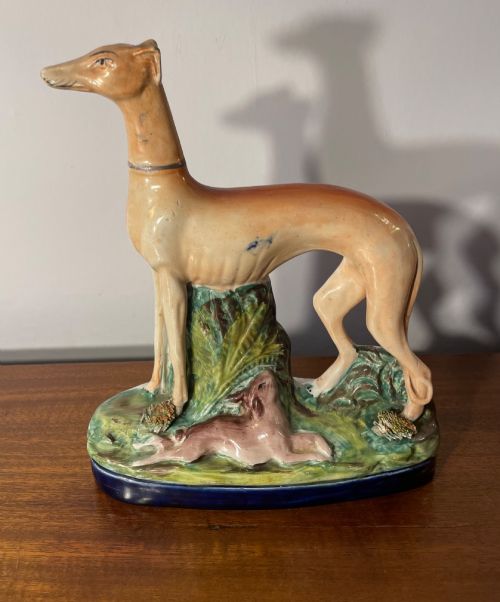
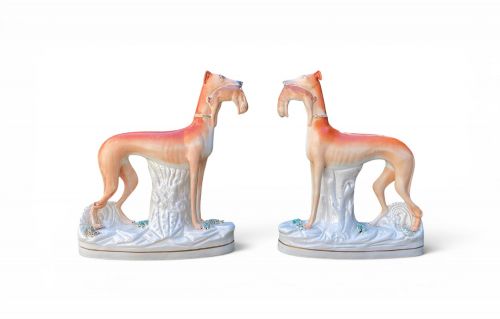
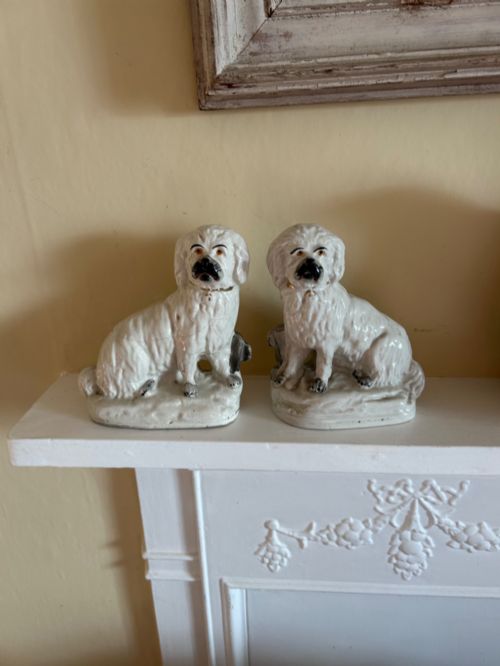


Glazed Earthenware Dog Figures
Glazed earthenware dog figures are enduring ceramic companions from the Victorian and Georgian eras that bring warmth and character to any mantelpiece.
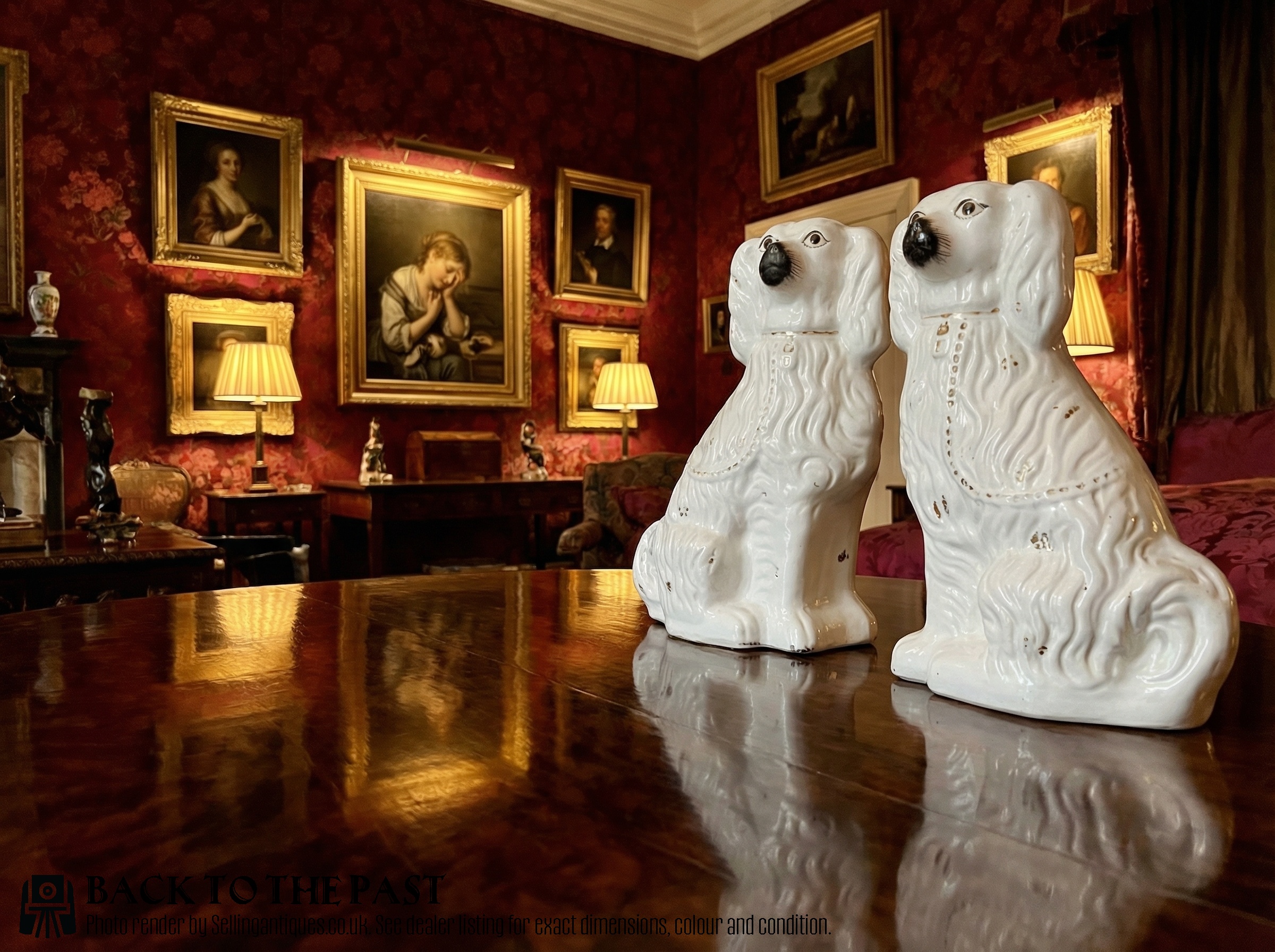
Glazed Earthenware Dog Figures
Glazed earthenware dog figures encompass a charming menagerie of spaniels, greyhounds, poodles, and pugs made during the nineteenth and early twentieth centuries. The majority of these pieces originate from Staffordshire potteries, capturing the domestic and sporting animals popular in British homes of the period.
Collectors frequently encounter pairs of seated spaniels and greyhounds, alongside more functional items such as quill holders and clock groups. While English Staffordshire is the dominant style, the selection also extends to Chinese and Japanese ceramic lions from around 1900.
These mantle ornaments range from miniature poodles to large seated spaniels, reflecting the diverse scale of Victorian ceramic production. Whether modelled as single decorative figures or complex groups with pups, they remain quintessential examples of nineteenth-century folk sculpture.
How they were made
The application of copper lustre and detailed hand-painting distinguished individual workshops and added depth to the ceramic fur and markings. Firing earthenware at lower temperatures produced the porous body typical of these traditional Staffordshire ornaments.
Victorian spaniels were so universally loved on mantelpieces that many pairs were given attentive expressions specifically designed to watch over the household hearth.
What varies in quality
The fineness of the modelling and the precision of the hand-painted enamels separate superior figures from standard production pieces. Crisp details around the eyes, muzzle, and fur indicate a sharper mould and a more skilled decorator.
Completeness and originality of the glaze finish, including the preservation of gilt highlights and copper lustre, dictate the desirability of a pair. Matched pairs with uniform glaze tones and minimal firing flaws represent the higher tier of these ceramics.
Thomas Parr·Wedgwood and Co Ltd·Beswick
The Glazed Earthenware Dog Figures Glossary
- Earthenware
- Porous pottery fired at lower temperatures, requiring a glaze to render it waterproof. It forms the primary ceramic body for the majority of these nineteenth-century figures.
- Lead Glaze
- A glossy coating containing lead oxide applied to earthenware before firing. It gives these figures their characteristic shiny surface and protects the painted decoration beneath.
- Copper Lustre
- A metallic glaze finish that produces an iridescent, coppery sheen. Potters utilised this technique to highlight collars, bases, and decorative trim on Staffordshire dogs.
- Quill Holder
- A utilitarian ceramic desk accessory featuring a modelled dog alongside an inkwell or pen recess. These functional pieces combined decorative appeal with practicality on Victorian writing desks.
- Staffordshire Figure
- A ceramic sculpture produced in the potteries of North Staffordshire. These figures range from domestic spaniels to exotic lions and theatrical groups.
Glazed Earthenware Dog Figures: Frequently Asked Questions
Were these dogs meant as toys?
These ceramic figures were strictly designed as decorative ornaments for the home, meant to sit on mantelpieces or side tables rather than serve as playthings for children.
Their hollow earthenware construction and delicate enamel painted surfaces meant they would not withstand the rigours of handling by younger members of the household.
Why are most of these dogs facing left and right?
Potters traditionally produced these Staffordshire figures in symmetrical pairs designed to face one another across a fireplace mantel or central shelf.
Displaying them outward from the centre created a balanced arrangement that suited the formal interior decoration of Victorian and Edwardian sitting rooms.
How do I date a Staffordshire dog?
Dating relies on examining the modelling style, the vibrancy of the enamel paints, and the characteristics of the earthenware body beneath the glaze.
Earlier Georgian examples often feature simpler painting and robust proportions, whereas later Victorian pieces display finer details and more varied glaze effects like copper lustre.
What is a Staffordshire clock group?
A clock group combines a modelled ceramic dog figure with a decorative clock face housing, creating a striking focal point for a mantelpiece.
These ambitious pieces integrated functional timepieces with traditional pottery sculpture, often featuring spaniels flanking the central dial.