
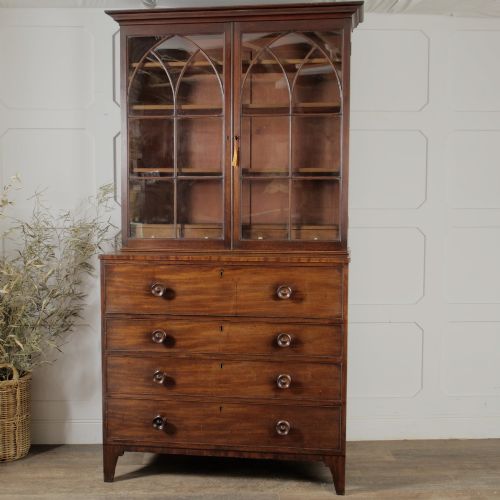
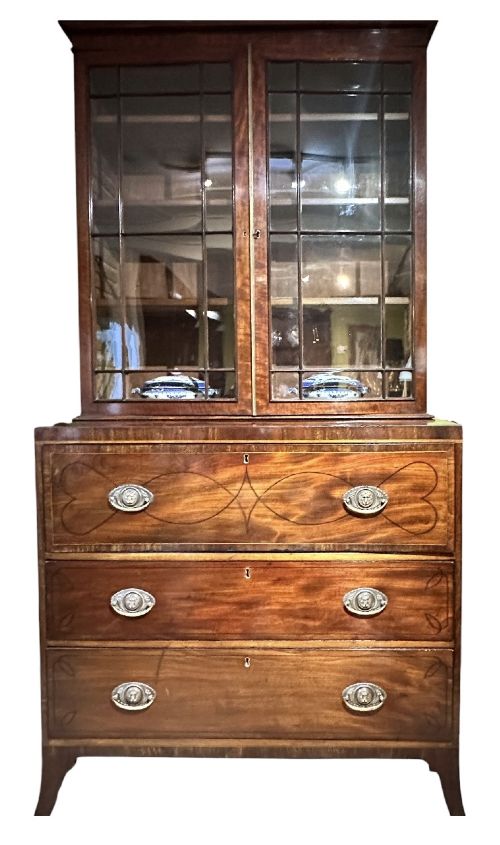
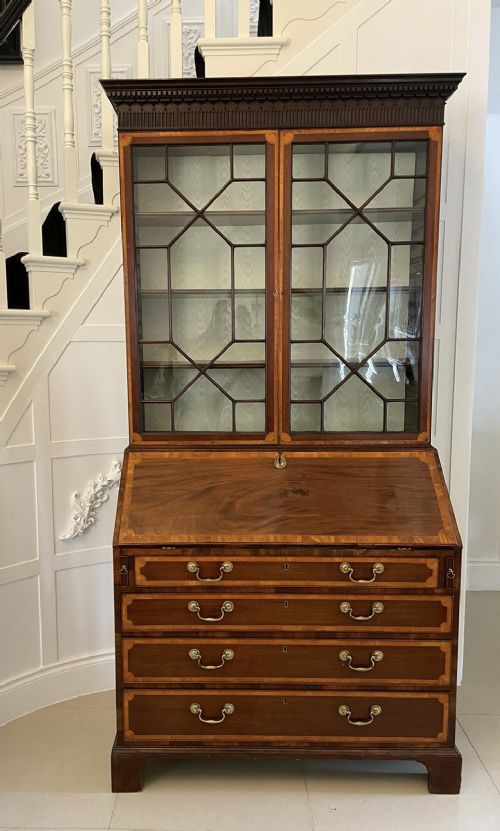
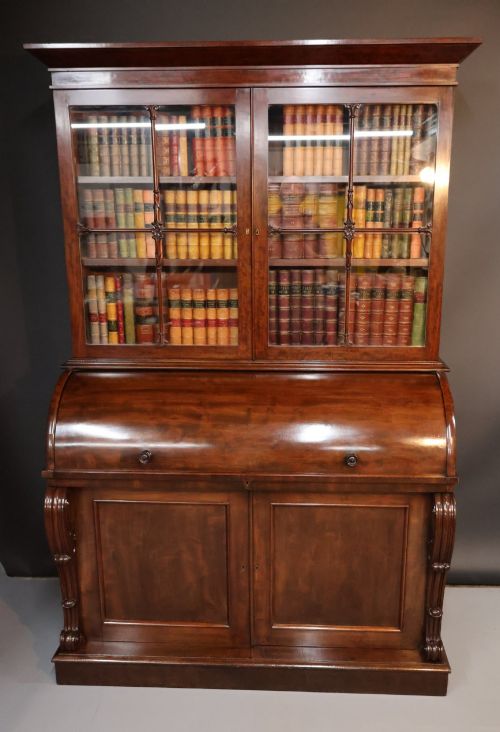
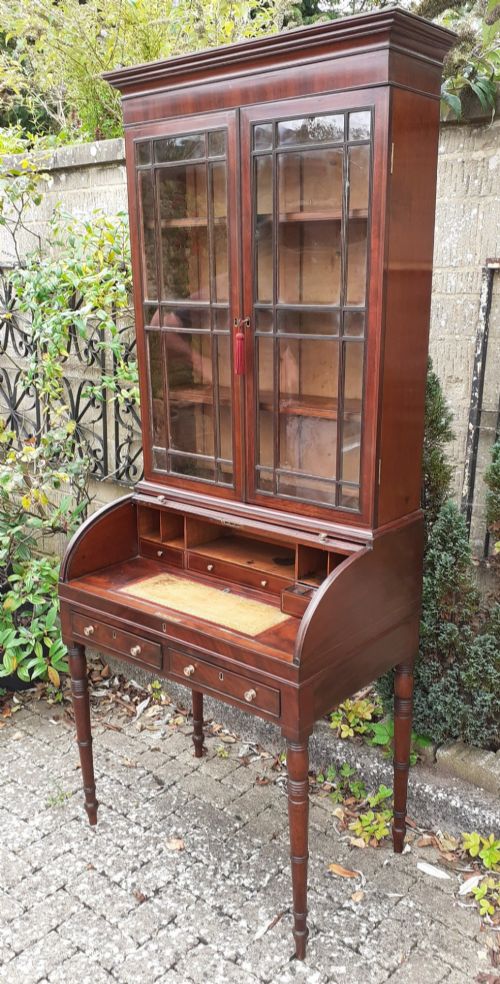
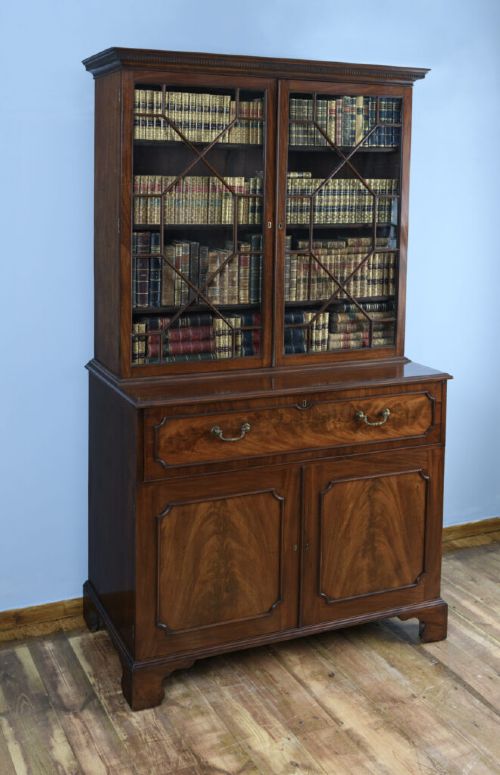
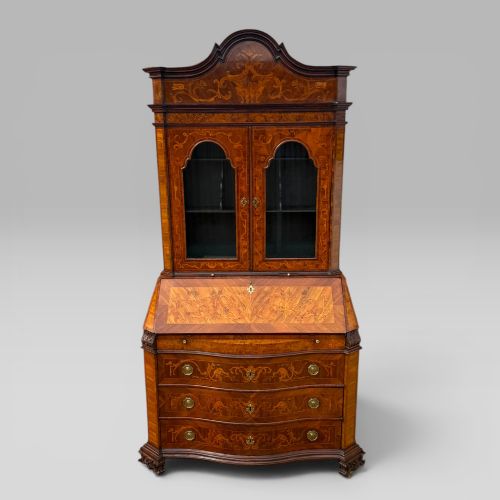
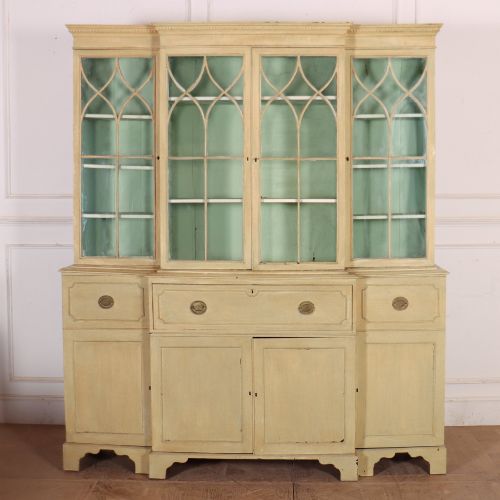
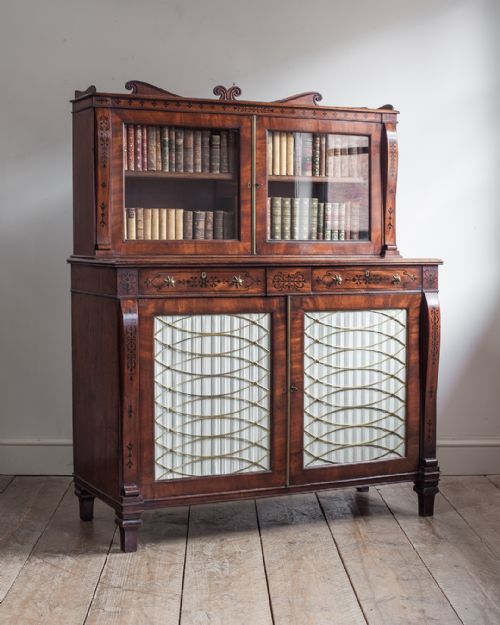

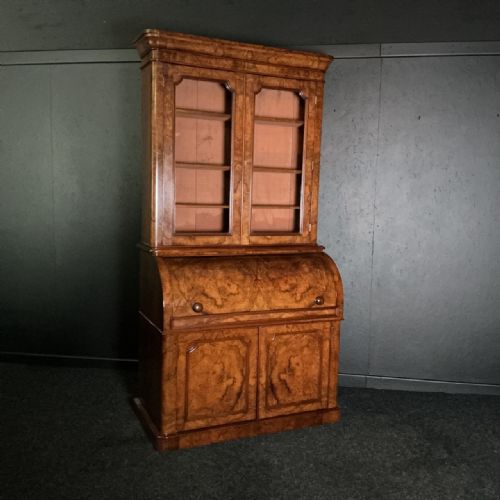
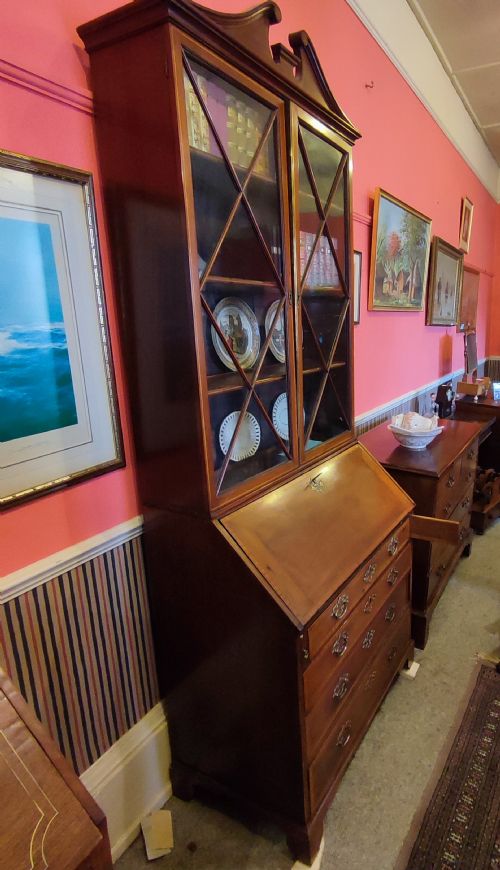
Glazed Door Writing Cabinet
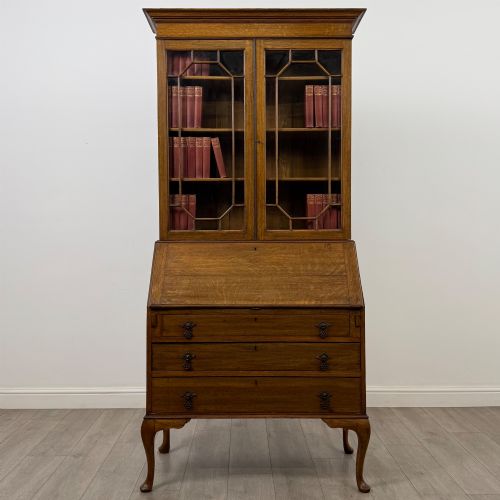
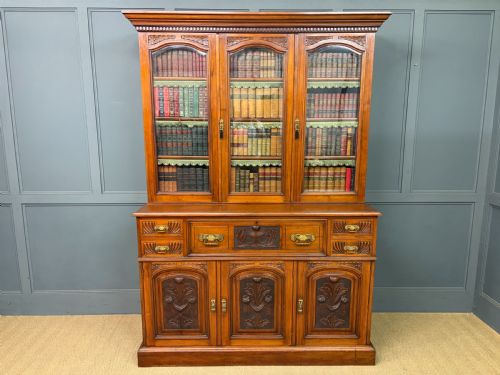
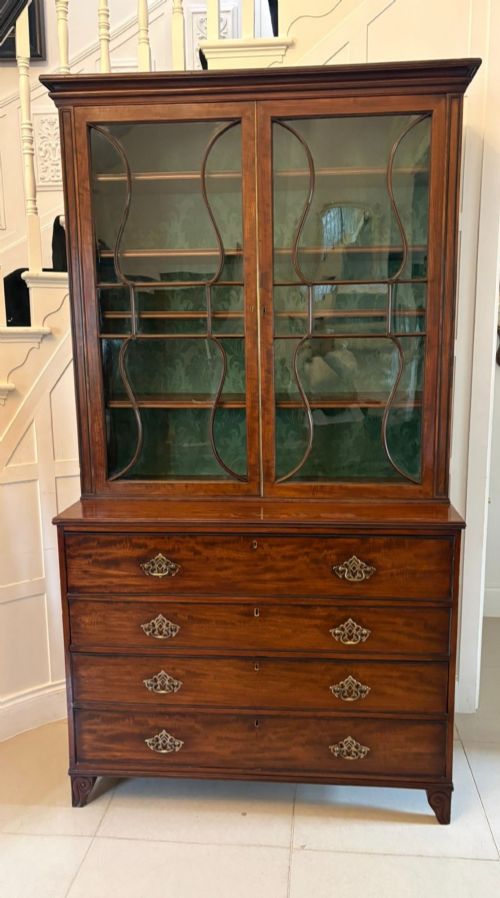
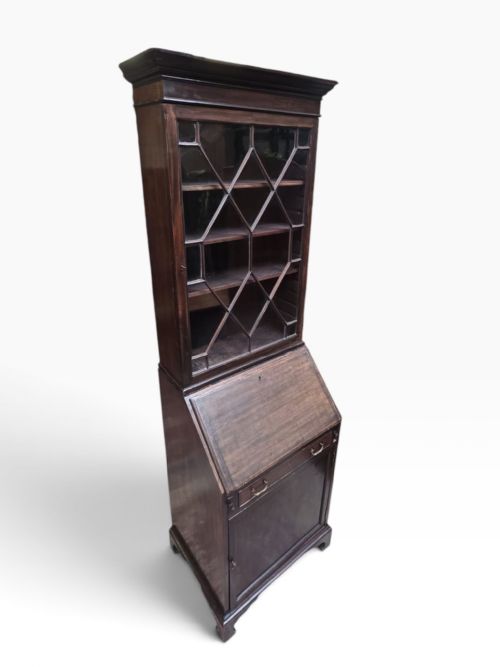
A glazed door writing cabinet combines a shelved bookcase with a fitted writing drawer or drop-front desk behind glass panels.
Glazed Door Writing Cabinet
A glazed door writing cabinet serves as a dual-purpose piece of furniture, pairing an upper display section with a lower bureau or writing compartment. These hybrid items appear across the Georgian, Regency, Victorian, and Edwardian periods.
The most common version met on this page is the mahogany bureau bookcase, often fitted with glazed doors above a fall-front desk or secretaire drawer. Pieces range from tall 18th-century Georgian formats to compact Edwardian variations in oak and walnut.
Makers designed these cabinets for domestic studies and libraries to store volumes while providing a dedicated writing surface. Alternative forms include cylinder bureau bookcases and specialised walnut or pine secretaire designs.
Construction and Materials
Cabinet makers relied primarily on mahogany, walnut, and oak timber, frequently selecting figured veneers, Cuban mahogany, and satinwood inlay to decorate the primary surfaces. Glass panels were fitted into wooden lattice frames to enclose the upper shelving.
Internal components incorporate brass hardware for handles and escutcheons, alongside leather writing inserts for the pull-down desks and fitted pigeonholes inside the secretaire drawers. Ormolu mounts and marquetry embellish specific continental or high-style examples.
Listings feature pieces spanning the Georgian, Regency, Victorian, and Edwardian periods, utilising mahogany, walnut, oak, glass, and brass.
Assessing Quality
The sophistication of the internal fittings defines the upper tier of these cabinets, where pigeonholes, small drawers, and hidden compartments show meticulous joinery. Figured timber selection and precise inlay work further distinguish superior examples from plain utility pieces.
Proportion and structural integrity separate fine cabinet-making from heavier vernacular production. Crisp carving on cornices and glazing bars indicates greater skill than generic or later factory output.
Tudor & Burrey
The Glazed Door Writing Cabinet Glossary
- Secretaire
- A desk component featuring a pull-out drawer with a drop-down front that reveals a fitted writing interior. This mechanism conceals pigeonholes and small drawers behind a single external drawer face.
- Bureau bookcase
- A tall combination piece uniting a lower writing desk with an upper glazed bookcase. It provides display space and writing accommodation within a single footprint.
- Cylinder bureau
- A writing cabinet featuring a quarter-circle rolling wooden cylinder that pulls down to cover the desk surface. When closed, it conceals the fitted interior entirely.
- Marquetry
- Decorative veneer patterns formed by fitting together small pieces of different coloured wood and other materials. It creates pictorial or geometric designs on cabinet surfaces.
- Ormolu
- Gilded bronze mounts applied as decorative ornaments to furniture corners, friezes, and drawer fronts. This technique appears on mid-nineteenth-century walnut pieces.
Glazed Door Writing Cabinet: Frequently Asked Questions
What is a secretaire bookcase?
A secretaire bookcase combines a bookshelf enclosed by glass doors with a lower section housing a pull-out writing drawer. The drawer front drops down to reveal small compartments and a writing surface.
This form allowed owners to keep correspondence and books in one upright piece of furniture. It served a similar function to a traditional bureau but maintained the upper display capacity of a bookcase.
How do I tell Georgian from Edwardian examples?
Georgian pieces typically employ solid mahogany, oak, or fine veneers with hand-cut dovetails and restrained classical proportions dating from the eighteenth and early nineteenth centuries. Edwardian revivals from the early twentieth century often use lighter satinwood inlay, specific Sheraton revival motifs, and machine-assisted construction.
Examining the internal drawer linings and timber thickness helps confirm the period. Earlier pieces show greater variation in secondary woods and hand-finished surfaces.
Where should I place a writing cabinet?
These cabinets suit studies, living rooms, and libraries where their vertical proportions and glass doors can display book collections. Position them away from direct sunlight and heat sources to protect timber veneers and leather desk inserts.
Ensure adequate floor space in front of the cabinet so the drop-down desk or secretaire drawer can open fully without obstruction.
How do I care for the glass and wood?
Dust the timber regularly with a dry cloth and apply a quality wax polish sparingly to maintain the finish on mahogany and walnut surfaces. Clean the glass panels with a mild window solution applied to a cloth rather than sprayed directly onto the wood.
Maintain stable room humidity to prevent timber shrinkage or veneer lifting. Inspect brass hardware periodically to ensure fixings remain secure.