




Glazed Corner Vitrine
A glazed corner vitrine turns dead room space into a showcase for your collection, bringing glass and timber together in a neat diagonal footprint.
Glazed Corner Vitrine
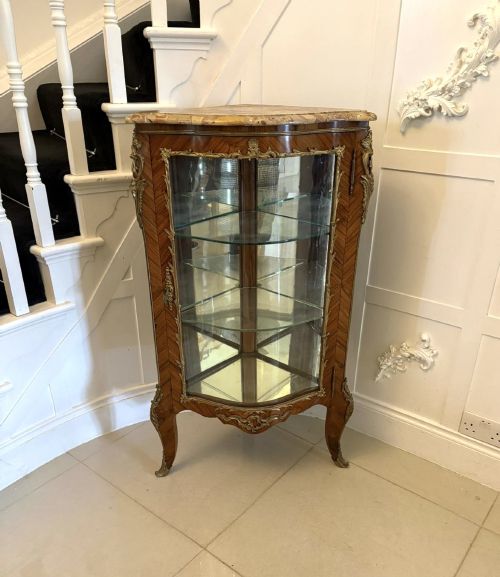
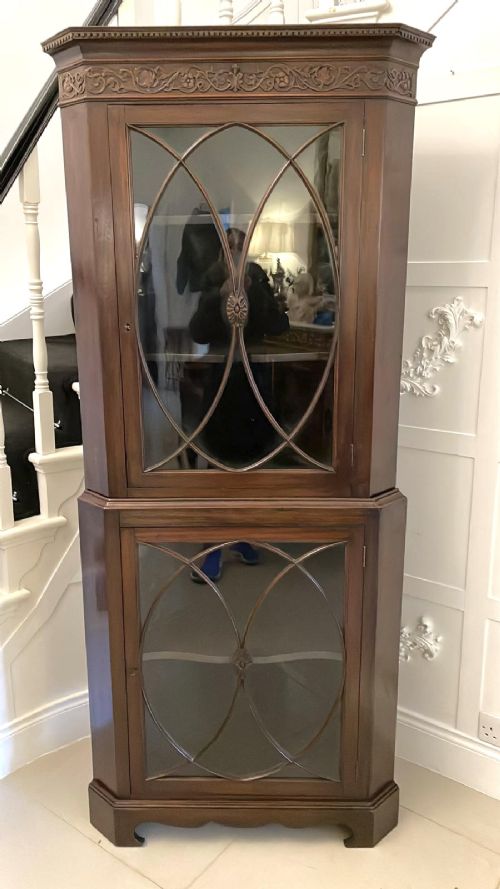
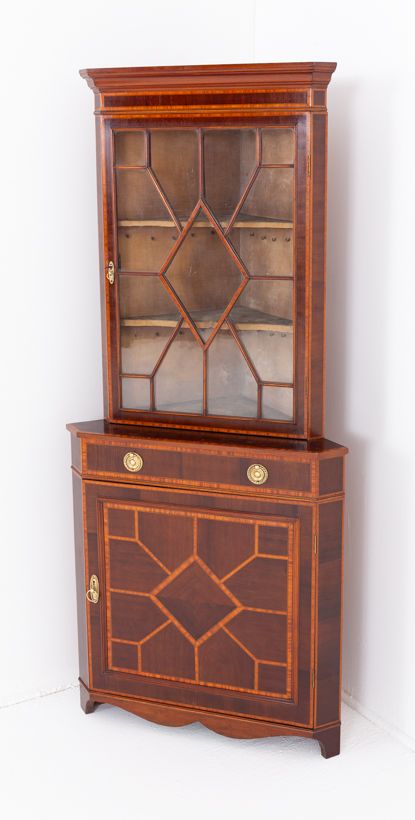
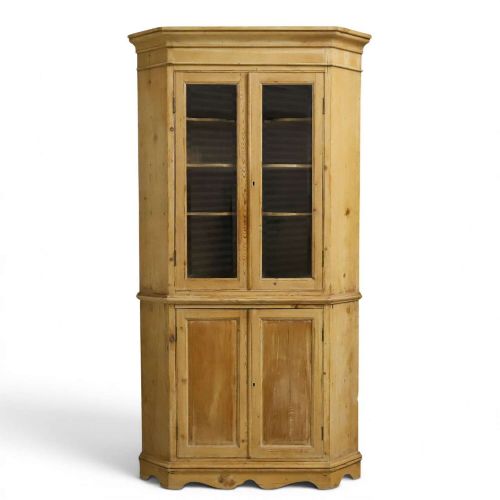
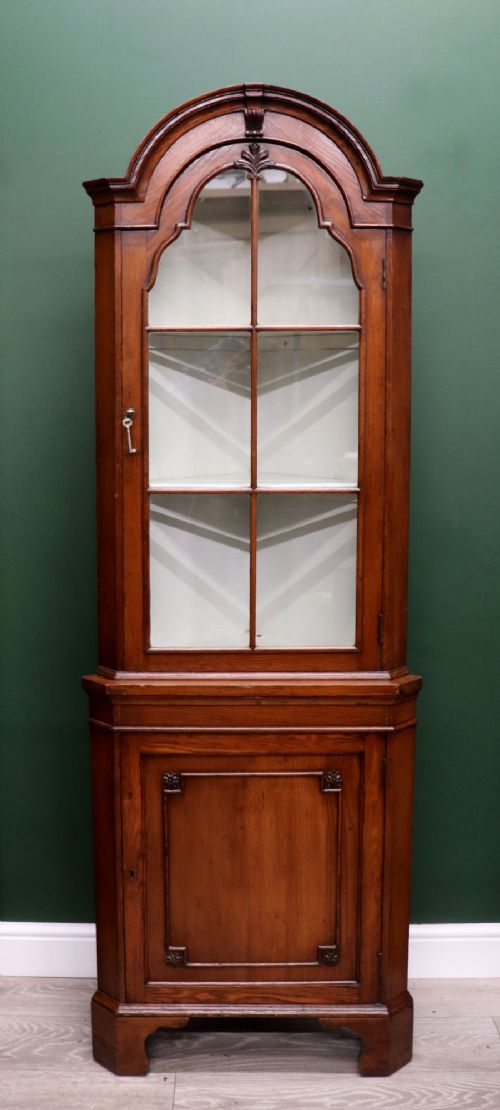
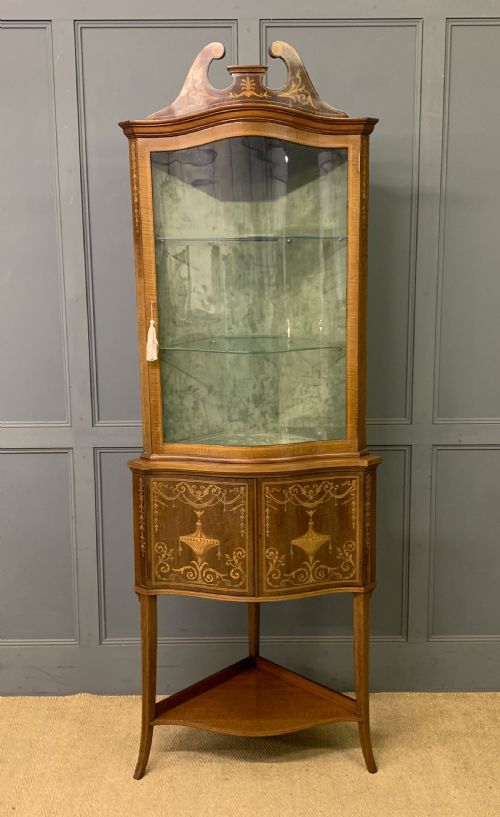
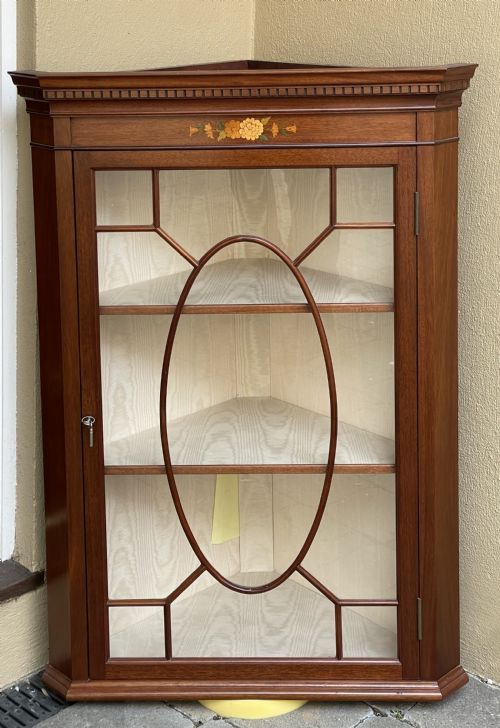
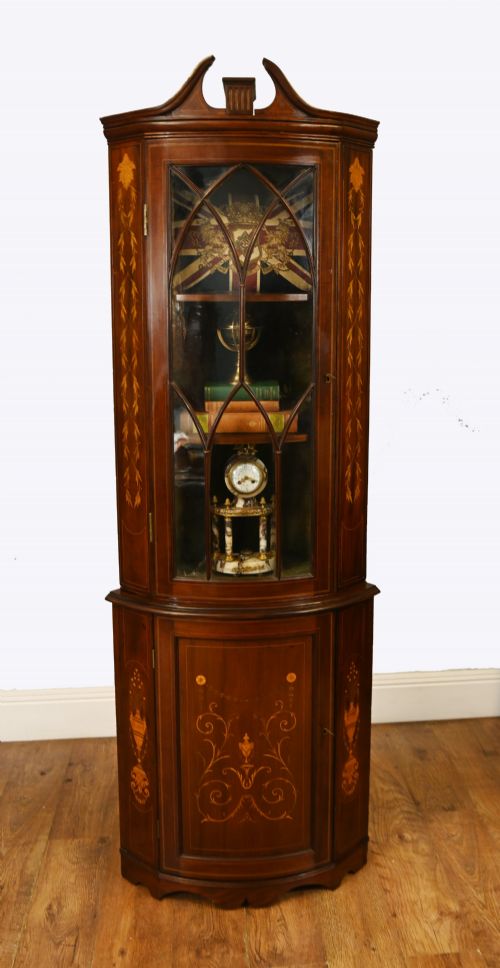
When you search for a glazed corner vitrine, you look at corner cabinets, display cabinets, and bookcases built to fit domestic room angles. The pieces on this page span the eighteenth, nineteenth, and early twentieth centuries, taking forms from wall-hanging cupboards to tall floor-standing corner cabinets.
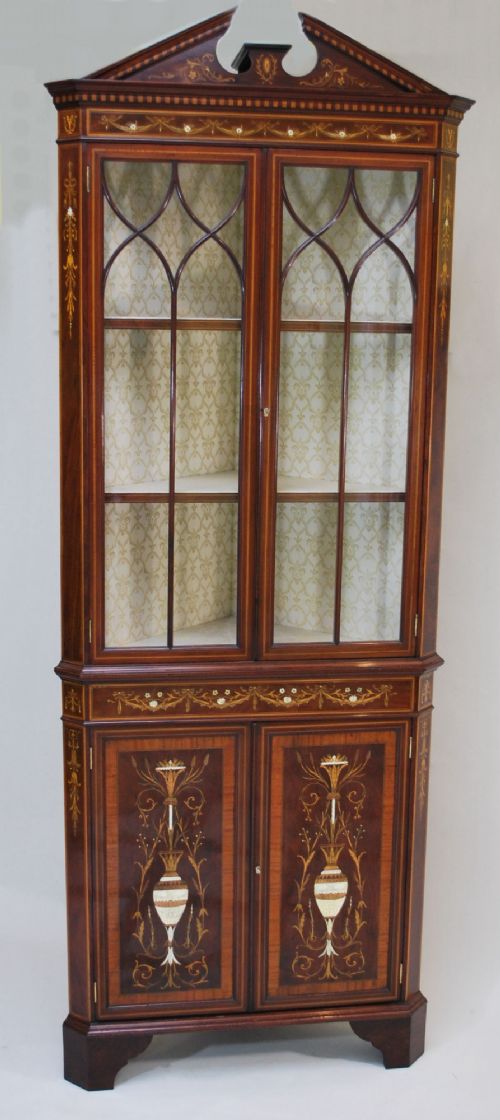
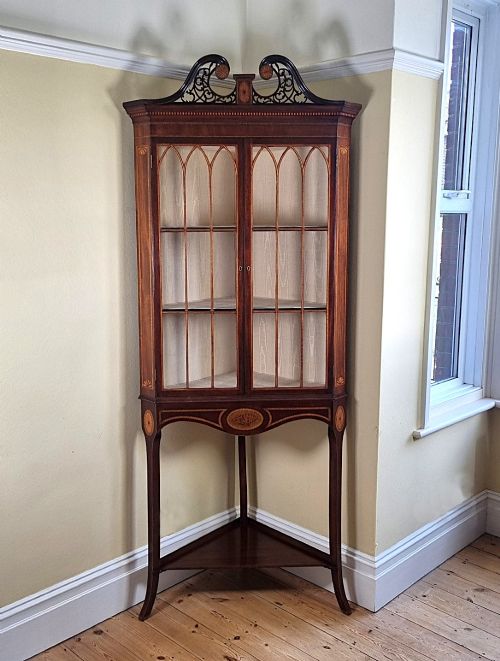
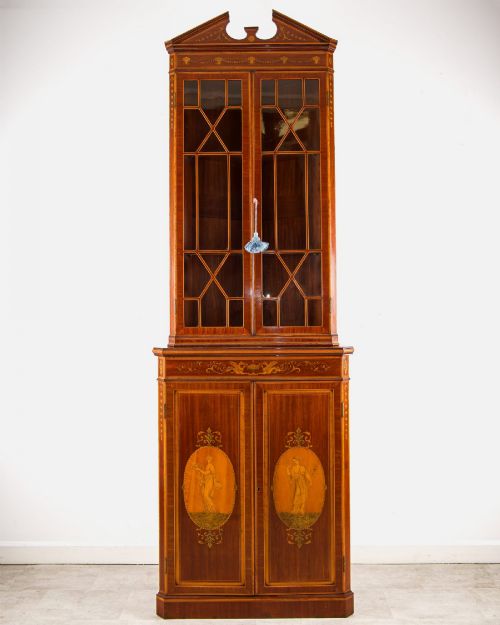
Mahogany dominates the selection, often inlaid with satinwood or featuring astragal glazing bars across the glass doors. You encounter styles ranging from Georgian and Victorian to Edwardian, Sheraton Revival, and Art Deco, alongside continental examples in walnut and marquetry.
How they were made
Cabinet makers constructed these glazed corner vitrines using solid timbers and veneers like mahogany, walnut, rosewood, and kingwood, frequently mounting them on tall stands or two-part forms. Carpenters integrated glass panels into doors using wooden glazing bars, whilst brass fittings, ormolu mounts, and painted finishes decorated the exterior surfaces.
Inlaid pieces utilised delicate satinwood banding and marquetry motifs to pattern the timber grain. Marble tops appear on specific French and continental models, adding weight and a smooth display surface above the wooden carcase.
Cabinet styles cover Georgian, Victorian, Edwardian, Sheraton Revival, Art Deco, and Louis XV Revival periods.
What varies in quality
Quality in a glazed corner vitrine rests on the depth of the cabinetwork, from simple pine country cupboards to intricate serpentine-fronted pieces with detailed marquetry and cast ormolu mounts. The crispness of the inlaid banding and the precision of the astragal glazing bars reveal the hand of the maker.
The choice of primary timber and secondary wood lining dictates the structural integrity over centuries of use. Superior examples display balanced proportions in their multi-part forms and refined cabinet joints that hold rigid against room humidity shifts.
Maurice Adams·Edwards And Roberts
The Glazed Corner Vitrine Glossary
- Astragal glazing
- Timber bars dividing a glass door into smaller panes. They form geometric or curved grids across the front of the cabinet.
- Marquetry
- Decorative patterns created by fitting contrasting wood veneers into a main background. Craftsmen use this technique on door panels and friezes.
- Ormolu
- Gilded bronze mounts applied to cabinet corners and cornices. This French technique adds metallic highlights to wood surfaces.
- Serpentine front
- A curved furniture front that undulates with a convex centre and concave sides. It requires skilled woodworking to shape timber smoothly.
- Vitrine
- A glass-fronted cabinet designed for displaying porcelain, books, or curiosities. These pieces often feature glass on the sides as well as the doors.
Glazed Corner Vitrine: Frequently Asked Questions
How do I choose the right height?
Consider whether you need a wall-hanging cupboard to sit above other furniture or a floor-standing cabinet to anchor an empty room corner. Wall units require secure fixing to solid wall studs to bear the weight of glass and timber.
Floor-standing versions often come in two-part forms, which make transport and installation simpler when navigating tight stairwells or doorways.
What is astragal glazing?
Astragal glazing refers to the slender wooden bars that hold individual panes of glass within a cabinet door. These bars create structured geometric patterns that frame the contents of the vitrine.
In period pieces, these bars are hand-shaped and jointed rather than moulded from modern synthetic compounds.
Are these cabinets secure in corners?
Yes, their diagonal footprint makes them inherently stable against two intersecting walls. Many taller floor-standing designs include internal fixing points to attach the carcase securely to the wall.
This prevents tipping when heavy glass doors swing open during daily use.
How do I care for inlaid wood?
Keep inlaid mahogany and walnut cabinets away from direct sunlight and heat sources to prevent the veneers and delicate satinwood banding from drying out. Dust the carved and inlaid surfaces regularly with a dry cloth.
Apply a traditional beeswax polish sparingly to maintain the natural sheen of the timber.