


Glazed Ceramic Pedestal
These glazed ceramic pedestal pieces elevate indoor greenery and sculpture, offering a striking structural presence rooted in Victorian and early twentieth-century design.
Glazed Ceramic Pedestal
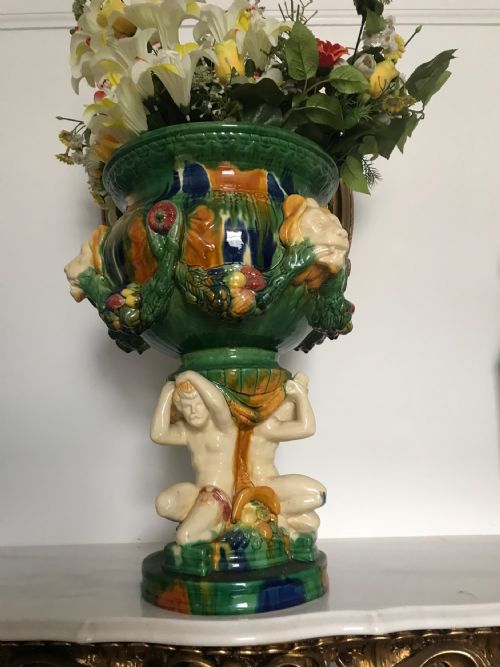
A glazed ceramic pedestal supports heavy jardinieres, planters, and decorative urns, creating a vertical focal point in a room or conservatory. Buyers searching for a glazed ceramic pedestal will frequently encounter tall majolica stands, earthenware plant columns, and matching jardiniere and pedestal combinations dating from the nineteenth and early twentieth centuries.
The objects combine sturdy pottery columns with elaborate top bowls or matching display surfaces, reflecting Victorian naturalism, Art Nouveau, and Renaissance Revival aesthetics. Common forms include figural bases with animal or human motifs, classical urns, and fluted columns designed to carry significant weight.
Originating largely from British potteries like Burmantofts and Minton, as well as continental European kilns in Italy, Germany, and France, these pieces served both practical and decorative functions in period interiors. The survivals range from single plant stands to monumental composite centrepieces with integrated bases.
Assessing quality and craftsmanship
Structural integrity also separates the standard production from the exceptional, as taller stands required careful internal support to prevent sagging during the high-temperature kiln firing. The harmony between a jardiniere and its matching pedestal base determines the overall design cohesion of the completed ensemble.
Listings span earthenware, terracotta, and porcelain, with production dates stretching from the mid-nineteenth century through the Edwardian era into the mid-twentieth.
Burmantofts Art Pottery·Royal Doulton·Ulisse Cantagalli·Clement Massier·Minton·Julius Dressler·Woodlesford Art Pottery·Mougin·Eichwald·Lipscombe and Co·Vallauris·Moorcroft·Albert Carrier
The Glazed Ceramic Pedestal Glossary
- Majolica
- A type of pottery glazed with an opaque tin-opacified glaze, painted with metallic oxide colours that fire into brilliant hues. It gained immense popularity in Victorian Britain through manufacturers like Minton.
- Jardiniere
- A large ornamental pot or container for plants or flowers, often designed to sit upon a matching column or pedestal. These vessels frequently feature botanical or figural reliefs.
- Tazza
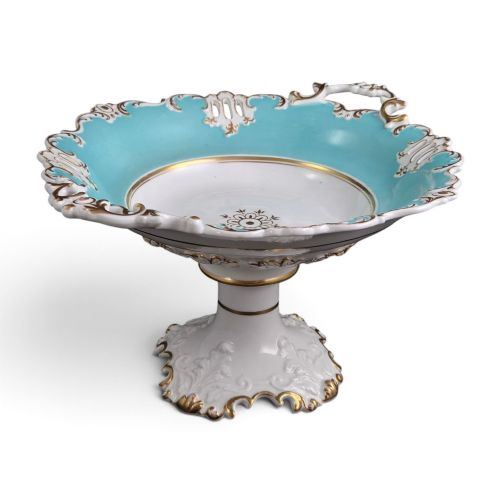
- A shallow bowl or vase raised on a high foot and a single column, used historically for display or serving. Victorian examples often incorporate elaborate mythological or naturalistic handles.
- Bisque
- Unglazed white porcelain or pottery fired once to a porous state, prized for its smooth, marble-like matte texture. It was frequently utilised for sculptural busts and classical figures.
- Lustre glaze
- A metallic ceramic glaze that produces an iridescent sheen reflecting rainbow colours in the light. This technique required a specialised reducing atmosphere in the kiln.
Glazed Ceramic Pedestal: Frequently Asked Questions
What were glazed ceramic pedestals used for?
These tall stands and columns supported heavy potted palms, ferns, and decorative jardinieres, elevating greenery to catch the light in nineteenth-century drawing rooms and conservatories.
They also served as independent display furniture for urns, busts, and sculptural art pieces, anchoring the corners of grand reception spaces.
How do I style a pedestal at home?
Place a substantial plant stand in an empty hallway or corner to add vertical architecture and break up flat wall expanses.
Pair the pedestal with a contrasting green fern or a trailing plant to soften the rigid ceramic lines and highlight the coloured glazes.
How can I tell Victorian pieces apart?
Victorian examples often rely on heavy majolica glazes, classical revival motifs, and naturalistic designs like leaves and animal figures.
Later pieces from around nineteen hundred frequently adopt the flowing, asymmetrical botanical lines characteristic of the Art Nouveau movement.
Are jardiniere stands and pedestals always sold together?
While many matching sets survive intact from the factory, individual jardinieres and pedestals often became separated over decades of use.
Finding a matched set with identical glaze colours and manufacturer marks remains a notable bonus for collectors.