


Glazed Ceramic Jugs
When you search for glazed ceramic jugs, you are looking at practical vessels transformed into decorative statements through centuries of firing, potting and surface treatment.
Glazed Ceramic Jugs
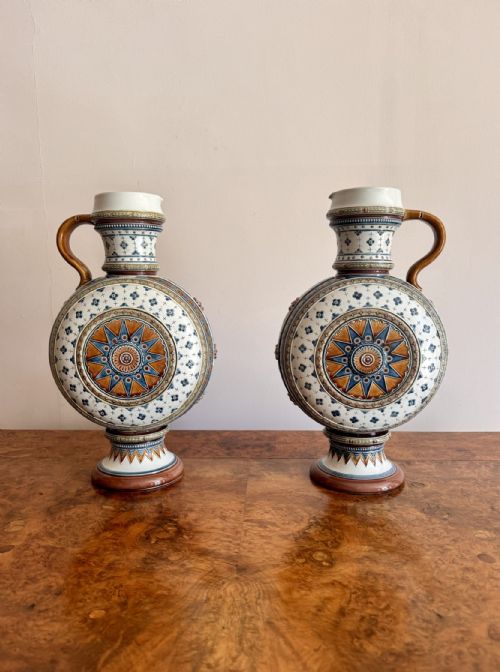
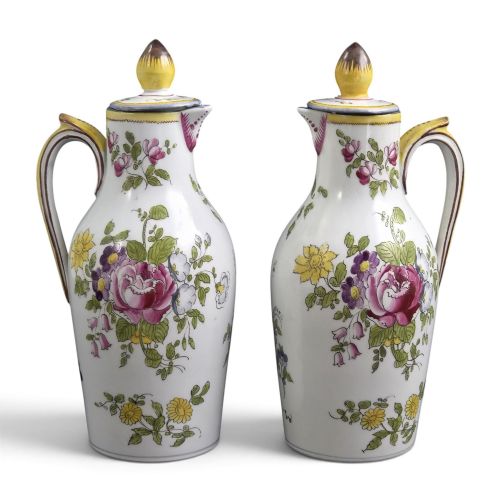
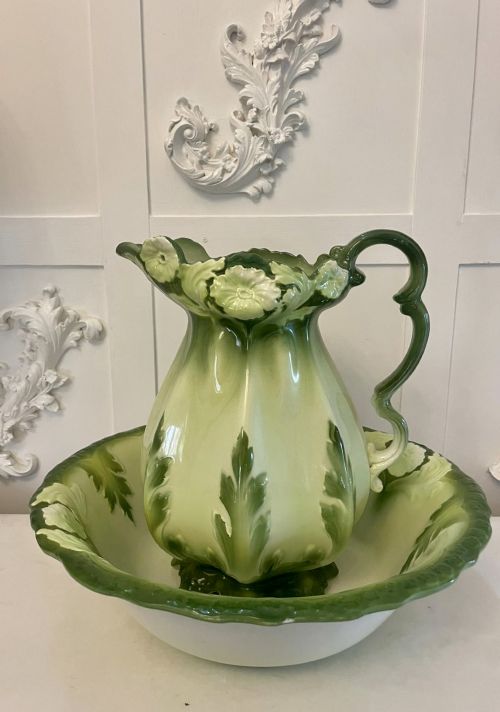
Glazed ceramic jugs encompass everything from sturdy nineteenth-century earthenware and stoneware storage vessels to ornate Victorian majolica, salt-glazed German pitchers and delicate Dutch delftware. These pieces range from utilitarian daily-use containers to finely decorated mantel ornaments, ewers and pharmacy vessels created across European and Asian potteries.
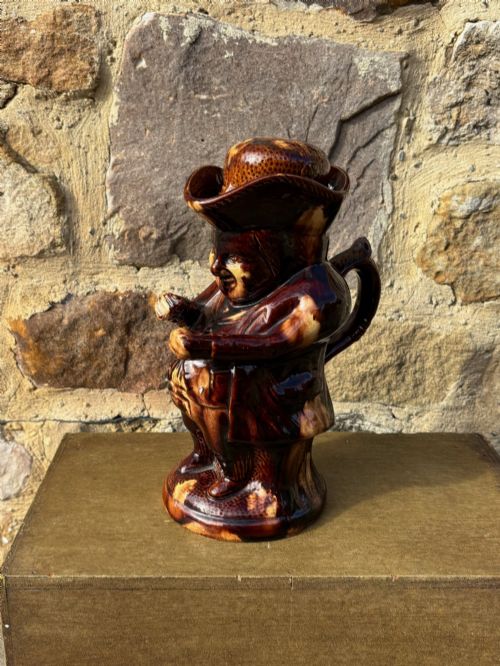
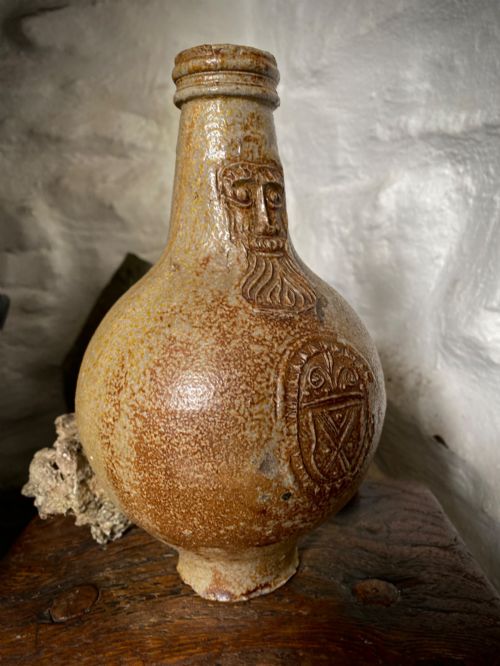
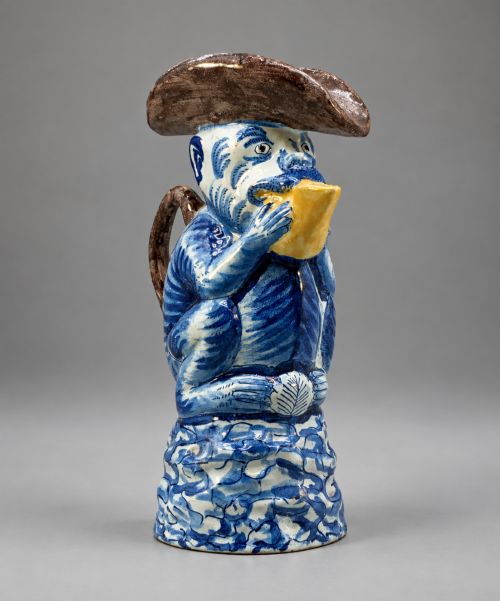
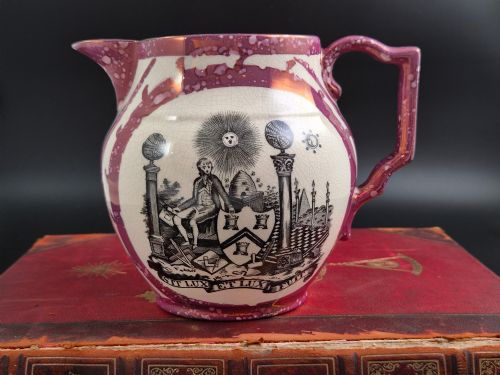
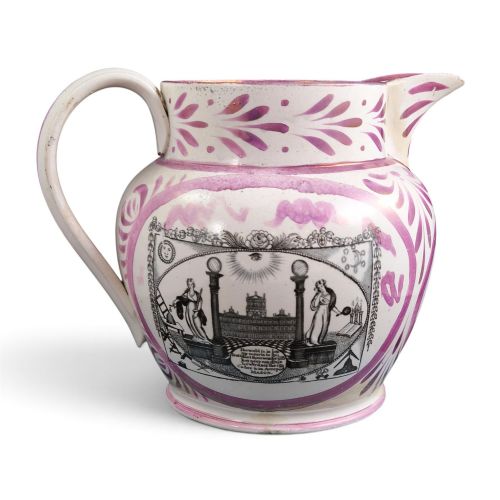
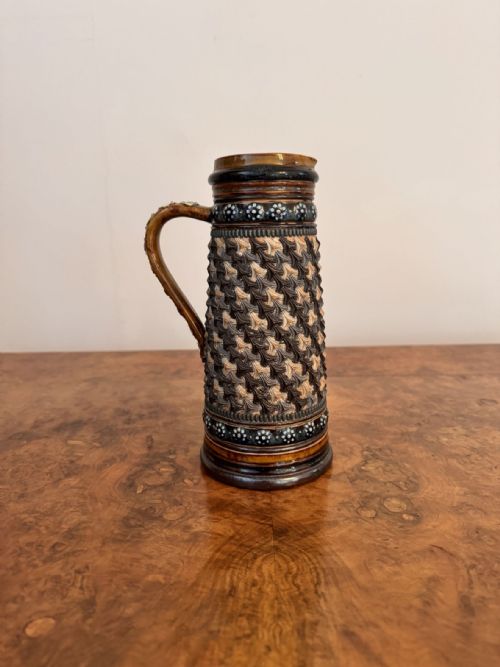
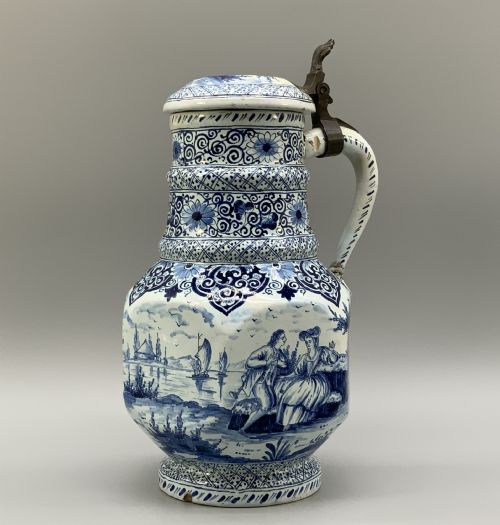
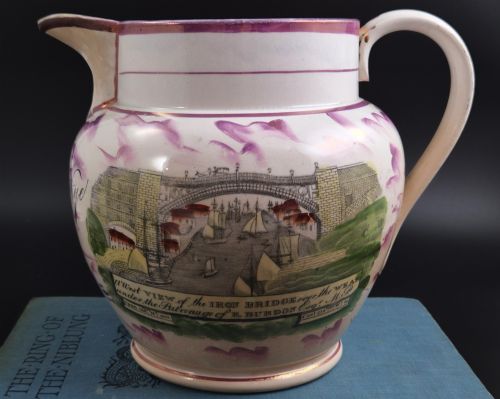
The versions most commonly met on this page date from the nineteenth century, including Victorian Doulton Lambeth salt-glazed stoneware, Sunderland pink lustre printed with maritime scenes, and Staffordshire figurative models. Alongside these, eighteenth-century Dutch delft and Westerwald stoneware appear with cobalt blue decoration and historic ciphers.
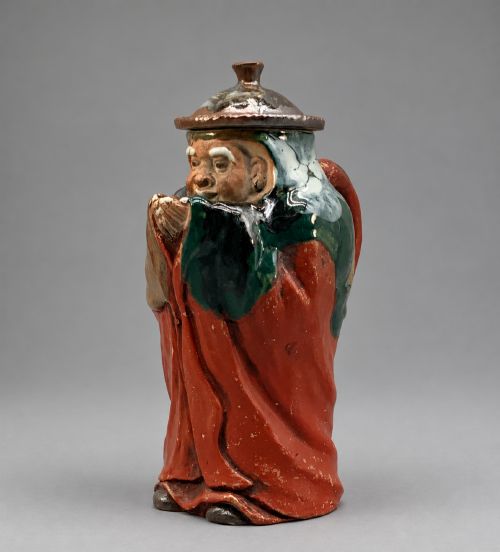
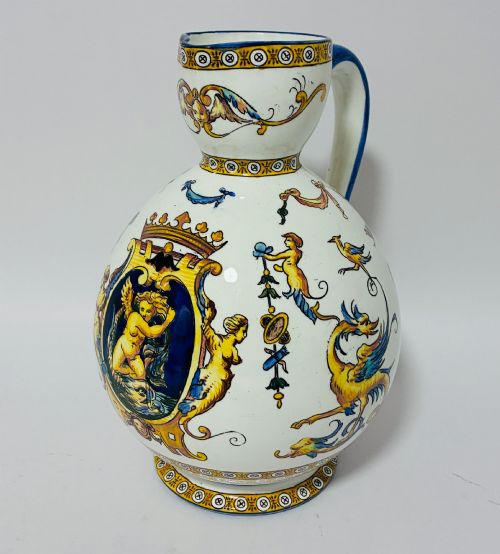
Collectors encounter diverse regional forms, such as Japanese Sumida Gawa pitchers with sculpted figures, French faience water pitchers bearing mythological scenes, and slipware vessels from the late eighteenth century. Each form reflects the specific domestic, tavern or display function intended by its maker.
Materials and Techniques
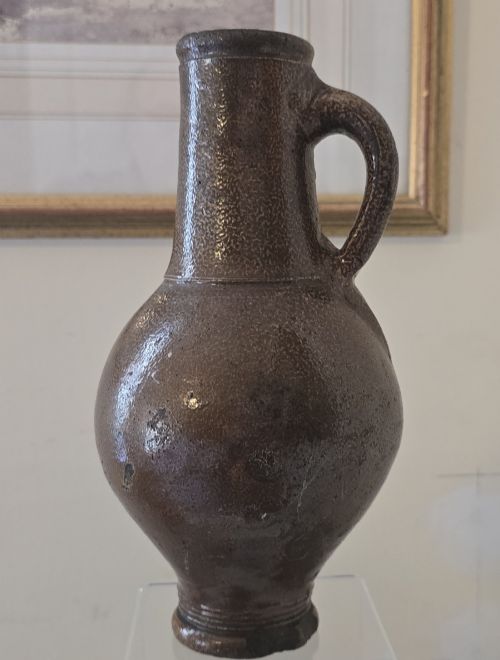
Potters shaped these jugs using local clays, denser stonewares or refined earthenware, throwing them on the wheel or moulding them in relief before applying mineral glazes. Salt glazing imparted a characteristic textured orange-peel surface to German stonewares, while tin glazes provided the smooth white ground necessary for traditional blue and white delft painting.
Surface ornamentation relied on hand-painted polychrome pigments, lustre finishes using metallic films to catch the light, and incised or relief-moulded patterns pressed into the damp clay body. Subsequent high-temperature kiln firings bonded the vitreous glazes to the ceramic body, sealing the porous clay for liquid containment.
Glazed Ceramic Jugs Retail Price Guide 2026
Typical asking prices for glazed ceramic jugs among the pieces listed under this phrase on Sellingantiques today, from the lower quarter to the upper quarter. They describe what is for sale here now, not the wider market.
Listings feature 18th-century earthenware and stoneware vessels alongside 19th-century Victorian salt-glazed pieces and Edwardian ceramics.
Evaluating Quality
Quality rests upon the crispness of the moulded or incised detail, the precision of the hand-painted brushwork, and the stability of the glaze finish during the kiln firing. Pieces with deep, clear cobalt blue application or evenly distributed lustre demonstrate superior control by the potter.
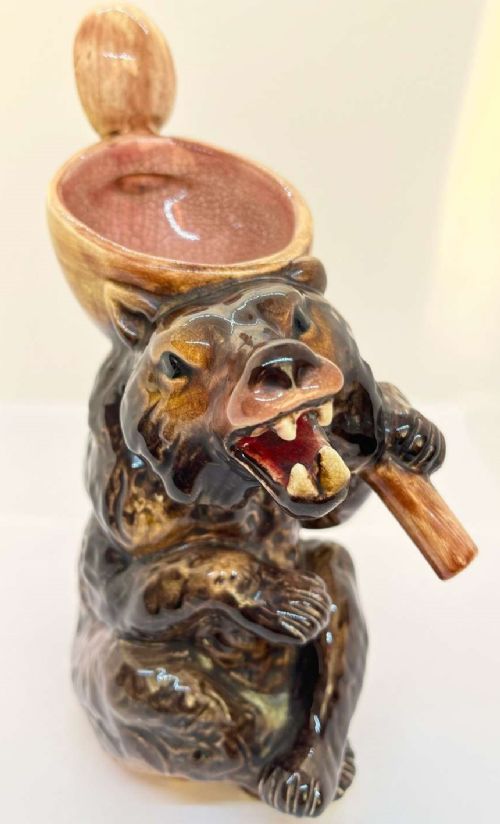
Artistic ambition also distinguishes standard utilitarian vessels from studio pottery or exhibition pieces, such as those bearing specific maker stamps, complex mythological scenes, or modelled figural elements like bears and military heroes.
Doulton Lambeth·Cantagalli Florence·Sir Edmund Elton·Simon Peter Gerz
The Glazed Ceramic Jugs Glossary
- Salt Glaze
- A technique where common salt is thrown into the kiln during high-temperature firing, reacting with the silica in the clay to produce a glossy, textured surface.
- Lustreware
- Earthenware decorated with a metallic film that creates an iridescent sheen, often applied in pink, copper or silver splashes.
- Delftware
- Tin-glazed earthenware originating in the Netherlands, typically featuring white surfaces painted with blue botanical or figurative designs.
- Ewers
- Large water pitchers featuring an ornamental spout and handle, often designed for display rather than heavy kitchen use.
- Stoneware
- A heavy, dense ceramic fired at high temperatures until semi-vitreous, rendering the finished body waterproof without internal glazing.
Glazed Ceramic Jugs: Frequently Asked Questions
Can I use these antique jugs for daily serving?
While many of these vessels were originally made for liquids like wine, water or milk, historic pieces often develop hairline fractures or contain old lead-based glazes.
It is safer to display them as decorative objects or dry flower vases rather than using them for food and beverage consumption today.
How do I tell salt glaze from tin glaze?
Salt glaze presents a slightly pebbled, orange-peel texture where the chemical reaction pitted the surface of the stoneware during high-heat firing.
Tin glaze provides an opaque, smooth white background designed to imitate Chinese porcelain, typically found on softer earthenware bodies.
What period do lustre jugs usually come from?
The vast majority of Sunderland and copper lustre jugs date from the nineteenth century, particularly the Victorian era and the decades leading up to it.
They frequently commemorate naval battles, local landmarks like iron bridges, or fraternal organisations with transfer-printed and hand-painted metallic highlights.