




Glazed Case Regulator Clock
A glazed case regulator clock offers precision timekeeping housed within a visible timber cabinet, prized for its mechanical clarity.
Glazed Case Regulator Clock
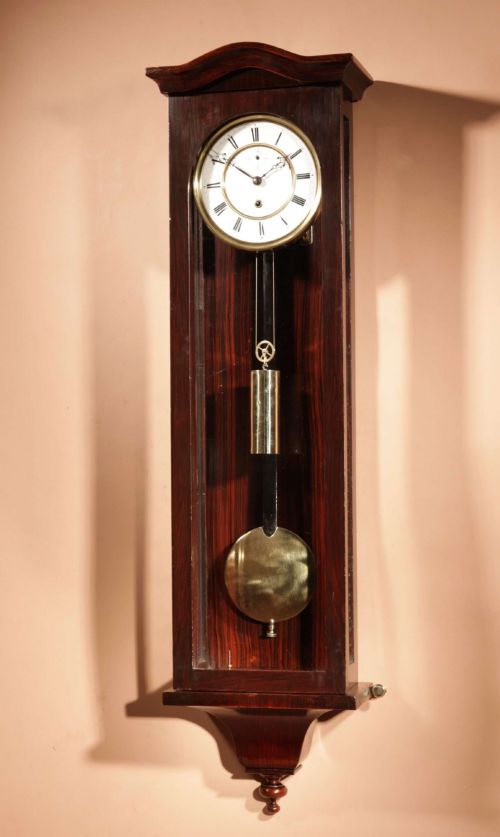
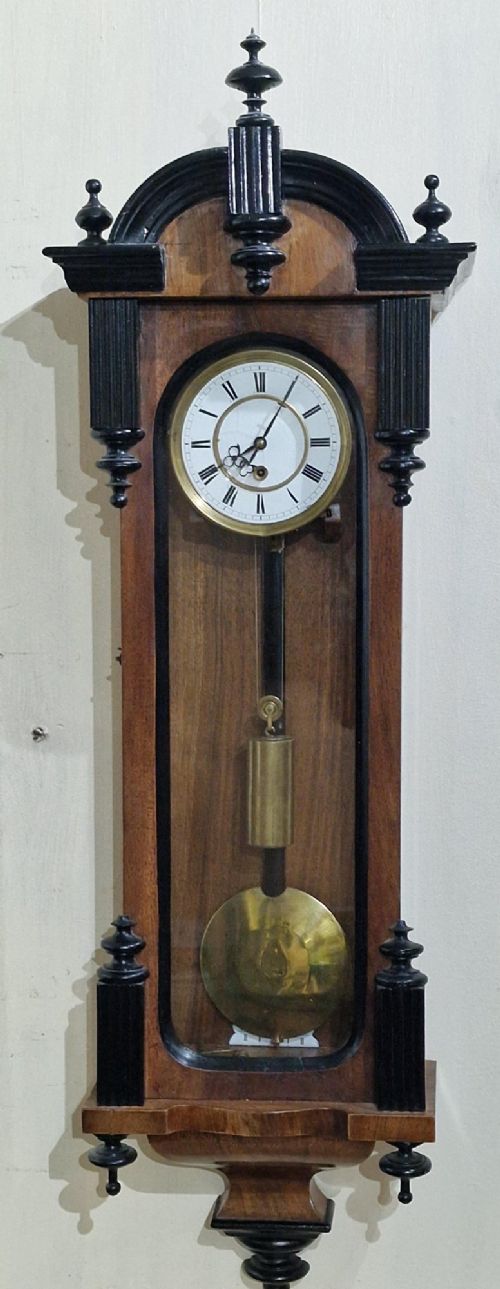
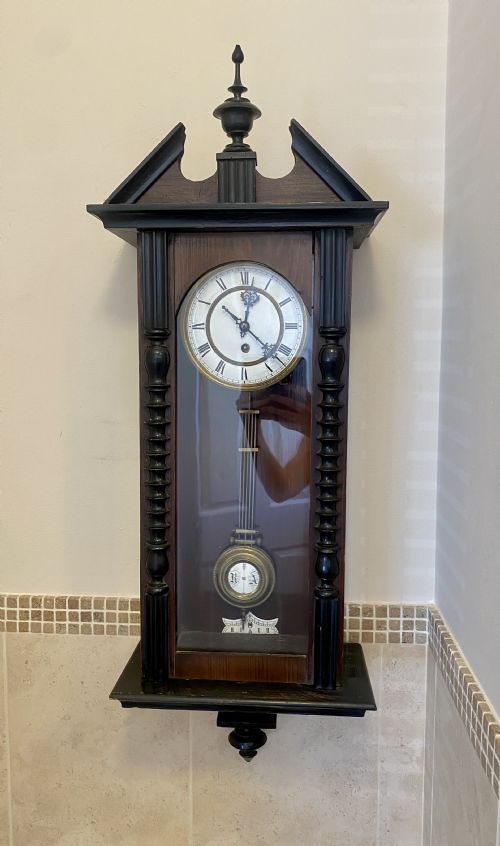
When searching for a glazed case regulator clock, you encounter precision timepieces originating from the nineteenth century, including Victorian and Biedermeier examples. These instruments include wall clocks and longcase forms, designed to display the movement and weights clearly through glass panels.
The versions most commonly met on this page are Vienna regulator wall clocks housed in walnut, mahogany, or ebonised wood cases. They often incorporate brass weights and enamel dials, reflecting the dominant styles of the period from eighteen-fifty to eighteen-ninety.
How these clocks were made
Maker workshops utilised dense hardwoods such as walnut and mahogany to construct the glazed cases, frequently incorporating carved details and ebonised wood accents. The timber frames house large glass panels that protect the dial and expose the swinging pendulum and weights.
Movements incorporate precise mechanisms like deadbeat escapements and maintaining power, driven by brass weights or double fusee systems. Dials are typically finished in white enamel with black Roman numerals, paired with delicate brass hands.
Some models chime three separate musical tunes to remind you of the hour.
What varies in quality
Quality rests in the complexity of the movement and the execution of the timber case, distinguishing standard production from exceptional craftsmanship. Pieces featuring month-duration movements, grand sonnerie striking, or triple chime mechanisms represent the upper tier of the range.
The refinement of the walnut or mahogany veneer and the crispness of any carved ornamentation further separate ordinary examples from those bearing maker signatures such as AG Lenzkirch or the French Royal Exchange.
AG Lenzkirch·French Royal Exchange
The Glazed Case Regulator Clock Glossary
- Regulator clock
- A high-precision timekeeper designed for accuracy, often used as a standard to set other clocks.
- Vienna regulator
- A style of wall clock originating in Austria, characterised by a long glazed case and precision movement.
- Deadbeat escapement
- A clock mechanism that stops the escape wheel from recoiling, improving timekeeping accuracy.
- Maintaining power
- A device that keeps a clock running while it is being wound, preventing loss of time.
- Grand sonnerie
- A striking mechanism that chimes the hours and quarters automatically on every quarter hour.
Glazed Case Regulator Clock: Frequently Asked Questions
What is a regulator clock?
A regulator clock is a high-precision timekeeper designed for exceptional accuracy, originally used in observatories and railway stations to set other timepieces.
These clocks rely on refined mechanical movements, often featuring deadbeat escapements and heavy pendulums to minimise timekeeping errors.
How do double weights work?
Double weights power movements that require additional energy for striking mechanisms or extended running durations, such as month-duration clocks.
Suspended by cords or chains inside the glazed case, these brass weights descend gradually as gravity drives the gear train.
What is maintaining power?
Maintaining power is a secondary spring or weight mechanism inside the clock movement that sustains power during the winding process.
This prevents the gear train from stopping and ensures the clock maintains accurate time without interruption while being wound.