


Glazed Case Barometer
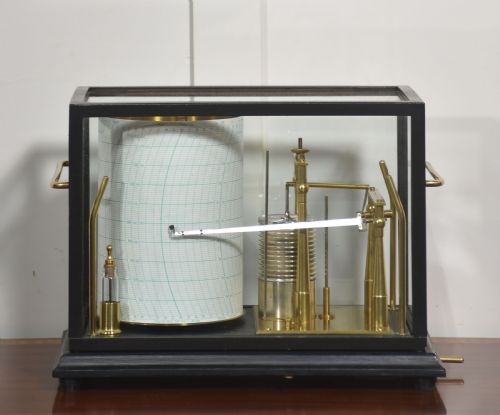
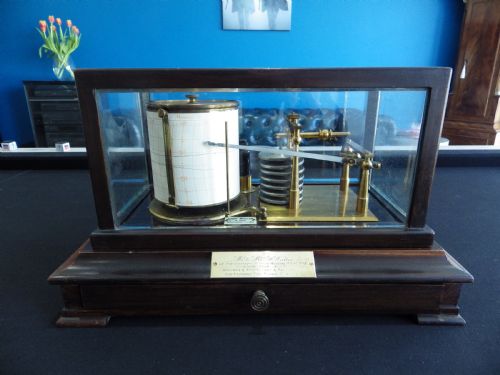
A glazed case barometer records atmospheric pressure inside a protective wooden and glass housing, offering both functional weather tracking and traditional domestic display.
Glazed Case Barometer
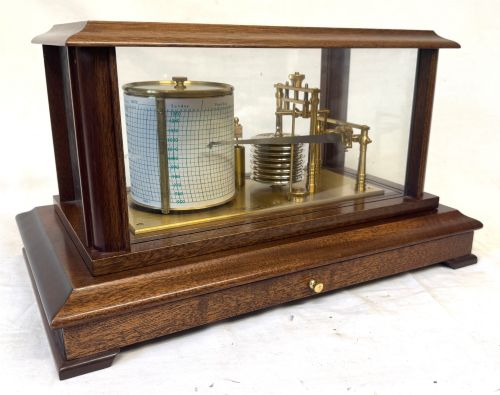
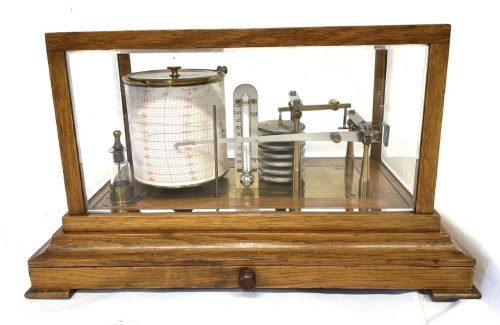
A glazed case barometer brings together scientific observation and cabinet making, housing delicate recording mechanisms beneath bevelled glass panels and timber frames. These instruments span periods from the Victorian era and Edwardian years through to the mid-twentieth century, capturing shifts in weather upon rotating paper charts.
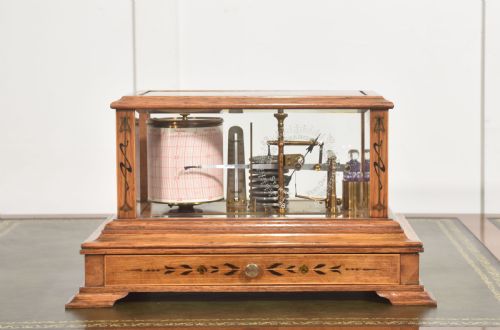
The most frequent examples seen here are oak and mahogany barographs housed in five-glass cases, often featuring lower chart drawers and associated thermometers. Alongside these recording barographs appear stick barometers and shop display aneroid models originating from London, regional English makers, and continental workshops.
Materials and construction
Cabinets utilise solid hardwoods such as mahogany, oak, and walnut, frequently joined with brass fittings, hinges, and carrying handles. Timber frames are sometimes enhanced with Art Nouveau inlay or bevelled glass panes designed to showcase the brass and steel mechanisms within.
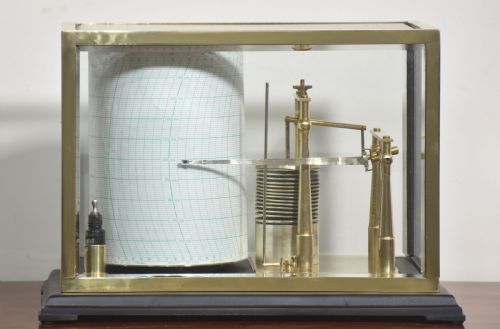
Internal recording units combine metallic aneroid barograph movements with paper charts, ink arms, and occasionally supplementary weather station dials. Movements depend on precision metalwork housed securely beneath protective glass covers to maintain accurate pressure readings.
Signed instruments from London scientific makers appear alongside regional provincial workshop examples and continental pieces.
Assessing quality and craftsmanship
Superior examples distinguish themselves through the quality of timber selection, cabinet joinery, and the refinement of the internal movement by established makers. Details such as bevelled glass panes, fitted chart drawers, and intact original paperwork separate standard production pieces from finer workshop commissions.
The integration of decorative elements, including marquetry inlay or specialised brass fittings, reflects the ambition of the original maker. The presence of signed movements from notable instrument makers adds a distinct layer of craftsmanship to the piece.
Short And Mason·Negretti And Zambra·Casella London·Jules Richard·Alexander Wright
The Glazed Case Barometer Glossary
- Barograph
- A self-recording aneroid barometer that charts atmospheric pressure over a weekly period onto a revolving drum. This mechanical instrument uses stacked metal capsules to translate air pressure changes into ink traces upon paper charts.
- Aneroid barometer
- A device for measuring atmospheric pressure without liquid, using expanding and contracting metal chambers. These mechanisms form the core of the recording instruments housed in wooden cases.
- Bevelled glass
- Glass panes featuring angled or polished edges set into the timber frame of the instrument case. This treatment adds a refined visual dimension to the viewing windows.
- Stick barometer
- A tall, vertical barometer utilising a column of mercury sealed in a glass tube to indicate atmospheric pressure. These pieces often feature exposed scales and protected wooden backs.
- Weather station
- A combined instrument assembly incorporating multiple meteorological devices such as barometers, thermometers, and hygrometers within a single housing.
Glazed Case Barometer: Frequently Asked Questions
How do I operate a barograph?
A barograph operates by placing a specialised paper chart around the revolving drum and filling the pen arm with suitable recording ink. The clockwork mechanism turns the drum once a week while the aneroid bellows move the pen according to atmospheric pressure.
Regular maintenance involves winding the clockwork drum carefully and ensuring the instrument sits level upon a stable surface. Replacement charts and specialised inks allow the continuous recording of weather patterns to persist.
Where should I place my instrument?
These instruments suit placement in studies, libraries, or living rooms where stable indoor temperatures protect the sensitive internal mechanisms. Avoiding direct sunlight and damp environments preserves both the wooden cabinet and the paper charts.
Positioning the piece on a sturdy shelf or sideboard ensures accurate readings free from excessive vibration. Adequate clearance around the glass case also allows easy viewing of the mechanical movement.
How do I date an oak cased barograph?
Dating relies upon examining the timber styles, hardware details, maker signatures, and any accompanying paperwork found within the chart drawer. Edwardian and Victorian pieces often exhibit specific cabinet proportions and brass fittings characteristic of their period.
Makers frequently stamped their business names and addresses onto the metal bedplate or paper scales. Comparing these details with known operational dates of the firm provides a reliable timeframe for the instrument's manufacture.
What is the chart drawer for?
The integrated chart drawer provides dedicated storage beneath the main movement for spare weekly recording papers, spare ink bottles, and winding keys. This practical addition keeps necessary maintenance accessories contained within the cabinet itself.
Drawers are constructed using traditional joinery matching the exterior timber of the main case. Finding original paperwork or unused charts inside adds historical context to the instrument.