

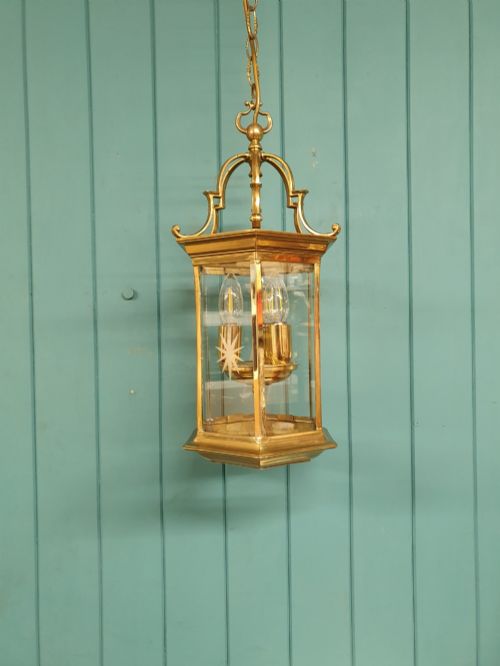
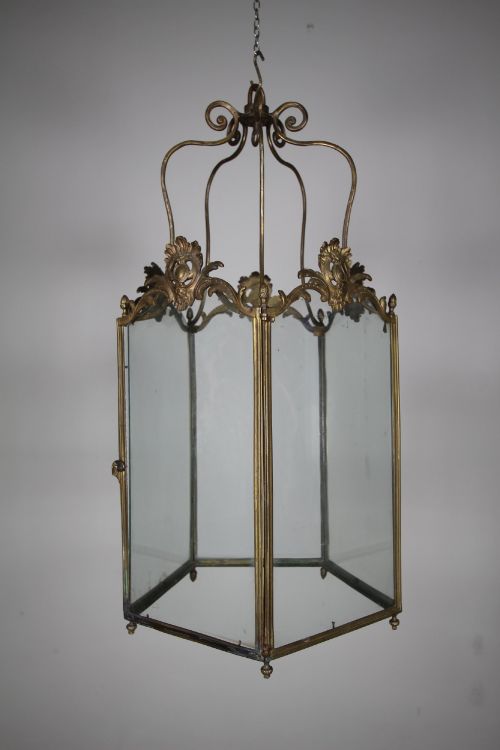
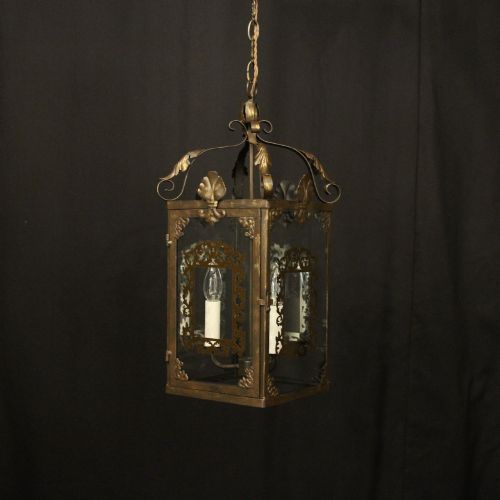
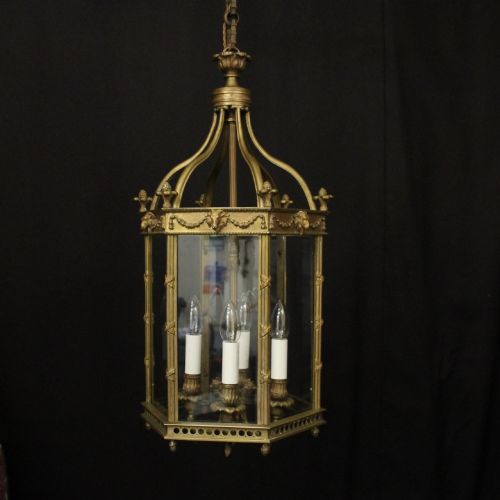
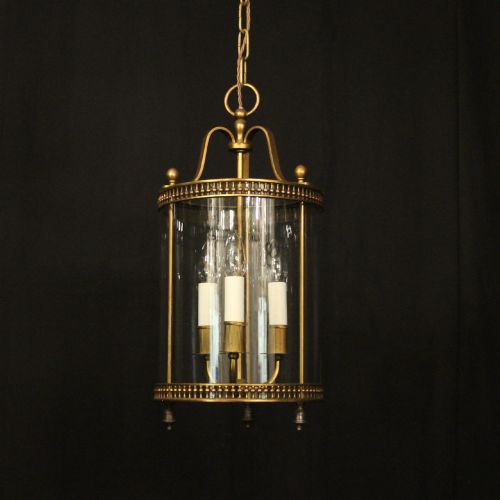
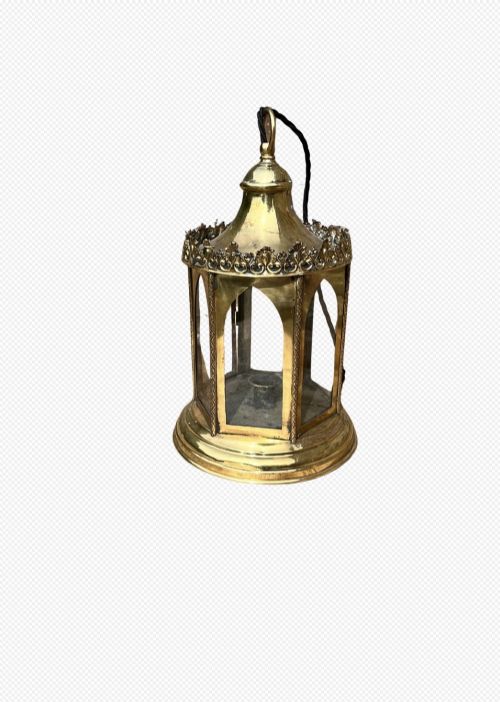

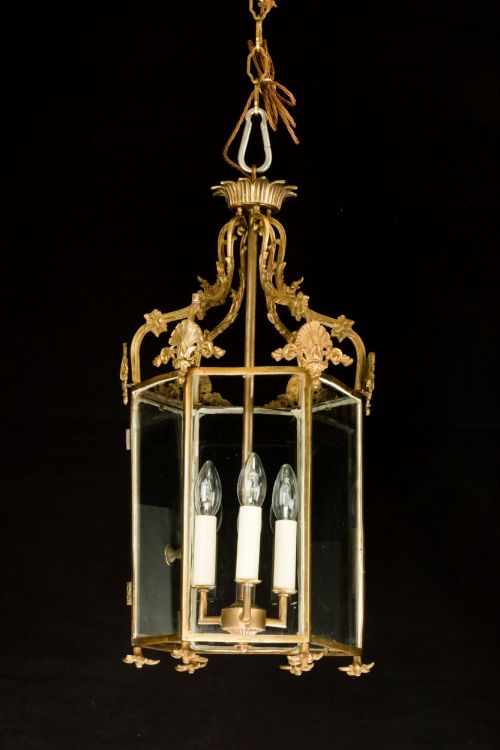
Glazed Brass Ceiling Lantern
A glazed brass ceiling lantern brings structural warmth and directional light to hallways and porches, drawing the eye upwards with its metallic frame.
Glazed Brass Ceiling Lantern
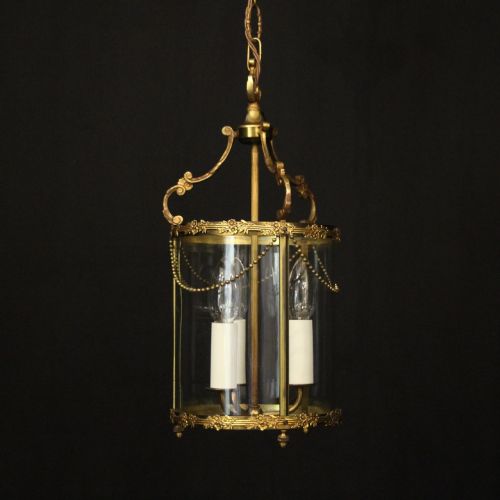
A glazed brass ceiling lantern combines a metal framework with glass panes to enclose a light source, designed to hang from entrance halls, stairwells, and landings. These fixtures emerge in forms ranging from simple hexagonal boxes to elaborate multi-light configurations.
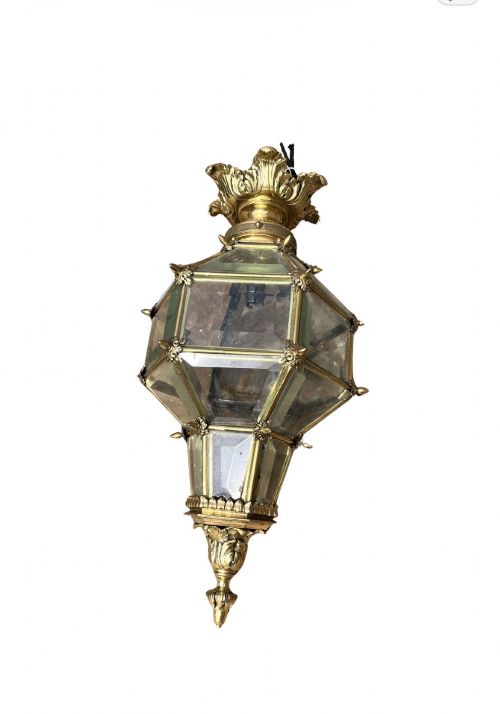
The pieces appearing on this page span the nineteenth century through the Edwardian period and the early decades of the twentieth century. Examples frequently adopt French styles such as Neoclassical, Rococo, and Chateau, alongside English and Continental interpretations.
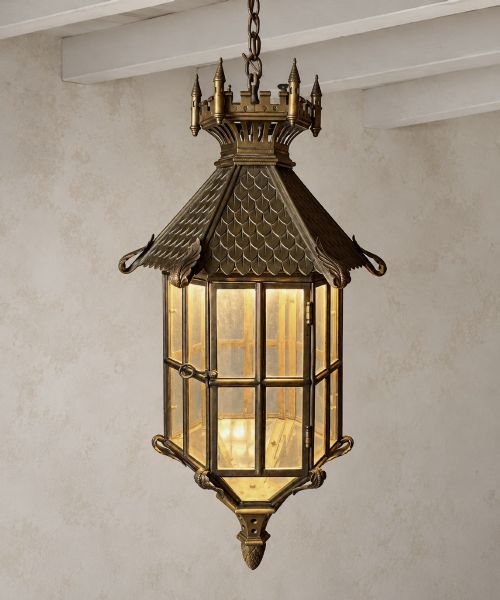
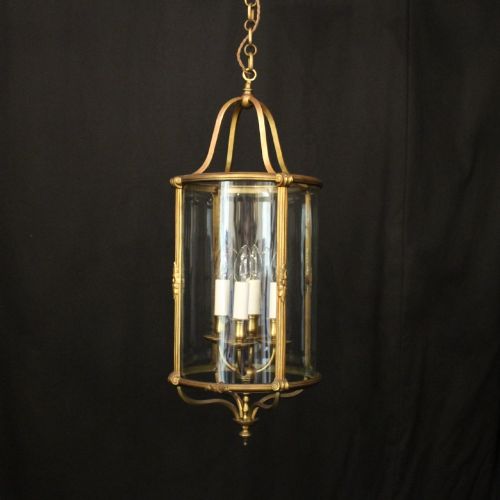
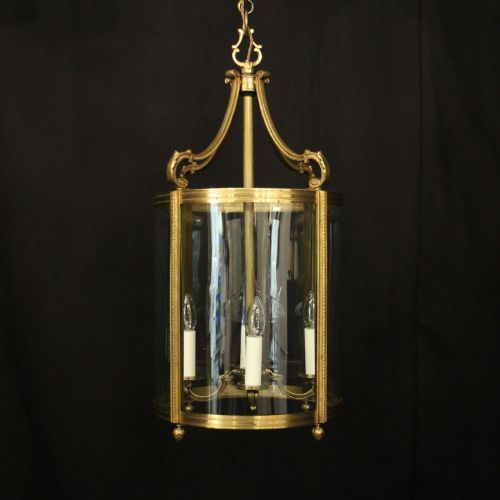
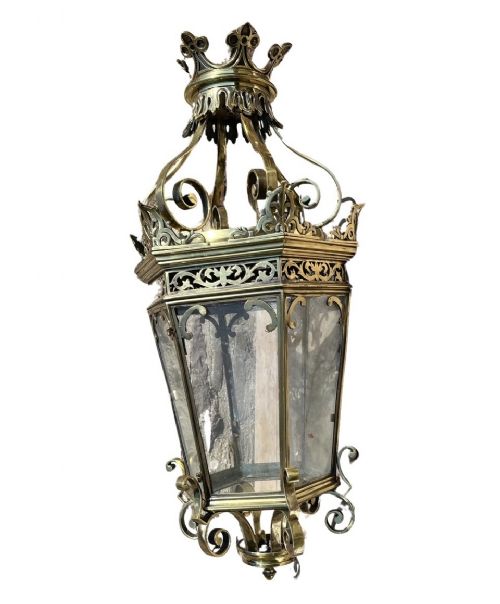
Buyers will encounter single-bulb pendants alongside larger multi-light hall lanterns fitted with doors or castellated crowns. Proportions range from compact hallway fixtures to substantial large-scale examples suited to high ceilings.
Materials and construction methods
Makers constructed the primary frames of these lanterns using brass, gilt brass, gilded bronze, and bronze, sometimes pairing them with steel elements or copper and toleware. This metalwork provides both structural integrity and a decorative surround for the fitted glass panes.
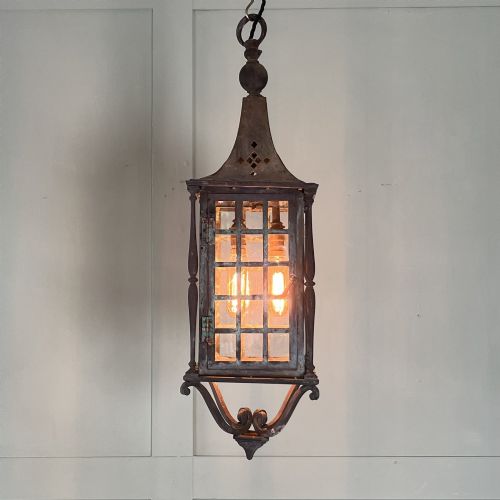
Glass panels take various forms, including bevelled edges and crackle glaze textures, secured within the metal framework to diffuse the internal illumination. Metal casting, gilding, and structural joining techniques determine the weight and rigidity of each hanging lantern.
Glazed Brass Ceiling Lantern Retail Price Guide 2026
Typical asking prices for glazed brass ceiling lantern among the pieces listed under this phrase on Sellingantiques today, from the lower quarter to the upper quarter. They describe what is for sale here now, not the wider market.
Listings feature brass, bronze, and copper materials alongside glass panes across nineteenth-century and Edwardian periods.
Distinctions in execution and design
The standard of a glazed brass ceiling lantern rests in the crispness of its metal casting and the complexity of its decorative mounts. Heavier gauge brass and finely chased bronze details separate substantial architectural pieces from lighter commercial variations.
Glazing quality also marks the distinction, particularly where bevelled glass panes or custom-curved panels fit precisely into the metal rebate. The sophistication of the period style - whether restrained Edwardian geometry or ornate French neoclassical ornament - governs the overall presence of the fixture.
The Glazed Brass Ceiling Lantern Glossary
- Hexagonal
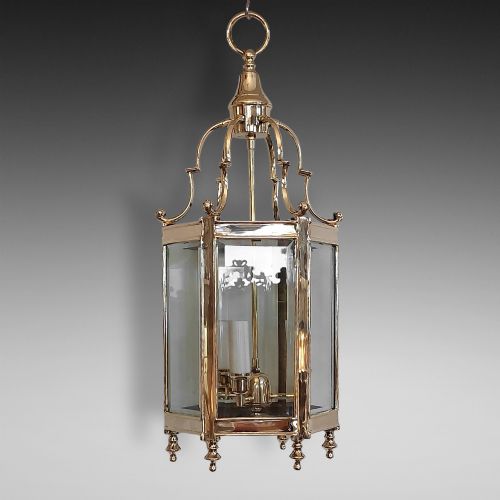
- Having six sides and six angles. This geometry frequently shapes the glass and brass body of hall lanterns.
- Gilt Bronze
- Bronze metal coated with a thin layer of gold or gold-coloured leaf. This finish offers a rich metallic sheen common in French lighting.
- Bevelled Glass
- Glass panes cut with an angled edge around the perimeter. This treatment catches and refracts light as it passes through the lantern walls.
- Castellated Crown
- A decorative top ornament featuring battlements or indented parapets. This architectural detail appears on Gothic Revival hanging fixtures.
- Toleware
- Enamelled or painted sheet metal used in lighting manufacture. It provides colourful contrast within traditional English hall lanterns.
Glazed Brass Ceiling Lantern: Frequently Asked Questions
Where should I hang a brass ceiling lantern?
These lanterns suit entrance halls, corridors, and high-ceilinged porches where they provide both ambient illumination and a decorative architectural focal point.
Ensure adequate clearance beneath the hanging point so doors can open freely and passage remains unobstructed.
How do I determine the period of a lantern?
Dating relies on stylistic clues such as Neoclassical mounts, Gothic castellation, or Edwardian proportions, alongside the construction methods used for the brass frame.
Examine the fixings, glass cutting style, and metal thickness to align the piece with nineteenth or early twentieth-century manufacturing standards.
Can these antique lanterns be electrified?
Many surviving examples have already been adapted for modern electrical wiring while retaining their original frames, suspension loops, and internal bulb holders.
Check individual listings to confirm whether the piece is currently wired for electricity or set up for pendant suspension.
What is the difference between bronze and brass frames?
Brass is an alloy of copper and zinc offering a bright golden tone, whereas bronze uses copper and tin for a deeper, heavier metallic structure.
Both materials often received gilt finishes or aged patination depending on the stylistic requirements of French and English makers.