


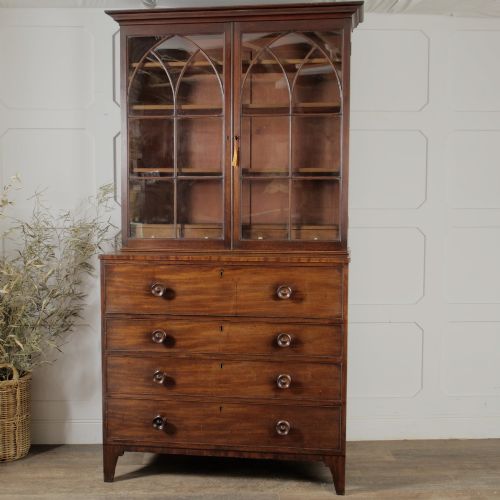
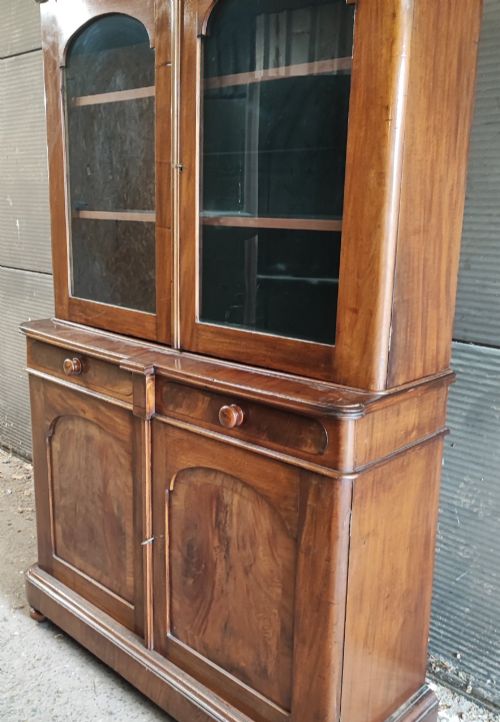
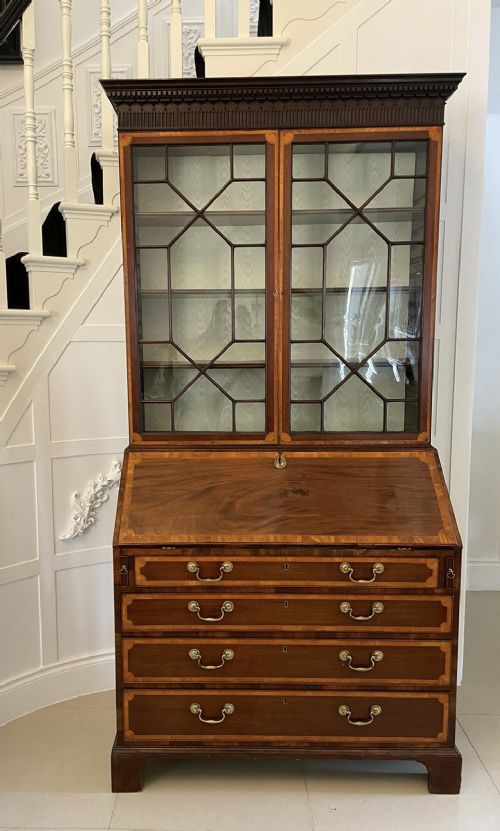
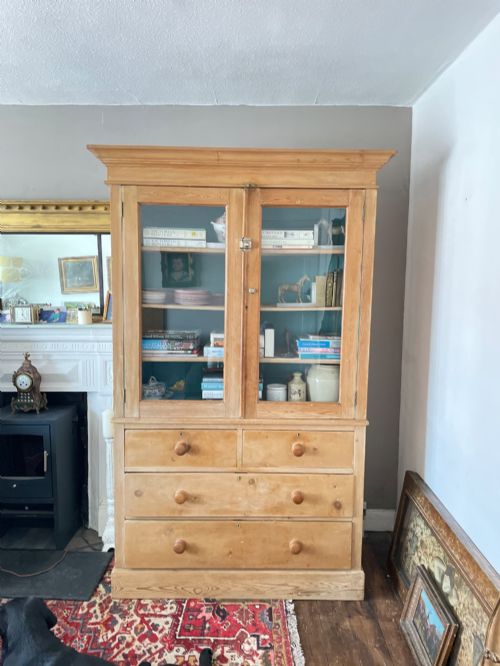
Glazed Bookcase with Drawers
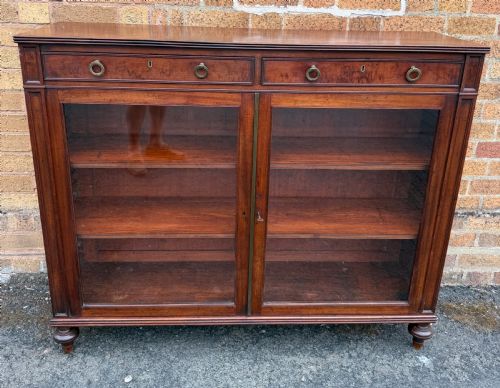
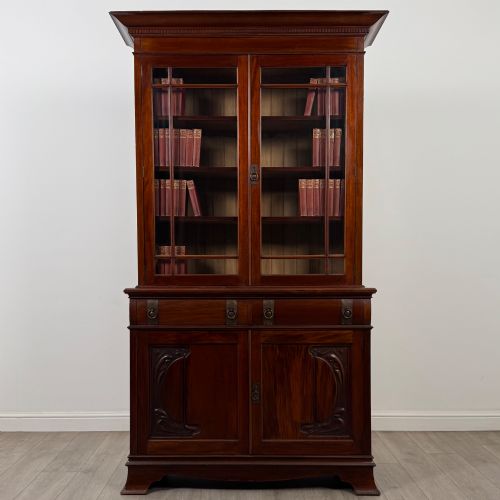
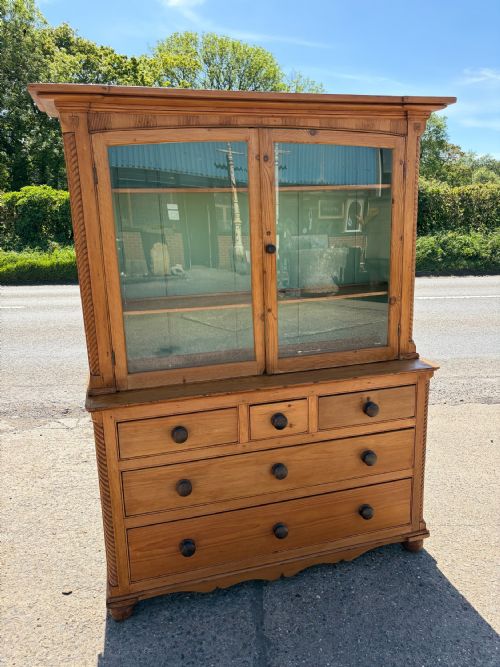
A glazed bookcase with drawers combines upper display space with lower storage, offering a practical solution for books and papers.

Glazed Bookcase with Drawers
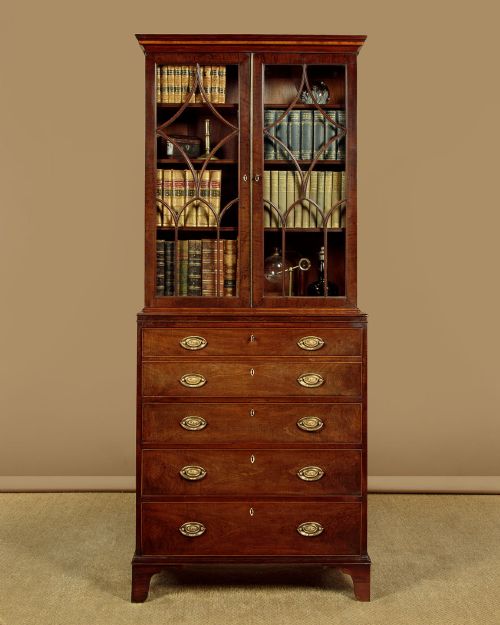
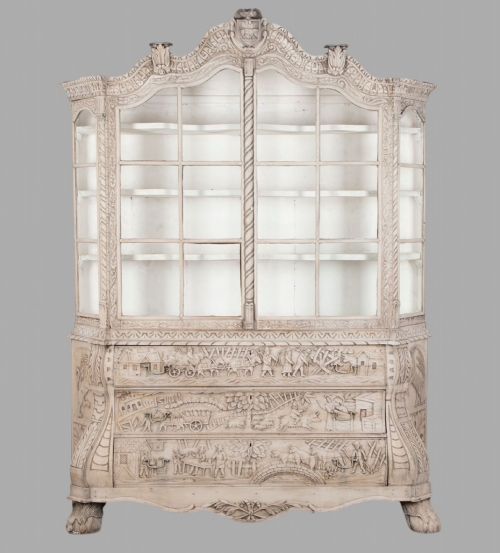
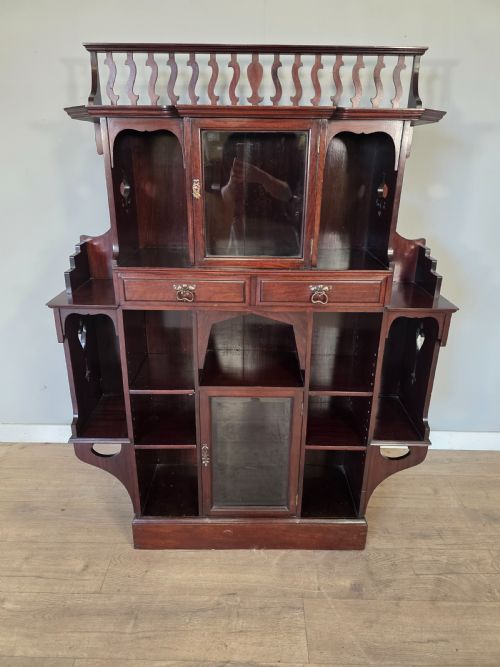
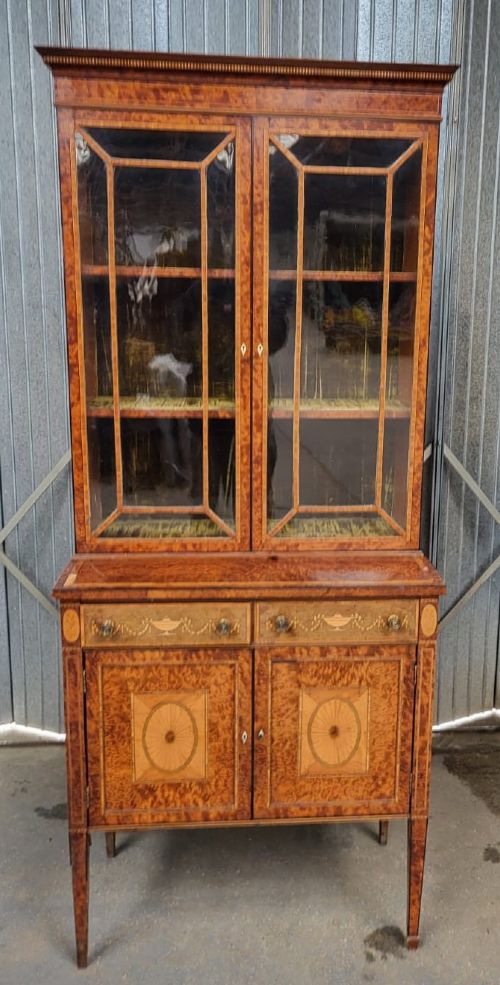
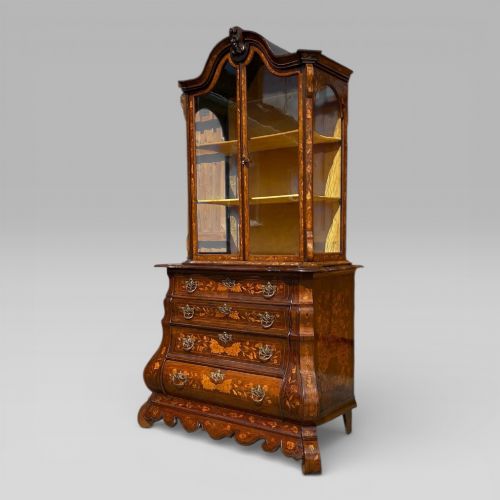
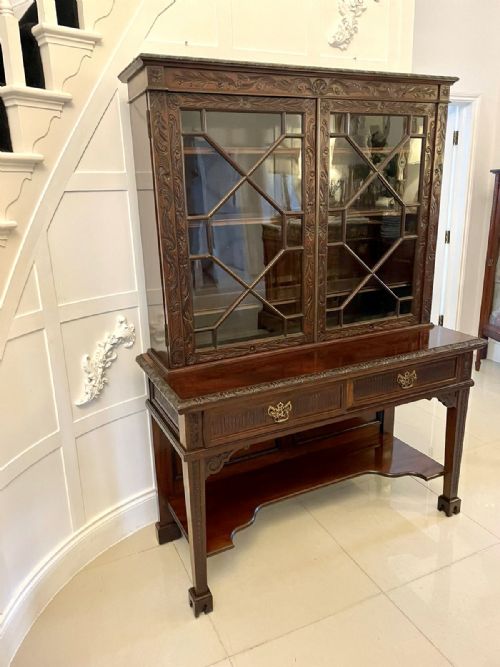
A glazed bookcase with drawers brings together a glazed cabinet top for visible storage and a lower section fitted with drawers, often appearing as a bureau bookcase or bookcase on chest. These pieces span periods from the eighteenth century through the Edwardian era, utilising forms like the secretaire and the breakfront.
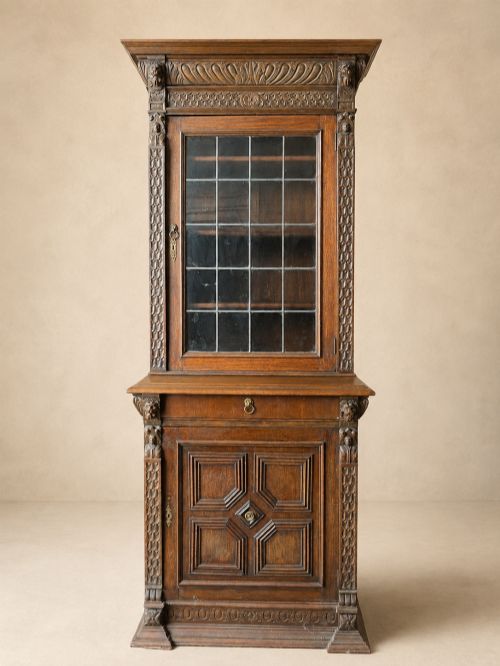
The versions most frequently encountered on this page date from the Victorian and Edwardian periods, constructed in mahogany and oak. Many examples incorporate fitted desks or drop fronts alongside standard drawer arrangements.
How they were made
Cabinet makers utilised solid timbers and veneers such as mahogany, oak, walnut, and pine, frequently pairing glass doors with brass hardware and lead detailing. Interiors often feature adjustable shelving and fitted desk compartments within the drawer sections.
Construction methods rely on traditional joinery, with dovetailing visible in the drawer construction and careful framing for the glazed upper doors.
Some nineteenth-century examples hide miniature drawers behind secret sliding panels.
What varies in quality
The distinction between standard and finer examples rests on the selection of timber, such as flame mahogany or burr walnut, and the precision of inlay work or marquetry. Superior pieces exhibit original glass, balanced proportions, and integrated hardware like brass bail handles.
Internal execution also separates pieces, with fitted desk interiors, secret compartments, and original shelving indicating a higher grade of manufacture from workshops.
James Winter and Sons
The Glazed Bookcase with Drawers Glossary
- Secretaire
- A piece of furniture incorporating a pull-down writing drawer with a fitted interior of small drawers and pigeon holes. This element sits between the upper glazed bookcase and the lower storage.
- Breakfront
- A cabinet design where the central section projects forward from the flanking wings. This architectural arrangement creates depth across the front elevation.
- Glazing
- The fitting of glass panes into doors using wooden bars or lead cames to secure the panels. It protects books from dust while maintaining visibility.
- Inlay
- A decorative technique where contrasting woods or brass are inserted into recesses cut into the primary timber surface. This creates flat geometric or floral patterns.
- Bracket foot
- A simple foot shape formed by two pieces of wood mitred together at the corner, lifting the base of the cabinet off the floor.
Glazed Bookcase with Drawers: Frequently Asked Questions
How do I date an oak bookcase?
Dating relies on observing construction techniques, timber choice, and the overall style associated with periods like the Georgian or Edwardian eras.
Hardware details and drawer dovetailing also provide clear indicators of the period of manufacture.
Are the shelves adjustable?
Many examples include adjustable shelving within the upper glazed section to accommodate books of varying heights.
This feature is often found in nineteenth-century and Edwardian pieces.
What timber was used most?
Mahogany and oak appear most frequently across the listed pieces, supplemented by walnut, pine, and satinwood.
Cabinet makers selected these hardwoods for their durability and grain patterns.