

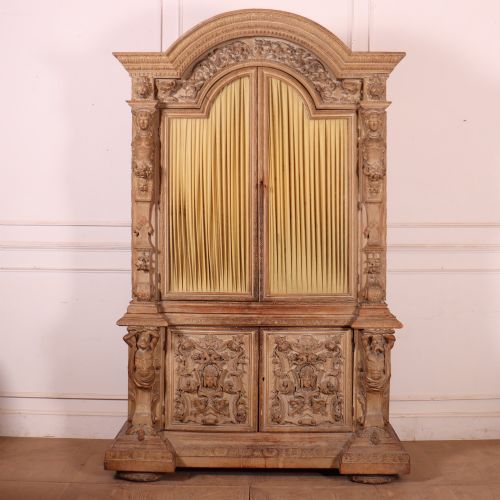


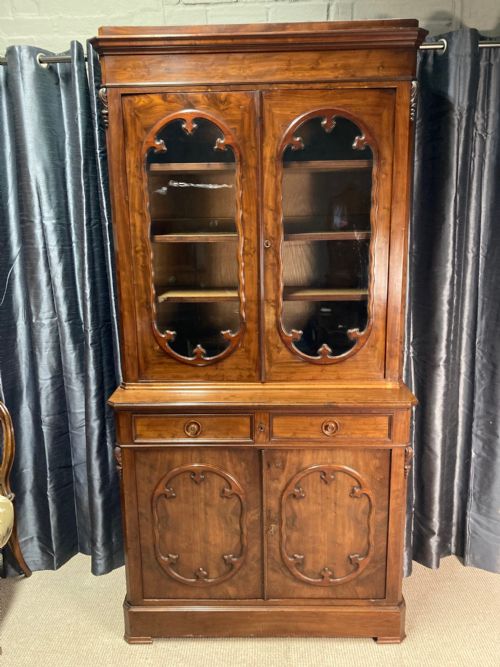


Carved Timber Bookcase
A carved timber bookcase brings architectural presence and rich grain into a room, offering sturdy shelves for a working library.
Carved Timber Bookcase
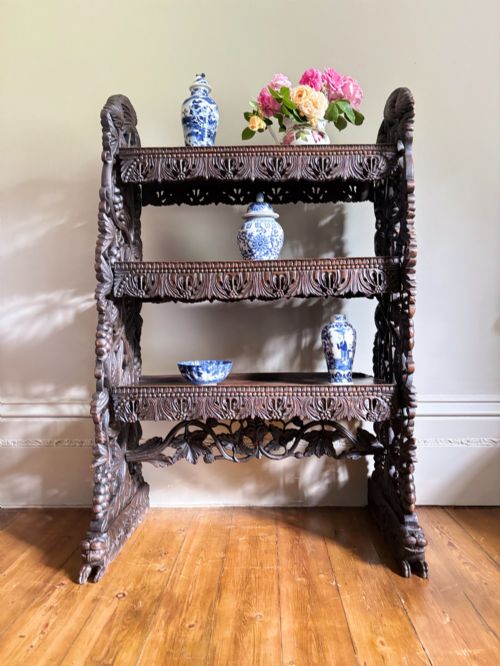
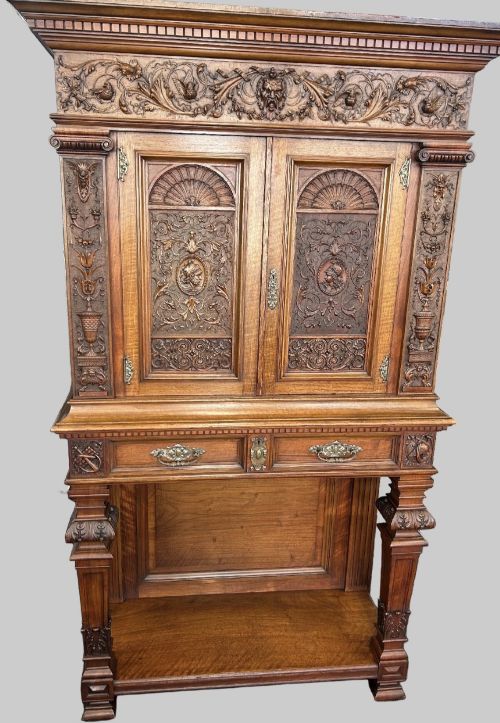
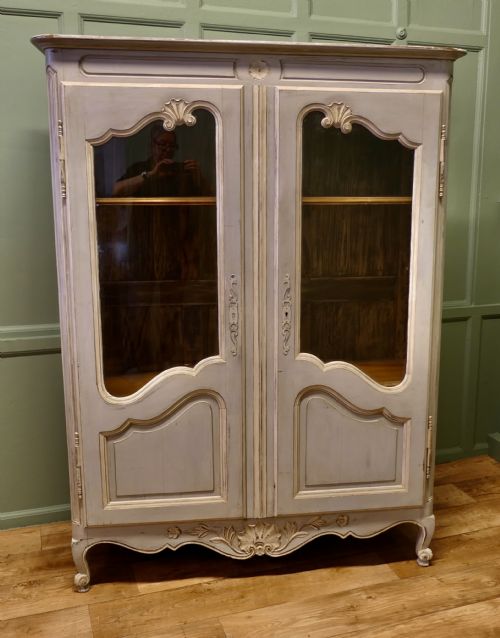
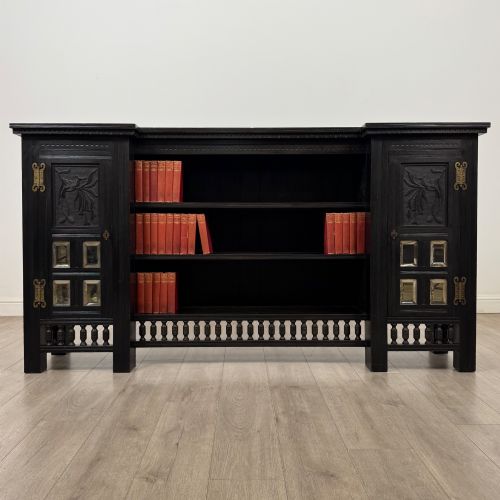
A carved timber bookcase serves as a functional storage piece for libraries and studies, emerging across various periods from the eighteenth century to the early twentieth century. You encounter open shelf formats alongside glazed display cabinets, wall shelves, and side cabinets with cupboard doors.
The pieces on this page span several distinct stylistic revivals, including Victorian, Regency, Italian Renaissance Revival, and Anglo-Indian designs. Formats range from large library bookcases down to small wall-hanging shelves, corner whatnots, and dwarf side-cabinets.
Materials and construction methods
Cabinet makers utilised dense hardwoods such as mahogany, oak, walnut, teak, padauk, and gonçalo alves, often pairing primary structures with contrasting timbers like amboyna. Grain selection governed the exterior appearance, with burr walnut and golden oak providing natural pattern.
Surface enrichment relied upon hand-carved detailing, inlay work, and painted finishes. Glazed doors incorporate glass panels held by timber framing, while open shelving units utilise sturdy bracket supports and breakfront mouldings.
Carved Timber Bookcase Retail Price Guide 2026
Typical asking prices for carved timber bookcase among the pieces listed under this phrase on Sellingantiques today, from the lower quarter to the upper quarter. They describe what is for sale here now, not the wider market.
Even a modest corner whatnot demands respect when its burr walnut grain decides to swirl in three directions at once.
Judging execution and proportion
Quality rests upon the crispness of the hand-carving and the deliberate choice of timber figures, where richly grained mahogany, padauk, or gonçalo alves elevates a simple cabinet. Heavier architectural pieces demonstrate superior joinery in their breakfront cornices and door construction.
Proportion and scale distinguish standard utility pieces from exceptional commissions, such as large library bookcases or cabinet work bearing maker attribution. The integration of decorative elements like brass hardware and detailed mouldings reflects the ambition of the original workshop.
Gillows
The Carved Timber Bookcase Glossary
- Breakfront
- A piece of furniture whose central section projects forward from the outer wings. This architectural arrangement creates depth and shadow across large library bookcases.
- Whatnot
- A set of open tiered shelves used for displaying ornaments and small books. These pieces typically feature slender upright supports and corner configurations.
- Vitrines
- A glass-fronted display cabinet designed for showing porcelain and precious volumes. The transparent panels protect contents while maintaining visibility from all angles.
- Gonçalo Alves
- A dense exotic hardwood prized for its striking contrasting grain patterns. Makers utilised this timber to create dramatic visual movement on Regency cabinets.
- Shodana
- An Asian display cabinet featuring asymmetrical shelving compartments. These pieces showcase intricate carving and compartments for curio storage.
Carved Timber Bookcase: Frequently Asked Questions
How do I date a carved timber bookcase?
Dating relies on identifying timber choices, construction techniques, and stylistic markers associated with periods like the Regency or Victorian eras. Examining the backboards, drawer linings, and hardware provides further clues to the decade of manufacture.
Cabinet construction shifted over the centuries from hand-sawn timbers to machine-finished components by the early twentieth century. Comparing the specific carved motifs against known revival styles helps narrow the origin.
What is the difference between an open bookcase and a vitrine?
An open bookcase provides direct, unhindered access to shelves for everyday volumes and working libraries. These pieces prioritise simple timber frames and straightforward vertical storage.
By contrast, a vitrine incorporates glass doors to enclose and protect delicate bindings or display items. This enclosed format keeps dust away from valuable or decorative contents.
Where should I place a heavy hardwood bookcase?
Heavy hardwood bookcases require stable, level flooring to support the considerable weight of dense timber and stacked volumes. Placing them against interior walls away from direct sunlight protects the wood from drying out and fading.
Allowing sufficient clearance around the piece prevents moisture accumulation behind the backboards. Large library formats look best anchored in studies, morning rooms, or libraries with adequate ceiling height.
Are wall shelves sturdy enough for heavy books?
Wall shelves designed for books utilise strong timber brackets and secure fixings to distribute weight across wall studs. Smaller configurations work well for lighter volumes and decorative displays rather than heavy folios.
Verifying the fixing method into the wall ensures the safety of the shelf and its contents. Proper installation prevents sagging under the load of bound volumes.