


Glass Vanity Tray
These glass vanity tray pieces combine reflective surfaces with metal and wood, offering a practical dressing table centrepiece.
Glass Vanity Tray
A glass vanity tray serves as a decorative surface for dressing tables, designed to hold perfumes and accessories while reflecting light. The pieces on this page span several decades, from Victorian examples to later twentieth-century designs.
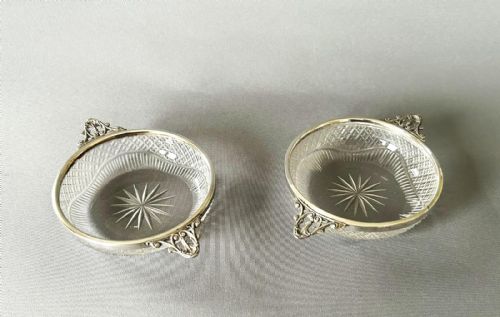
The most common versions encountered here date from the Art Deco era, often featuring geometric mirrors combined with contrasting handles and frames. Alongside dedicated trays, the selection includes related items such as mirrored plateaus, trinket dishes, and dressing table sets.
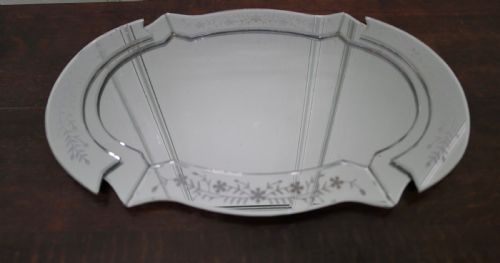
Origins range across British, French, and Italian workshops, showing styles from ornate Victorian engraving to clean Modernist lines. Buyers find both rectangular cocktail trays and smaller octagonal display stands among the current listings.
Materials and construction
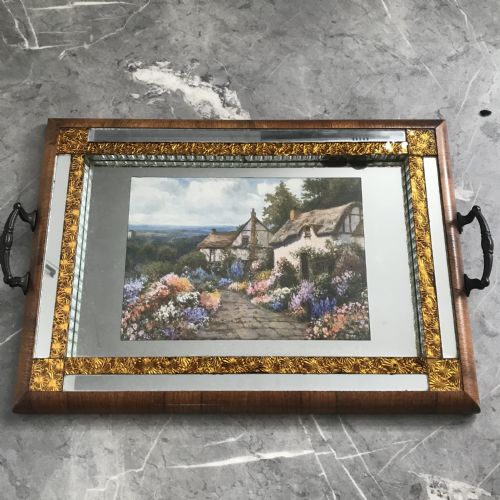
Makers utilised clear, cut, and mirrored glass as the primary reflective surface, frequently mounted upon sturdy timber bases or metal frames. Walnut veneer and Macassar provide rich wooden borders, while copper, chrome, and silver plate form structural mounts and handles.
Surface decoration relies on wheel-cutting, etching, and hand-bevelling to create texture and pattern across the glass panes. Metal components are shaped through casting and plating, securing the mirrored base within a protective edge.
Materials recorded across the selection include cut glass, mirrored glass, walnut veneer, chrome, copper, and silver plate.
Quality variations
The refinement of the glass cutting and the clarity of the mirrored surface distinguish finer examples from standard production. Deep bevels, crisp wheel-engraving, and substantial metal mounts indicate superior craftsmanship.
The choice of secondary materials also alters the character of a piece, with figured veneers like walnut and Macassar elevating simple mirrored trays into luxurious dressing table accessories.
René Lalique·W M F
The Glass Vanity Tray Glossary
- Bevel
- An angled edge ground along the perimeter of a mirror plate. This technique catches light and adds depth to the glass.
- Plateau
- A mirrored display stand traditionally placed in the centre of a dining table or upon a dressing chest. It elevates objects while reflecting their form.
- Silver Plate
- A thin layer of silver fused to a base metal such as brass or copper. It provides the lustre of solid silver without the associated weight.
- Venetian
- A style associated with glass production from the lagoon of Venice. It often incorporates delicate etching and tinted mirror glass.
- Veneer
- A thin slice of decorative wood applied to a stable underlying structure. Walnut and Macassar are typical examples found on these trays.
Glass Vanity Tray: Frequently Asked Questions
What is a glass vanity tray used for?
These trays provide an organised, reflective surface for holding perfume bottles, trinkets, and cosmetics on a dressing table. They keep small items tidy while brightening the surface beneath them.
Historically, they also served as small drinks trays or display stands for decorative objects in the bedroom or parlour.
How do I date an Art Deco mirror tray?
Art Deco trays typically date from the 1920s and 1930s, identifiable through geometric shapes, stepped corners, and modernist motifs. They frequently pair mirrored glass with chrome handles or contrasting wood veneers.
Earlier Victorian examples rely on heavier cut glass and ornate silver mounting, whereas the interwar pieces favour streamlined elegance.
What is a mirrored plateau?
A plateau is a heavy mirrored base, often fitted with a decorative metal gallery or feet, designed to sit on a surface and elevate displayed items. Jewellers and homeowners used them to reflect light upwards through glassware and ornaments.
They share materials with standard vanity trays but are generally constructed to support heavier centerpieces.
Are these trays suitable for serving drinks?
Many mirrored trays from the 1930s were specifically produced as cocktail or wine trays, reinforced to carry glassware. Metal handles and sturdy wooden bases help secure the tray during use.
Buyers should check the firmness of the frame and the condition of the backing before utilising them for hospitality.
How should I clean a vintage mirror tray?
Cleaning requires gentle care to protect the silvering on the reverse of the glass and any plated metal mounts. Soft cloths and mild glass cleaner applied sparingly prevent moisture from seeping behind the plate.
Harsh abrasives should be kept away from both the mirrored surface and the surrounding frame.