




Art Deco Tray Handles
Art deco tray handles are functional and decorative fixtures that complete serving pieces, offering buyers geometric elegance and practical grip.
Art Deco Tray Handles
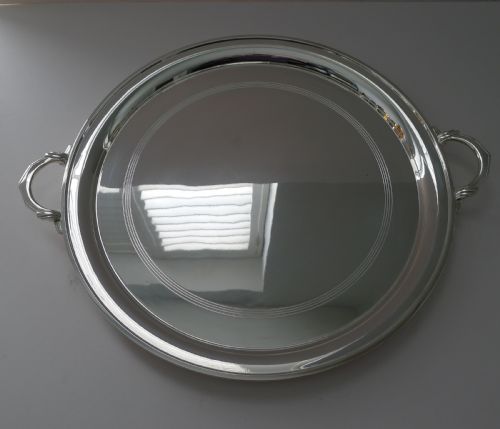
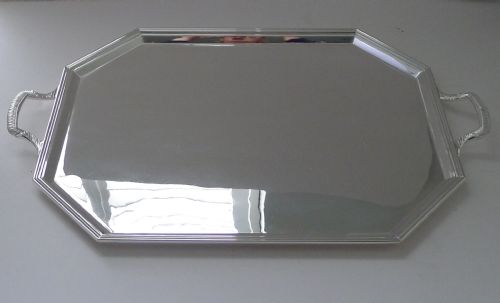
When you search for art deco tray handles, you encounter hardware and fitted mounts from the 1920s, 1930s, and 1950s that define serving items such as cocktails trays, drinks trays, and saucières. The pieces listed on this page span silver plate, sterling silver, wood, glass, chrome, metal, nickel silver, and pewter, reflecting the diverse material culture of the period. You are most likely to meet silver-plated and sterling silver drinks trays complete with their original handles, alongside mirrored glass and wood serving forms.
The objects bearing these handles range from English cocktail trays by makers like Keith Murray for Mappin & Webb to French Art Deco creations and novelty barware. Styles stretch from classic Art Deco to occasional touches of Art Nouveau and French Art Deco, showing how makers integrated grip into the overall geometry of the design. Whether attached to a Macassar wood base or a Venetian mirror glass surface, the handle remains a focal point of the serving piece.
How they were made
Metals such as sterling silver, silver plate, chrome, nickel silver, pewter, and copper form the primary structural components for these handles and their corresponding trays. Silversmiths and metalworkers utilised casting, plating, and soldering techniques to secure grips firmly to serving vessels while maintaining clean lines. Wood elements, notably Macassar, and glass components like mirror glass or etched panels were combined with these metal mounts using specialised fixings.
Makers integrated decorative treatments such as guilloche enamel, etching, and polished metal finishes to elevate the visual appeal of the handles and frames. The construction balances structural durability for lifting heavy drinks sets with the streamlined aesthetic characteristic of the era. Each piece demonstrates the workshop practices of the 1920s and 1930s, from heavy silver plating over base metal to precision-cut glass.
Listings feature silver plate, sterling silver, wood, glass, chrome, metal, nickel silver, and pewter across the 1920, 1930, and 1950 periods.
What varies in quality
The distinction between standard production and superior craftsmanship rests in the weight of the metal, the integrity of the plating, and the precision of the handle attachment. Top-tier examples exhibit solid sterling silver or heavy silver plate with robust structural joins that show no flex when lifted under load. Lesser pieces may display thin plating wear, loose mounts, or minor compromises where handles meet the tray body.
Design execution and material selection further differentiate the range, with notable makers employing superior finishing techniques on glass, mirror panels, and exotic woods like Macassar. The integration of the handle into the overall silhouette - whether geometric, modernist, or figural - reveals the hand of skilled designers and established silversmiths. Quality reveals itself in the balance of the object and the uncompromised preservation of its original surface textures.
Keith Murray For Mappin & Webb·Christofle Gallia·Armada Pewter·J B Chatterley & Sons·Asprey London·Atkin Brothers
The Art Deco Tray Handles Glossary
- Silver Plate
- A layer of silver fused to a base metal such as copper or nickel silver. This technique allowed manufacturers to produce affordable tableware with the appearance of solid silver.
- Guilloche Enamel
- Decorative metalwork covered in translucent enamel over an engine-turned patterned background. It appears frequently on small compacts, boxes, and luxury vanity or tray items from the period.
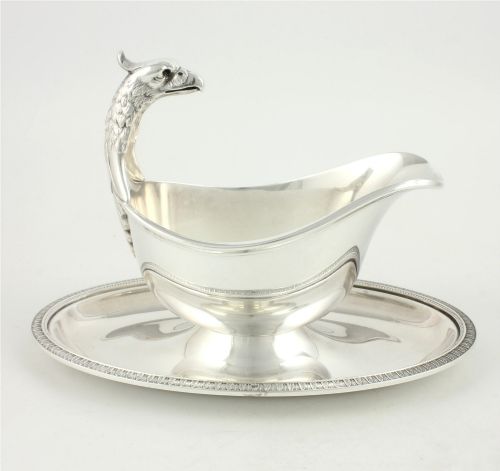
- Sauce Boat
- A small boat-shaped vessel designed for serving gravies or sauces, often fitted with an integral handle and matching underplate. French examples of this form are termed saucières.
- Macassar
- A dark, striking wood native to Southeast Asia with distinctive brown and black grain patterns. It was favoured by French designers for luxury modernist trays and furniture.
- Salver
- A flat serving tray, typically made of silver or silver plate, used for presenting drinks or calling cards. It forms a core category alongside standard cocktail and serving trays.
Art Deco Tray Handles: Frequently Asked Questions
What materials make up these trays?
These serving pieces incorporate a wide variety of materials including sterling silver, silver plate, chrome, nickel silver, pewter, copper, wood, and glass.
Many designs combine reflective surfaces such as Venetian mirror glass with metal handles, while others utilise exotic woods like Macassar alongside polished metal mounts.
How do I identify the period?
Dating relies on stylistic markers characteristic of the 1920s and 1930s, including geometric motifs, modernist lines, and specific maker signatures or hallmarks.
Objects from this era often bear stamps denoting silver standards, maker marks, or registration numbers that help pinpoint their exact decade of manufacture.
Were these trays used for cocktails?
Many examples function specifically as cocktail trays, designed to hold shakers, glasses, and barware during the interwar social revival.
Their robust handles and wipe-clean glass or metal surfaces made them practical for serving drinks in domestic and commercial settings.
How should I clean my tray?
Maintenance depends entirely on the specific material, requiring gentle polishing for silver and plated surfaces while avoiding harsh abrasives on mirror glass and enamel.
Careful handling of the original handle joints ensures the structural integrity of the piece remains undisturbed over time.