
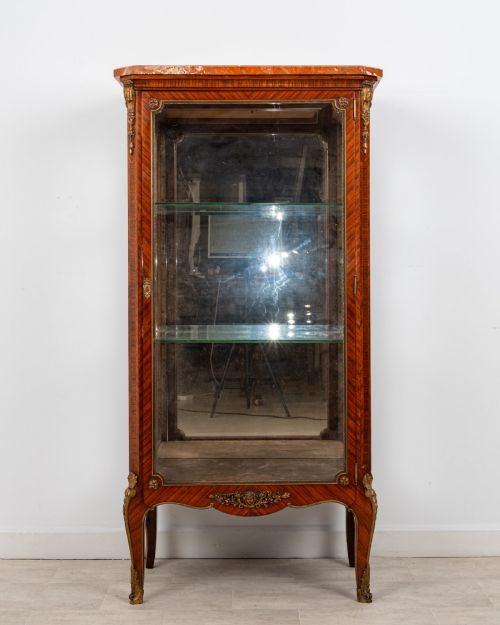
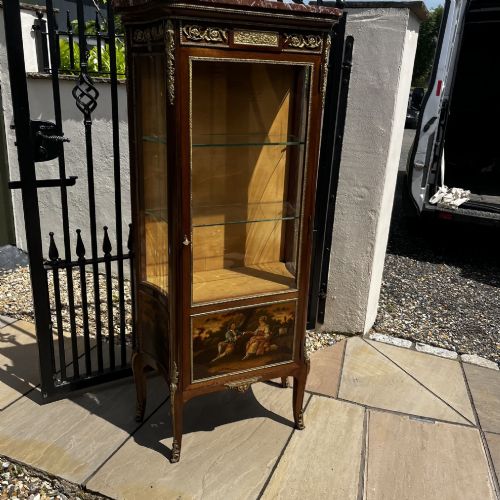
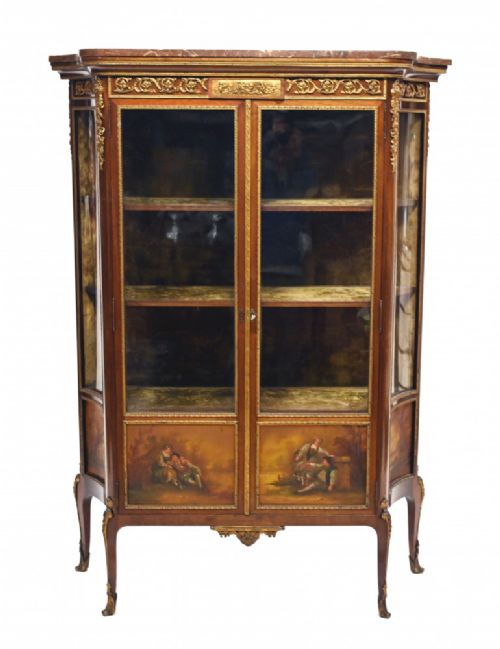
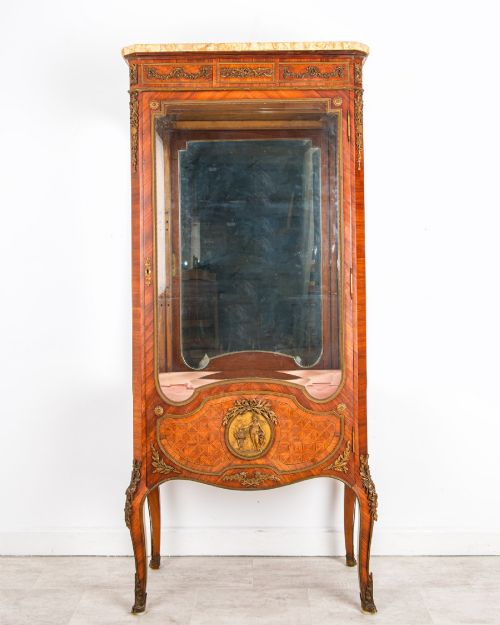


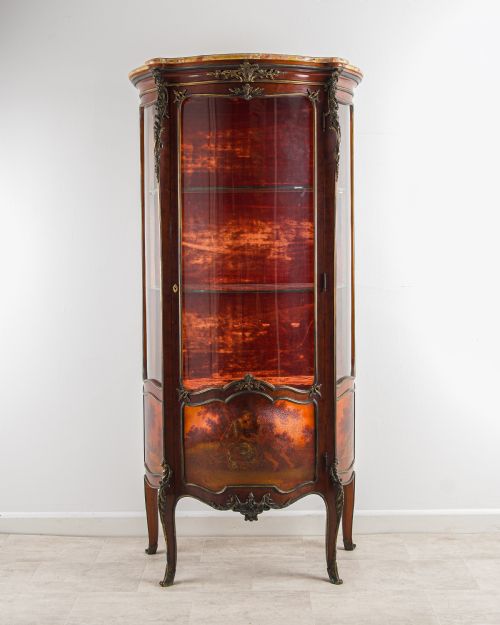
Glass Top Display Case
Glass top display case selections unite Victorian shop counters and Edwardian bijouterie tables to protect precious contents.
Glass Top Display Case
A glass top display case combines transparent viewing panels with timber framing to exhibit small items and collections. Buyers encounter diverse forms ranging from counter-top shop units to freestanding vitrines and low bijouterie tables.
The material record spans the nineteenth century through the nineteen-thirties, taking in Edwardian inlaid mahogany, French kingwood revival pieces, and utilitarian commercial counters. Domestic and retail origins define the surviving examples.
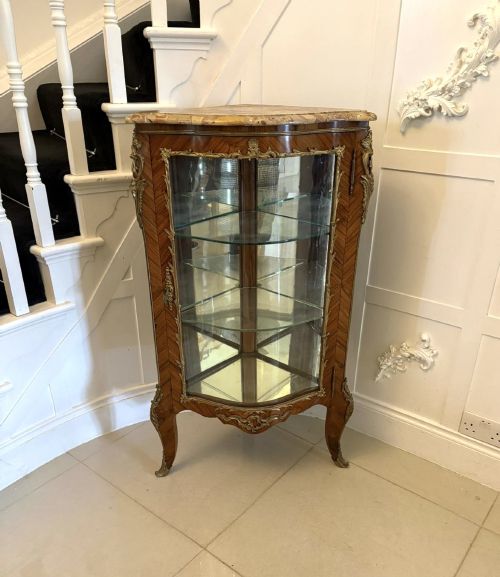
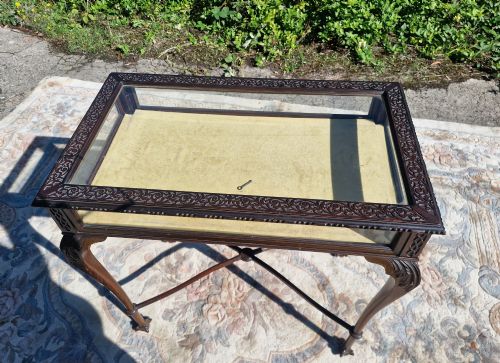
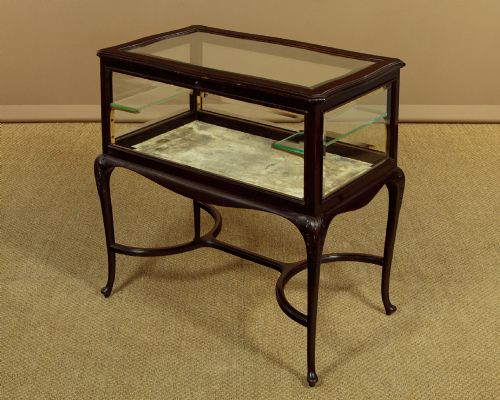
Domestic pieces typically manifest as glazed tables for jewellery or serpentine cabinets with marble surfaces, whereas commercial variants serve as mahogany and oak shop counters designed for public display.
Materials and construction methods
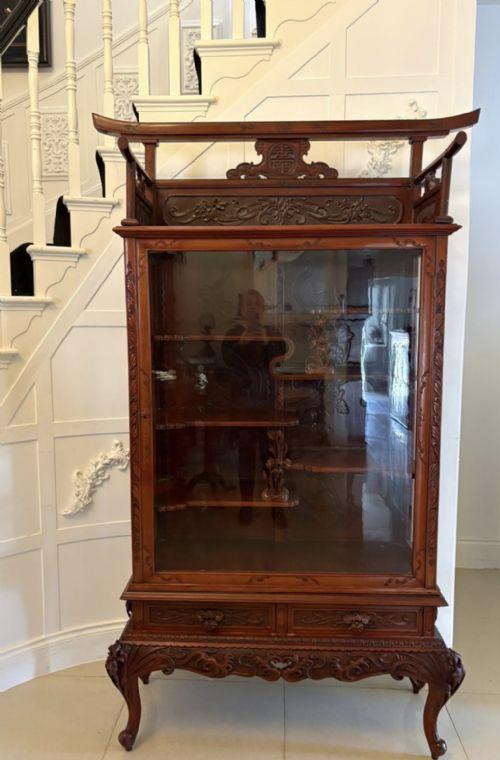
Makers utilised dense timbers such as mahogany, kingwood, rosewood, walnut, and oak to build the structural framework of each glass top display case. These hardwoods provide the necessary rigidity to support heavy plate glass and marble tops.
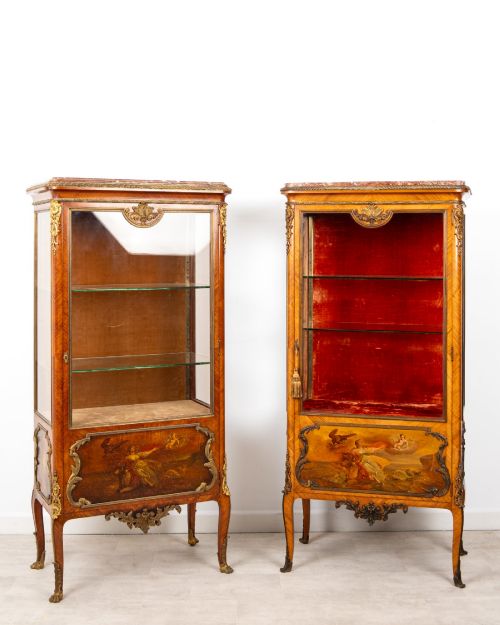
Decorative embellishments rely on cast ormolu mounts, brass framing, and intricate wood inlay. Painted Vernis Martin panels and hand-painted shop signage further distinguish individual cabinets.
Joinery techniques balance display visibility with structural security, utilising tight-fitting glazed panels held by wooden rebates or metal framing bars.
Several survival cases preserve the literal evidence of their retail past, complete with hand sign-written pharmacy and gunsmith details.
Determining quality in construction and design
Quality rests upon the selection of cabinet timbers and the refinement of subsidiary materials like ormolu mounts and marble slabs. Superior examples employ figured kingwood or solid mahogany alongside finely cast, gilded bronze mounts.
The integration of glazing and the precision of the timber joinery reveal the maker's hand, particularly in complex serpentine or bow-fronted configurations. Higher grade pieces demonstrate seamless alignment between the transparent top and the supporting cabinet carcass.
Attribution to documented workshops elevates certain items above standard production pieces, separating commercial utility from cabinet-maker artistry.
François Linke·G. Durand
The Glass Top Display Case Glossary
- Bijouterie table
- A glazed display table designed specifically for small ornaments, medals, and jewellery. These pieces frequently feature velvet-lined interiors beneath the glass top.
- Ormolu
- Gilt-bronze mounts applied to the exterior angles and feet of cabinets. This decorative technique is common on French revival furniture.
- Vernis Martin
- A simulated Japanese lacquer technique developed in France, often featuring painted pastoral scenes on cabinet doors. It appears frequently on nineteenth-century vitrines.
- Vitrine
- An enclosed glass display cabinet designed to show off porcelain, silver, and curiosities. They often stand on slender cabriole legs.
- Serpentine
- A curved furniture front characterised by a concave centre flanked by convex ends. This shape requires advanced woodworking skill.
Glass Top Display Case: Frequently Asked Questions
What items belong in a glass top display case?
These cases suit delicate items such as medals, pocket watches, jewellery, and small porcelain collections. The transparent top keeps objects safe from dust while allowing full visibility.
Table models work well in drawing rooms for viewing items from above, while cabinet forms protect taller curiosities behind vertical glazing.
How do I clean the wood and glass?
Maintenance requires mild cleaning products that will not harm polished hardwood surfaces or delicate ormolu mounts. Use a soft, dry cloth for the timber and standard glass cleaner applied to a cloth rather than sprayed directly.
Avoid placing cases in direct sunlight to protect interior velvet linings and antique wood finishes from fading.
Were these cases made for shops or homes?
The inventory includes both domestic furniture and commercial shop fittings. Retail pieces often feature maker or owner lettering, such as chemist or gunsmith signage.
Domestic variants rely on decorative veneers, inlay, and polished marble tops intended to complement period parlour interiors.
How do I distinguish Edwardian from Victorian pieces?
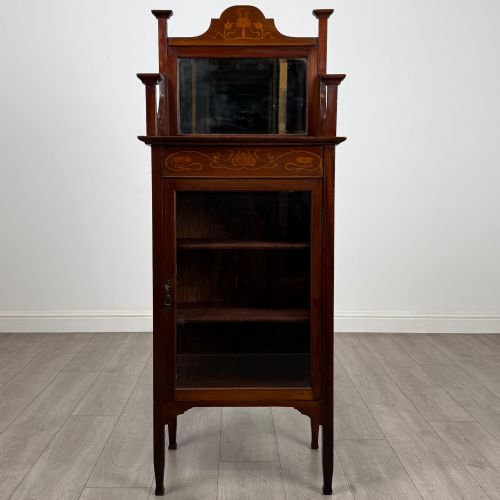
Victorian examples generally feature heavier proportions in oak or mahogany, often built as robust counter-top units for retail trades. Edwardian designs frequently lean towards lighter inlaid mahogany bijouterie tables and slender display stands.
Revival styles bridge both eras, copying eighteenth-century French forms with ormolu and kingwood.