



Collector Display Table Case
A collector display table case is a glazed vitrine designed to elevate and protect small treasures.
Collector Display Table Case
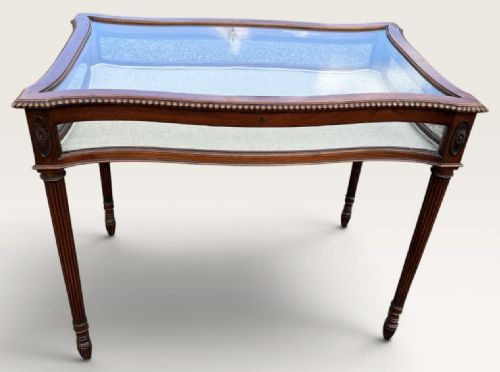
A collector display table case brings together surface functionality and transparent storage, turning objects into a tabletop landscape. These pieces appear across Georgian, Victorian, Edwardian, and early twentieth-century periods, spanning forms from bijouterie tables to glazed table-top cabinets.
Most examples met on this page date from the Edwardian era or the nineteenth century, utilising mahogany, rosewood, and walnut frames. The primary function remains the exhibition of jewellery, curios, and small collections beneath a glass lid or within a glazed carcase.
Makers drew on diverse design vocabularies including Louis XVI style, Queen Anne style, and Arts and Crafts. Buyers encounter serpentine shapes, inlaid woodwork, and ormolu mounts that elevate simple storage into formal furniture.
Materials and construction
Timber frames in mahogany, satinwood, kingwood, rosewood, and ebony provide the structural skeleton for these cabinets. Cabinetmakers shaped solid woods and applied fine veneers, often incorporating brass mounts, ormolu, and carved detailing.
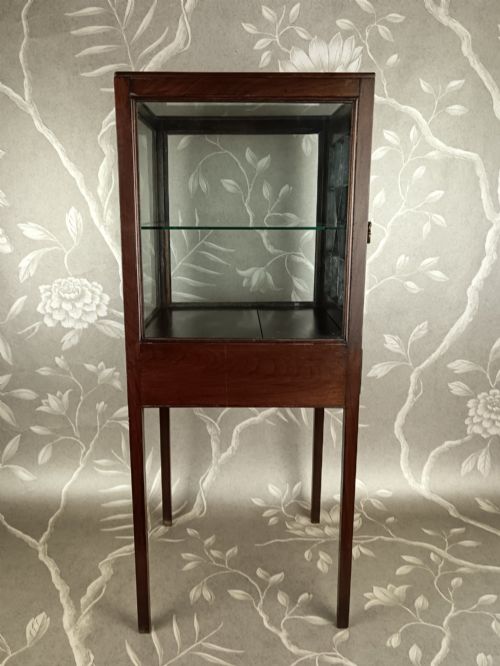
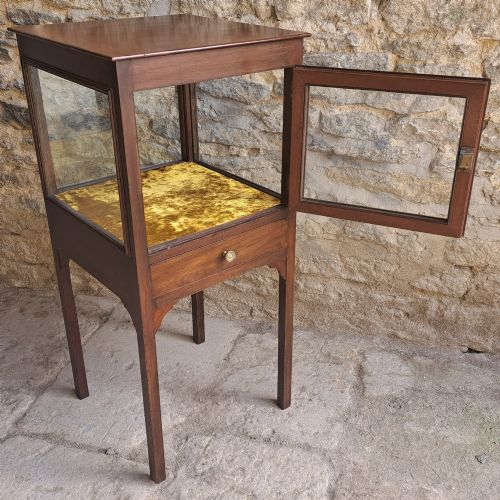
Interior display surfaces are lined with fabric such as velvet, felt, or other textiles to cushion delicate objects. Glazed panels set into hinged tops or doors allow light to flood the interior while keeping dust away from the collection.
Collector Display Table Case Retail Price Guide 2026
Typical asking prices for collector display table case among the pieces listed under this phrase on Sellingantiques today, from the lower quarter to the upper quarter. They describe what is for sale here now, not the wider market.
Listings feature mahogany, rosewood, walnut, and satinwood alongside brass, ormolu, and velvet linings.
Assessing quality and execution
The distinction between ordinary and exceptional pieces lies in the crispness of the carving, the precision of the wood inlay, and the weight of the bronze or brass mounts. Superior examples employ choice veneers like burr walnut or kingwood alongside substantial glass and sturdy hinges.
Proportion and execution drive value, as seen in serpentine shapes and well-balanced legs that support the glazed compartment without heaviness. Finer cabinets integrate textiles and metalwork seamlessly into the overall architectural composition.
The Collector Display Table Case Glossary
- Bijouterie table
- A glass-topped display table specifically designed for small ornaments, jewellery, and curiosities. These pieces elevate collections to waist height for easy viewing.
- Vitrine
- A glass-panelled cabinet or case used for displaying objects of vertu and porcelain. The term covers both standing furniture and tabletop variants.
- Ormolu
- Gilded bronze mounts applied to furniture for decorative accent. This technique adds metallic brilliance to timber surfaces.
- Veneer
- A thin slice of figured wood applied over a secondary timber base. This method creates decorative grain patterns across table tops and cabinet fronts.
- Serpentine
- A gently undulating line curving outward then inward, frequently seen on the edges of tabletops and cabinet fronts. It requires high skill in shaping timber.
Collector Display Table Case: Frequently Asked Questions
What goes inside a collector display table case?
These tables house small personal items such as jewellery, pocket watches, medals, coins, and natural curiosities. The glass top keeps dust away while maintaining complete visibility.
Collectors historically used them in drawing rooms to share interesting specimens and conversation pieces with guests.
How do I tell an Edwardian piece from a Victorian one?
Victorian examples tend to use heavier timbers like rosewood and walnut, often featuring rich carvings and ormolu mounts. Edwardian pieces frequently lean towards lighter mahogany with subtle inlay work and satinwood stringing.
Design influences also shift, with Victorian items showing revival styles and Edwardian pieces displaying refined classical restraint.
Are the fabric linings usually original?
Many tables retain period fabric, but velvet and felt linings often require replacement due to fading or wear over time. A replacement lining done in a period-appropriate textile helps preserve the interior presentation.
Checking the wood beneath the lining helps determine the overall age and originality of the carcase.
How do I care for the wood and glass?
Keep these pieces away from direct sunlight and steady heat sources to protect timber veneers and interior fabrics from fading. Dust the glass gently with a soft cloth and avoid harsh chemical cleaners on the polished wood.
Checking the hinges and locks periodically ensures the glazed lid operates smoothly without straining the frame.