





Vintage Glass Vitrine Table
A vintage glass vitrine table brings museum-quality display right into the home, turning small treasures and collections into focal points.
Vintage Glass Vitrine Table
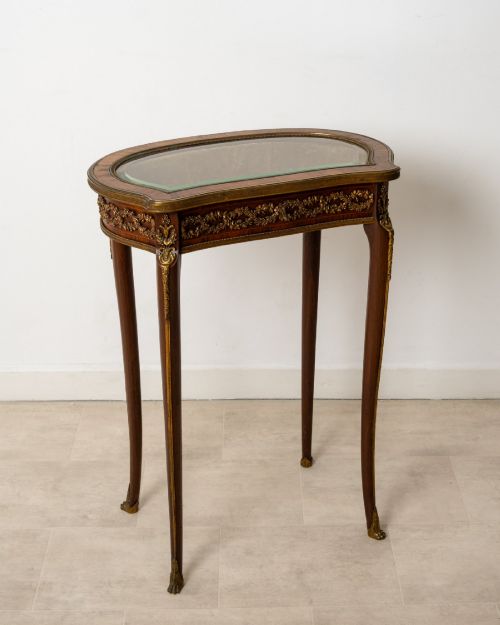
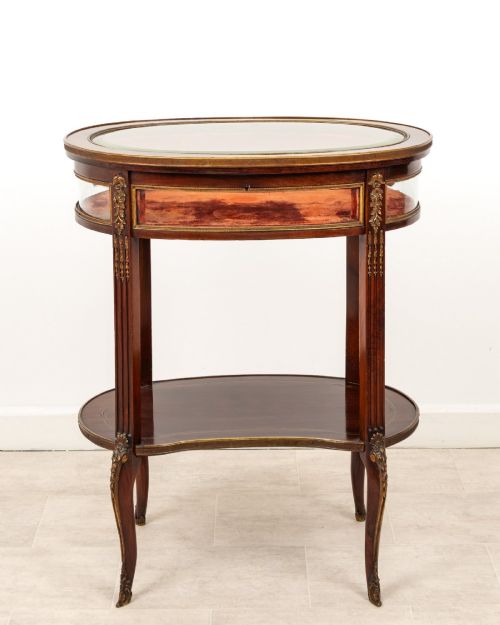
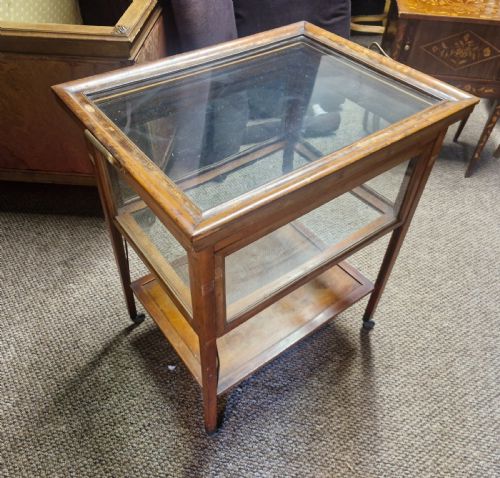
When a buyer searches for a vintage glass vitrine table, they are looking at specialised display furniture designed to showcase small objects, jewellery, and curiosities under glass. These pieces serve a dual purpose as functional tables and protective display cabinets, often taking the form of bijouterie tables with glazed tops and hinged or lifting lids.
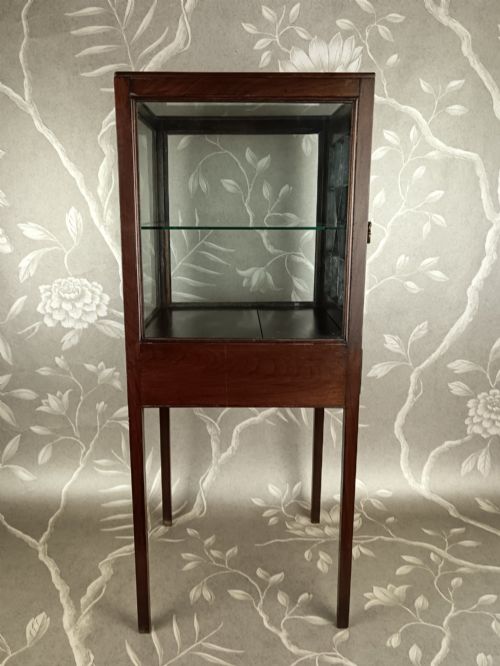
The most common versions met on this page belong to the Edwardian period and the early twentieth century, constructed primarily in mahogany with glazed compartments. Alongside these domestic bijouterie tables appear larger shop display counters, cabinet forms, and tea trolleys adapted for showing collections.
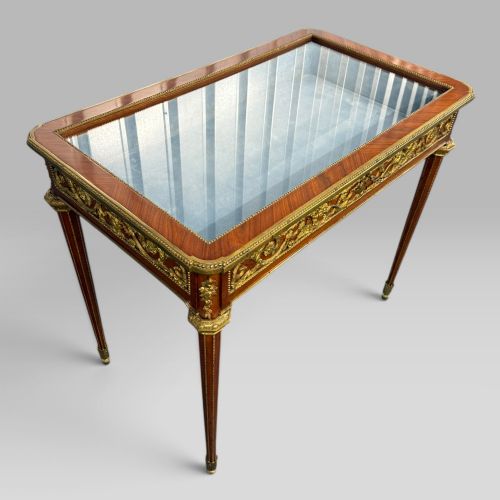
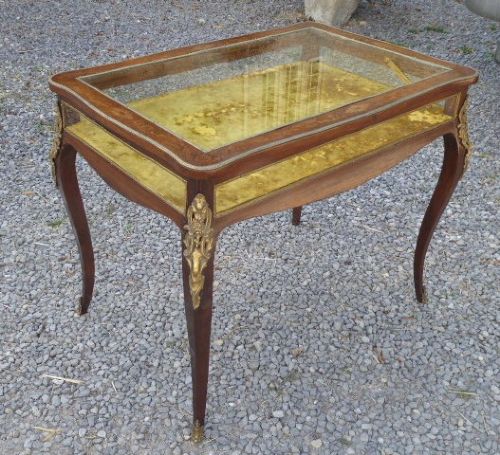
Stylistic influences range widely across the selection, with French Louis XVI and Louis XV revivals appearing alongside Edwardian inlaid satinwood and Georgian-inspired proportions. Continental and English workshops both contributed to this variety, producing pieces that vary from delicate parlour tables to robust commercial display counters.
Materials and Construction
The primary structural timber across these listings is mahogany, frequently paired with decorative veneers such as kingwood and satinwood, and occasionally inlaid with contrasting brass or lighter woods. Cabinetmakers utilised solid framing to support heavy glass panels and hinged lids, ensuring stability for the glazed display well within.
Surface ornamentation relies heavily on cast or gilt ormolu mounts, floral painted decoration, and intricate marquetry detailing that define the revival styles. Silk, velvet, or fabric linings commonly cushion the interior bases of the display wells, providing a contrasting background for the objects placed inside.
Vintage Glass Vitrine Table Retail Price Guide 2026
Typical asking prices for vintage glass vitrine table among the pieces listed under this phrase on Sellingantiques today, from the lower quarter to the upper quarter. They describe what is for sale here now, not the wider market.
Periods represented span from Georgian and nineteenth-century pieces through Edwardian designs up to mid-twentieth-century French revival examples.
Assessing Quality and Craftsmanship
Quality in these tables is evident in the precision of the timber joinery, the weight and finish of the brass or ormolu mounts, and the clarity of the glass used in the top and sides. Superior examples display refined hand-carving, crisp marquetry, and tightly fitted lids that close flush against the frame.
The choice of secondary woods and the selection of figured mahogany or exotic veneers also separate standard production pieces from exceptional ones. Interior details such as hand-stitched velvet linings and finely finished storage wells indicate a higher grade of original commission.
François Linke·Quincy Showcase Works
The Vintage Glass Vitrine Table Glossary
- Vitrine
- A glass-fronted or glass-topped cabinet designed for displaying fine objects or collections. These pieces protect delicate items from dust while offering all-around visibility.
- Bijouterie table
- A small display table with a glazed compartment beneath the top, originally used for showing jewellery, medals, and small trinkets. The hinged top allows easy access to the lined interior.
- Ormolu
- Gilt-bronze mounts applied as decorative ornaments to furniture, particularly popular in French revival styles of the nineteenth and twentieth centuries. These metal details are cast and chased before gilding.
- Marquetry
- Decorative veneer patterns formed by fitting together thin pieces of wood, shell, or ivory into pictorial or geometric designs. This technique decorates the surfaces of high-status cabinet work.
- Kingwood
- A dense, richly grained tropical timber used extensively as a veneer in fine cabinet making during the eighteenth and nineteenth centuries. Its dark purple-brown tones with lighter streaks create strong visual contrast.
Vintage Glass Vitrine Table: Frequently Asked Questions
What was a bijouterie table used for?
These tables were designed to exhibit small valuable items, portrait miniatures, and personal collections in drawing rooms and parlours. The glazed top allowed guests to inspect delicate objects without handling them directly.
Over time, their use expanded from aristocratic drawing rooms into commercial settings, with similar glazed counters utilised by jewellers and watchmakers to display merchandise to customers.
How do I clean the interior lining?
Most interior wells feature fabric, velvet, or silk linings that require gentle maintenance to preserve the textile. Using a soft brush attachment on a low-suction vacuum helps remove dust without damaging the fibres.
Avoid liquid cleaners near the fabric or the wooden frame, as moisture can stain the textile lining and seep into the timber joints beneath.
How do I date an Edwardian vitrine?
Edwardian pieces generally date from the period between nineteen-hundred and nineteen-ten, often identified by light mahogany framing, satinwood crossbanding, and delicate inlaid stringing. Construction methods during this era relied on machine-assisted woodworking combined with traditional hand-finishing.
Comparing the hardware, lock mechanisms, and internal hinges with known examples from the same decade helps confirm the exact manufacturing era.
Can I use a shop display counter at home?
Commercial display counters and larger vitrines adapt well to domestic interiors for showcasing substantial collections of ceramics, books, or curiosities. Their deeper proportions and robust construction provide secure housing for heavier items.
Placing these larger pieces requires careful room planning to balance their generous scale against surrounding domestic furniture.