

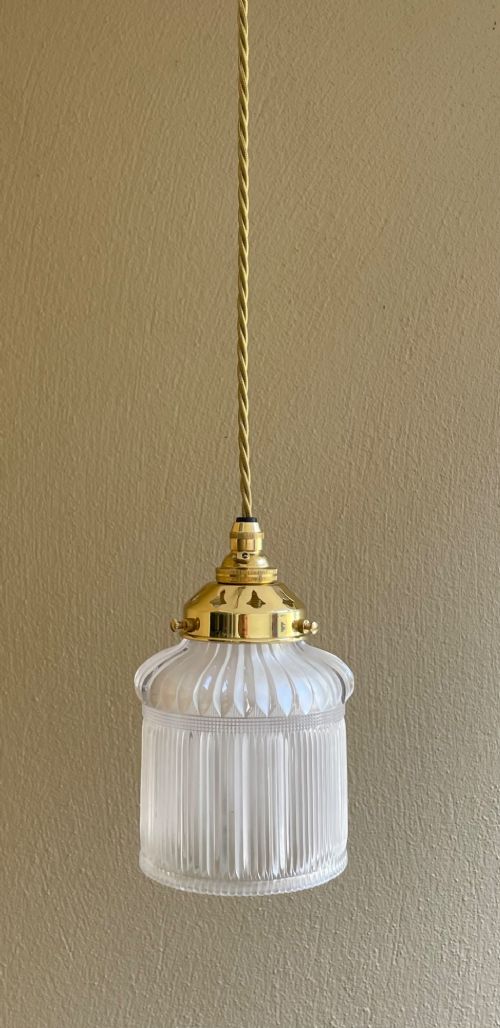
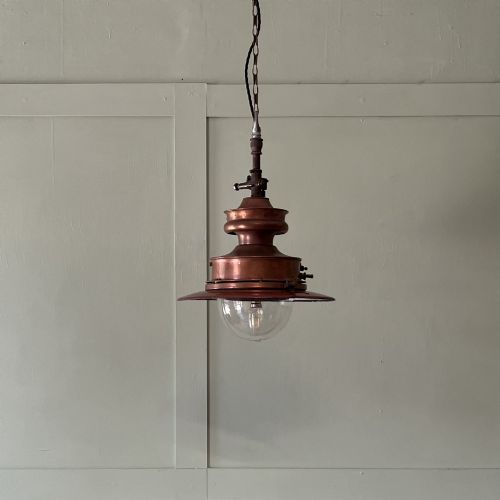
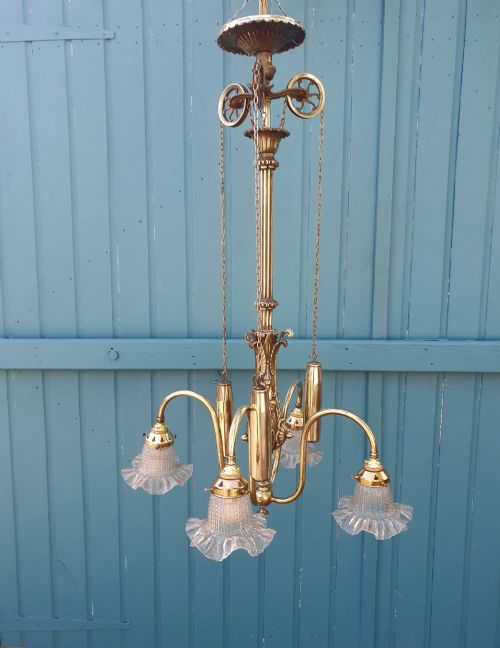
Glass Shade Ceiling Lamp
These glass shade ceiling lamps bring character and directed illumination to a room, spanning periods from the Victorian era to the mid-twentieth century.
Glass Shade Ceiling Lamp
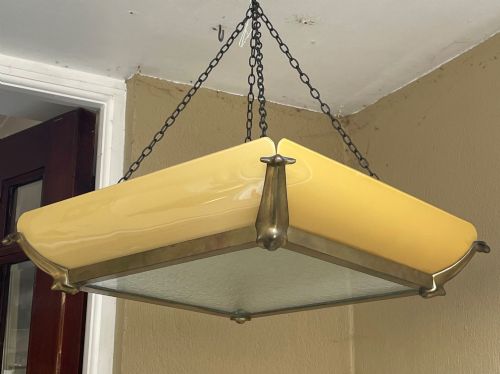
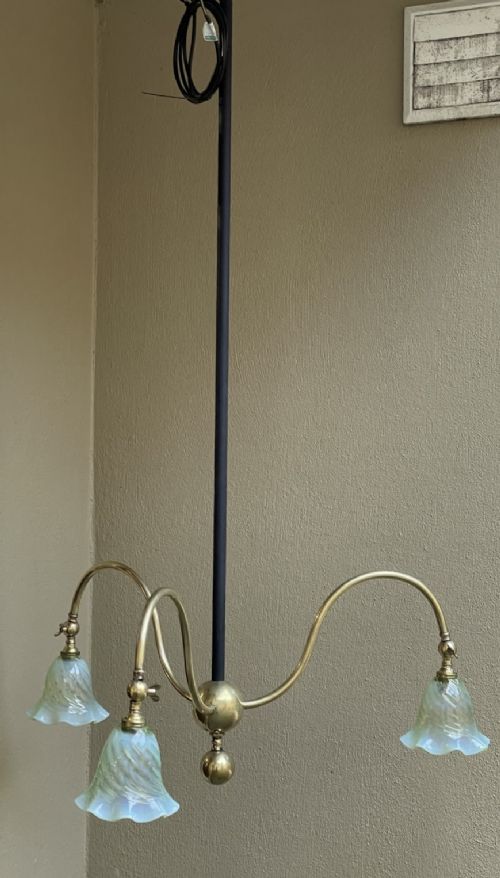
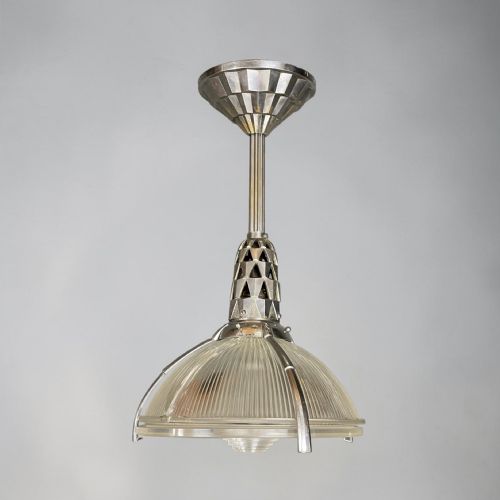
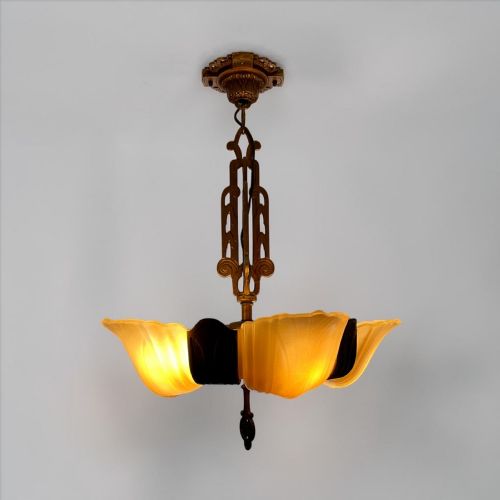
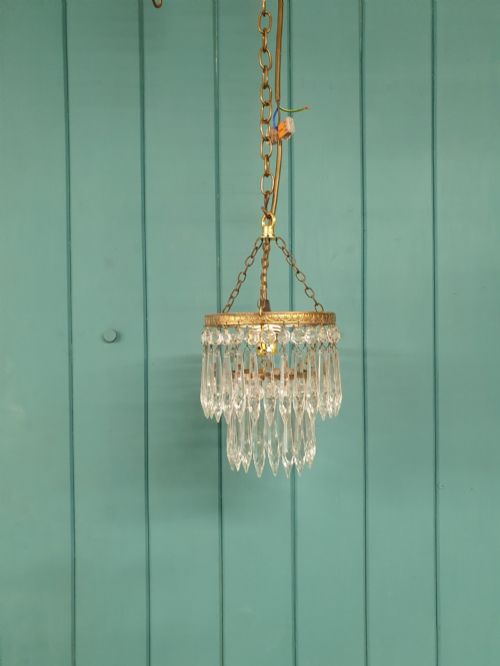
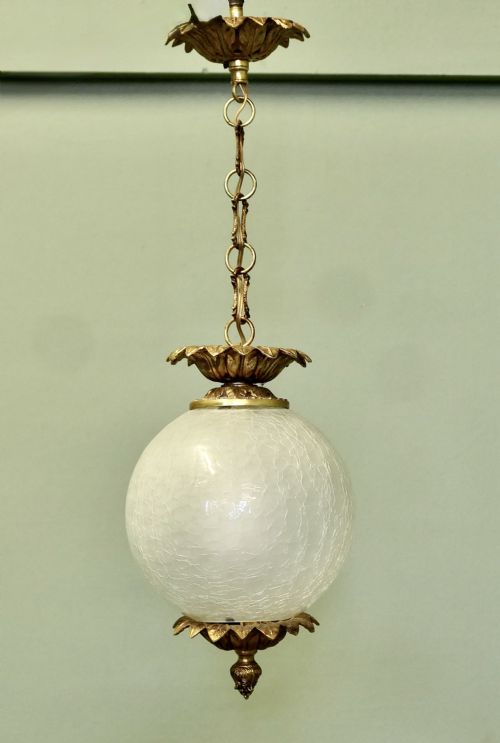
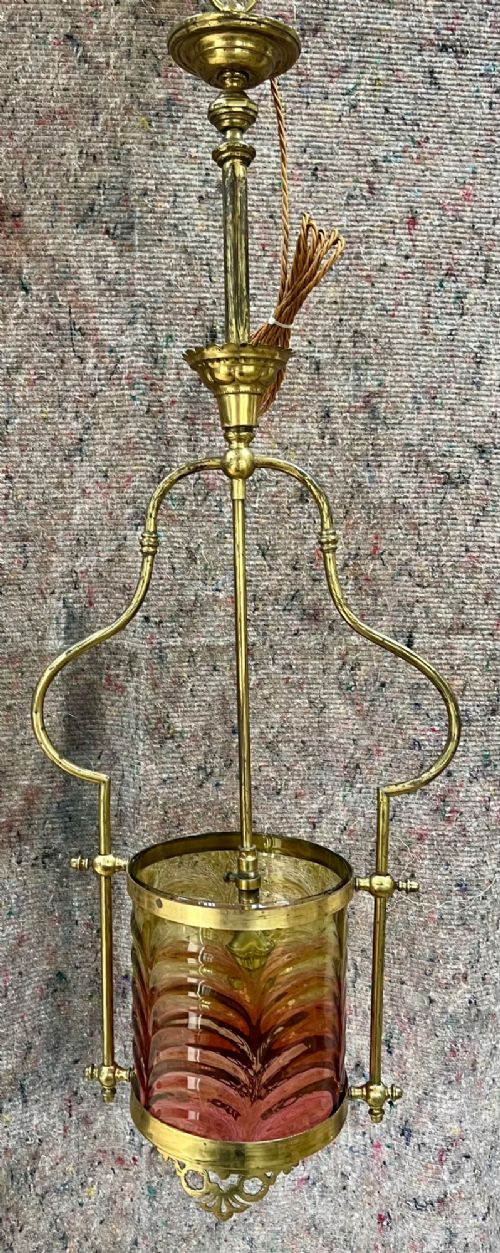
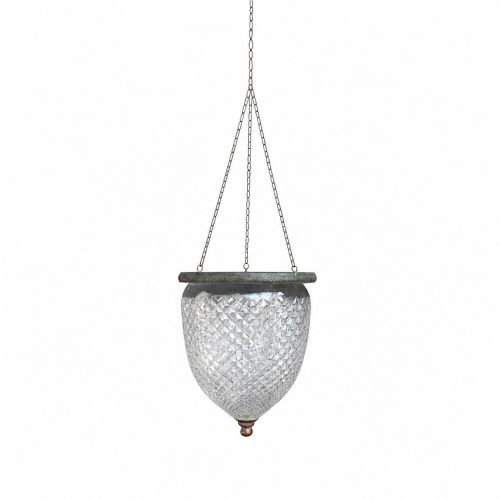
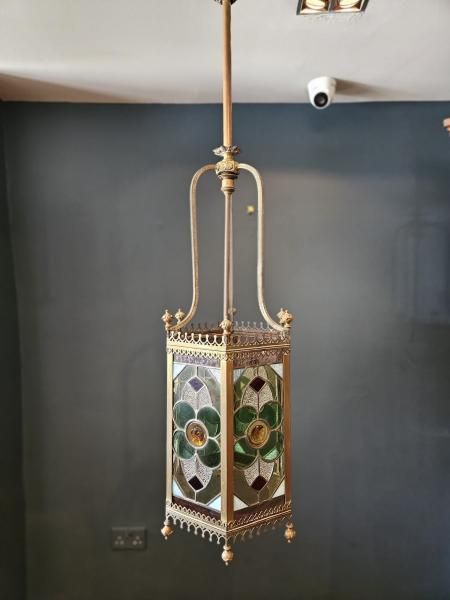
A glass shade ceiling lamp is a hanging lighting fixture designed to diffuse light downward or outward into a space. When exploring this selection of glass shade ceiling lamps, you encounter pendant lights, chandeliers, and hall lanterns suspended from chains, cords, or rigid brass stems.
The pieces originate across several distinct eras, stretching from nineteenth-century Victorian designs through Edwardian fixtures and into the geometric forms of Art Deco and the utilitarian lines of Industrial and mid-century modern lighting.
Materials and construction
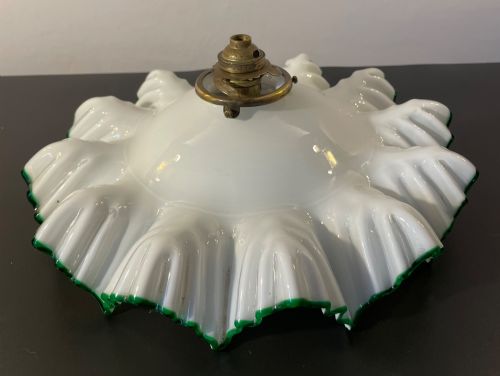
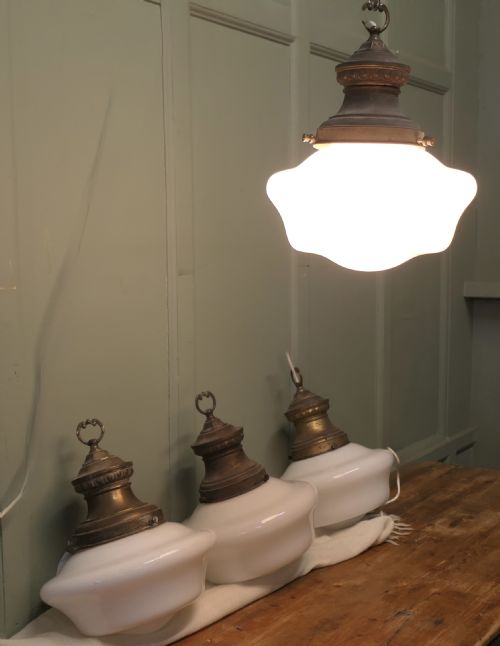
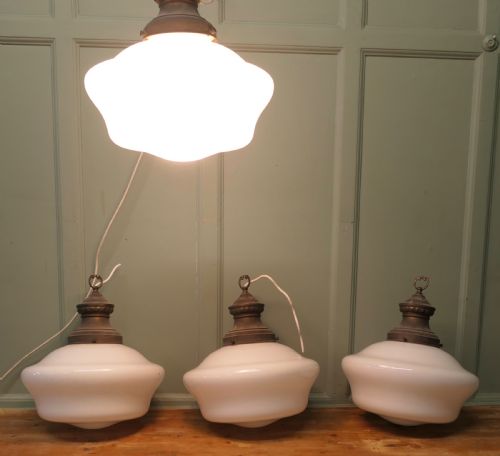
Makers combined cast or spun brass, copper, and base metal hardware with various formulations of glass, including opaline, frosted, cut crystal, crackle glass, and moulded slip shades. Metal frames hold the glass bowls, globes, and shades securely, often incorporating decorative details such as leaf motifs or patinated finishes.
Techniques range from hand-blown glass globes and mould-pressed opaline shades to precision-cut crystal prisms and leaded glass lanterns. Metal components are frequently joined by screws, galleries, and chains, with rise-and-fall pulley mechanisms appearing on larger Edwardian chandeliers.
Subtleties of manufacture
Quality reveals itself in the weight and clarity of the glass, the depth of hand-cut facets, and the substantial gauge of the brass or copper mounts. Superior pieces display crisp moulding in opaline and slip shades alongside robust metal casting that maintains its rigidity over decades of suspension.
The integration between the glass shade and its metal gallery demonstrates maker skill, with finer examples offering balanced proportions and original period fittings that complement the overall silhouette rather than relying on later replacements.
Émile-Jacques Ruhlmann·Jefferson
The Glass Shade Ceiling Lamp Glossary
- Opaline glass
- A milky, semi-translucent glass that softens light evenly without harsh glare. It was widely utilised across Edwardian and Art Deco pendant lights.
- Plafonnier
- A ceiling-mounted lighting fixture where the shade sits flush or very close to the ceiling surface rather than hanging on a long drop.
- Holophane
- A brand of prismatic glass engineered to direct and diffuse light efficiently. These ribbed industrial shades appear frequently in twentieth-century utility lighting.
- Slip shade
- A moulded piece of glass that slides into a metal frame or basket to form a bowl-shaped chandelier fixture, characteristic of Art Deco interior design.
- Rise and fall
- A mechanical counterweight pulley system allowing the hanging height of a pendant light or chandelier to be adjusted manually.
Glass Shade Ceiling Lamp: Frequently Asked Questions
Are these lamps wired for modern electricity?
Many surviving fixtures retain older wiring or have been updated at various points in their history. It remains standard practice to have antique lighting inspected and rewired to meet current safety standards before installation.
Most standard modern bulbs and holders fit comfortably within these vintage glass shades, provided you check the internal clearance dimensions of the fitter rim.
How do I clean antique opaline glass?
Wash the glass gently in warm water using a mild, unscented soap and a soft microfiber cloth. Avoid abrasive scouring pads or harsh chemical cleaners that can damage the surface finish.
Remove the shade from its metal gallery before cleaning to prevent water from lodging in electrical components or tarnishing fragile brass screws.
How do I date a glass ceiling lamp?
Examine the hardware construction, screw types, and glass moulding techniques to establish a chronological baseline. Victorian pieces often feature heavy cast brass and hand-etched details, while 1930s examples lean toward geometric slip shades and opaline spheres.
Look for manufacturer stamps on metal galleries or registry marks on the glass, which often narrow down the production era significantly.