





Glass Prism Lustres
Glass prism lustres are decorative tabletop lights hung with crystal pendants that catch the daylight and cast coloured candlelight across a room.
Glass Prism Lustres
Glass prism lustres are decorative mantel and table pieces designed to hold candles or lamps while scattering light through hanging crystal drops. When you search for glass prism lustres, you encounter pairs of mantel ornaments and candlesticks most frequently, alongside table lamps and chandeliers.
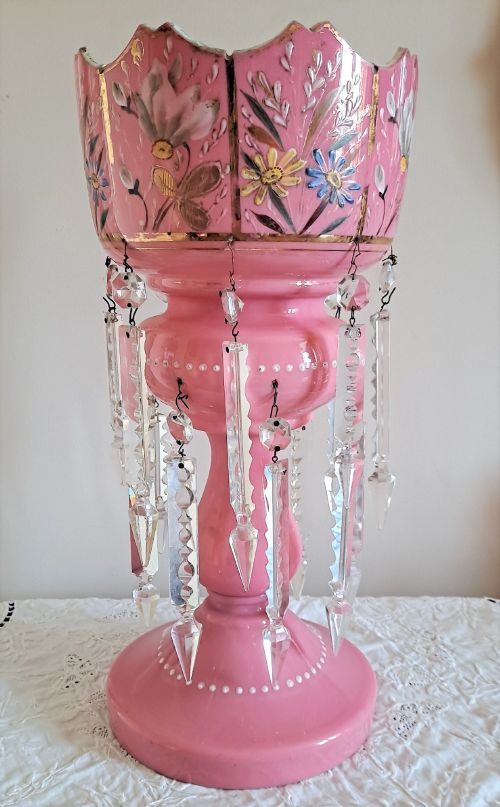
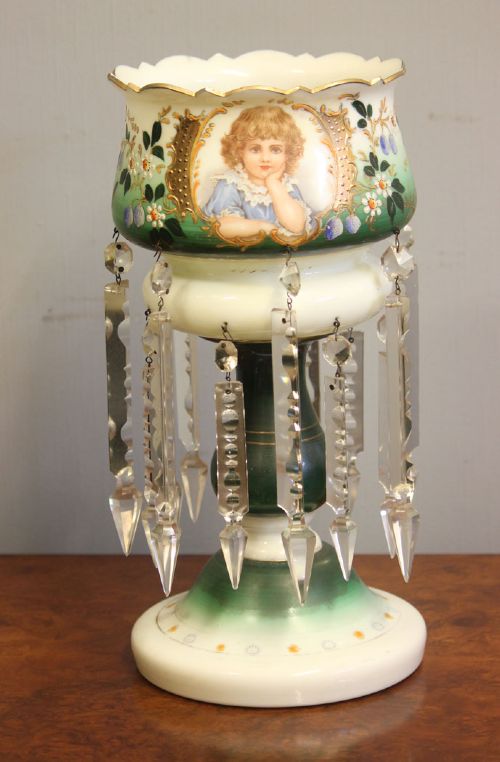
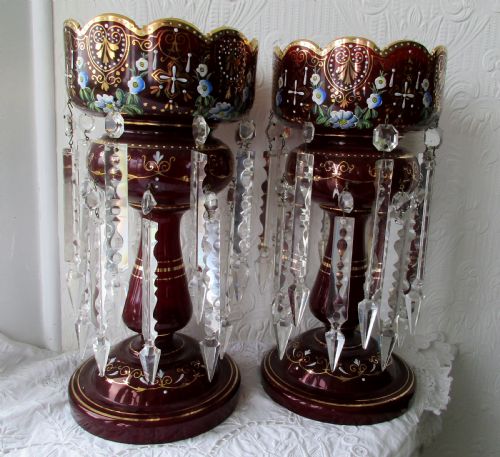
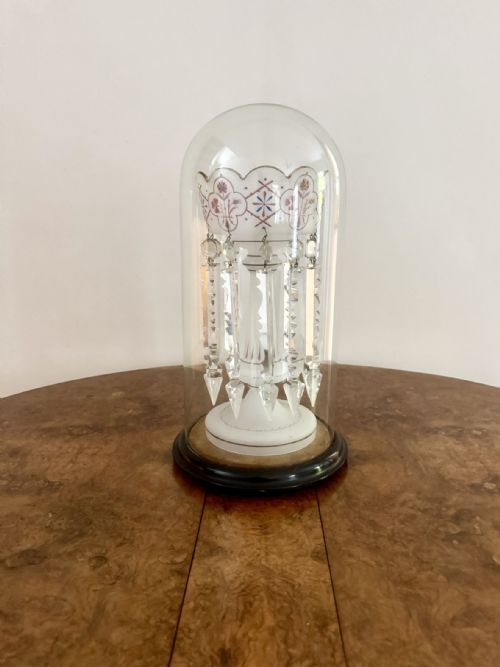
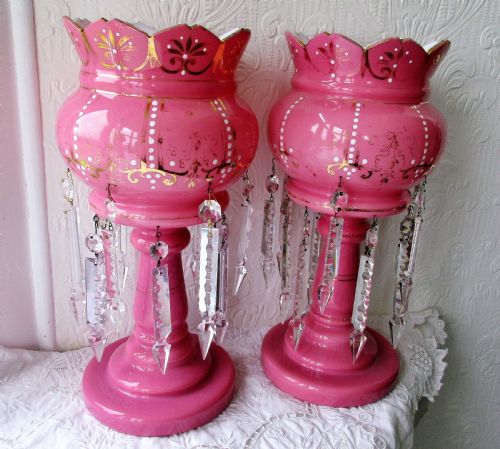
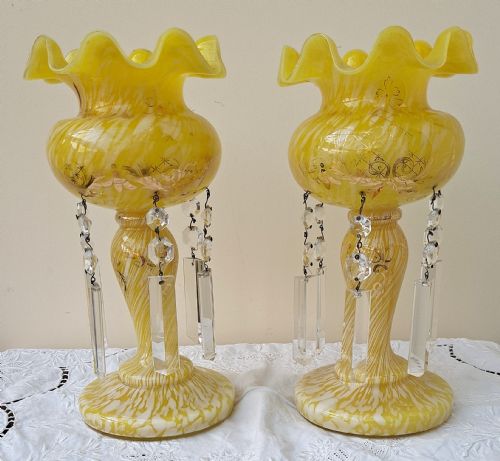
The selections span the Regency and Victorian periods up to the early twentieth century. English and continental workshops produced these items in green, ruby, pink, yellow, and cranberry glass, as well as clear cut crystal and opaline.
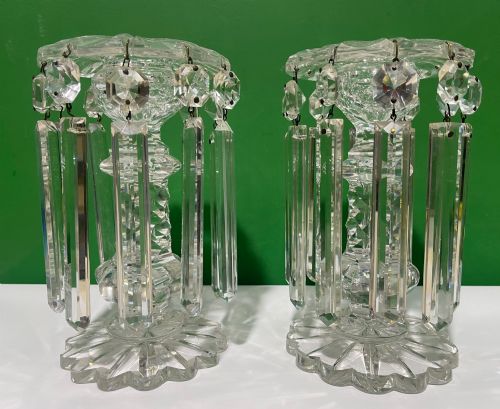
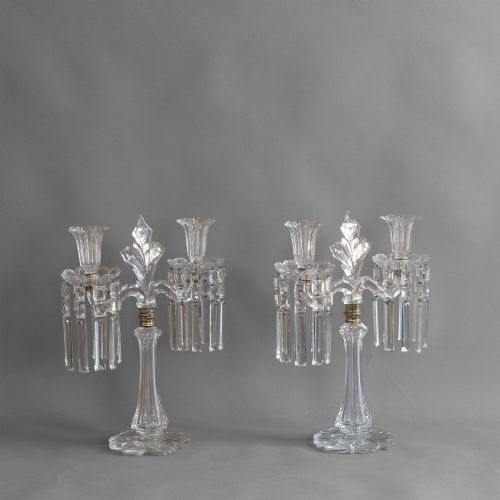
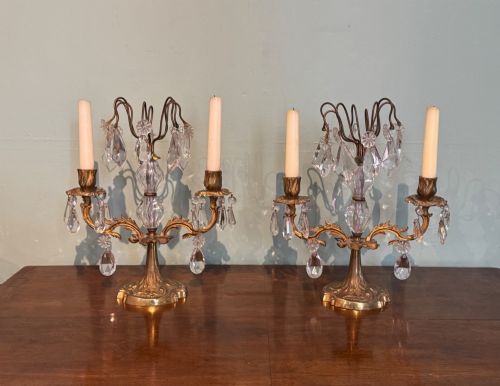
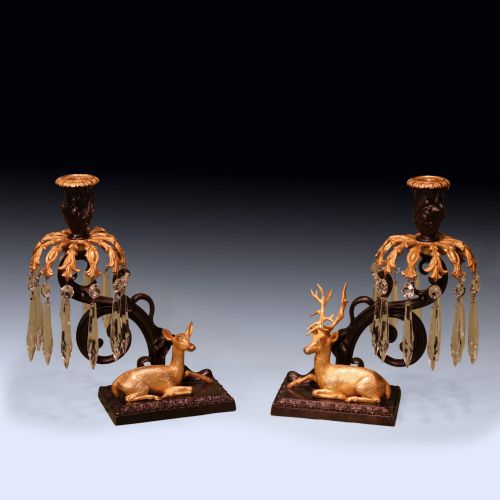
Forms range from simple single vessels to elaborate pairs set with gilt bronze, ormolu, and brass fittings. Many survivors remain matched pairs intended for symmetry on a fireplace mantel or side table.
How they were made
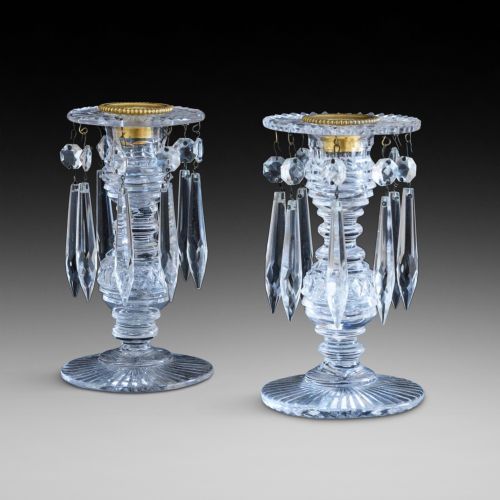
Makers shaped glass through blowing and moulding, often applying overlaid or flash layers that workers then cut away to reveal contrasting colours beneath. Cut glass and crystal components received deep faceting by hand to maximise refraction.
Metal mounts incorporate cast bronze, ormolu, brass, and gilt elements, sometimes accented with enamel or gold leaf. Prisms and pendants hang from the central body by wire loops or pins fitted through drilled rims.
Glass Prism Lustres Retail Price Guide 2026
Typical asking prices for glass prism lustres among the pieces listed under this phrase on Sellingantiques today, from the lower quarter to the upper quarter. They describe what is for sale here now, not the wider market.
Listings span the Regency and Victorian eras through to nineteen-thirty, utilising ruby glass, brass, crystal, and gilt bronze.
What varies in quality
The weight and clarity of the glass set the foundation, with heavy cut crystal and rich saturated colours like ruby and cranberry indicating finer work. Sharpness in the faceting of the hanging prisms dictates how brightly the piece refracts light.
The quality of the supporting metalwork distinguishes standard output from exceptional pieces, particularly where cast bronze, ormolu, and gilt details show crisp definition. Completeness matters greatly, as matching sets retaining their original series of crystal drops achieve higher regard.
The Glass Prism Lustres Glossary
- Lustre
- A decorative tabletop vessel fitted with pendant glass prisms designed to catch and reflect light. They often double as candlesticks.
- Prism
- A cut glass or crystal pendant suspended from the rim of a lustre to refract light. These drops take various faceted shapes.
- Flash glass
- A vessel made with a thin outer layer of coloured glass over a clear or contrasting body, partially cut away to create patterns. Bohemian makers utilised this technique extensively.
- Opaline
- An opaque or translucent pale glass popular in nineteenth-century decorative objects. It provides a soft background for enamel and gilt decoration.
- Ormolu
- Gilded bronze mounted onto decorative objects and furniture during the eighteenth and nineteenth centuries. It adds metallic lustre to glass centrepieces.
Glass Prism Lustres: Frequently Asked Questions
Where were glass prism lustres displayed?
These decorative objects sat predominantly on mantelpieces above fireplaces, where candle flames brought the hanging crystal prisms to life.
They also appeared on console tables, sideboards, and drawing-room furniture to enhance the illumination of evening gatherings.
How do I clean a lustre?
Maintenance requires removing the hanging crystal prisms and washing them individually in lukewarm soapy water. Drying each drop with a soft cloth restores their sparkle before you reattach them to the body.
The main glass body and metal mounts need gentle dusting with a dry microfibre cloth to protect any gilt or enamel surfaces.
Are most lustres found in pairs?
Victorian and Regency mantels required symmetry, so workshops produced these decorative pieces in matched pairs for balanced placement.
Single examples do survive, though matched pairs remain the standard format encountered in historical interiors.
How do I identify a Victorian lustre?
Victorian examples frequently display saturated colours like ruby, cranberry, green, and pink, often paired with heavy cut crystal or gilt metal mounts.
Proportions tend to be generous, and the cut glass prisms usually feature hand-finished facets rather than modern machine moulding.