




Glass Pocket Flask
These glass pocket flask examples deliver portable spirits in glass, silver, and leather.
Glass Pocket Flask
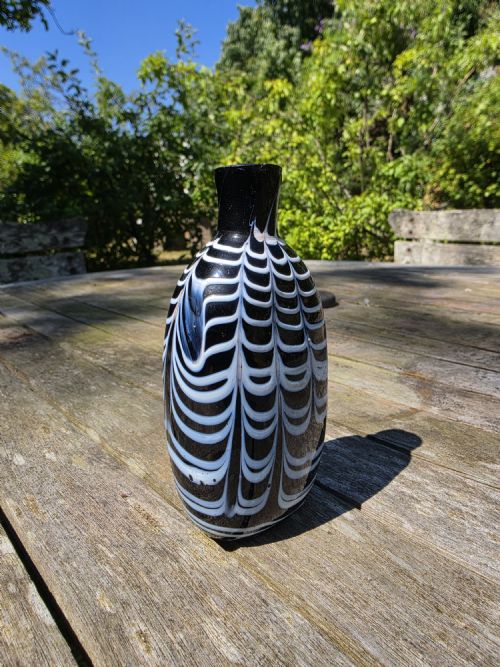
A glass pocket flask serves as a portable container for spirits, designed to fit a pocket or hunting bag. Buyers seeking a glass pocket flask encounter forms ranging from Georgian Nailsea glass to Victorian and Edwardian silver-mounted glass bottles with removable cups.
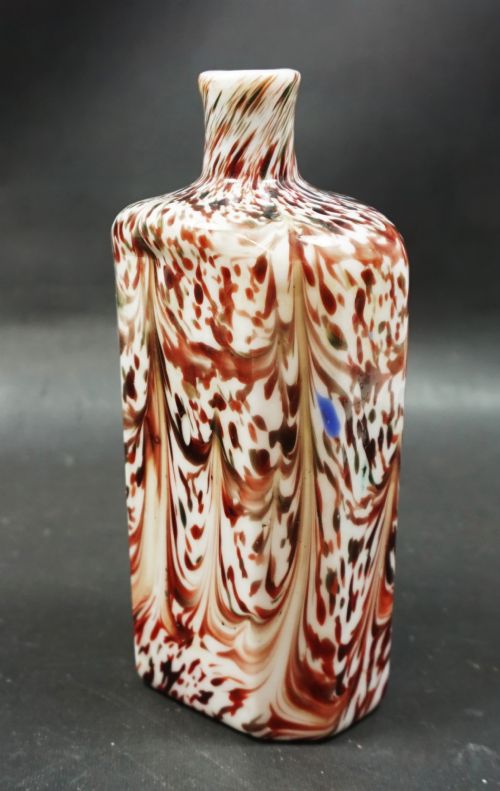
The selection includes rectangular milk glass vessels, cut glass cylinders, and leather-bound spirit flasks bearing hallmarks from London, Birmingham, Sheffield, and Glasgow. Many feature fitted silver caps and collapsible cups intended for field use.
How they were made
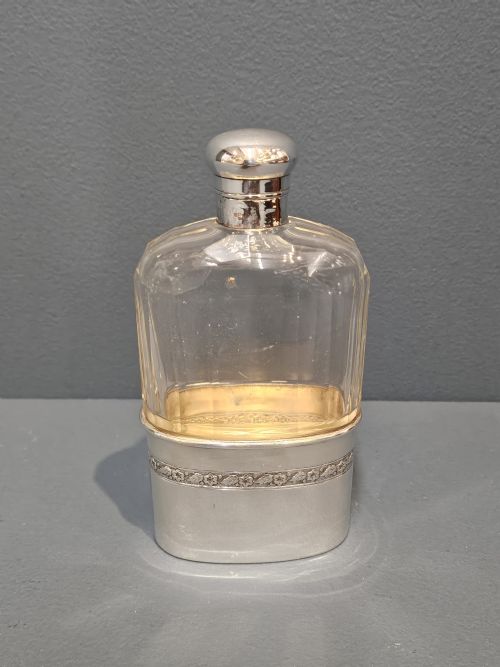
Makers combined blown or cut glass bodies with mountings in sterling silver, silver plate, and gold gilt. Exterior coverings utilised crocodile leather, standard leather, and enamel decoration.
Vessels incorporated screw-down silver caps, often paired with removable base cups secured by cork or silver collars to prevent leakage during travel.
Listings span from 1750 through the Georgian, Victorian, Edwardian, and Art Deco periods, utilising cut glass, silver, and crocodile leather.
What varies in quality
Quality separates by the heft of the silver mounts, the precision of the glass cutting, and the condition of any leather binding or enamel work. Asprey and James Dixon pieces demonstrate superior finishing.
Asprey London·James Dixon & Sons·W A Ellwick Ltd
The Glass Pocket Flask Glossary
- Nailsea glass
- Glassware produced in Somerset featuring looped, splattered, or quilt-moulded opaque white patterns. It originates from late eighteenth and nineteenth-century production.
- Removable cup
- A lower silver or metal beaker fitting the base of a flask. It detaches for drinking spirits in the field.
- Sterling silver gilt
- Silver coated with a thin layer of gold on its interior surface. This protects the metal from acidic contents.
- Mary Gregory glass
- Glass decorated with white enamel silhouettes depicting children in pastoral settings. It appears on late nineteenth and early twentieth-century pieces.
- Cut glass
- Glass shaped by wheel-cutting to create geometric facets and patterns. It adds weight and sparkle to spirit flasks.
Glass Pocket Flask: Frequently Asked Questions
How do I date a silver mounted flask?
Assay office hallmarks stamped on the silver mounts provide exact year letters, maker marks, and city symbols. Comparing these stamps against registry records dates the piece precisely.
Style elements like Edwardian proportions or Victorian engraving styles offer secondary clues when hallmarks are rubbed or missing.
Are glass flasks safe for carrying spirits?
Most historic flasks remain structurally sound for holding liquids if the internal cork liner inside the cap is intact and supple. Glass and sterling silver do not impart unwanted flavours to whisky or brandy.
Gentle hand washing preserves the vintage glass and leather bindings without damaging historical adhesives or silver solders.
Why do some flasks have cups on the bottom?
The slip-on base cup protected the vulnerable glass toe of the flask while doubling as a drinking vessel during hunts or travels. These cups lock securely onto the glass body via friction fit.
Pieces retaining their original matching cups command greater interest from collectors than those missing them.
What is Nailsea glass?
Nailsea glass refers to distinctive wares made in the Somerset village featuring opaque white glass loops or splatters blown into clear or coloured bodies. Eighteenth and nineteenth-century examples often took flask forms.
Authenticated pieces display characteristic pontil marks and irregular bubble formations from traditional furnace work.