

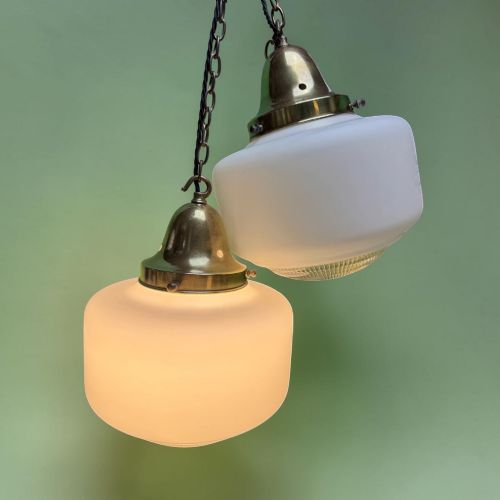
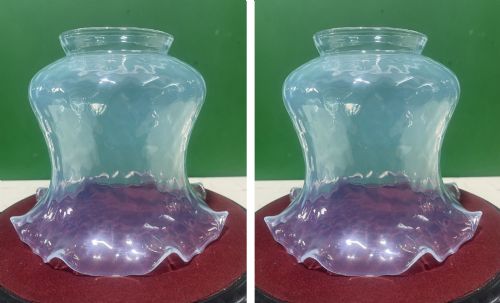
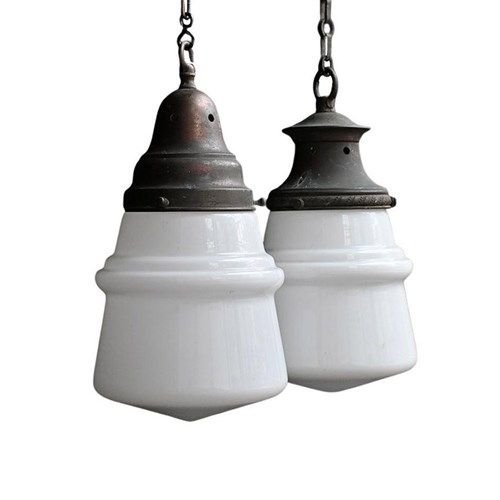
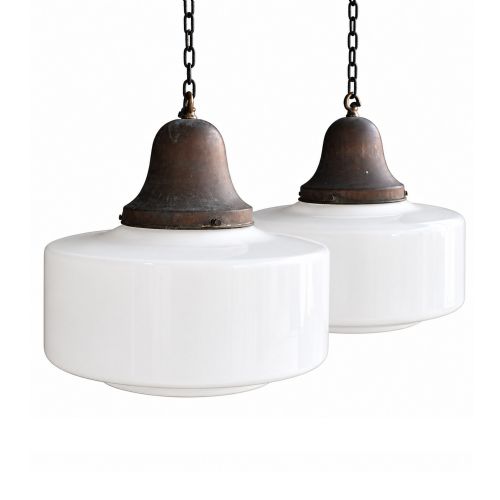


Glass Pendant Shade Pair
A glass pendant shade pair brings direct ceiling illumination and period character to a room, spanning Victorian to Art Deco designs.
Glass Pendant Shade Pair
A glass pendant shade pair consists of matching ceiling hung light fittings designed to distribute ambient or task illumination evenly across a space. Buyers searching for a glass pendant shade pair will encounter matched sets originating from the Victorian era, the Edwardian period, and the 1920s or 1930s.
The forms on this page include diffused opaline fixtures, large Stourbridge glass shades, mercury mirrored reflectors, and frilly French glass designs. Art Deco English church lights and Arts and Crafts copper hanging fixtures also appear among the selection.
Most examples date from the early twentieth century, utilising brass, copper, or iron mounts to suspend the glass elements. These ceiling lights serve functional lighting roles while displaying the distinct decorative qualities of their respective periods.
How they were made
The manufacturing process relies heavily on specialised glassblowing techniques to produce opaline, opalescent, crystal, and mercury mirrored finishes. Glassmakers shaped molten material into domes, dishes, and frilled bowls designed to soften harsh bulb glare.
Metal components such as brass, copper, and iron provide the structural support and suspension for each shade. Workshops combined these metal mounts with finials, spikes, and chains to secure the hanging lights safely from the ceiling.
Glass Pendant Shade Pair Retail Price Guide 2026
Typical asking prices for glass pendant shade pair among the pieces listed under this phrase on Sellingantiques today, from the lower quarter to the upper quarter. They describe what is for sale here now, not the wider market.
Some Edwardian hall lights stretch up to twenty-six inches, demanding tall ceilings and forgiving guests.
What varies in quality
Quality differences depend on the depth and consistency of the glass coloration, particularly in opaline and mercury mirrored pieces where even light diffusion is crucial. Thicker crystal and heavier glass pressings indicate superior material weight and durability.
The refinement of the metalwork mounts, including cast brass galleries, hand-finished copper, and detailed iron finials, distinguishes standard utility lighting from more ambitious decorative pieces. Matched pairs that retain their original proportions and mounts demonstrate higher integrity than assembled sets.
The Glass Pendant Shade Pair Glossary
- Opaline Glass
- A milky, semi-translucent glass that diffuses light softly without complete transparency. It was widely used in lighting fixtures from the Victorian period through the 1930s.
- Mercury Glass
- Blown double-walled glass filled with a silvering solution through a pontil hole, then sealed to create a reflective mirror finish. This technique produces a metallic sheen that catches and bounces room light.
- Stourbridge Glass
- Glassware produced in the English town of Stourbridge, known for advanced nineteenth-century coloured and textured glass techniques. Pieces from this centre often exhibit high technical skill in moulding and finishing.
- Gallery
- The metal ring or fitting that grips the neck of a glass shade to suspend it from a pendant cord or rod. A secure gallery ensures the shade hangs evenly.
Glass Pendant Shade Pair: Frequently Asked Questions
How do I hang a glass pendant shade pair?
These fixtures require secure ceiling attachment and electrical connection by a qualified professional to support the combined weight of the glass and metal mounts.
Ensure the suspension height leaves adequate clearance below the shades depending on whether they are placed over a dining table or in an open hallway.
What rooms suit a glass pendant shade pair?
Pendant lights work well in kitchens, hallways, and dining areas where direct overhead illumination is required.
The choice of opaline or mirrored glass helps determine whether the light output is soft and diffused or bright and directional.
How do I clean vintage glass shades?
Remove the shades from their metal galleries and wash them gently in warm soapy water using a soft cloth.
Avoid abrasive scourers or harsh chemicals that can damage mercury mirrored surfaces or delicate opaline finishes.
How can I tell Victorian shades from 1920s examples?
Victorian pieces often feature heavier moulded details, frilled rims, or richer colours typical of nineteenth-century Stourbridge glass production.
Twenties and thirties pieces tend towards cleaner opaline dish forms, geometric Art Deco influences, or industrial church lighting configurations.