

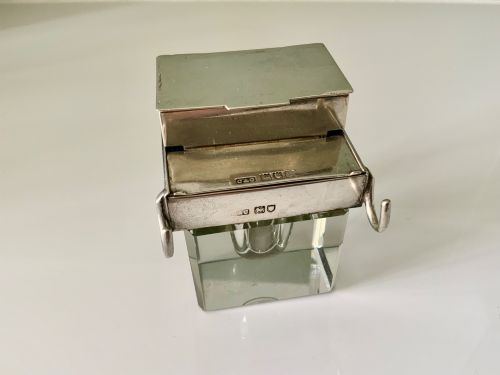


Glass Inkwell Pen Rest
These glass inkwell pen rest items are practical desk accessories designed to hold writing instruments securely alongside ink, combining utility with period craftsmanship.
Glass Inkwell Pen Rest
When you search for glass inkwell pen rest, you are looking at desk accessories that combine ink receptacles with resting places for pens. These items appear across several periods including the Victorian and Edwardian eras, extending into the 1930s.
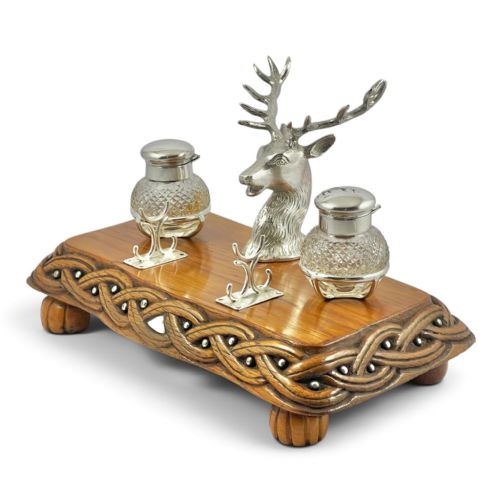
The versions you are most likely to meet on this page take the form of inkstands and desk sets combining glass reservoirs with materials like brass, oak, silver plate, and ormolu. Novelty pieces, such as equestrian jockey cap designs or figural animal items with glass eyes, also feature among the selection.
Origins span English, Scottish, and French workshops, utilising styles that range from Victorian Celtic Revival and French Second Empire to Art Deco. Each object serves the dual purpose of ink storage and pen placement for period writing desks.
How they were made
Construction relies heavily on combinations of cut glass and metalwork, utilising brass, silver plate, ormolu, and gilded bronze alongside wooden bases such as solid oak. Glass ink pots or reservoirs sit within or upon these structured mounts, often accompanied by designated grooves or rests for pens.
Decorative techniques incorporate casting for figural and novelty subjects, such as stags and bulldogs with glass eyes, alongside mounted horn and sterling silver elements. Metal mounts frequently display period chasing or patination that complements the clarity of the cut glass components.
Glass Inkwell Pen Rest Retail Price Guide 2026
Typical asking prices for glass inkwell pen rest among the pieces listed under this phrase on Sellingantiques today, from the lower quarter to the upper quarter. They describe what is for sale here now, not the wider market.
Several Victorian desk pieces feature surprisingly watchful glass eyes staring up from brass stags and bulldog caps.
What varies in quality
Quality in these desk accessories rests on the integration of materials and the precision of the casting or mounting work. Pieces featuring heavier gauge metals like ormolu or solid silver alongside finely cut glass display superior substance compared to lighter plated alternatives.
The presence of original components, such as matching glass ink pots and intact glass eyes in figural pieces, distinguishes higher grade examples. Craftsmanship in novelty subjects, from equestrian jockey caps to detailed animal figures, dictates the overall refinement of the piece.
The Glass Inkwell Pen Rest Glossary
- Inkstand
- A complete desk accessory comprising one or more inkwells and dedicated provisions for holding pens. It often takes the form of a tray or stand made from wood, metal, or glass.
- Ormolu
- Gilded bronze applied to ornamental objects and furniture mounts, popular in French decorative arts. It provides a rich, gold-coloured finish to metal details on desk sets.
- Cut glass
- Glass decorated by cutting facets or patterns into the surface using a wheel. This technique enhances the brilliance and weight of ink pots and reservoirs.
- Novelty inkwell
- An inkwell shaped to resemble an animal, object, or figure rather than a standard geometric container. Examples include equestrian items and figural animal designs.
Glass Inkwell Pen Rest: Frequently Asked Questions
What is a glass inkwell pen rest?
It is a desk accessory that combines a glass ink reservoir with a fitted place to rest a pen. These items were essential stationery pieces for writing desks.
They appear in various styles from the Victorian era through the 1930s, incorporating materials like brass, oak, and silver plate.
How were these inkstands used?
They were kept on writing desks and tables to hold ink for dip pens while providing a convenient place to lay the pen between uses. The design kept ink accessible and prevented nibs from rolling onto the desk.
Many included fitted glass pots and integrated trays to catch stray drips of ink.
How do I identify the period?
Dating relies on stylistic clues, material combinations, and manufacturing techniques characteristic of periods like the Victorian era, Edwardian period, or 1930s Art Deco. Heavy cast brass, ormolu, and figural novelty designs often point to the nineteenth century.
Simpler geometric lines and distinct glass forming techniques help separate later twentieth-century pieces from earlier examples.
Are the glass pots original?
Original glass pots match the specific dimensions, glass tint, and cutting style of the surrounding stand. Collectors look for fit and wear consistency between the glass component and the metal or wooden mount.
Replacements do occur due to the fragile nature of glass over decades of use.