
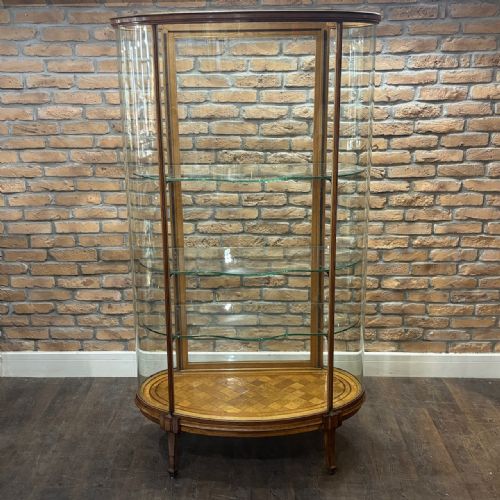
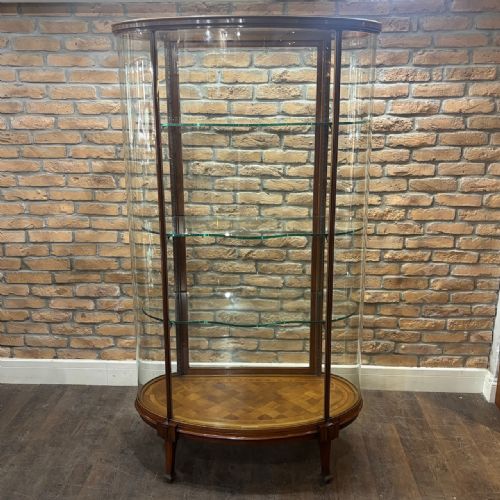
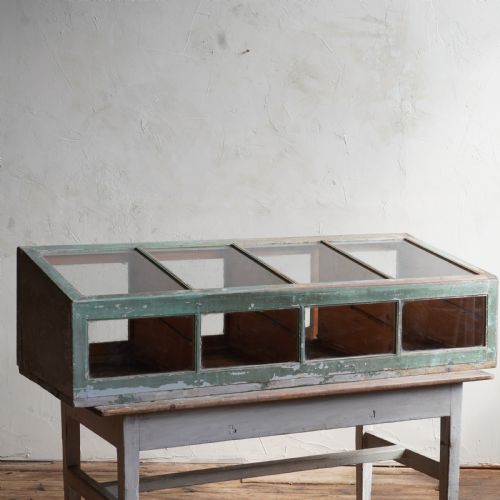
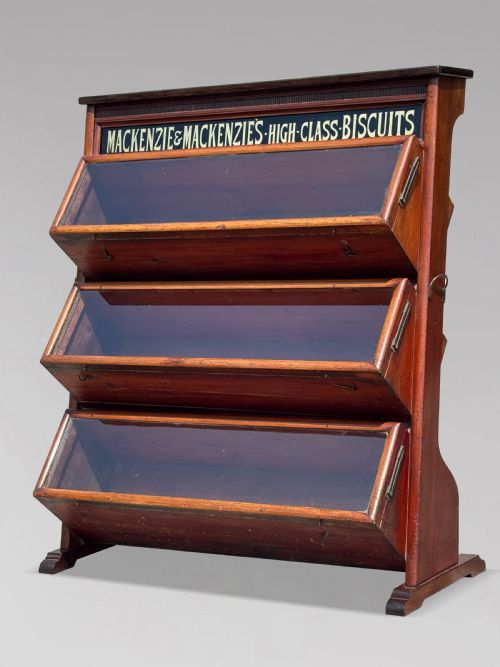


Glass Haberdashery Display Case
A glass haberdashery display case brings shop counter utility into the home, designed to protect small wares under clear panes.
Glass Haberdashery Display Case
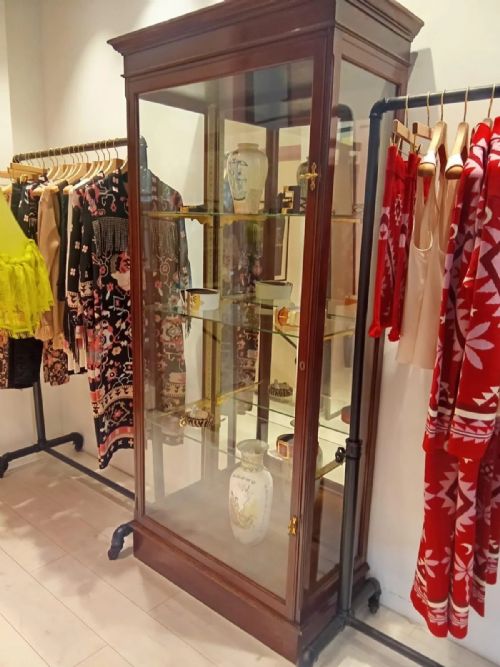
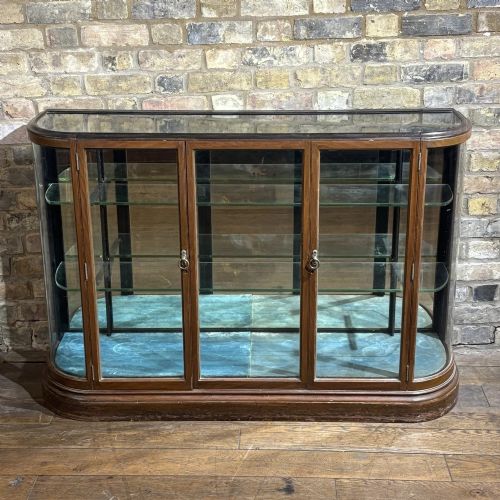
A glass haberdashery display case is primarily a commercial shop fitting originating from late nineteenth and early twentieth century retail spaces. These cabinets range from compact countertop cases to large standing counters and tall tower units built to showcase goods clearly to customers. The versions most commonly met on this page date from the Victorian and Edwardian eras through to the nineteen-twenties and nineteen-thirties.
Form follows function closely in these commercial pieces, relying on glazed panels and timber framing to maximise visibility while protecting contents from dust and handling. Many examples retain specific trade associations, evident in painted lettering or manufacturer badges linked to confectionery, tobacco, and general mercantile use. Buyers select them to display collections at home with the same orderly transparency once used in high street shops.
Construction and materials
Framing relies predominantly on dense hardwoods such as mahogany and oak, chosen for structural stability and finished with polished surfaces or ebonised treatments. Later twentieth century pieces introduce metal elements like brass and aluminium frames to support expansive glass panes with lighter structural profiles.
Glazing forms the main body of each piece, requiring precision joinery to secure large glass sheets within wooden rebates. Interiors frequently incorporate mirrored backs to amplify light, alongside velvet or fabric linings on base boards designed to cushion delicate stock.
Several cabinets still whisper of forgotten sweets and sewing cottons through surviving trade lettering.
Quality variations
Standard of cabinetmaking distinguishes everyday utility pieces from bespoke retail fittings produced by prominent shopfitters. Joinery details such as tight mitre joints, original bevelled glass panes, and substantial timber thickness indicate superior original manufacture.
Originality of internal components and hardware dictates desirability among collectors. Cabinets retaining working brass locks, original mirrored backs, and authentic trade signage command greater interest than those altered or stripped of period fittings.
F. Sage & Co.·John Stow Ltd·Saml. Elliott & Sons
The Glass Haberdashery Display Case Glossary
- Countertop cabinet
- A small glazed case designed to sit upon a shop serving counter. These units placed small goods directly at customer eye level.
- Bow end
- A cabinet featuring curved glass panels at one or both ends. This shaping softens the rectangular geometry and provides panoramic viewing angles.
- Ebonisation
- A wood finishing process that darkens timber to imitate ebony. It was popular on Victorian and Edwardian display furniture for a formal appearance.
- Sign-written
- Hand-painted lettering applied directly to glass or wood surfaces. Examples often display period brand names or retailer details.
Glass Haberdashery Display Case: Frequently Asked Questions
How do I clean the glass safely?
Use a mild vinegar-based solution applied to a soft cloth rather than spraying directly onto the wood or antique mirror backing. Avoid harsh chemical ammonia cleaners that can degrade vintage silvering behind the glass.
Take care around hand-painted sign writing and delicate putty or wooden glazing beads. Gentle wiping preserves the original finishes without lifting aged patination.
Were these made for homes?
These pieces were built strictly for commercial retail environments like drapery shops, jewellers, and general stores. They served to keep merchandise visible yet secure from casual handling by customers.
Today they suit domestic interiors precisely because their proportion and visibility lend themselves to displaying personal collections.
How do I date an Edwardian case?
Edwardian pieces typically date from the turn of the twentieth century up to the First World War. Look for lighter mahogany timbers, slightly more restrained ornamentation than Victorian equivalents, and machine-made brass hardware.
Maker plaques and census records of registered shopfitters also help narrow down the exact decade of manufacture.
Can I adjust the internal shelves?
Most period display cases feature fixed wooden or glass shelving supported by internal wooden battens rather than modern adjustable metal racks. Altering them disrupts the structural integrity and originality of the cabinet.
Consider the height of your intended display items before purchasing a cabinet with fixed shelf spacing.