



Glass Globe Oil Lamp
A glass globe oil lamp brings a warm, layered illumination and tactile historical presence to a room.
Glass Globe Oil Lamp
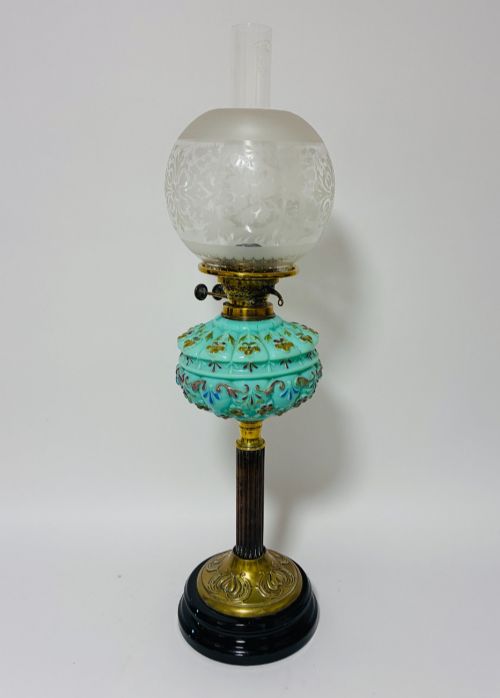
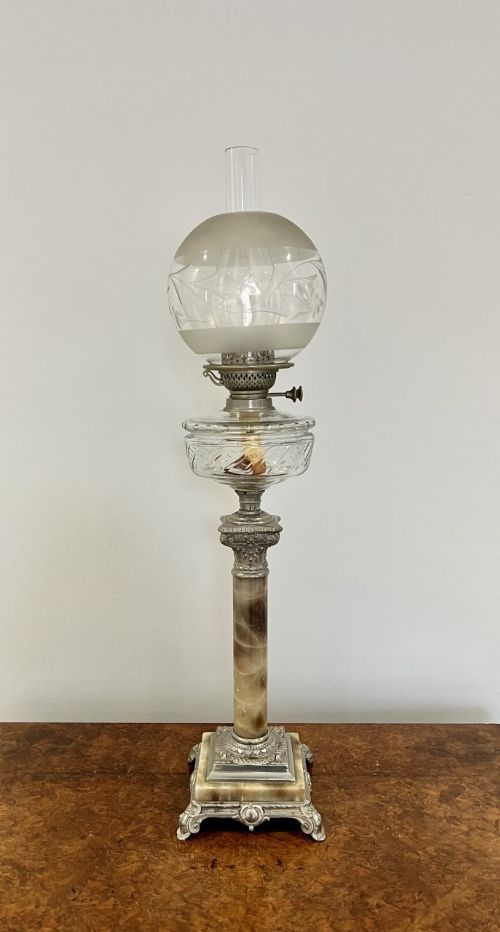
A glass globe oil lamp combines a sturdy reservoir or font with a spherical or tulip-shaped glass shade, designed to diffuse the brightness of the flame. The pieces found here span the Victorian and Edwardian eras, alongside several from around nineteen hundred, capturing a period when domestic lighting shifted toward decorative display.
Most examples pair a substantial base in brass, bronze, or ceramic with a coloured or etched glass globe. You will encounter straightforward table lamps alongside taller adjustable stands and individual replacement shades.
Origins range from English workshops to French and Chinese export studios, showing diverse regional approaches to mounting glass globes upon metal or ceramic columns.
Materials and Construction
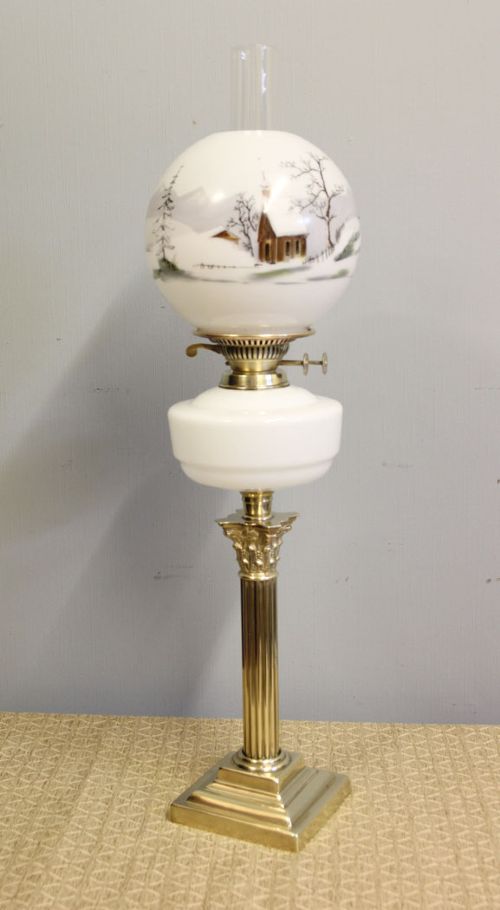
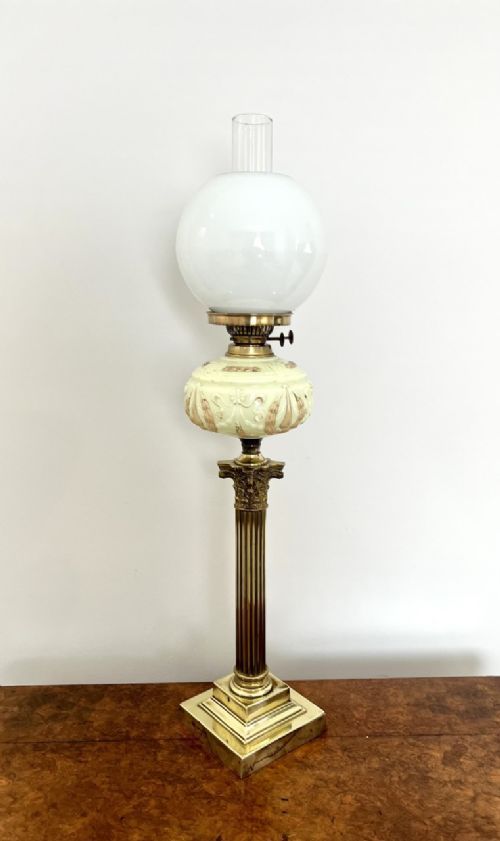
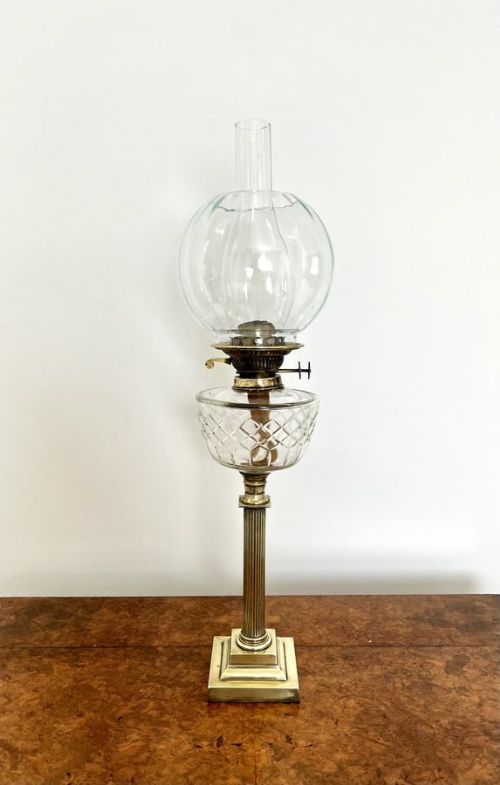
The construction relies on the contrast between heavy cast metals and delicate blown glass. Brass and bronze provide the structural weight for the stands and Corinthian columns, while ceramic and faience components add colour and pattern to the body.
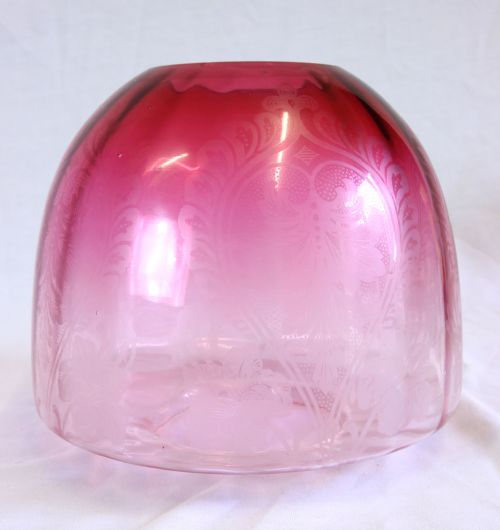
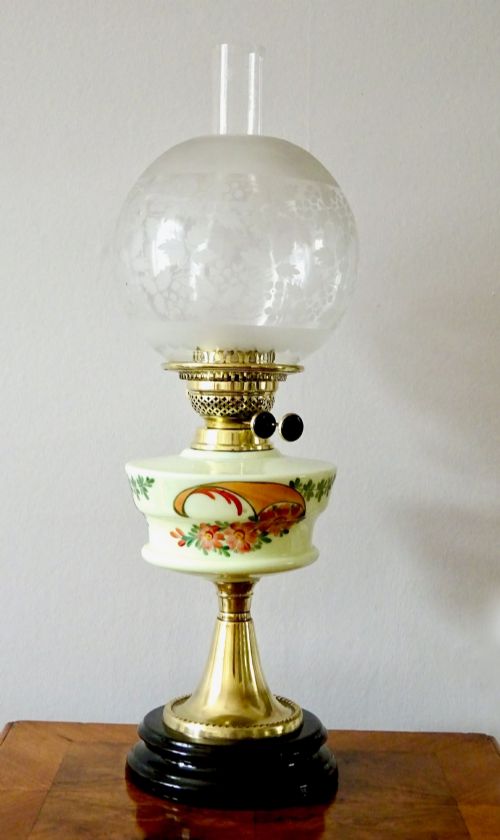
The globes and shades demonstrate various glassmaking techniques, including opaline, cranberry, and vaseline glass, often finished with acid etching or hand-painted enamel details. Metal collars and brass rings secure the glass shades firmly above the font.
The listings combine nineteenth-century Victorian and Edwardian periods, featuring materials from cranberry glass and opaline to heavy cast brass and faience.
Distinctions in Quality
Quality rests upon the crispness of casting in the brass or bronze mounts and the depth of colour within the glass. Superior examples feature heavier gauge metalwork with well-defined chased details rather than simple smooth castings.
The artistry of the glass globe dictates much of the overall merit, particularly where etching creates intricate winter scenes or floral motifs. Matching original components across the base, font, and shade elevate the integrity of the piece.
Hinks of Birmingham·Messengers·Harrods·Gaggenau
The Glass Globe Oil Lamp Glossary
- Font
- The oil reservoir of the lamp, typically formed from glass, ceramic, or metal. It sits atop the main column and feeds fuel to the burner.
- Opaline Glass
- A translucent, milky-white glass developed in France during the nineteenth century. It often takes on pastel tints and diffuses light softly.
- Corinthian Column
- An architectural column style featuring ornate acanthus leaves on the capital. Many metal lamp stands adopt this classical form.
- Cranberry Glass
- A rich pinkish-red glass created by adding gold chloride to the molten batch. It appears frequently in Victorian lamp shades.
- Faience
- Tin-glazed earthenware used for the decorative bodies of continental lamps. It provides a smooth surface for painted enamels.
Glass Globe Oil Lamp: Frequently Asked Questions
How do I date a glass globe oil lamp?
Dating relies on stylistic clues within the metalwork and the manufacturing techniques of the glass. Victorian and Edwardian examples often display distinct aesthetic movements, from classical revival columns to flowing Art Nouveau lines.
Maker marks stamped onto the brass burner mechanisms or metal bases also help narrow the production period. Comparing the shade glass type, such as opaline or cranberry, against period manufacturing records adds further clarity.
Are these lamps safe to use with oil?
Most antique lamps on the market have been converted for modern electrical use or retain historic burners that require careful inspection before burning fuel. Using them as decorative objects or commissioning a safe rewiring is standard practice for collectors.
If you intend to burn oil, a professional check of the font and wick mechanism ensures there are no leaks or hairline fractures in the glass and metal seals.
Can I replace a broken glass globe?
Finding a period-correct replacement shade is possible by matching the fitter size, which is the diameter of the lower opening that slides into the brass ring. Collectors often look for matching nineteenth-century glass types like etched or cranberry glass to maintain authenticity.
Measurements must be exact because nineteenth-century collars varied widely between English and continental manufacturers.
What is the difference between a table lamp and an oil lamp?
Traditional oil lamps were engineered specifically to burn paraffin or other fuels via a wick and burner assembly housed above a reservoir. Many found today have subsequently been converted to electricity while retaining their original burners and fonts.
Table lamps built purely for electricity lack the internal fuel reservoir and burner mechanism, though the exterior silhouettes often mirror traditional oil lamp designs.