
Glass Glazed Showcase
These glass glazed showcase pieces bring clarity and proportion to interiors, offering a dedicated vessel for cherished objects through polished timber frames.
Glass Glazed Showcase
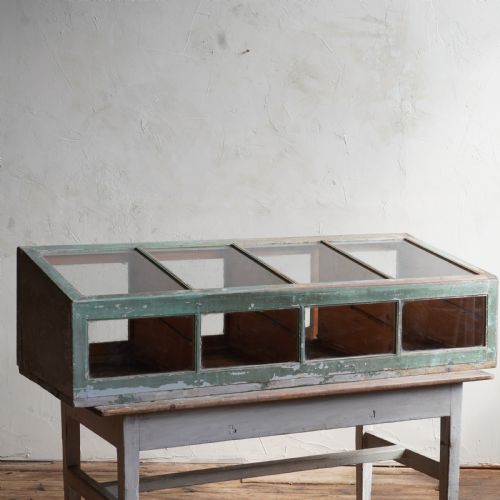
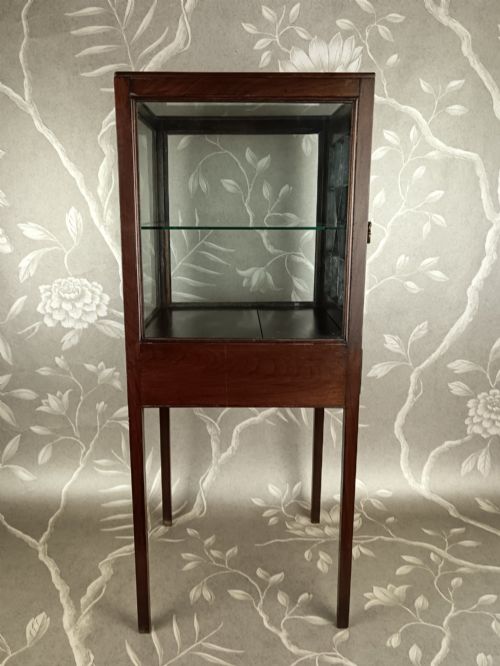
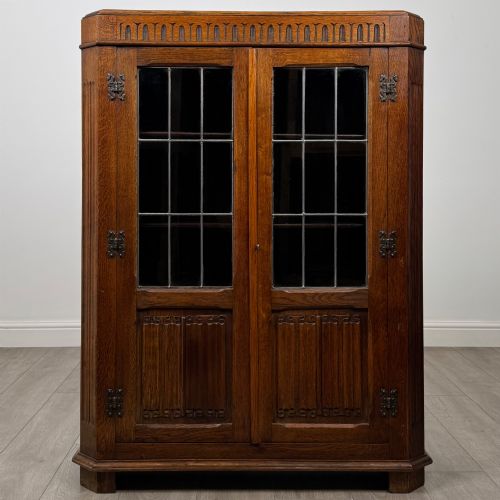
A glass glazed showcase serves to exhibit decorative objects, porcelain, or trade goods while protecting them from dust within domestic and commercial settings. When buyers search for this term, they encounter pieces ranging from compact countertop display cases to tall freestanding shop display cabinets.
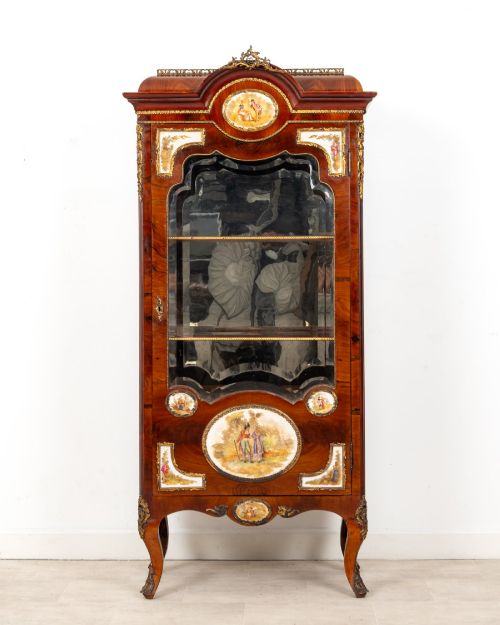
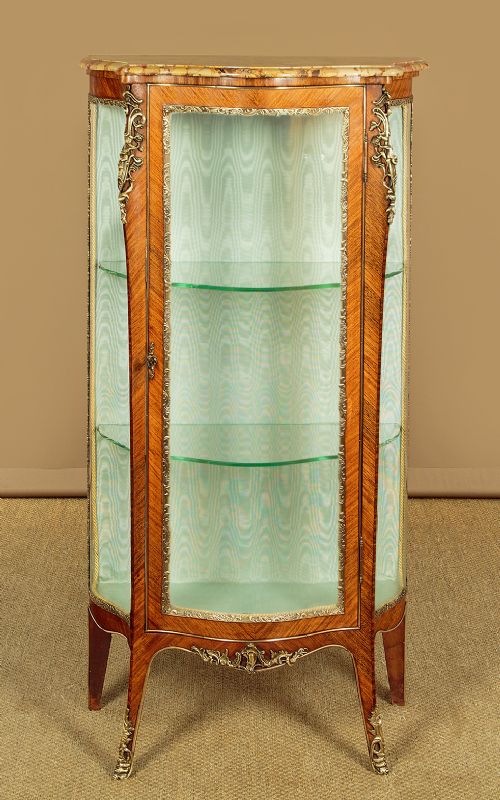
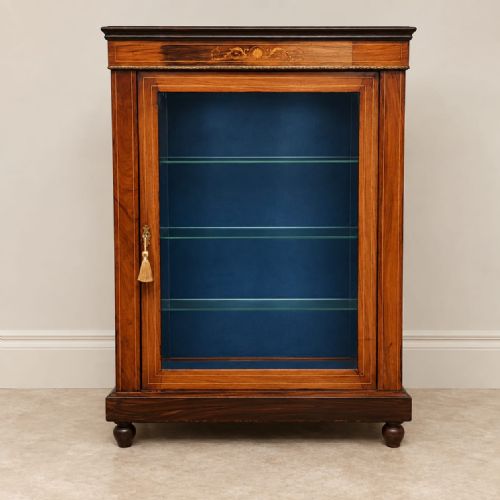
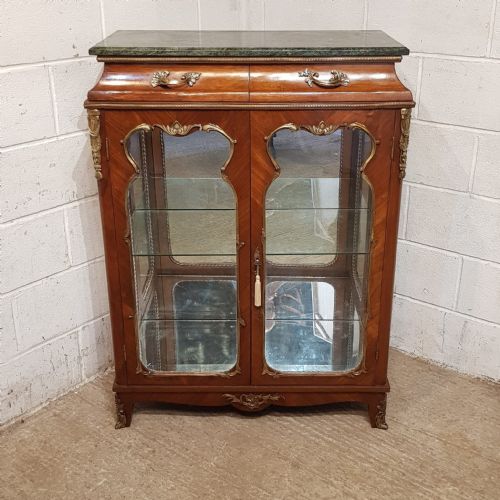
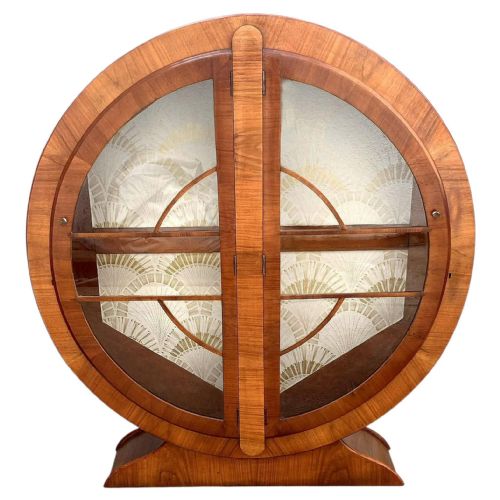
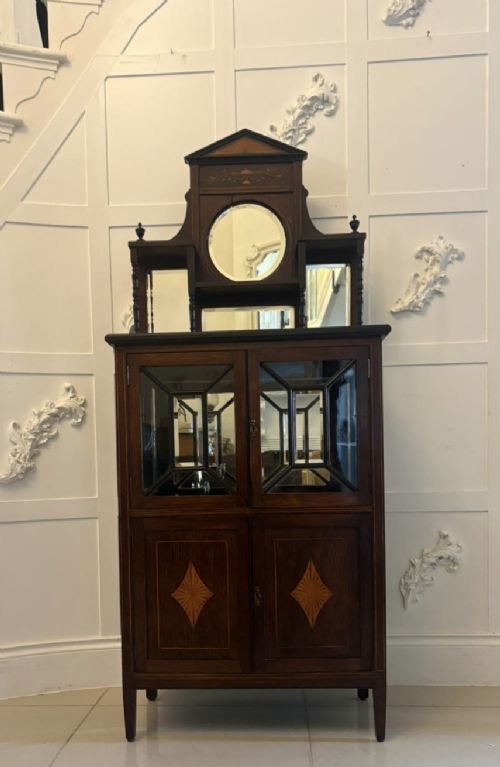
The selection on this page spans several distinct eras, drawing heavily from Victorian, Edwardian, and Art Deco periods alongside specific revivals like Louis XV Style. Common configurations include corner cabinets, pier cabinets, and specialised bijouterie tables with glass panels.
Origins vary between domestic household furniture and commercial shop fittings, incorporating woods such as mahogany, walnut, satinwood, and oak. Certain examples utilise mirror backs or fabric linings to enhance the presentation of the contents within.
Materials and construction methods
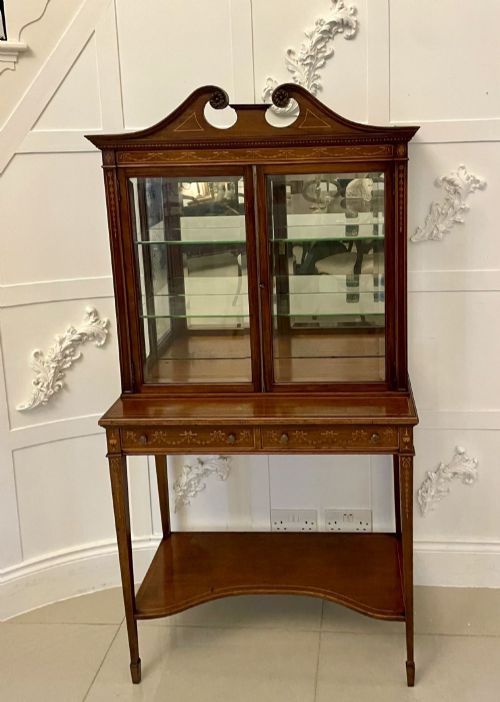
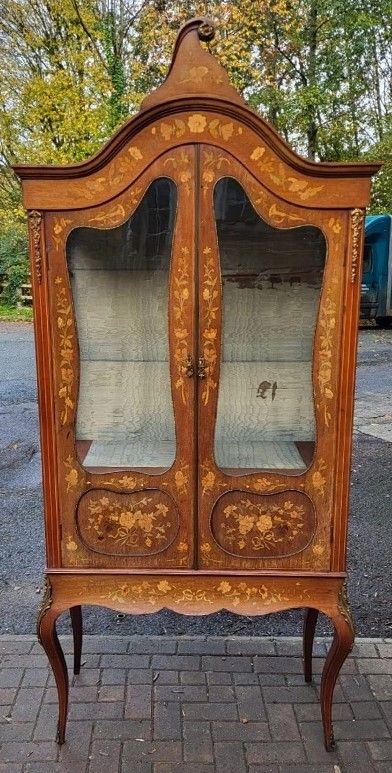
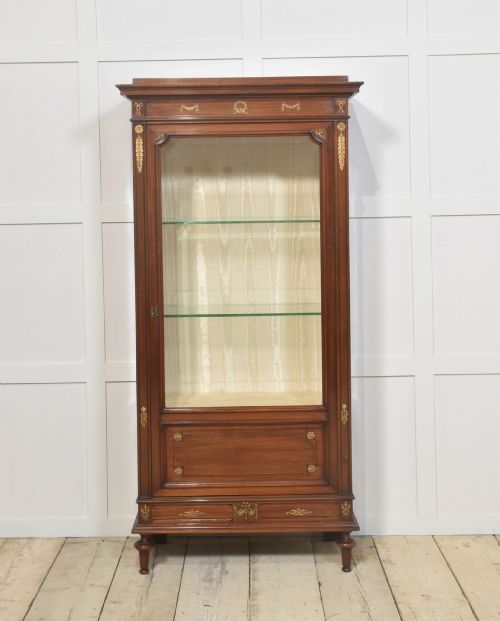
Makers built the primary structures of these cabinets using solid or veneered hardwoods like mahogany, walnut, oak, and satinwood, frequently applying floral marquetry, inlay, or painted decoration. Brass, ormolu, and gilt metal mounts furnished structural joints and decorative borders around the glazed doors and panels.
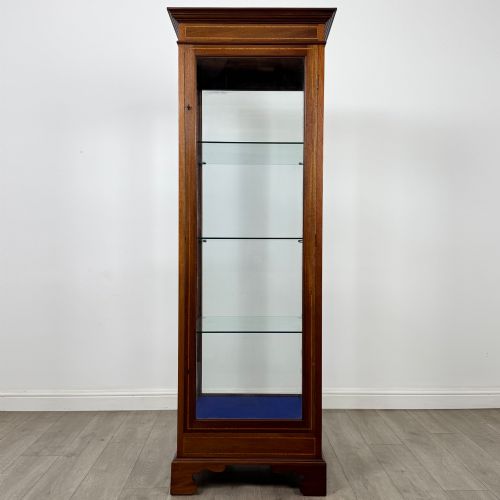
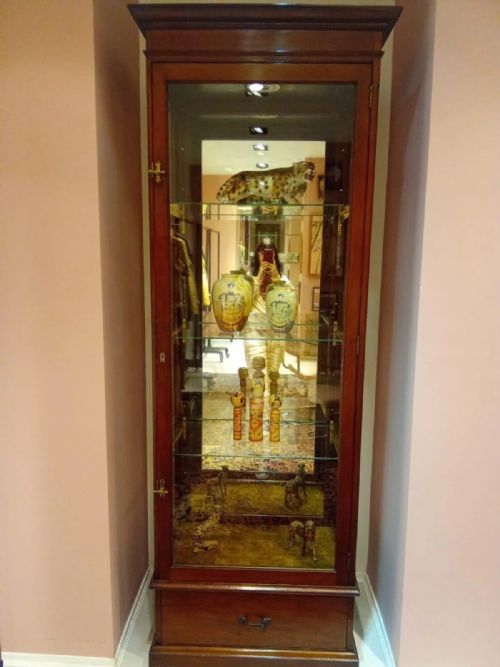
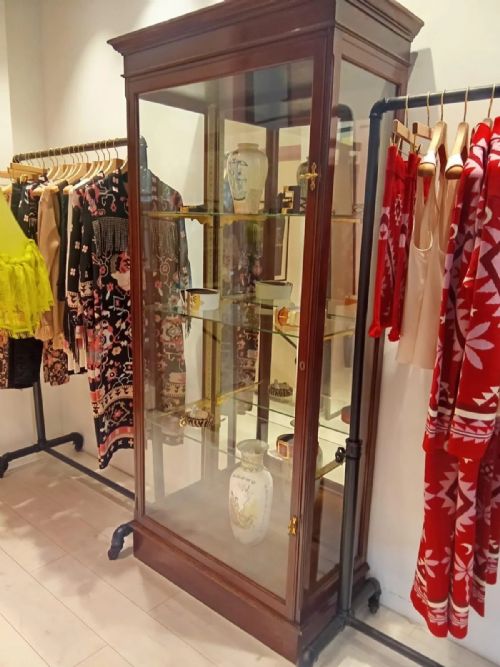
Glass panels fitted into rebated wooden frames formed the primary viewing areas, supported in some instances by adjustable internal glass shelves and mirrored interior backs. Countertop and freestanding commercial variants often utilised heavy timber bases with specialised hardware to endure frequent retail use.
Periods represented span from the nineteenth century through Victorian, Edwardian, and Art Deco eras up to the 1930s.
Evaluating craftsmanship and detail
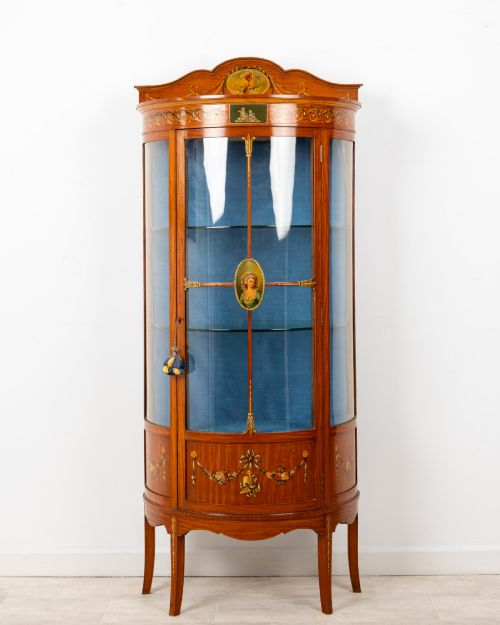
The calibre of a piece rests upon the precision of its timber selection, such as figured burr walnut, amboyna, or finely grained mahogany. Superior examples display meticulous marquetry, crisp brass or ormolu mounts, and harmonious proportions across curved bow fronts or specialised shapes like clove and circular designs.
Joinery execution distinguishes standard production from exceptional work, visible in the tightness of mitred frame corners and the smooth operation of glazed doors. The integration of high-grade mirrored backs and adjustable glass shelving elevates the interior architecture of the cabinet.
James Hicks·Rurka·F. Sage and Co.·Robert West Gunsmith
The Glass Glazed Showcase Glossary
- Vitrine
- A glass-sided cabinet designed specifically for displaying porcelain, curiosities, or fine objects. These enclosures often feature glazed sides as well as doors to maximise ambient light penetration.
- Bijouterie
- A low display table or cabinet featuring a glazed top and shallow compartment intended for jewellery, medals, and small collectables. They typically stand on slender legs at a height suitable for top-down viewing.
- Marquetry
- Decorative veneer work created by fitting together small pieces of wood, shell, or ivory to form geometric or floral patterns. Master craftsmen used this technique to ornament the friezes and doors of Edwardian cabinets.
- Ormolu
- Gilded bronze furniture mounts cast in ornate scrollwork or floral motifs and affixed to corners and door frames. This finish adds metallic contrast to dark timbers like walnut and mahogany.
- Pier Cabinet
- A narrow cabinet built to fit against the wall space between windows. Victorian examples frequently incorporate ebonised wood or inlaid panels.
- Bow Front
- A convex curved cabinet front that projects outward in a smooth arc. This shape requires advanced woodworking skill to bend timber and fit curved glass panes.
Glass Glazed Showcase: Frequently Asked Questions
What is a glass glazed showcase used for?
These cabinets protect and display collections of porcelain, silverware, and decorative objects away from dust and handling.
Commercial variants historically served shops and jewellers to merchandise goods securely while maintaining maximum visibility for customers.
How do I distinguish Edwardian from Victorian cabinets?
Victorian pieces tend to utilise heavier timbers like burr walnut, mahogany, and ebonised finishes with deep, dark patination.
Edwardian examples frequently favour lighter woods such as satinwood, brighter mahogany, and delicate marquetry inlay reflecting neoclassical revivals.
Where should I place a display cabinet?
Tall freestanding models suit dining rooms or drawing rooms where natural light can pass through the glazed doors to illuminate contents.
Countertop and table top versions sit effectively upon sideboards, desks, or dedicated stands to bring smaller objects to eye level.
Are the shelves adjustable?
Many shop display cabinets and larger domestic vitrines feature adjustable glass or timber shelving supported by internal brackets.
Fixed shelving remains common in older period pieces, particularly smaller pier cabinets and corner units.