


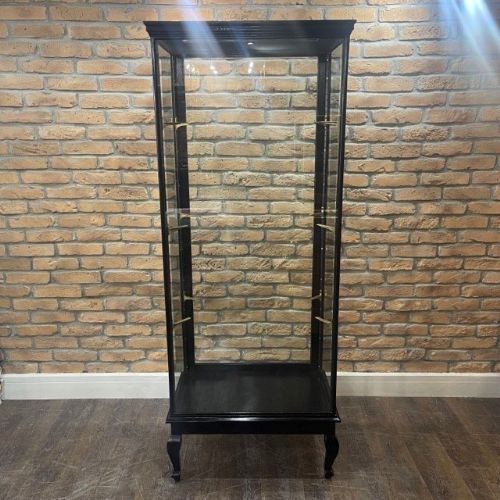


1920s Shop Display Cabinet
These 1920s shop display cabinet pieces are commercial fixtures built to showcase merchandise, offering buyers elegant glazed storage with period character.
1920s Shop Display Cabinet
When you search for a 1920s shop display cabinet, you encounter commercial furniture designed to exhibit retail goods to the public. These items originate from the 1920 period and Edwardian era, spanning interwar commercial and Art Deco styles.
The pieces on this page take several forms, including countertop display cases, haberdashery cabinets, tall tower cabinets, and large shop serving counters. You also find specialised pieces such as apothecary cabinets and needle drawer units.
Most examples serve to protect items under glass while keeping them fully visible from multiple angles. They range from small table top cases to pentagonal counters and corner cabinets.
Materials and construction
Makers construct these cabinets using structural timber frames of mahogany, oak, and ebonised wood combined with extensive glazed panels. Brass and bronze feature heavily in the framing, mounts, and hardware, adding strength and decorative contrast.
Interiors often incorporate functional elements like velvet or felt linings to cushion displayed objects. Mirror glass appears within backing panels to reflect light through the enclosed display space.
Needle drawers kept tiny buttons from escaping into the abyss.
Judging quality and execution
Quality shows in the choice of cabinet timber and the precision of the metal framing work. Pieces utilising solid mahogany or oak with substantial bronze or brass mounts represent superior commercial production.
The refinement of the glazing and the presence of specialised maker details distinguish standard retail furniture from high-end establishment fittings. Finely turned legs, such as Art Deco style supports, elevate the architectural presence of the cabinet.
F. Sage & Co.·Pollards·Siegel
The 1920s Shop Display Cabinet Glossary
- Countertop
- A smaller display case designed to sit upon a shop counter for close customer inspection of goods. These portable units typically feature glazed panels on the top and sides.
- Haberdashery cabinet
- A specialised storage unit featuring numerous small drawers, often with glass fronts or pulls, used for selling small sewing items and accessories.
- Tower cabinet
- A tall, vertical display case designed to maximise vertical floor space in a retail environment. These structures use narrow frames and extensive glass to exhibit items at eye level.
- Ebonised wood
- Timber treated with a dark finish to imitate expensive ebony wood. This technique provides a sleek, high-contrast surface popular in interwar commercial design.
1920s Shop Display Cabinet: Frequently Asked Questions
Where were these cabinets used?
These cabinets served merchants in various retail environments, ranging from drapery shops and pharmacies to general emporiums. Retailers positioned them on serving counters or directly on the shop floor to catch customer attention.
Today, they transition easily into domestic settings for displaying collections, silverware, or curiosities while keeping items free from dust.
How do I clean the brass?
Metal framing requires gentle dusting with a soft, dry cloth to prevent accumulation. Avoid abrasive chemical cleaners that strip the aged character from the bronze and brass mounts.
Preserving the original surface maintains the historical integrity of the piece.
Can I adjust the shelves?
Most commercial cabinets from this period feature fixed internal shelving designed to support the weight of heavy retail goods. Altering the interior layout is rarely straightforward without modifying the original structure.
Consider the fixed shelf heights when planning what objects you wish to display inside.
Are the glass panels original?
Many surviving cabinets retain their original glazed panels, though individual panes may show signs of age or replacement. Examining the glass closely reveals subtle waviness or minor imperfections typical of early production methods.
Original mirror glass often displays gentle foxing that marks its age.