

Glass Fruit Bowl Centrepiece
A glass fruit bowl centrepiece commands the middle of a formal table, combining translucent glass with metal mounts to anchor a dining room.
Glass Fruit Bowl Centrepiece
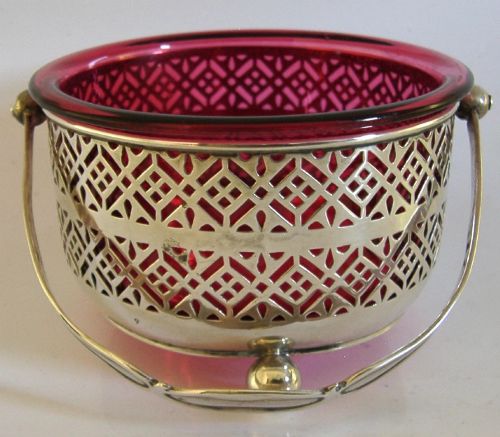
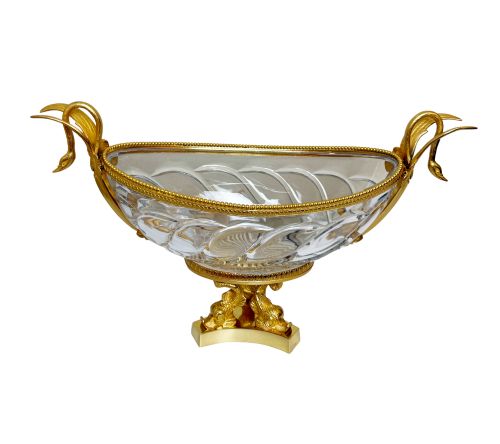
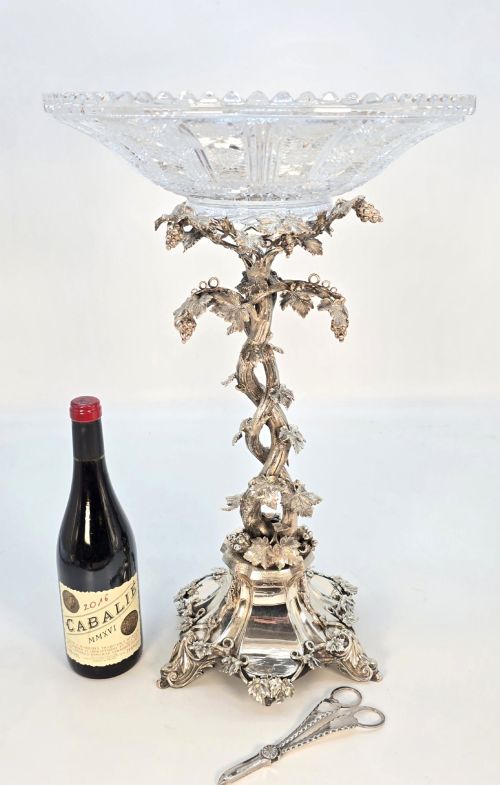
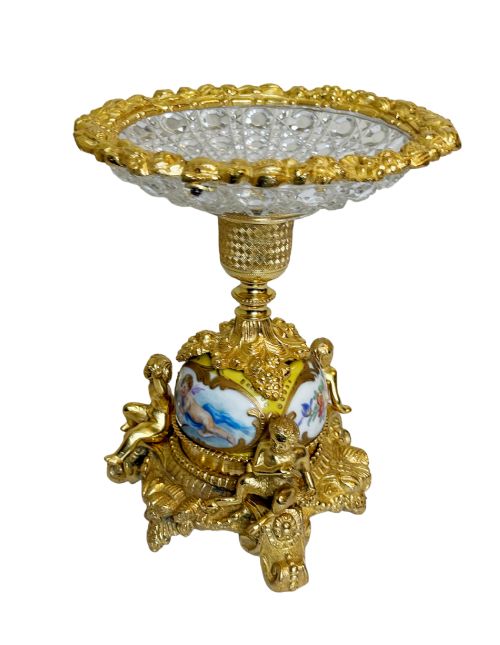
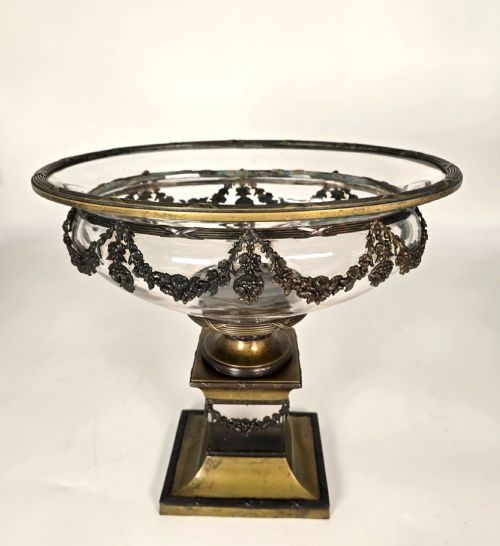
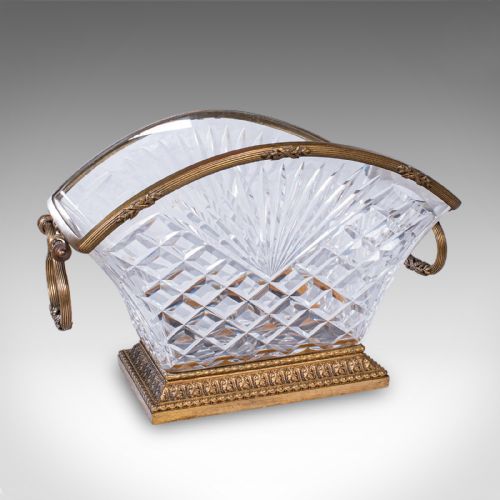
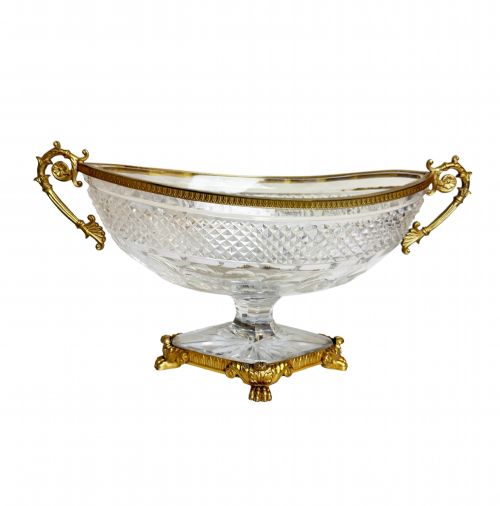
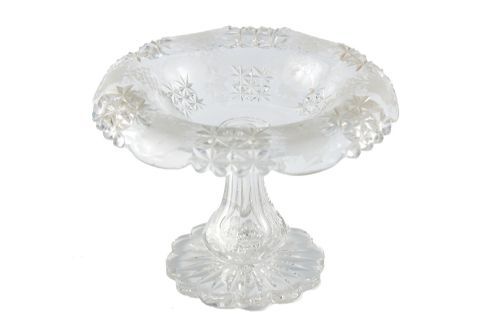
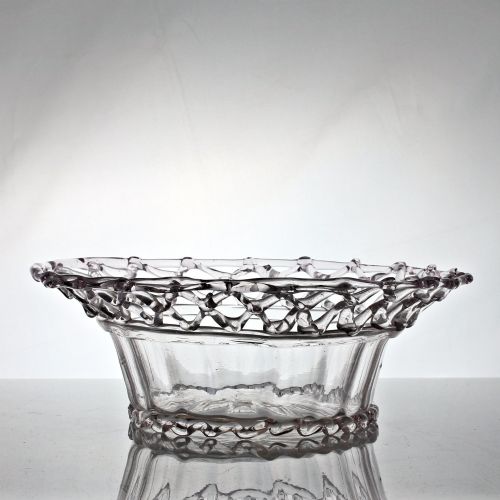
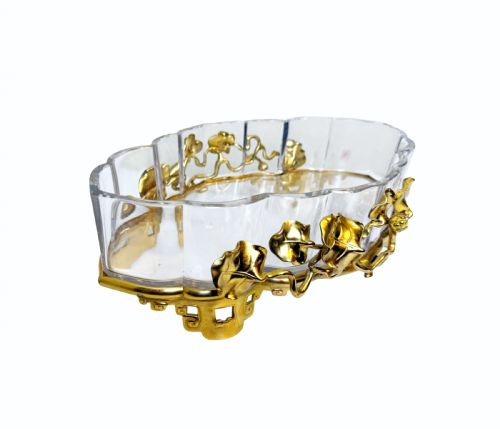
A glass fruit bowl centrepiece serves as a decorative focal point for dining tables and sideboards, taking forms from heavy footed comports to low open dishes. When you search for this phrase, you meet items spanning the Georgian, Victorian, Edwardian, and Art Deco periods, alongside 19th-century Continental designs. The version you are most likely to encounter on this page is a cut glass or crystal bowl set within a metal frame, often supported by a pedestal.
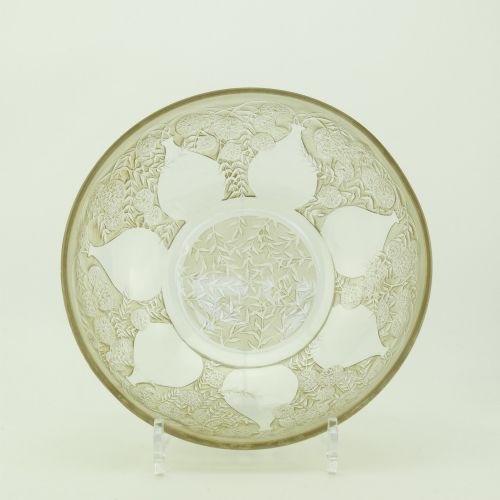
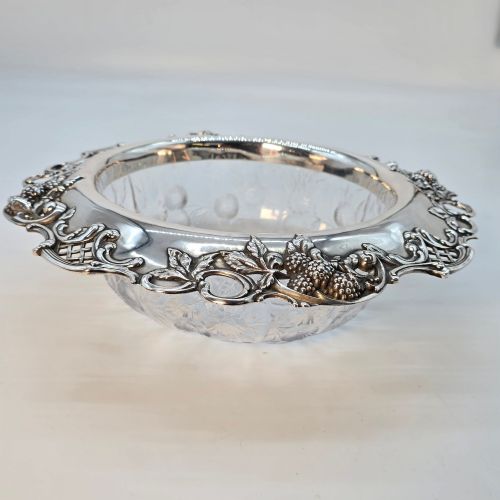
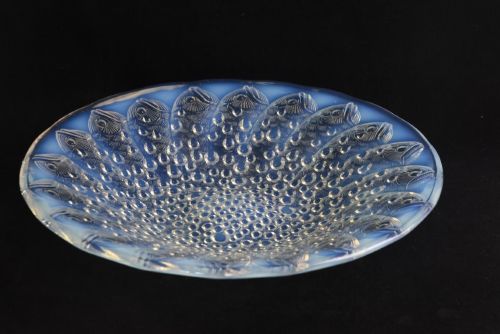
The materials recorded in these listings combine moulded or hand-blown glass with metal elements such as sterling silver, silver plate, gilt bronze, and ormolu. Styles range from the intricate cutting of Georgian Irish glass to the fluid lines of Art Nouveau green vaseline glass and the moulded opalescent surfaces of the 1920s and 1930s. Many examples incorporate decorative mounts, cherubs, or swing handles, bridging functional serving ware and ornamental sculpture.
Materials and construction
Makers produced these bowls using lead crystal, cut glass, opalescent glass, and coloured glass, often shaping them through hand-blowing and deep wheel-cutting. The resulting vessels display facets, flutes, and etched patterns that catch the light from various angles.
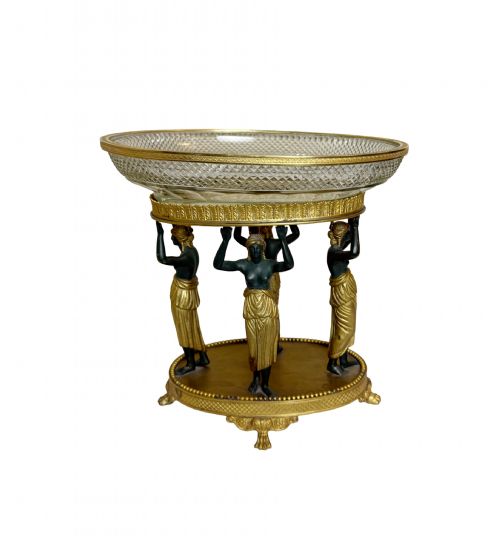
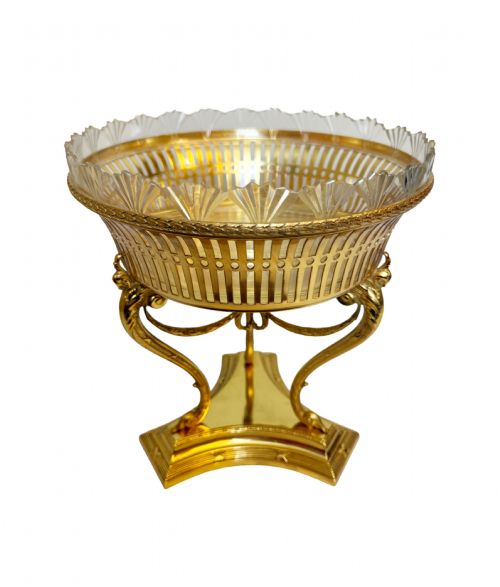
Metal components - including gilt bronze, ormolu, silver plate, and sterling silver - were cast, chased, and mounted as frames, pedestals, or handles to support the glass inserts. Makers secured these components using pins, screws, or direct integration into the base structure.
Listings range from Georgian cut glass and Victorian silver-plated épergnes to 1930s Art Deco opalescent bowls and Belgian crystal.
Distinctions in craftsmanship
The weight and clarity of the glass separate standard production pieces from finer examples, with high-lead crystal offering deeper resonance and sharper cut facets. Precision in the wheel-cutting, crispness of edge detail, and the absence of bubbles or cloudiness indicate superior glasshouse work.
The execution of the metal mountings defines the upper tier of these objects, particularly where gilt bronze, ormolu, or silver work displays fine chasing and secure, well-fitted joints. Signed pieces from established designers or recognised glassworks command greater interest for their documented provenance and distinct stylistic attribution.
Rene Lalique·Tiffany and Co·Walker and Hall·Val St Lambert·St Louis glassworks·Graystan
The Glass Fruit Bowl Centrepiece Glossary
- Cut glass
- Glass decorated by holding the vessel against a rotating abrasive wheel to carve geometric or floral patterns into the surface. This technique produces sharp facets that reflect light.
- Ormolu
- A gilding technique applied to a bronze base, creating a rich golden finish popular in French decorative arts. It provides ornate framing for crystal bowls.
- Opalescent glass
- Glass containing agents that cause parts of the material to appear milky or to catch a blue or amber glow when light passes through. It is characteristic of 1920s and 1930s decorative objects.
- Comport
- A stemmed dish or bowl raised on a pedestal, traditionally used for serving fruit or sweetmeats at the centre of a table.
- Vaseline glass
- Glass containing uranium dioxide, which produces a characteristic yellow-green colour and a bright green fluorescence under ultraviolet light.
Glass Fruit Bowl Centrepiece: Frequently Asked Questions
What is a glass fruit bowl centrepiece used for?
These bowls were traditionally placed in the middle of a dining table to hold fresh fruit, flowers, or sweetmeats during formal meals. They functioned both as practical serving vessels and as decorative statements for the dining room.
Over time, many of these pieces transitioned into purely decorative objects displayed on sideboards or mantels, valued for their reflective glass and detailed metal mounts.
How do I clean and care for antique glass bowls?
Wash the glass by hand in lukewarm water using a mild, non-abrasive detergent, supporting the weight of the bowl at all times. Avoid sudden temperature changes to prevent thermal shock and cracking in older lead crystal.
Keep metal mounts, especially silver plate and gilt bronze, dry and clean with a soft cloth. Avoid using harsh metal polishes near the glass edge to prevent chemical damage.
Are these bowls suitable for daily use?
While these pieces were originally made for dining tables, their age and delicate metal mounts make them better suited for occasional display or gentle service. Heavy everyday use increases the risk of chipping the hand-cut glass or loosening the antique frames.
Placing felt pads beneath the base can protect both the furniture surface and the lower mounts from wear when moving the piece.