
Glass Front China Cabinet
A glass front china cabinet brings domestic ceremony into a room, offering a clear stage for treasured porcelain through polished panes.
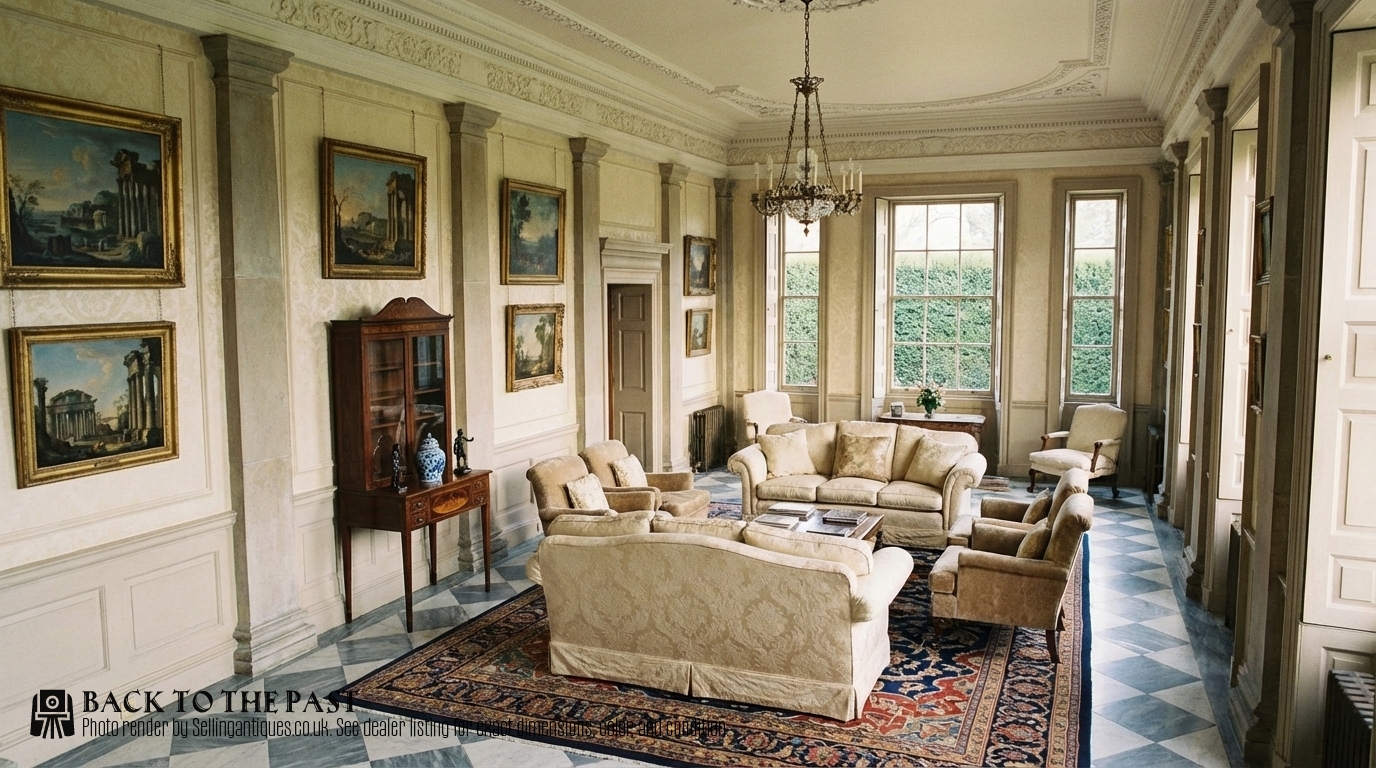
Glass Front China Cabinet
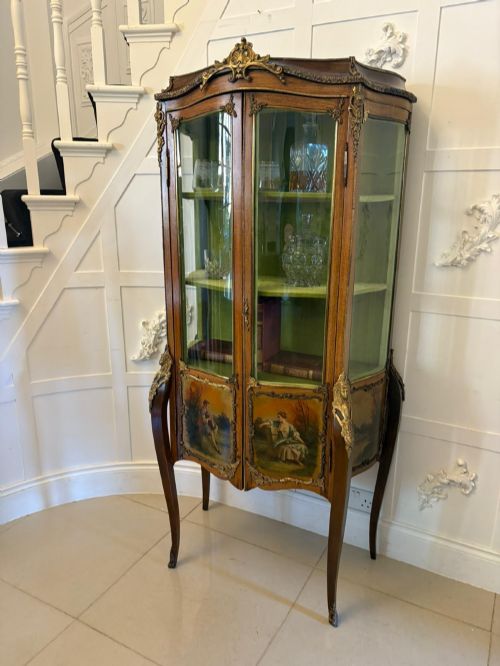
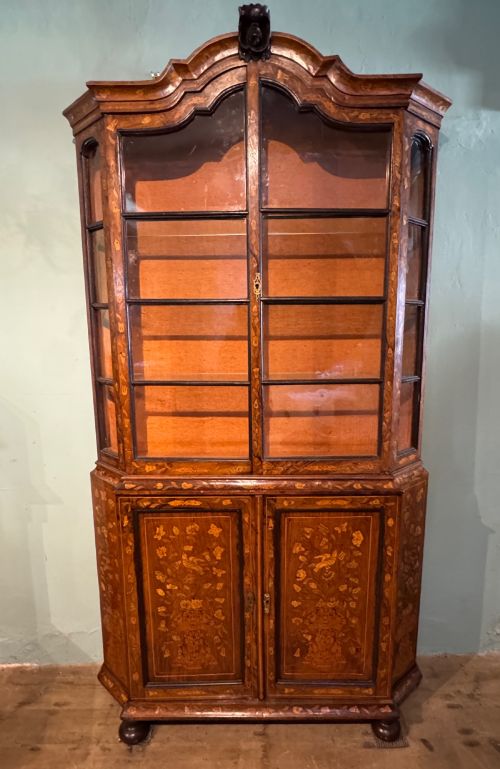
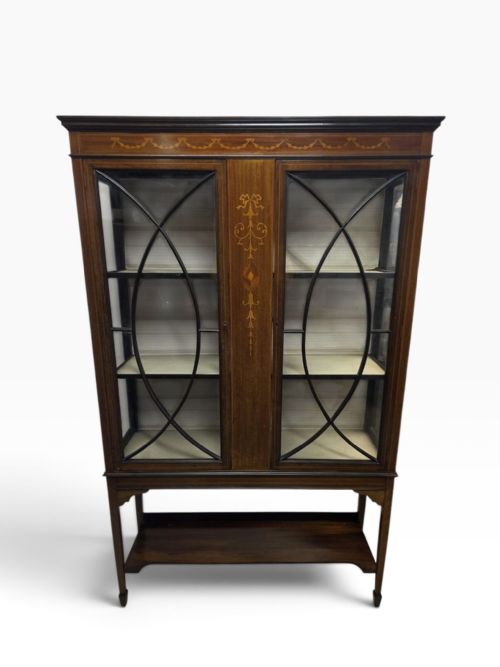
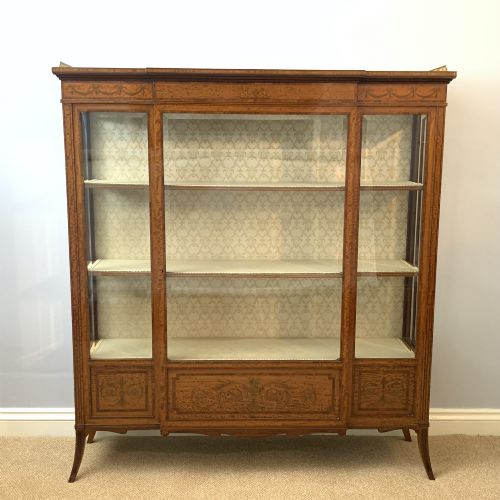
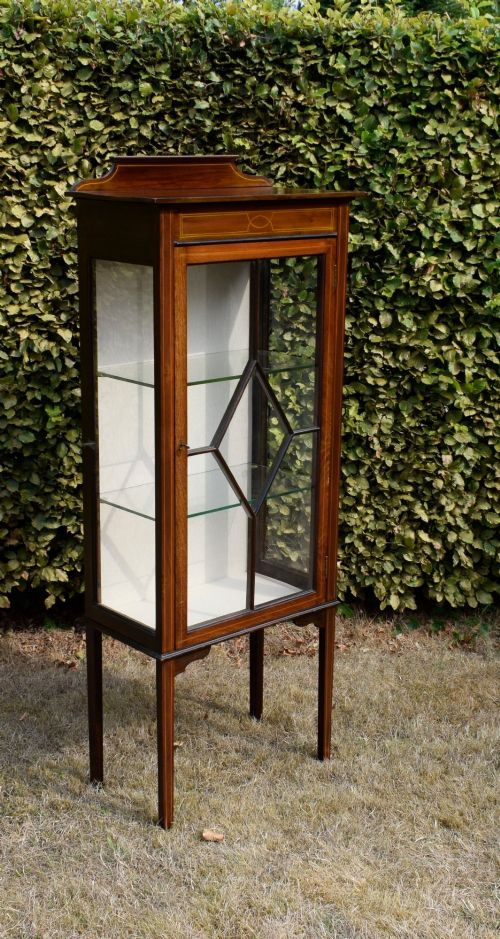
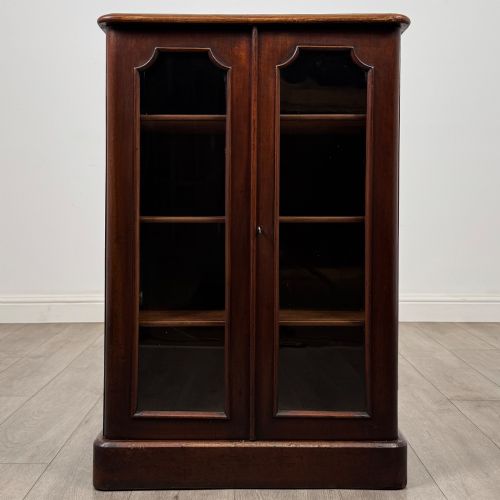
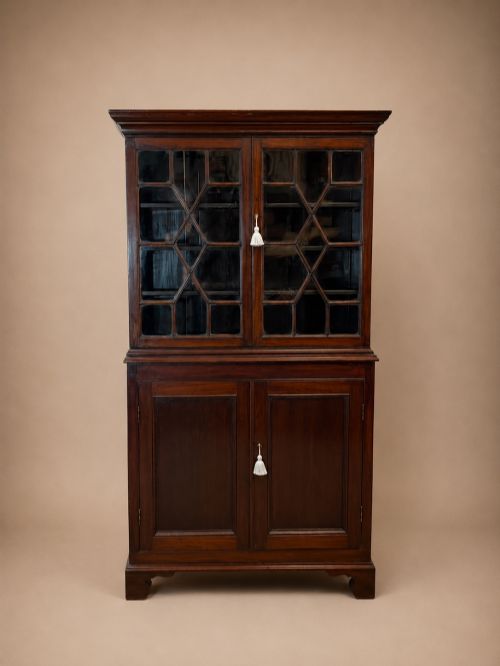
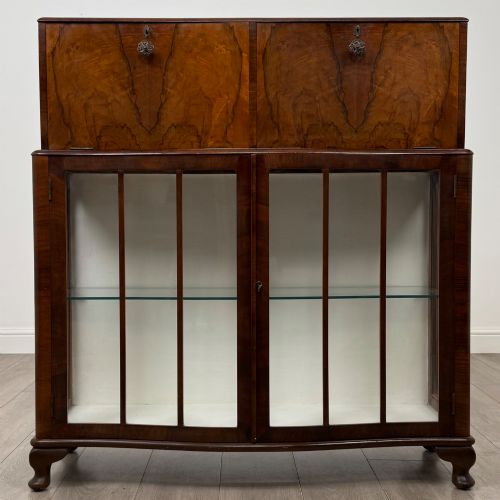
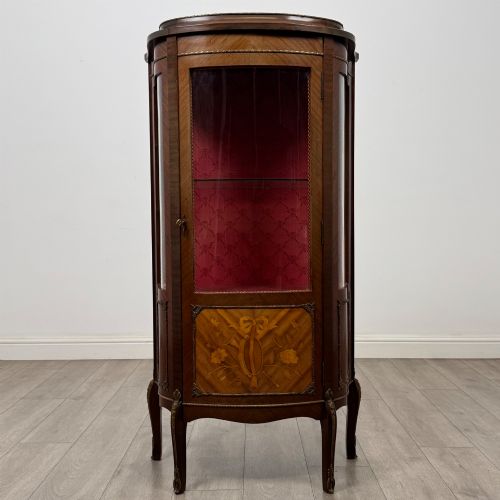
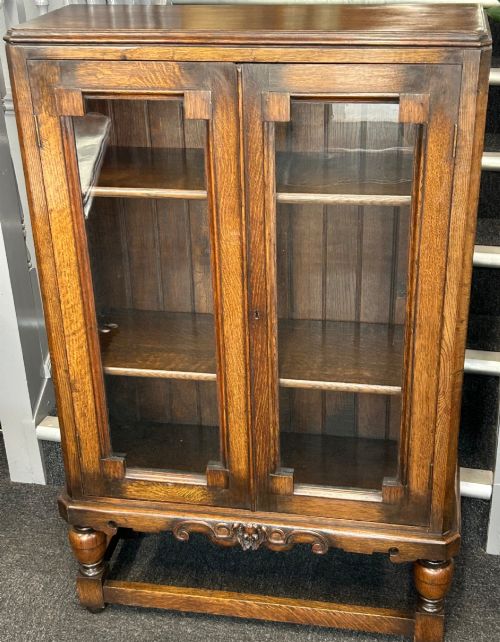
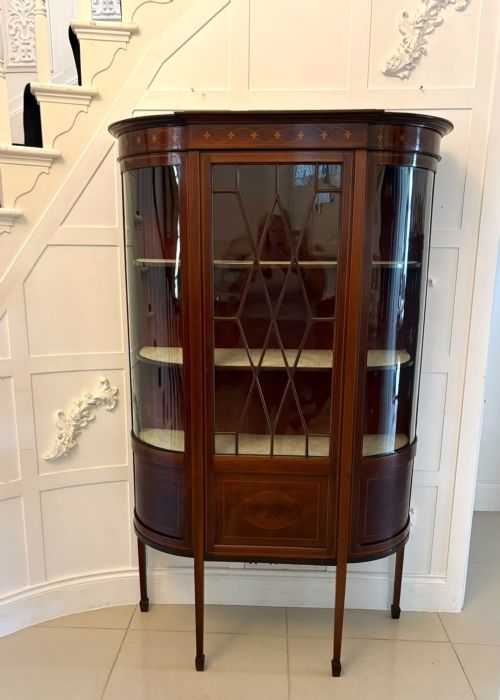
A glass front china cabinet takes many shapes across the Victorian, Edwardian, and twentieth-century periods, appearing as slim display cabinets, corner cabinets, and freestanding vitrines. The Edwardian mahogany inlaid model represents the version most frequently encountered on this page, often featuring delicate stringing and glazed doors.
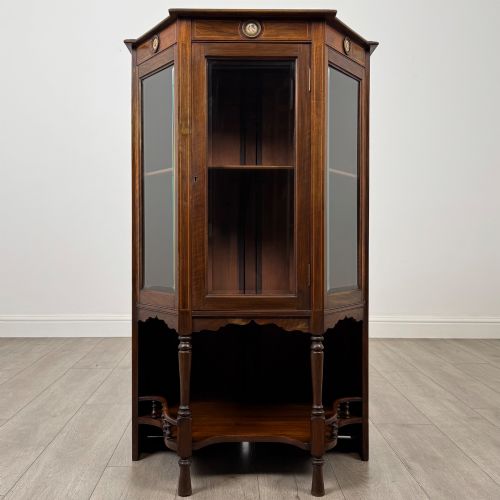
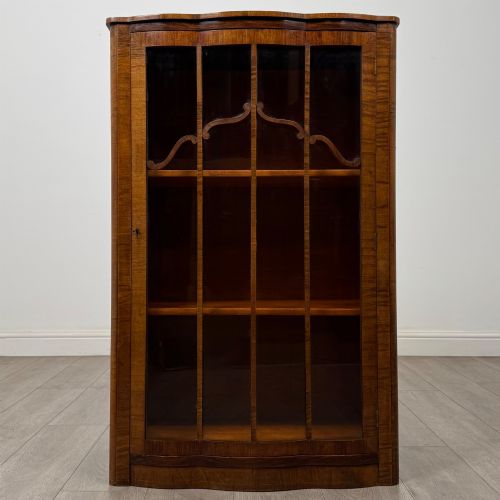
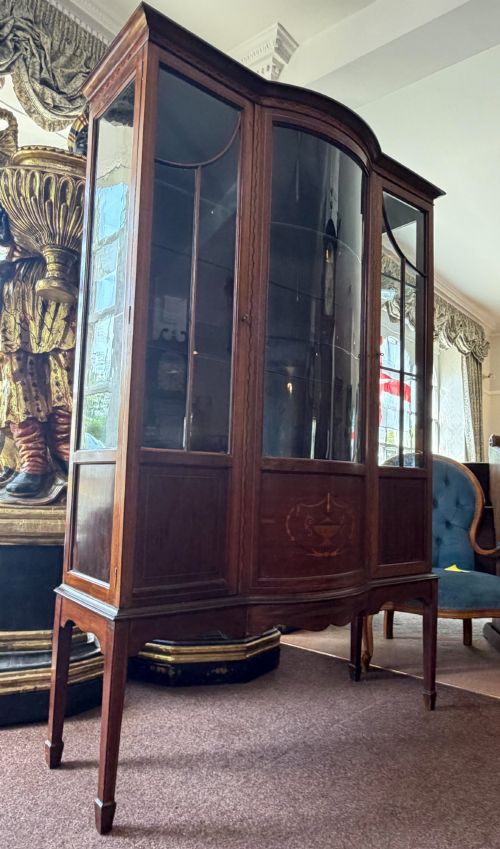
Makers and cabinetmakers also produced bow-fronted and serpentine variations, alongside pieces designed to fit awkward corners or sit upon slender legs. These forms derived from earlier display traditions, adapted by Edwardian and late nineteenth-century workshops to suit domestic drawing rooms.
The materials span native and imported timbers, primarily mahogany, walnut, and satinwood, frequently paired with glass doors that protect fragile contents from dust while keeping them visible.
Materials and Construction
Cabinetmakers constructed the main carcass from hardwoods such as mahogany and walnut, frequently applying veneers of satinwood or kingwood to create figured surfaces. Inlays of lighter fruitwoods formed delicate decorative borders across Edwardian and Sheraton Revival examples.
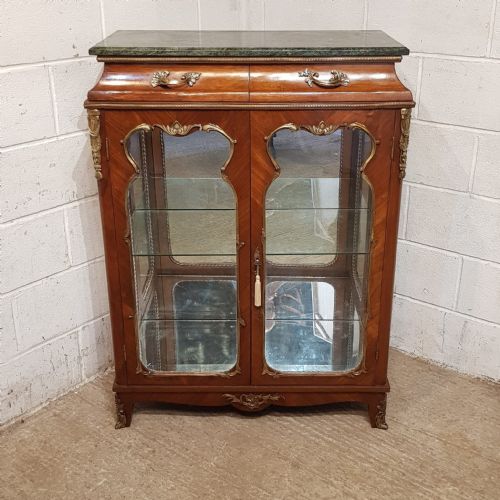
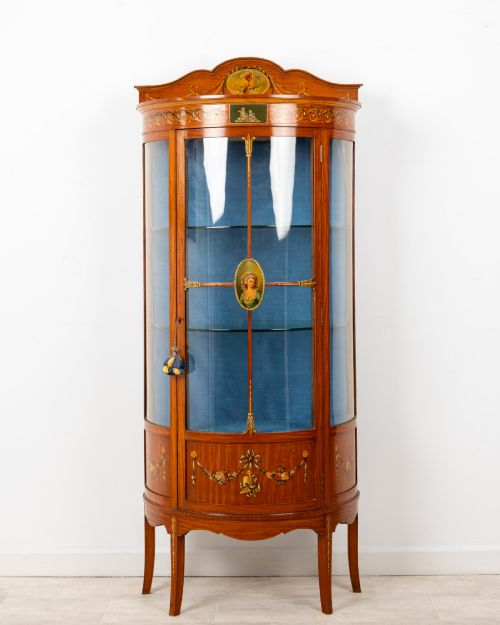
Glazing techniques secured sheets of glass within wooden framing bars, while brass mounts, ormolu, and gilt metal details reinforced corners and decorated French-style vitrines. Interior spaces occasionally incorporated fabric-lined shelving to cushion china and glassware.
Cabinet styles span formal Sheraton Revival interpretations alongside regional Dutch marquetry and French Rococo revival forms.
Standards of Execution
Quality rests upon the crispness of the cabinetmaker's inlay and the selection of figured timber veneers, where balanced grain patterns elevate a piece above standard production. The integration of bronze mounts, cast ormolu, and hand-painted Vernis Martin panels separates standard domestic storage from ambitious exhibition furniture.
Joinery execution dictates longevity, visible in the snug fit of glazed doors and the tidy execution of dovetails within interior drawers. Superior examples maintain balanced proportions, refined glazing bars, and retain original brass hardware without excessive replacement.
Edwards & Roberts·Maple & Co.
The Glass Front China Cabinet Glossary
- Vitrine
- A glass-fronted cabinet designed specifically for displaying fine porcelain, curiosities, and decorative objects. These often feature glazed sides as well as front panels to maximise light entry.
- Vernis Martin
- A simulated Japanese lacquer technique developed in eighteenth-century France and revived on nineteenth-century cabinets. It utilised successive layers of varnish to create glossy, painted narrative scenes.
- Stringing
- A narrow strip of contrasting wood inlaid into a cabinet surface to form delicate decorative borders. This technique appeared widely on Edwardian mahogany furniture.
- Serpentine
- A curved shape featuring a convex centre flanked by concave ends, creating a gentle undulating line. Cabinets with this profile required advanced woodworking skill to shape timber and glass accurately.
- Ormolu
- Gilded bronze mounts applied to furniture for decorative enrichment, common on French revival and nineteenth-century vitrines. The technique involved treating cast bronze with gold amalgam.
Glass Front China Cabinet: Frequently Asked Questions
How do I clean the glass?
Use a gentle glass cleaner applied to a soft cloth rather than directly onto the glass, preventing liquid from seeping into antique wooden frames or damaging delicate stringing.
Wipe carefully along the grain of surrounding woodwork if any moisture transfers during cleaning.
Where should I place a cabinet?
Position your cabinet away from direct sunlight and strong heat sources to protect timber veneers from drying out, cracking, or fading over time.
Ensure the floor surface is level so the glazed doors hang evenly and latch correctly without straining hinges.
How do I secure interior shelves?
Most cabinets utilise traditional wooden support slips or adjustable metal brackets to hold glass or wooden shelves securely at desired heights.
Check that shelf edges do not press directly against glass panes when loading heavier china collections.
Can I adjust the door hinges?
Many older brass hinges are fixed with traditional screws that settle into original timber housings, meaning adjustments should be approached with care.
If doors bind slightly due to seasonal humidity changes, consult a professional restorer rather than forcing the alignment.