
Glass Drop Light Fitting
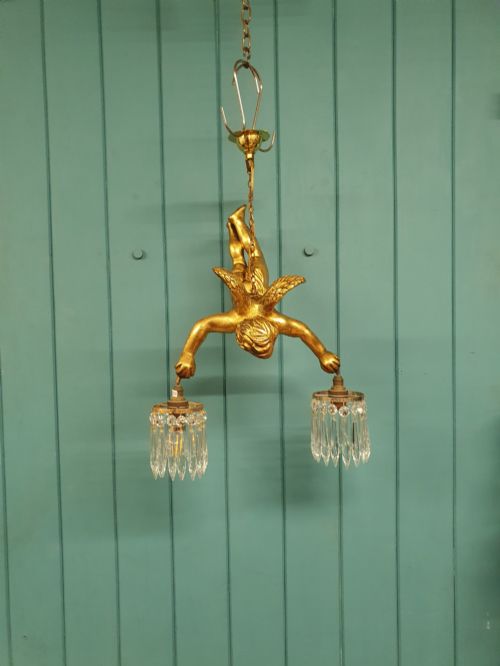
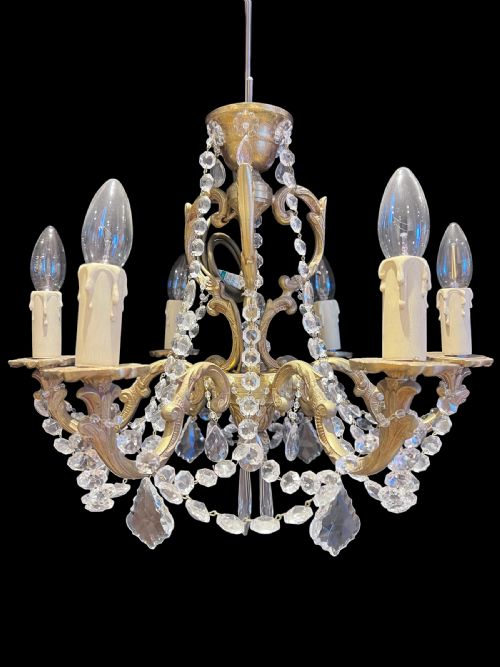
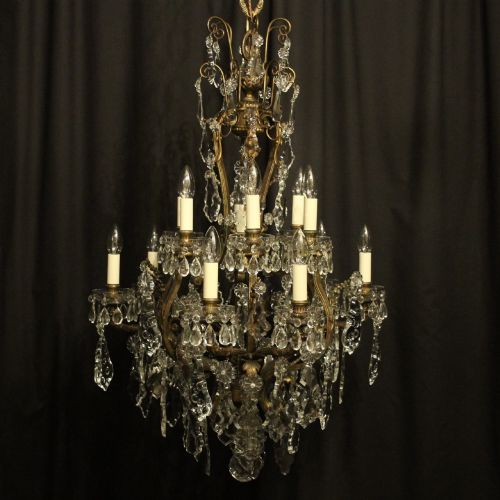
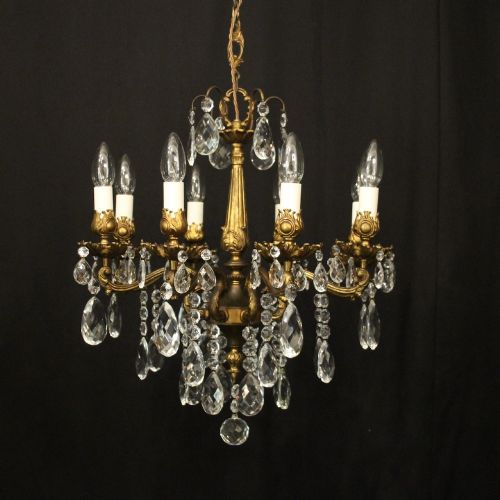
These glass drop light fittings bring together brass, cut glass and crystal to hang from ceilings and walls with genuine period character.
Glass Drop Light Fitting
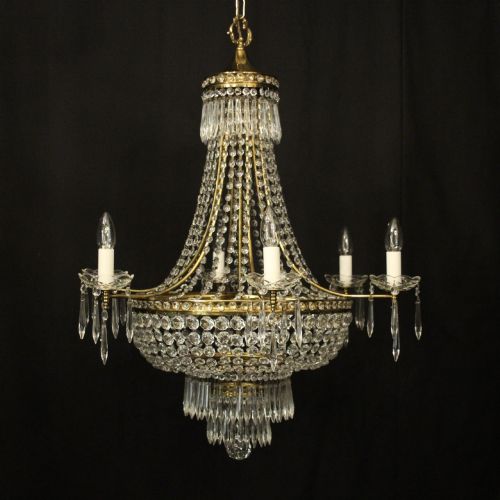
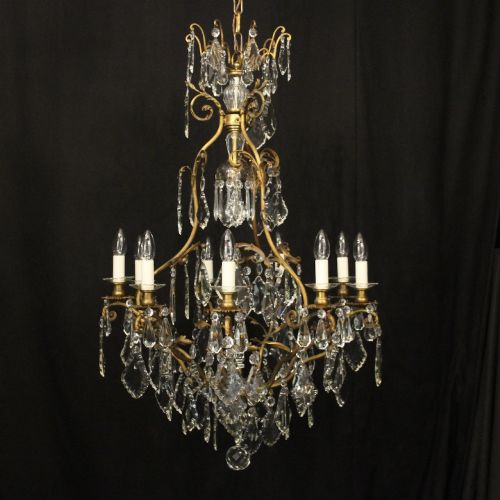
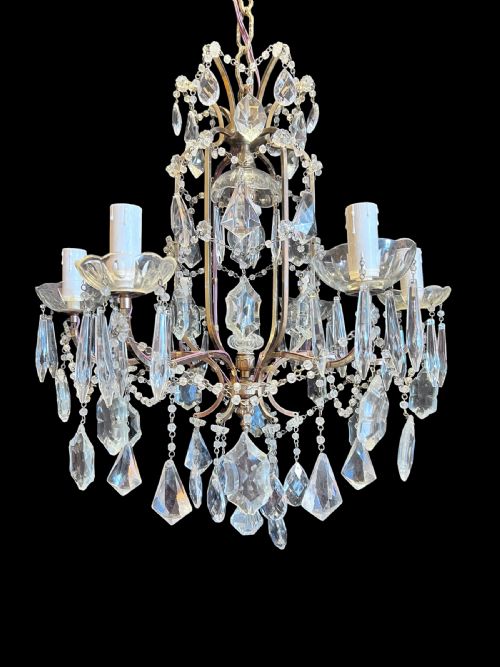
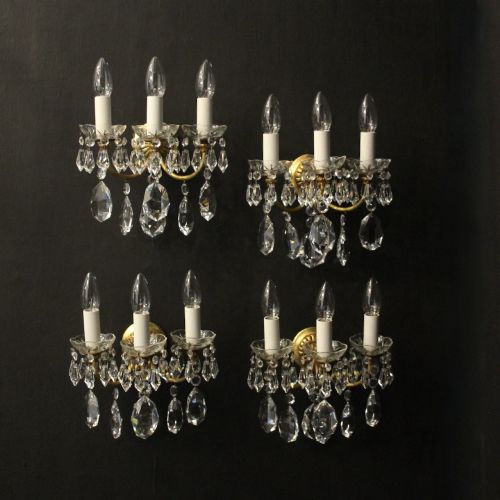
A glass drop light fitting provides illumination through fixtures dressed with prismatic elements, hanging crystals and glass beads. When searching for a glass drop light fitting, buyers encounter chandeliers, ceiling lights, pendant lights and wall lights spanning periods from the nineteenth century through the Edwardian era to the 1930s.
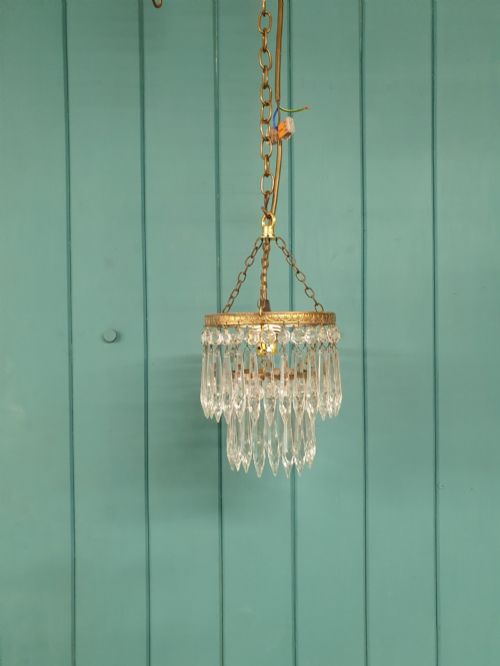
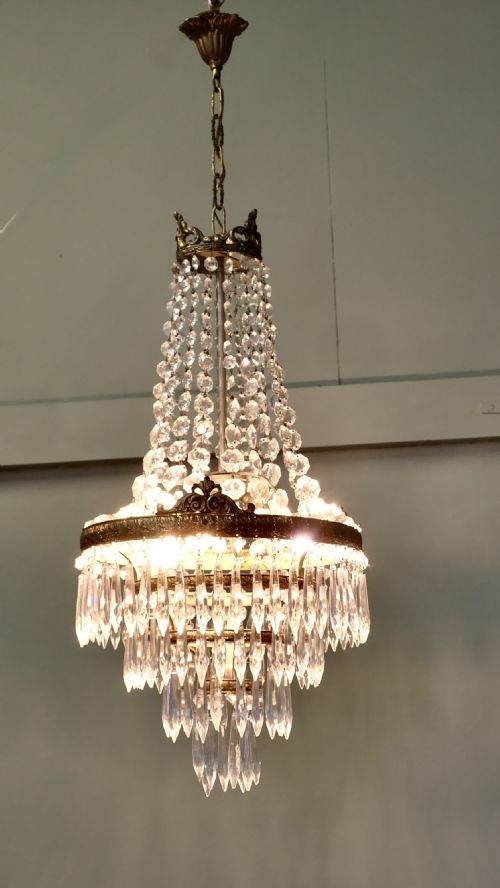
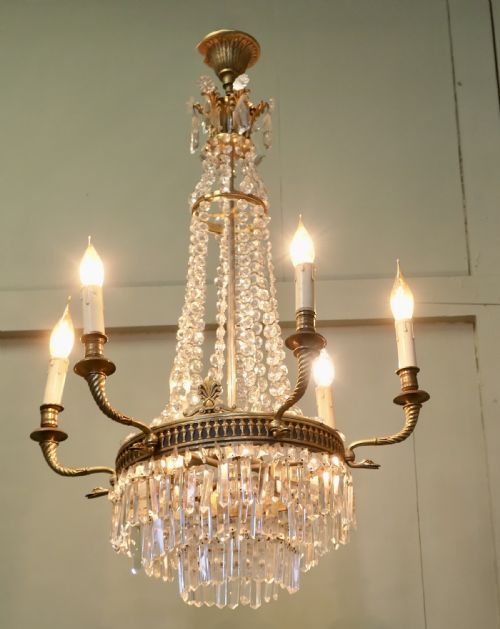
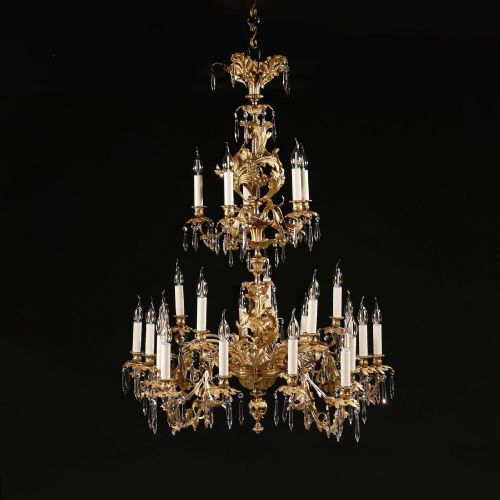
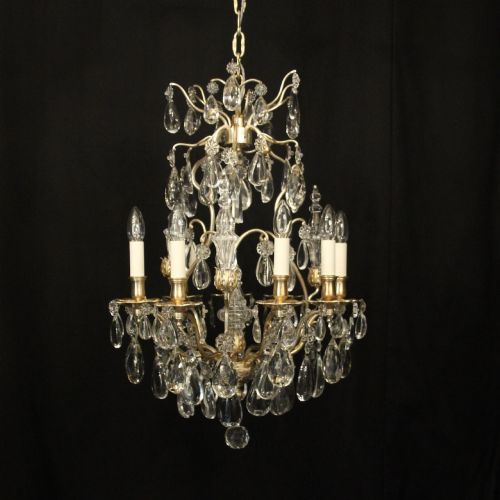
The selections on this page lean heavily towards French and Italian designs, ranging from small bag chandeliers measuring a few inches to large multi-light tent and waterfall arrangements. Brass, gilded bronze and gilt metal form the structural framework that supports the cascades of glass.
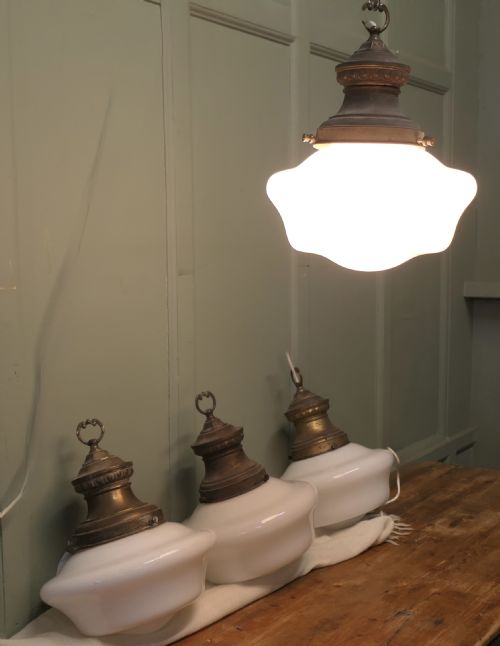
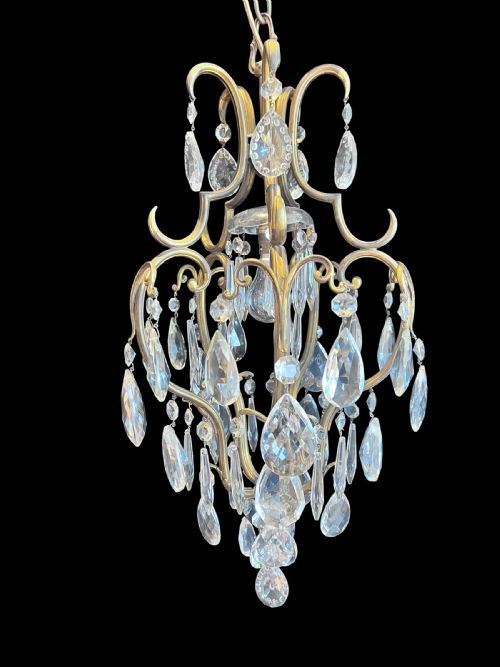
Smaller examples include single light plafonieres, spike chandeliers and bag fixtures featuring coffin prisms and drops. Larger formats scale up to multi-branch chandeliers influenced by French Empire and Rococo styles.
Materials and construction
Makers built the foundational frames of these fittings using cast brass, bronze, metal and gilt brass, often applying a silver or gold finish to the metalwork. Structural branches and hoops secure the hanging elements in symmetrical patterns.
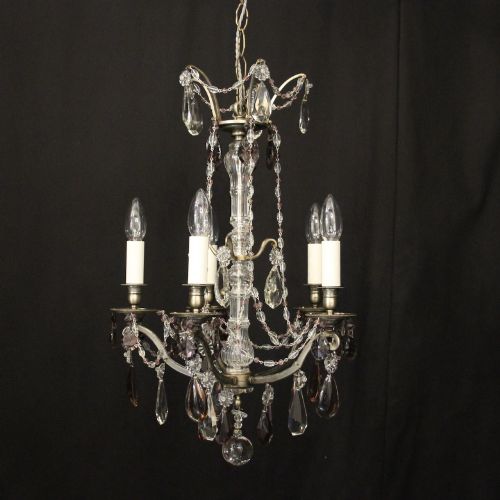
The optical elements rely on cut glass, crystal and crystal glass shaped into drops, spikes, beads and prisms. Metal pins and wire links connect the individual glass pieces to the brass frames, allowing movement and light refraction.
Listings feature brass, gilded bronze, cut glass and crystal materials across nineteenth-century, Edwardian and 1930s periods.
Distinctions in craftsmanship
Quality reveals itself in the depth of the metal casting and the precision of the glass cutting. Finer pieces display crisp hand-cut facets on crystals that scatter light cleanly, paired with substantial brass or bronze mountings.
The integration of the design determines the visual coherence of the fixture. Superior examples balance the weight of the metal armature with the density and arrangement of the glass drops.
The Glass Drop Light Fitting Glossary
- Tent and waterfall
- A lighting arrangement where an upper conical section of strung crystals feeds down into a wider cascading lower tier.
- Bag chandelier
- A flat-backed or basket-shaped fixture covered in closely hung glass drops that form a silhouette resembling a small bag.
- Coffin prism
- A long, flat-sided glass pendant with a pointed termination reminiscent of a geometric coffin shape.
- Plafoniere
- A ceiling-mounted bowl or shallow light fitting positioned directly against the plaster.
- Spike chandelier
- A compact hanging light featuring upward or outward pointing glass spikes radiating from a central mount.
Glass Drop Light Fitting: Frequently Asked Questions
How do I hang a heavy brass chandelier?
Installation requires fixing directly into ceiling joists using a suitable metal hook and mounting plate that can bear the combined weight of the brass frame and crystal drops.
Professional consultation with an electrician ensures the wiring safely supports the electrical load of multi-light fittings.
What rooms suit a bag chandelier?
Compact bag chandeliers and small spike fittings work well in hallways, cloakrooms or bedrooms where ceiling height is limited but decorative character remains important.
Their flat profiles allow them to sit closer to the ceiling than sprawling multi-branch chandeliers.
How do I clean cut glass drops?
Maintenance involves wiping individual glass drops with a mild cleaning solution while they remain attached to the frame, using a soft cloth to avoid scratching.
For deeper cleaning, remove the drops carefully in small sections, wash them in warm soapy water and dry them thoroughly before rehanging.
How do I identify an Edwardian light fitting?
Edwardian fittings often appear in smaller formats, such as five to twelve-inch bag or spike chandeliers, reflecting early twentieth-century domestic scales.
They frequently combine simple brass mounts with early cut glass prisms characteristic of the period around nineteen hundred to nineteen ten.