
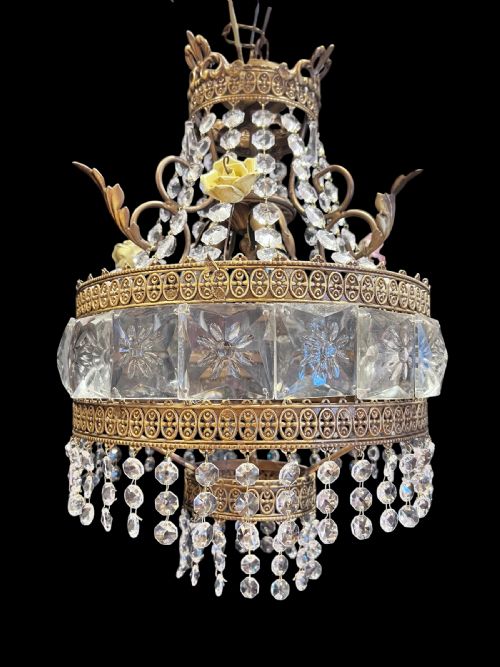
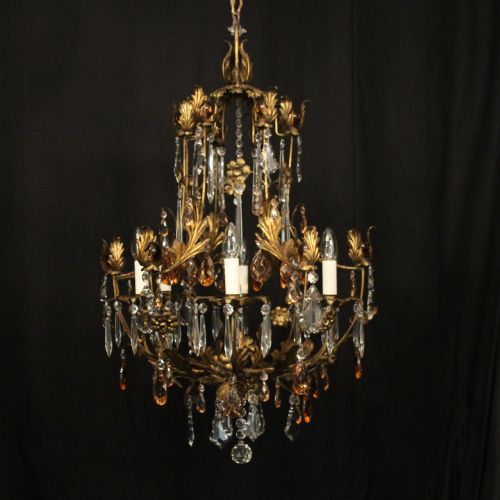
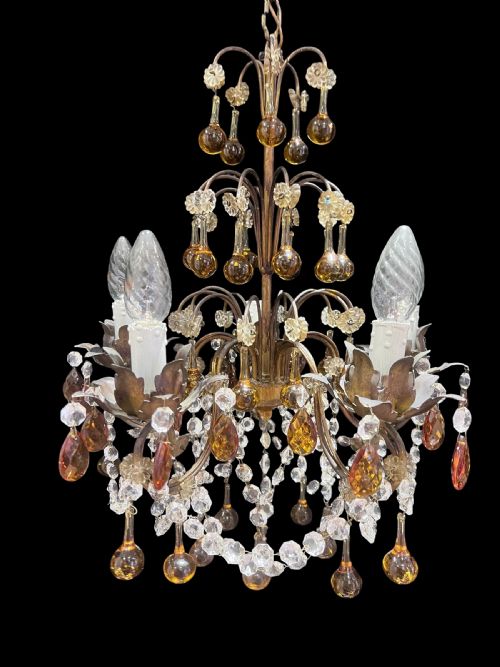


Florentine Glass Chandelier
A florentine glass chandelier brings warmth and intricate Italian character to a room through layered glass drops and gilded metal work.
Florentine Glass Chandelier
A florentine glass chandelier is a decorative overhead lighting fixture rooted in Italian traditions, spanning styles from Italian Rococo Revival to Baroque. These pieces range from intimate three light fixtures to massive twenty four light configurations.
Most examples found here date from the early twentieth century, including Edwardian era pieces and items produced around 1900 to 1930. The typical form combines multiple tiers, branching arms, and abundant glass or crystal embellishments.
How they were made
Construction relies heavily on gilt metal, brass, wrought iron, and iron frameworks shaped into delicate or robust armatures. Artisans then applied gilding or polychrome finishes to the metal surfaces to create rich textural depth.
Lighting assemblies are densely hung with glass, crystal, frosted glass, and occasionally porcelain flowers or coloured fruits. Beaded garlands and coloured crystals are wired directly to the frame to catch and refract light.
Some chandeliers come festooned with delicate glass fruits and porcelain blooms, turning a simple ceiling fixture into an indoor orchard.
What varies in quality
Quality rests in the richness of the metalwork and the complexity of the hanging elements, distinguishing simple frames from heavily detailed multi tiered structures. Superior examples feature extensive hand applied gilding and dense arrangements of coloured crystals.
The integration of delicate elements such as porcelain flowers or fruit motifs separates standard production from finer artisan pieces. Heavier framing supports larger light capacities, reflecting more ambitious scale and design.
The Florentine Glass Chandelier Glossary
- Florentine
- A regional Italian style characterised by ornate gilt metal frameworks, organic leaf motifs, and lavish glass drops. This aesthetic draws heavily upon historical Baroque and Rococo design traditions.
- Gilt metal
- Metal that has been coated with a thin layer of gold leaf or gold paint to give a lustrous metallic finish. It provides the signature warm glow found on these chandeliers.
- Polychrome
- A decorative surface treatment utilising multiple distinct colours painted onto the metal or wooden framework. It adds visual variety beyond standard monochrome gilding.
- Beaded
- A descriptor for glass or crystal elements strung together into swags and garlands that drape across the chandelier frame. These beads enhance the reflective surface area of the fixture.
Florentine Glass Chandelier: Frequently Asked Questions
What periods do these pieces come from?
The selection primarily encompasses pieces from the early twentieth century, including Edwardian examples and items dated from 1900 to 1930. These chandeliers often channel older Italian Baroque and Rococo revival styles.
Manufacturing during this era combined traditional metalworking techniques with inventive glass drop configurations. This creates an antique appearance rooted in specific twentieth century interpretations.
How many lights do I need?
Light capacity varies widely, from modest three light and five light fixtures up to massive eighteen light and twenty four light arrangements. The choice depends on room dimensions and ceiling height.
Larger double tiered chandeliers require substantial open space to command the room properly. Smaller single tier options suit more intimate residential settings.
Are all parts original?
Antique lighting frequently undergoes rewiring and component maintenance to meet modern electrical safety standards over a century of use. Glass drops and crystal components may occasionally be replaced or matched during restoration work.
Checking the wiring and overall structural integrity ensures the fixture is safe for installation. Patina on the gilt metal generally indicates genuine age.