

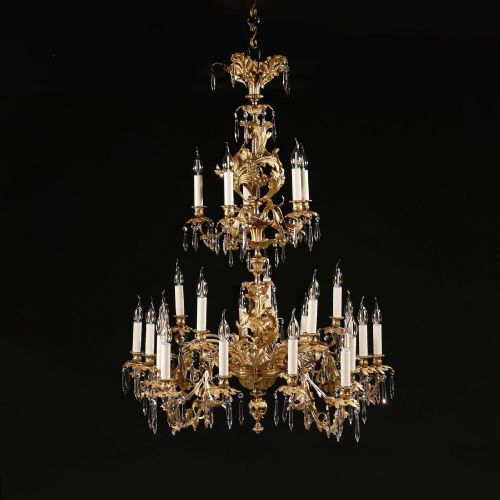
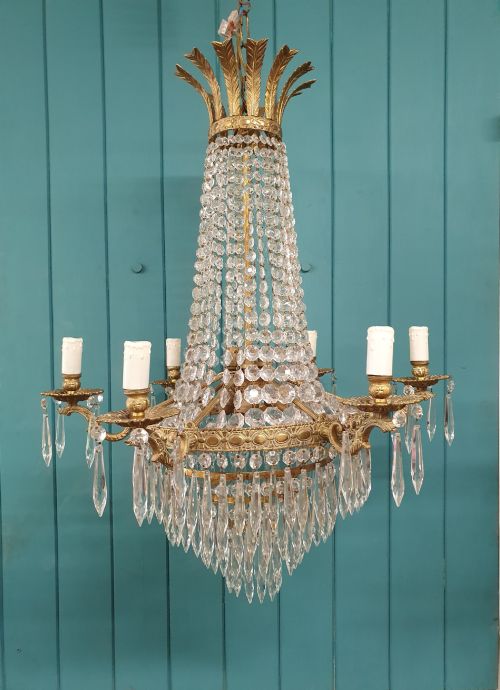
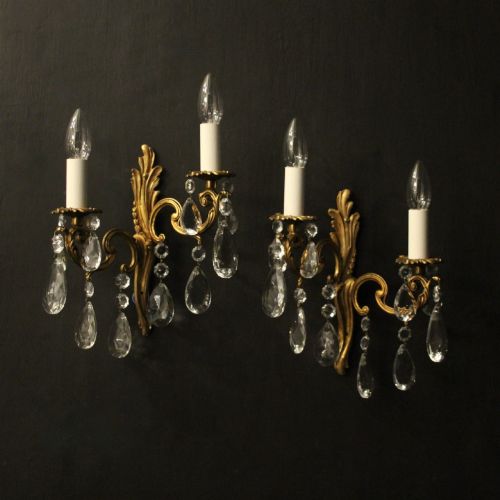
Gilt Crystal Chandelier
A gilt crystal chandelier brings dramatic refraction and warm metallic reflection to a high ceiling, drawing the eye upwards with period elegance.
Gilt Crystal Chandelier
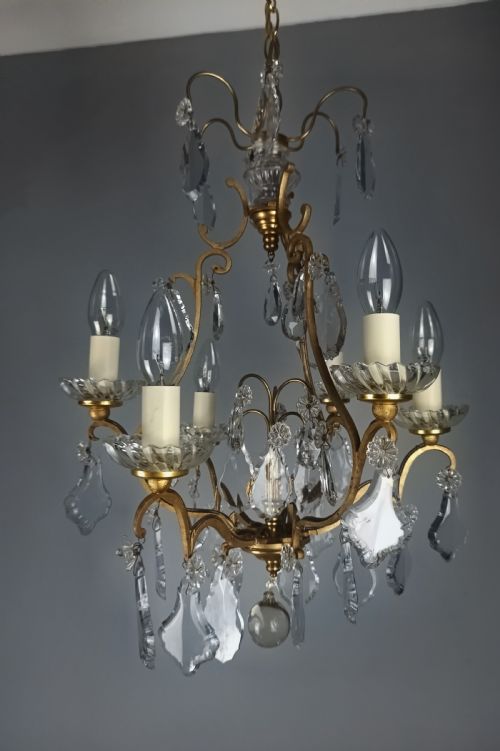
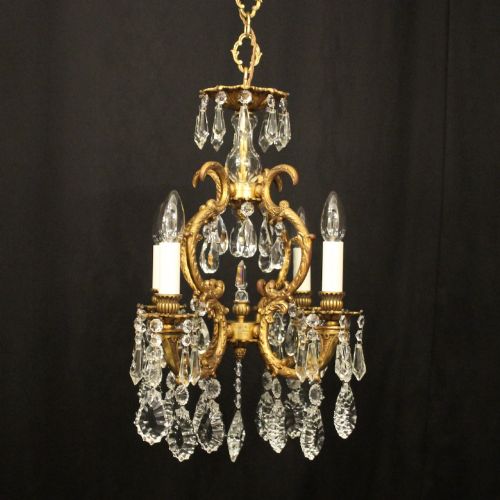
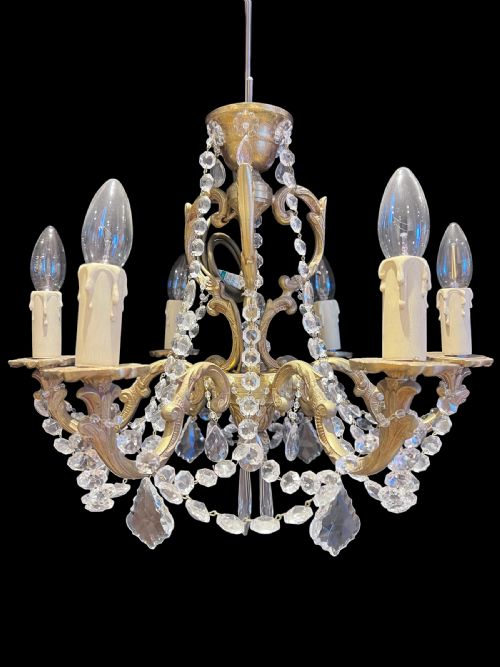
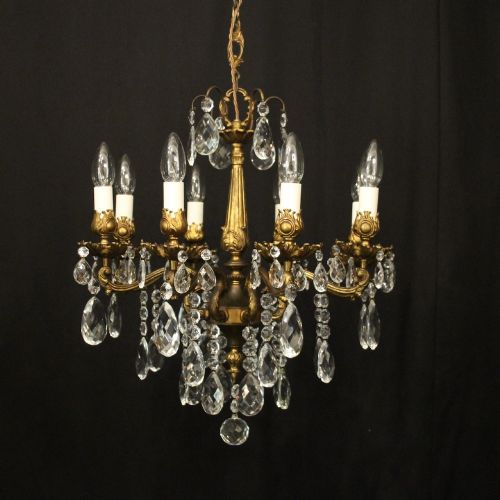
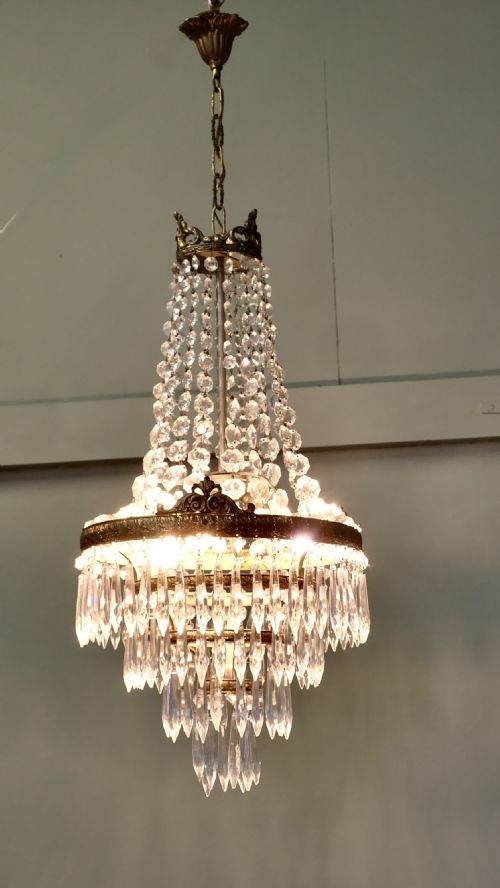
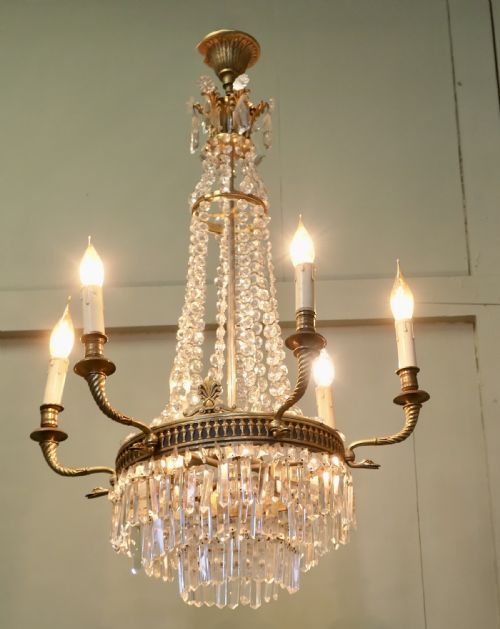
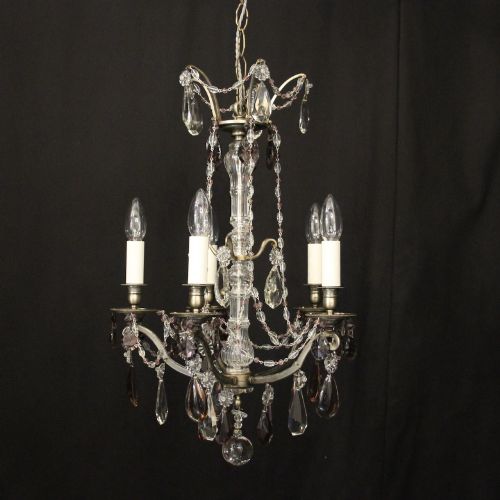
A gilt crystal chandelier unites a gilded metallic frame with cut glass drops, pendants and prisms designed to hold multiple candle or electric lights. When you search for a gilt crystal chandelier, you encounter a selection spanning the nineteenth and early twentieth centuries, dominated by French and Italian origins.
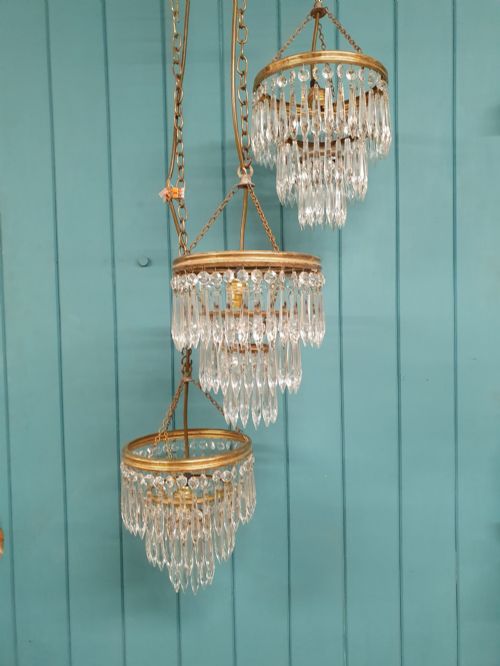
The inventory on this page consists heavily of French chandeliers in styles such as Empire, Rococo Revival, and Chateau, alongside Italian Florentine and Rococo Revival pieces. Forms range from simple single-light birdcage designs to multi-tier structures carrying twenty-five lights.
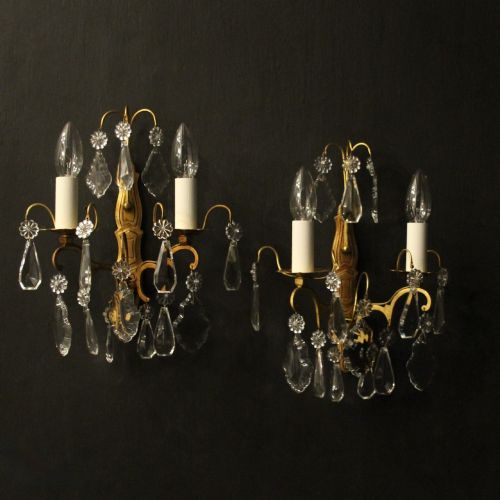
Alongside central ceiling fixtures, the selection includes matching wall lights, wall sconces, and smaller spike or bag chandeliers. These pieces draw upon periods extending from the nineteenth century through the Edwardian era and into the 1920s and 1930s.
How they were made
Frames are constructed from brass, bronze, spelter, wrought iron, or carved wood, which is then gilded, silver-gilded, or finished with toleware paint. These metallic and wooden structures form the skeleton that supports the weight of the glass components.
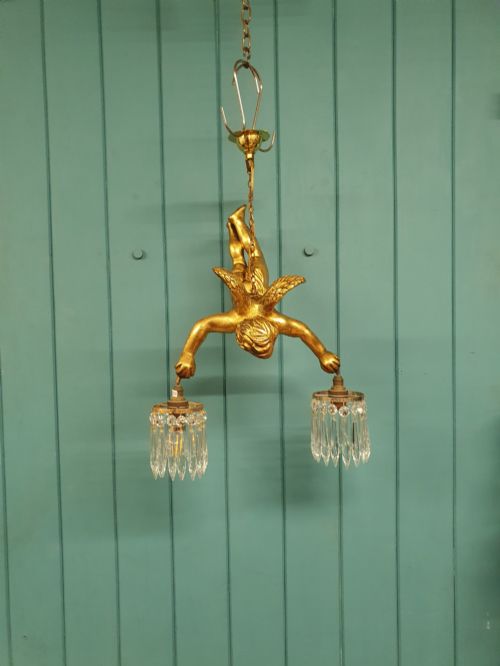
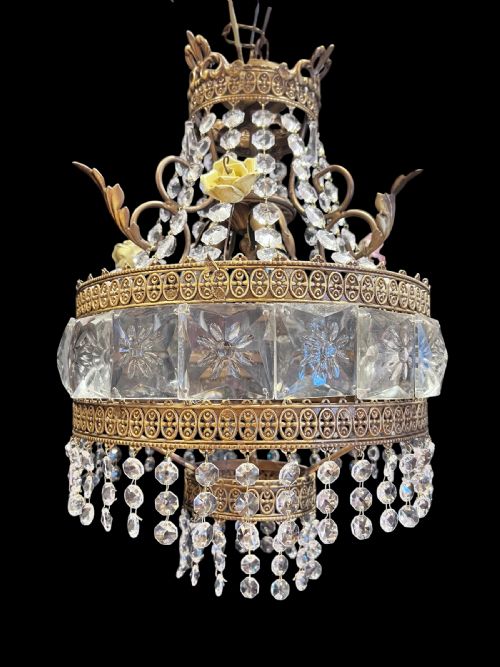
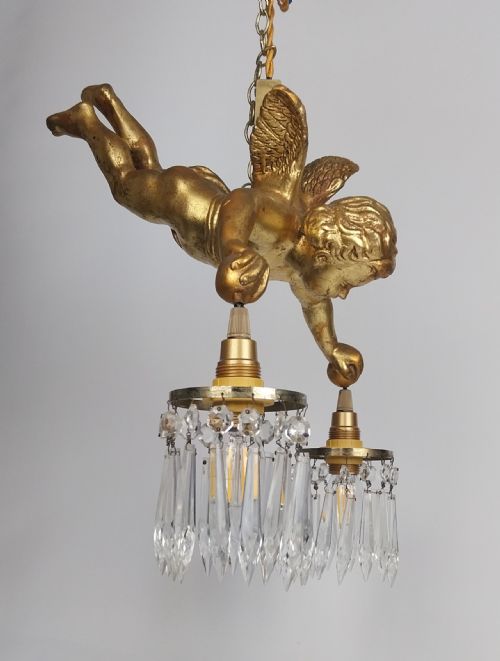
Crystal and glass elements are integrated through hand-cutting, moulding, and polishing to create drops, teardrops, coffin prisms, and amethyst or turquoise crystals. These components are wired or pinned to the frame using brass or bronze fittings, often incorporating decorative motifs like porcelain flowers, cherubs, and leaf decorations.
Gilt Crystal Chandelier Retail Price Guide 2026
Typical asking prices for gilt crystal chandelier among the pieces listed under this phrase on Sellingantiques today, from the lower quarter to the upper quarter. They describe what is for sale here now, not the wider market.
Materials documented across the inventory include brass, bronze, spelter, toleware, crystal, and glass.
What varies in quality
The distinction between tiers rests on the density and hand-cutting quality of the crystal drops, where deep hand-faceting produces sharper light refraction than machine-pressed glass. Cast bronze and heavy brass frames demonstrate crisper chasing and deeper relief work than lighter spelter or stamped metal alternatives.
Maker attribution and structural complexity dictate the standing of a fixture, with multi-tiered tent-and-waterfall configurations or signed French works demonstrating superior artistry. Integrated decorative elements, such as hand-painted toleware leaves or carved porcelain flowers, separate standard production pieces from finer examples.
Baccarat
The Gilt Crystal Chandelier Glossary
- Birdcage chandelier
- A fixture shaped like an aviary cage formed by curved metal wires radiating from a central band. These designs typically suspend crystal drops within and around the metallic cage structure.
- Tent and waterfall chandelier
- A lighting form featuring an upper conical tent of strings of beads falling outward to a wider basket or ring. Prisms and crystal drops cascade downward from this perimeter like falling water.
- Coffin prism
- A long, flat-backed crystal pendant with a pointed tip, reminiscent of a geometric coffin shape. These are frequently hung from the arms and crown to catch and scatter light.
- Toleware
- Painted tin or sheet metal used to form decorative leaves, floral elements, or structural banding on the body of the light. It frequently appears in green, polychrome, or gilt finishes.
- Spelter
- A zinc alloy utilised as a less costly substitute for bronze or brass in frame casting. It provides sufficient detail for sculptural elements like cherubs but requires careful handling due to its relative softness.
Gilt Crystal Chandelier: Frequently Asked Questions
How do I hang a heavy antique chandelier?
Installation requires securing the primary weight of the fixture directly into the ceiling joists using a rated ceiling hook and steel box. Do not rely on plaster or lath to support the combined weight of the metal frame and glass drops.
Electrical wiring must be routed through the supporting chain or downrod to a junction box. Given the age of these pieces, professional rewiring is recommended to ensure safe operation with modern household circuits.
Can I clean the crystal drops without taking them off?
Washing the prisms in situ is possible using a specialised spray cleaner designed for chandeliers and a catch basin placed below. Spray the solution generously over the glass elements and allow it to drip off onto a towel.
For thorough restoration, individual crystal drops must be unpinned, washed in warm soapy water, dried by hand, and reattached. Avoid harsh chemical agents that can strip the gilt finish from the surrounding metal frame.
How do I tell French styles apart from Italian ones?
French fixtures from the nineteenth and early twentieth centuries lean toward architectural formality, utilising Empire tent configurations, crisp gilt bronze, and structured birdcage frames. The decorative program often references classical motifs or Rococo asymmetry.
Italian pieces, particularly from the Florentine tradition, emphasise organic forms, carved giltwood, and floral elements such as porcelain blossoms or leafy gilt metal work. They frequently feel lighter and more whimsical in their overall composition.
How do I choose the right size for a room?
Selecting the correct proportion involves calculating the dimensions of the space to ensure the fixture neither overwhelms the furniture below nor gets lost in the volume of the room. A common guideline is adding the room's length and width in feet to determine an appropriate diameter in inches.
Ceiling height dictates whether a flush mount, a semi-flush wall light, or a suspended drop chandelier with a chain is appropriate. Ensure adequate clearance beneath the lowest crystal drop for foot traffic.