

Tiered Crystal Pendant
When you look for a tiered crystal pendant, you want a multi-layered ceiling fixture that refracts light through cascading glass drops.

Tiered Crystal Pendant
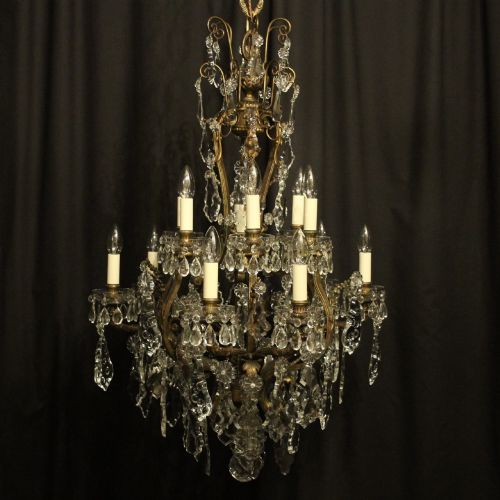
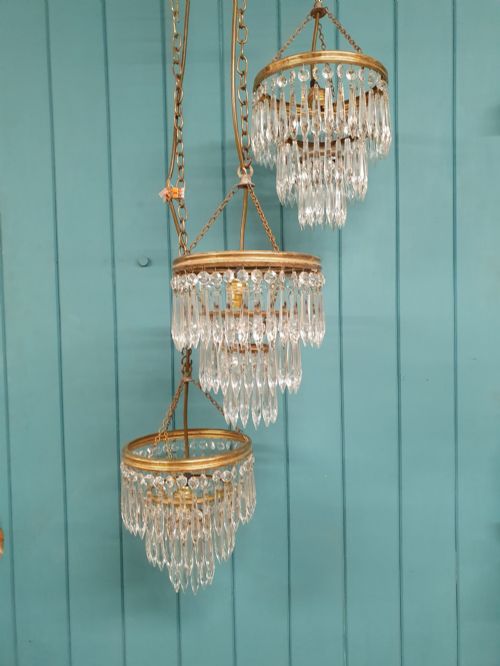
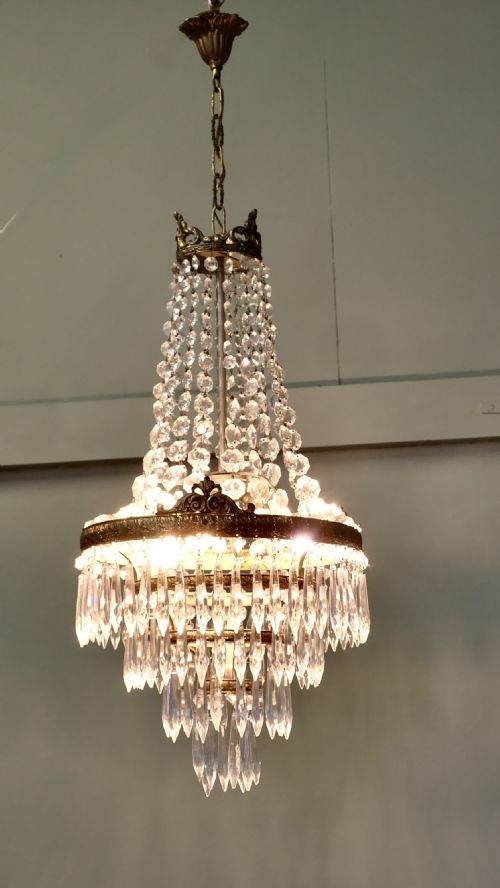
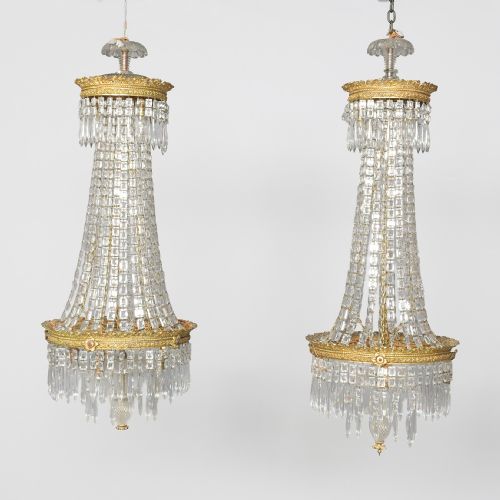
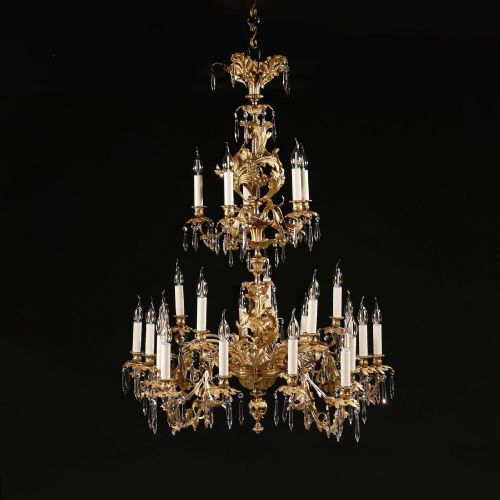
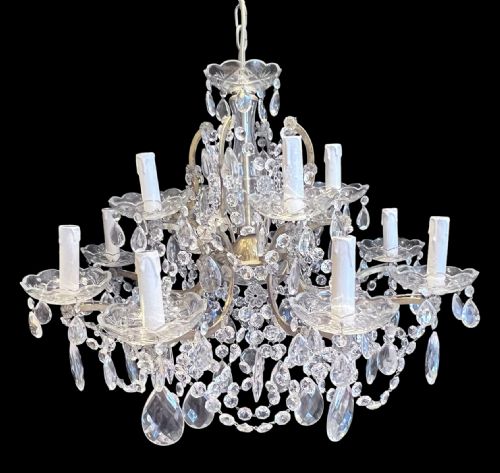
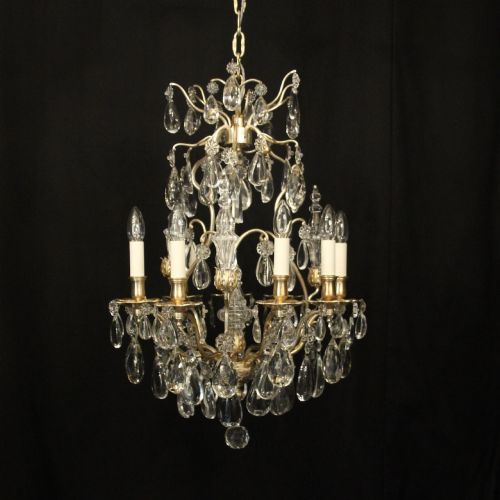
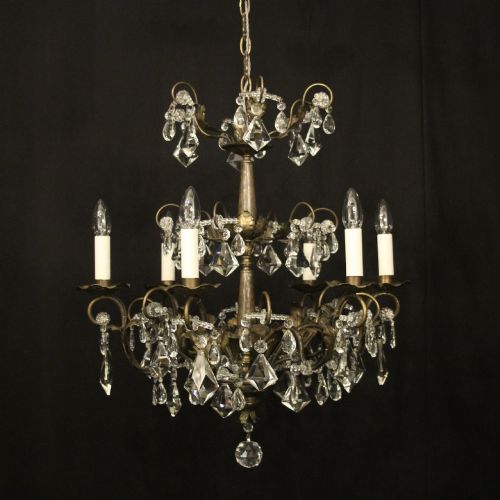
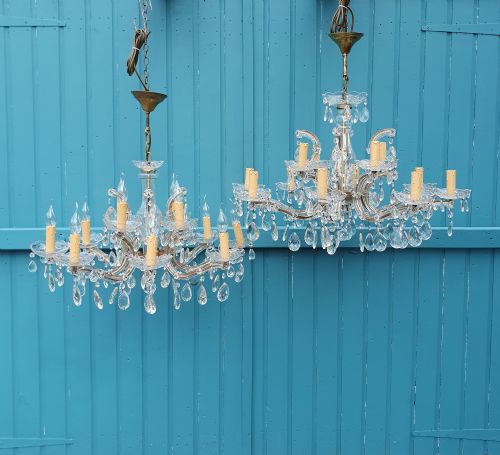
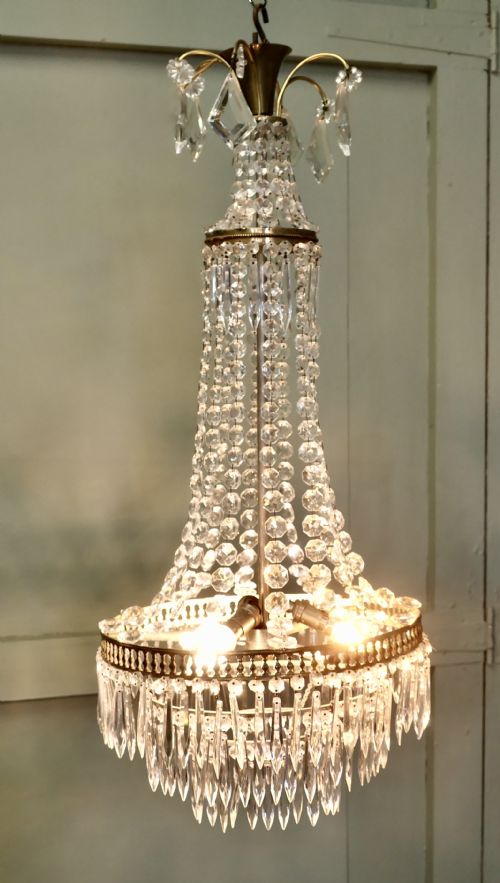
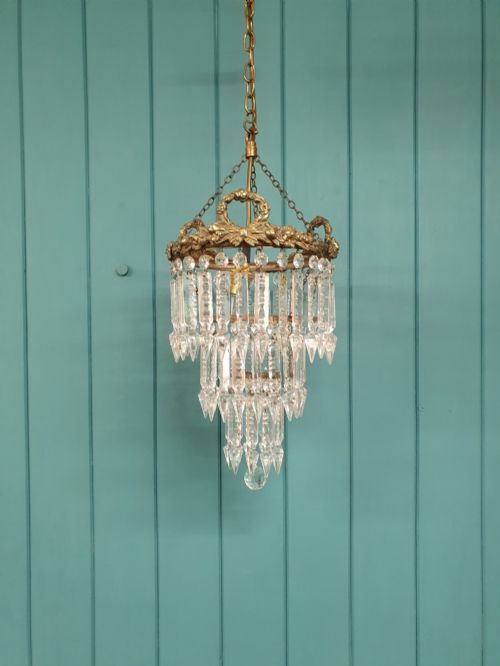
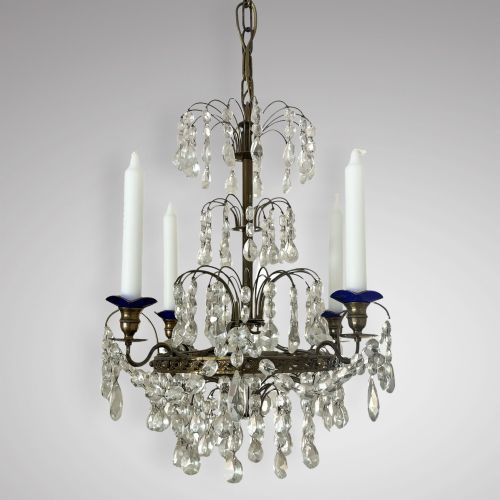
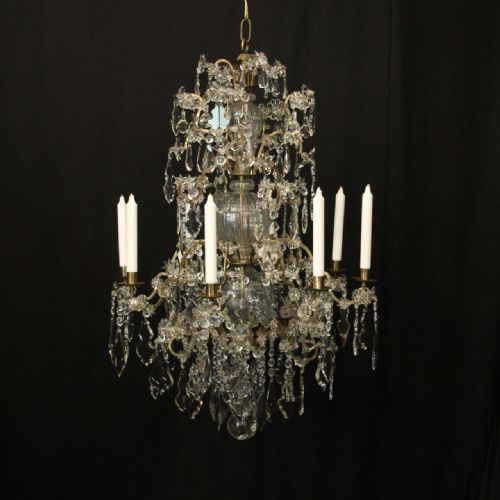
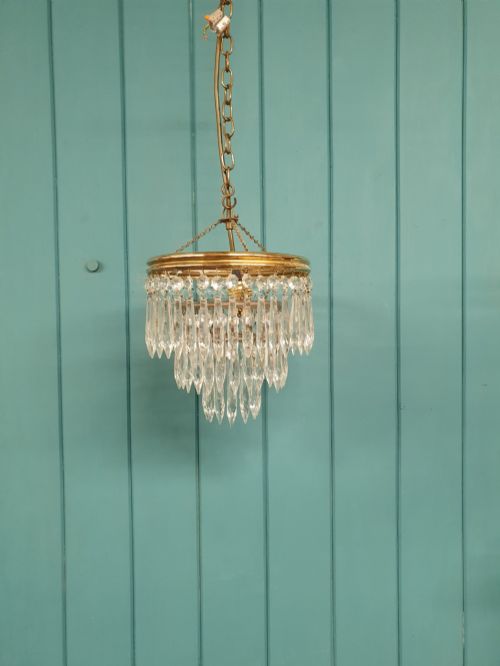
A tiered crystal pendant delivers layered illumination through descending bands of cut glass drops, beads, and metal frames. These hanging ceiling fixtures organise glass into distinct overlapping levels to maximise the refraction of light across a room.
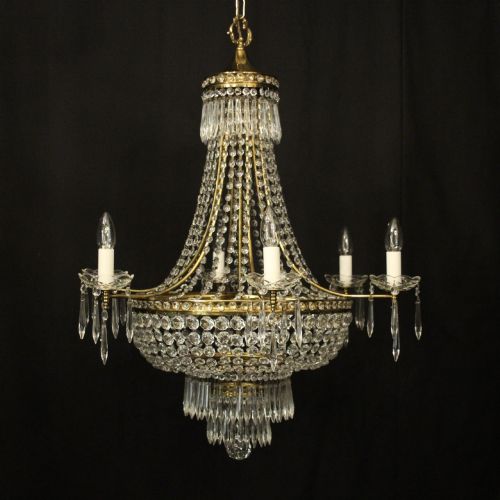
The selections here span from the nineteenth century into the nineteen-thirties, drawing heavily on French Empire, Rococo Revival, and early twentieth-century design. You will encounter forms ranging from delicate three-tier pendant lights to expansive multi-light chandeliers boasting heavy brass, gilded bronze, and silvered metal structures.
Origin points across the inventory lean towards French, Italian, English, and Bohemian workshops. Styles vary from restrained Edwardian glass arrangements to ornate French Chateau and Florentine polychrome constructions with numerous candle arms and beaded drapery.
How they were made
Makers built the structural framework of these fixtures using cast brass, gilded bronze, and metal armature to support the considerable weight of the glass. Individual metal arms, rings, and tiers were soldered or bolted together to hold the central stem and branching candle holders.
Prisms, drops, and beads were formed from cut glass and crystal glass, then hand-wired onto the metal frames using small brass pins or loops. This meticulous assembly allowed the cascading tiers of lustre drops and tent arrangements to move slightly and catch ambient light from every angle.
Tiered Crystal Pendant Retail Price Guide 2026
Typical asking prices for tiered crystal pendant among the pieces listed under this phrase on Sellingantiques today, from the lower quarter to the upper quarter. They describe what is for sale here now, not the wider market.
What varies in quality
The clarity and lead content of the crystal dictate how sharply the fixture refracts light. Higher quality pieces utilise finely cut crystal glass that produces crisp prismatic flashes, whereas simpler examples rely on standard moulded glass with softer edges.
Subtlety of metalwork separates standard production from finer examples. Heavier cast bronze or silver-gilded frames with intricate chasing and secure structural engineering support complex multi-tiered formations more effectively than lightweight stamped metal.
Baccarat
The Tiered Crystal Pendant Glossary
- Waterfall chandelier
- A lighting fixture where crystal drops cascade downwards in dense, overlapping layers resembling falling water. This formation hides much of the internal metal frame beneath sheets of glass.
- Tent and waterfall
- A design style featuring an upper conical section of glass beads strung in a tent shape above a lower cascading waterfall drop configuration. It represents a classic French Empire arrangement.
- Lustre
- A glass pendant drop or prism hung from the arms or rim of a light fixture to enhance light reflection. These elements swing gently and disperse illumination.
- Electrolier
- A large hanging light fixture originally designed for electricity rather than converted from candles or gas. They often scale up to massive proportions with numerous light arms.
- Plafoniere
- A ceiling light fixture mounted flush or very close to the ceiling surface rather than suspended on a long chain. They utilise bowl or tiered glass configurations to diffuse light directly downwards.
Tiered Crystal Pendant: Frequently Asked Questions
How do I hang a tiered crystal pendant?
Suspension requires securing the fixture to a ceiling joist using a heavy-duty metal hook and electrical box capable of supporting the combined weight of the metal frame and glass drops. Professional installation is standard practice given the substantial mass of multi-tiered crystal assemblies.
Height placement depends on the room function and ceiling clearance. Dining tables and hallways allow for lower positioning, while open living spaces require enough clearance beneath the lowest tier for safe passage underneath.
How do I clean a crystal pendant?
Routine maintenance involves dusting the glass drops gently with a soft feather duster or microfiber cloth while the fixture is switched off and cool. Minimising movement prevents the delicate wire loops connecting the drops from bending or detaching.
Deep cleaning requires removing individual crystal components or spraying a specialised glass cleaner onto a cloth and wiping each prism by hand. Placing a towel beneath the fixture catches any stray moisture or dislodged drops during the process.
Were these fixtures electrified originally?
Many early examples began as candle or gas-lit fixtures before undergoing conversion to electricity during the twentieth century. Component wiring inside the central stem accommodates modern internal electrical fittings while preserving the antique exterior appearance.
Later pieces from the nineteen-thirties arrived designed specifically for electric illumination with multiple internal bulb holders. Rewiring older fixtures ensures current safety standards while maintaining the original metal and crystal housing.
How do I identify the period of a crystal pendant?
Dating relies on examining the casting techniques of the metal frame, the cut of the glass drops, and stylistic motifs. Nineteenth-century examples often feature heavy gilded bronze and hand-cut lead crystal with candle pans, whereas nineteen-thirties pieces lean towards streamlined Art Deco multi-tier arrangements.
Hardware details like screw types, wire fixings, and metal patina offer further clues to age. Comparing the overall structural silhouette against documented French Empire or Edwardian design books helps narrow down the decade of manufacture.