


Vintage Florentine Pendant
These vintage florentine pendant lights and chandeliers bring gilded Italian craftsmanship and ornate floral detail directly into your home.
Vintage Florentine Pendant
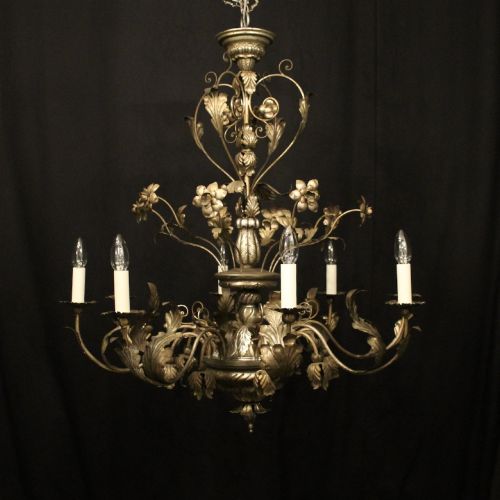
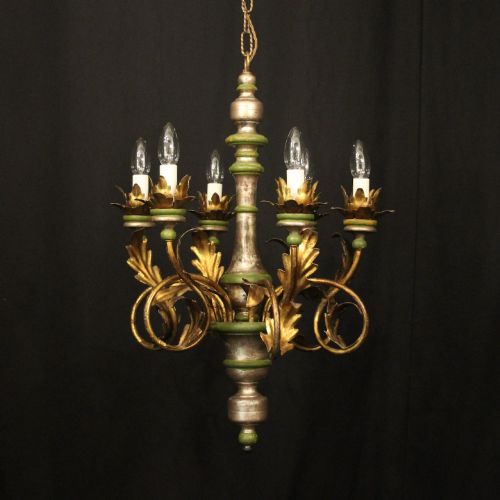
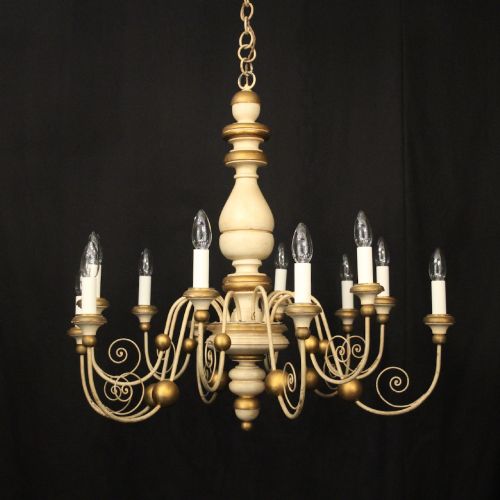
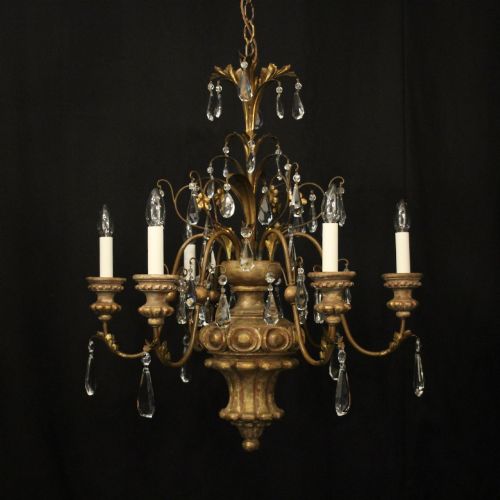
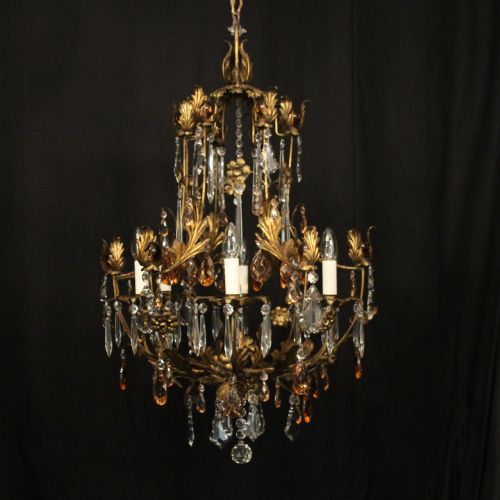
When you search for a vintage florentine pendant, you examine ornate lighting fixtures originating from Italy, predominantly taking the form of multi-armed chandeliers spanning the eighteenth century through to the 1930s. These pieces frequently feature carved frames decorated with giltwood, gesso, and gold leaf, often accented by glass or crystal drops.
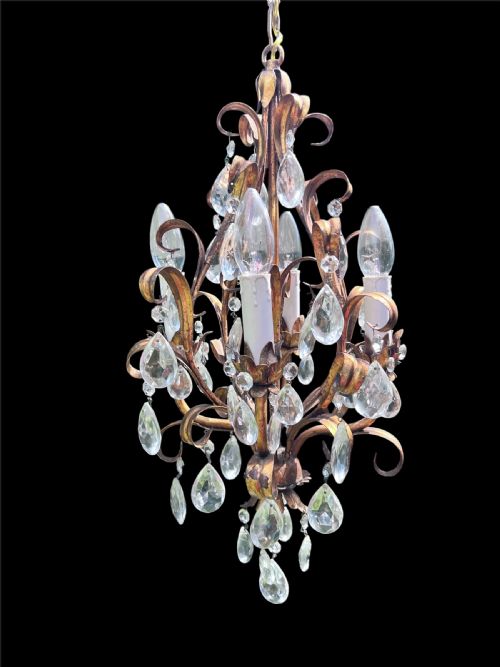
The most common examples on this page are mid-period creations dating around 1920 to 1930, displaying styles that range from Florentine Baroque to Italian Rococo Revival. They vary significantly in scale, from intimate three-light lanterns up to grand twenty-four-light double-tiered fixtures designed for high ceilings.
How they were made
Makers constructed the structural frames of these fixtures using carved wood, wrought iron, and cast metal, applying layers of gesso to prepare surfaces for gilding. Artisans then finished the bodies with gold leaf, silver gilding, or polychrome paint, occasionally incorporating delicate porcelain flowers and hand-shaped metal leaves.
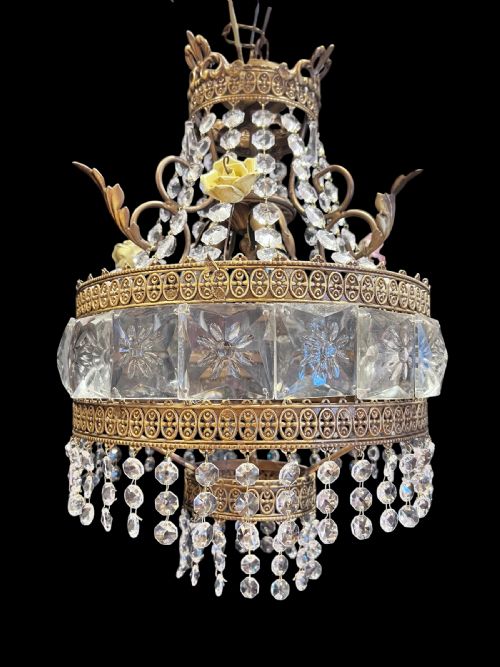
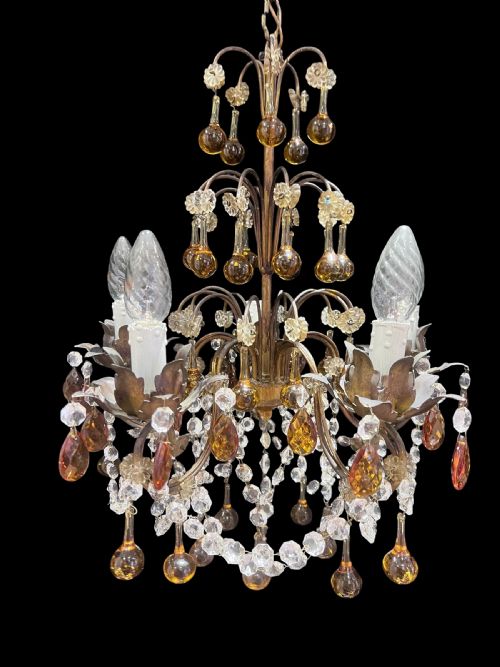
Lighting elements incorporated glass and crystal drops, beads, and coloured fruits suspended from the metal or giltwood arms. These components reflect light through multi-tiered frames, combining heavy wooden carving with translucent glass elements.
Listings incorporate periods ranging from the 18th century and Edwardian era through to 1930, utilising giltwood, gesso, wrought iron, and crystal.
What varies in quality
The distinction between tiers of quality rests in the depth of the carving and the richness of the surface application. Finer examples display meticulous hand-carved giltwood and gesso work with intricate floral and leafy motifs, whereas simpler items rely on basic metal or cast forms.
Quality also shows in the composition and completeness of the crystal and glass elements. Pieces featuring abundant coloured crystals, glass drops, and intact porcelain flowers represent the higher end of the range compared to stripped or plain frames.
The Vintage Florentine Pendant Glossary
- Giltwood
- Wood that has been coated with gold leaf or a gold-coloured substance. This finish provides the bright, reflective surfaces characteristic of Italian chandeliers.
- Gesso
- A plaster-like mixture applied to wood or metal bases to create a smooth surface for gilding. It allows artisans to carve fine details before applying gold leaf.
- Polychrome
- Decorated in multiple colours. This technique adds painted accents to the gilded wooden elements of the frame.
- Rococo Revival
- A nineteenth-century style reviving the asymmetrical scrolls and ornate natural motifs of the eighteenth century. It influences many of the fluid, leafy designs seen on these fixtures.
Vintage Florentine Pendant: Frequently Asked Questions
What periods do these pieces span?
The selections span from the eighteenth century through the Edwardian era up to the 1930s. Most examples date from the early decades of the twentieth century.
Production methods shifted slightly over these centuries, moving from purely hand-carved eighteenth-century originals to more diverse twentieth-century interpretations utilising varied metal and giltwood combinations.
How are these fixtures suspended?
They hang by chains or rods attached to the central upper crown of the frame. Their weight varies depending on the scale and materials utilised.
Larger multi-tiered examples require robust ceiling fixings to support the combined weight of the heavy wooden frames, metal arms, and crystal components.
Where were these items made?
These lighting fixtures originate from Italy, specifically reflecting Florentine workshops and regional Italian decorative traditions. French chateau styles also appear among the continental designs.
Local artisans utilised traditional techniques of wood carving, gilding, and glass assembly that defined Italian decorative arts across multiple generations.
How do I identify a Florentine chandelier?
Florentine pieces are distinguished by heavily carved wooden frames, giltwood finishes, and naturalistic motifs such as leaves, flowers, and fruit. They frequently incorporate crystal drops and glass beads.
Many examples feature multi-armed configurations, ranging from three lights up to twenty-four lights arranged in single or double tiers.