
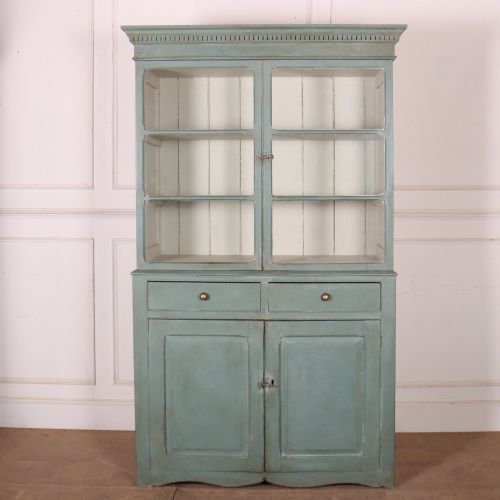
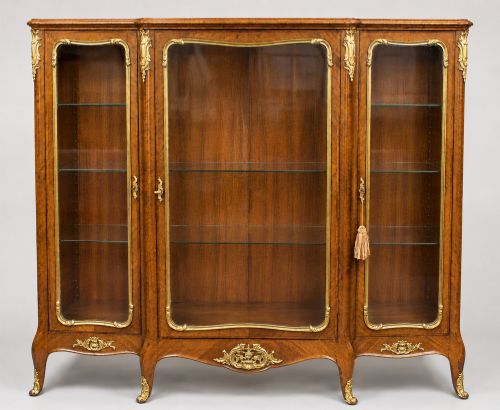
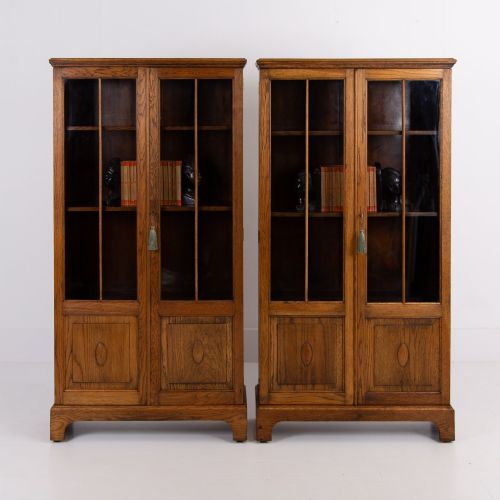
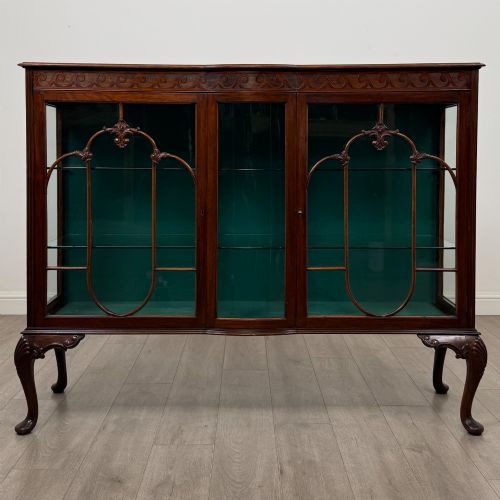
Glass Door Display Cabinet
A glass door display cabinet protects treasured collections while offering clear visibility from every angle.

Glass Door Display Cabinet
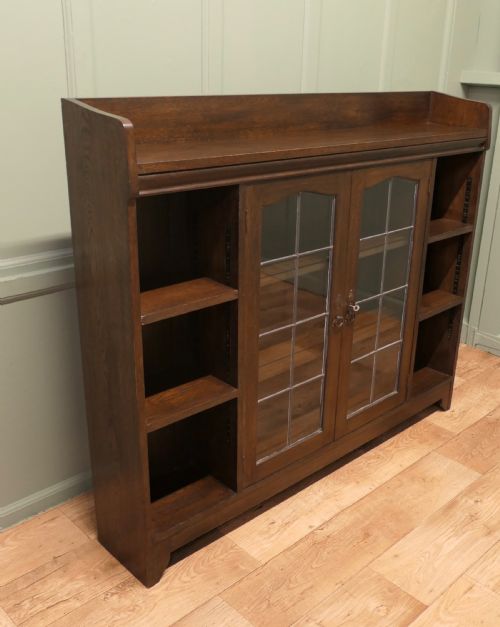
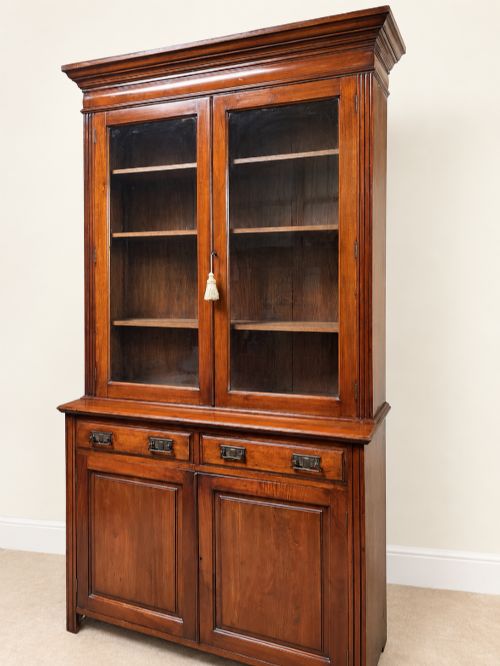
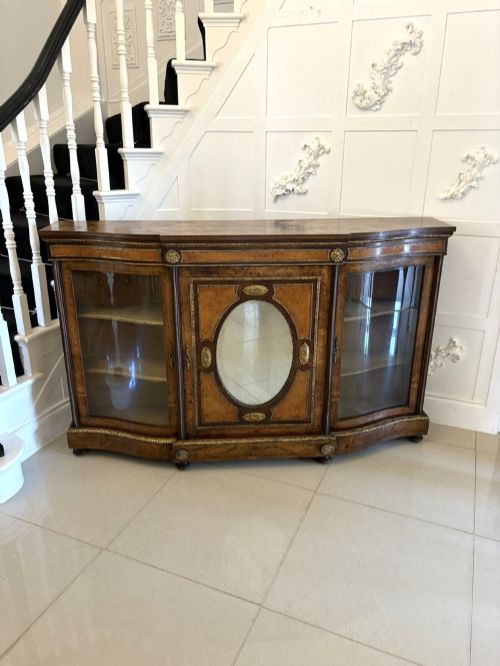
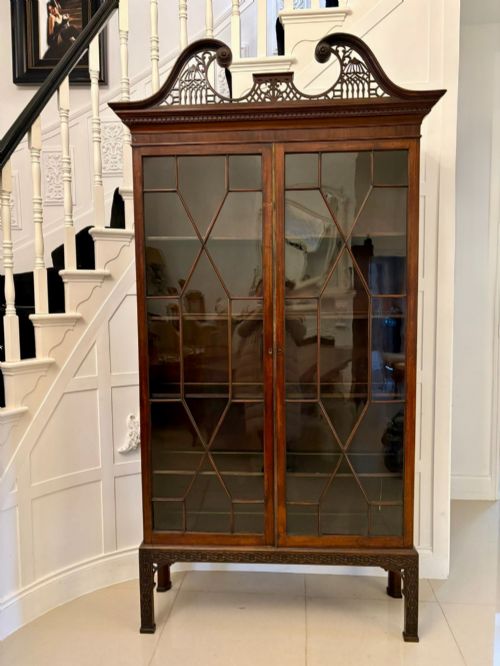
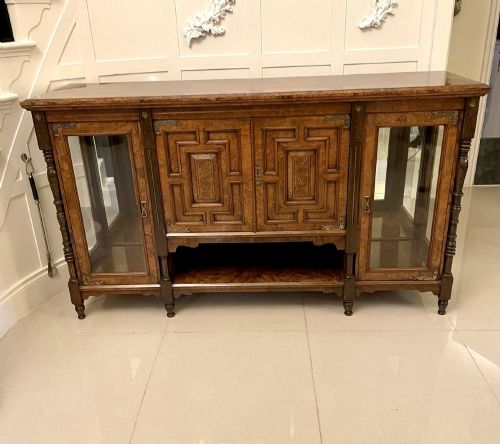
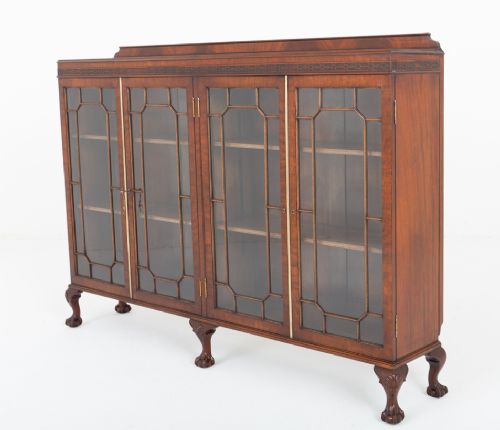
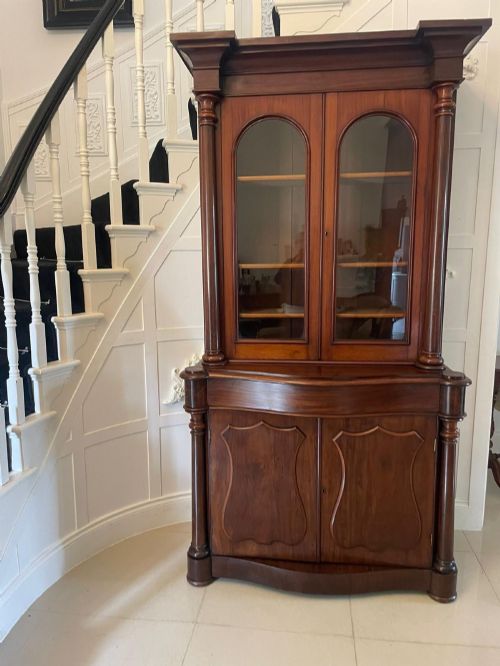
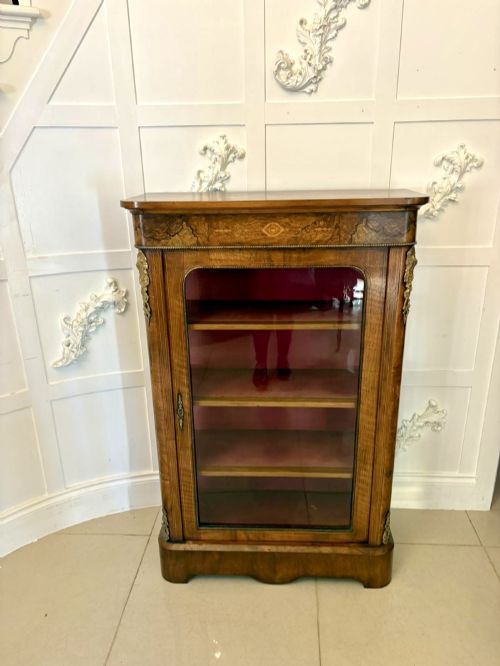
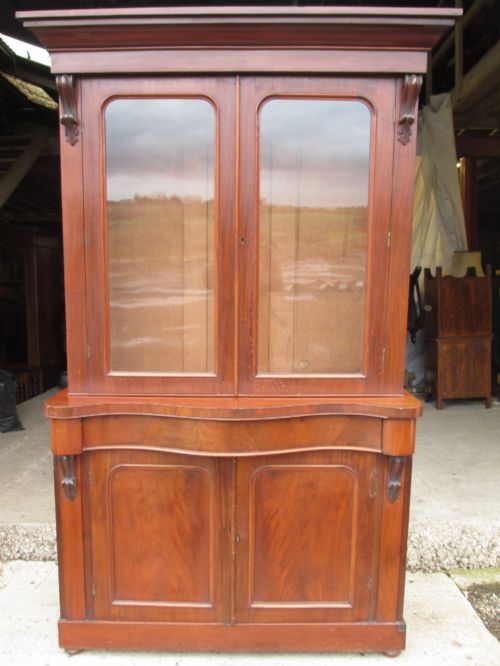
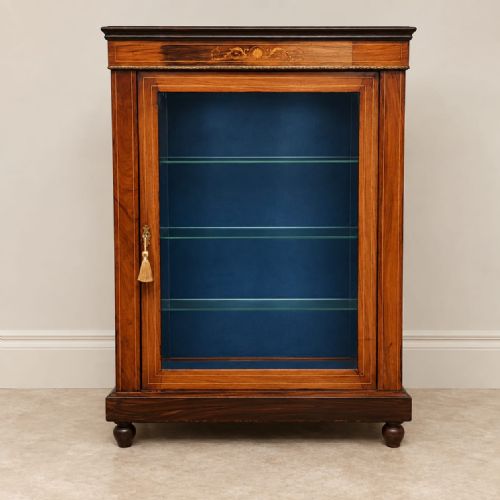
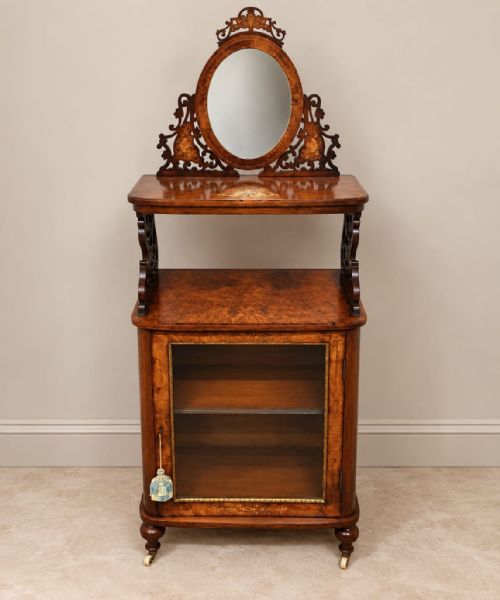
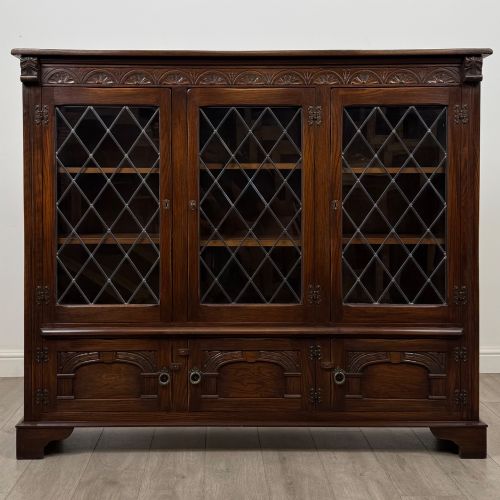
A glass door display cabinet groups several forms together, including tall bookcases, compact pier cabinets, and broad side cabinets designed to showcase objects behind transparent panes.
The selections span the nineteenth century through the Edwardian era and the nineteen-twenties, incorporating revival styles such as Chippendale, Sheraton, and Queen Anne alongside Victorian and Regency periods.
Most examples rely on glazed timber doors, sometimes curved or arranged in pairs, to keep dust away from contents while maintaining light inside.
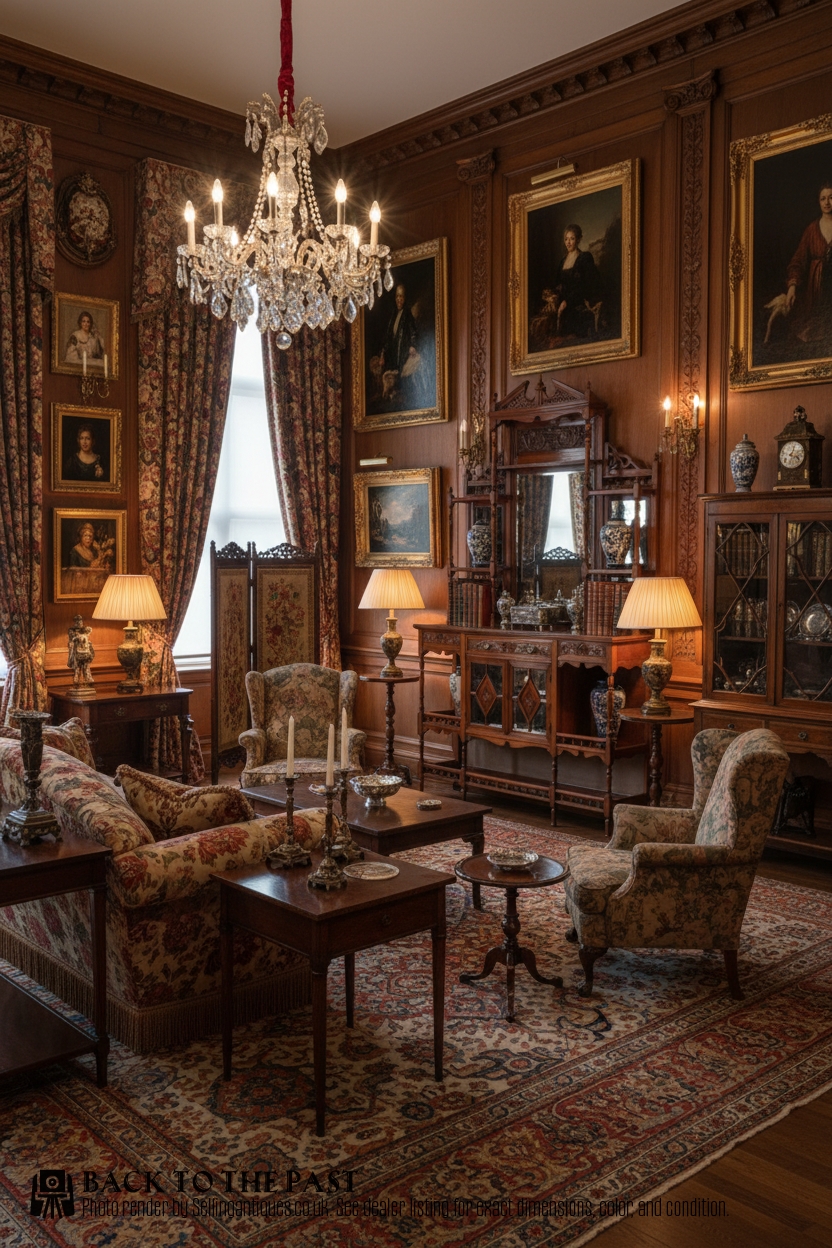
How they were made
Cabinetmakers built these frames primarily in mahogany, walnut, and oak, frequently selecting burr veneers or figured grains for decorative exterior surfaces.
Workshops added polished brass hardware, gilt-bronze mounts, or cast ormolu details to accentuate the framework around the glass panes.
Makers applied marquetry inlays, floral motifs, or painted finishes to satinwood and pine carcasses, depending on the prevailing style of the period.
One archive piece carries sliding glass doors hand sign-written for the Times and the Sunday Times.
What varies in quality
Superior examples demonstrate precision in timber selection, matching figured grain patterns across doors and panels rather than relying on uniform planks.
The refinement of cast mounts, crispness of carved wooden details, and smoothness of door alignment separate standard production from master workshops.
Hampton and Sons·Edwards and Roberts·H. J. Hatfield and Sons
The Glass Door Display Cabinet Glossary
- Vitrine
- A glass-sided cabinet designed specifically for displaying porcelain, curiosities, or decorative objects. These often feature glazed panels on the sides as well as the front.
- Pier cabinet
- A low cabinet built to fit narrow wall spaces between windows or doors. Victorian examples frequently utilise burr walnut and glass doors.
- Credenza
- A low side cabinet or sideboard originating in the nineteenth century, sometimes fitted with glass doors and ormolu mounts. They anchor a dining room or drawing room wall.
- Marquetry
- The art of applying decorative veneer pieces in wood, metal, or shell to form intricate patterns. This technique appears across revival styles on cabinet doors and friezes.
- Ormolu
- Gilded bronze mounts applied to cabinet furniture for decorative contrast. Higher quality pieces utilise finely chased mounts secured firmly to the timber frame.
Glass Door Display Cabinet: Frequently Asked Questions
What is a glass door display cabinet used for?
These pieces serve to store and exhibit collections of ceramics, glassware, books, and curiosities. The enclosed shelving protects delicate items from dust while keeping them visible.
They function equally well in dining rooms, libraries, and drawing rooms as focal storage furniture.
How do I date a glass door display cabinet?
Dating relies on identifying the primary timbers, construction methods, and stylistic revival motifs present in the woodwork. For instance, burr walnut and heavy carving point toward the Victorian era.
Lighter satinwood finishes or simpler golden oak frames often indicate Edwardian production or later twentieth-century periods.
How do I care for antique wood and glass?
Maintain stable indoor humidity levels to prevent timber warping or veneer lifting over time. Dust the glass and polished surfaces regularly with a soft cloth.
Avoid placing cabinets in direct sunlight to protect figured wood grains and interior fabrics from fading.