

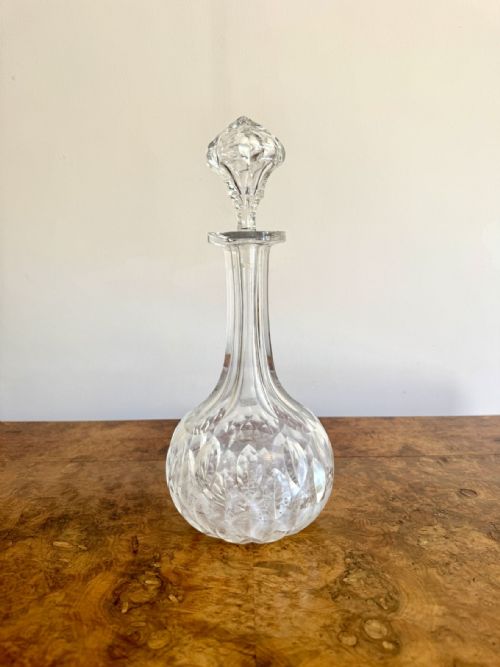
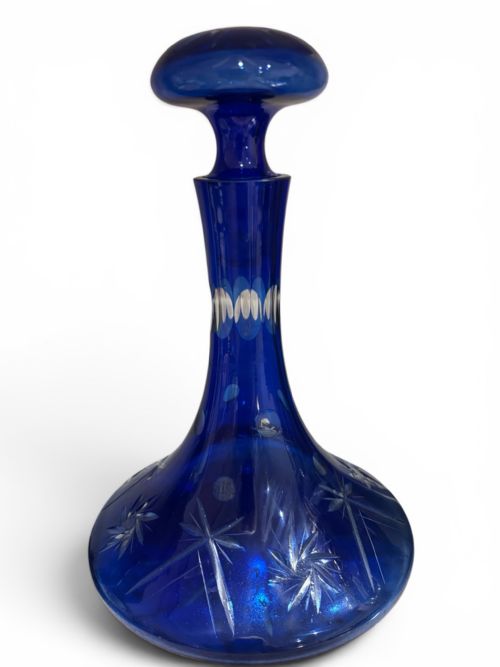
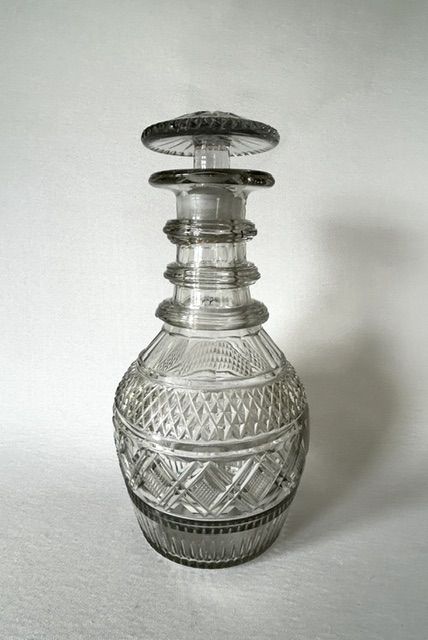
Glass Decanter with Stopper
A glass decanter with stopper brings functional elegance to any sideboard, offering both timeless storage and brilliant light reflection.
Glass Decanter with Stopper
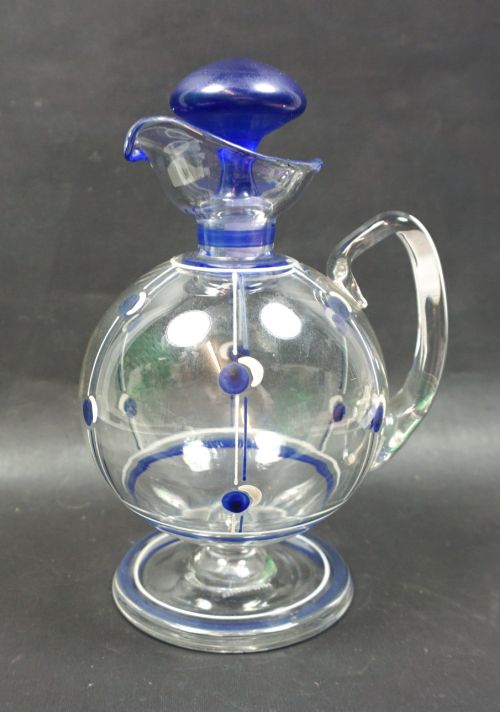
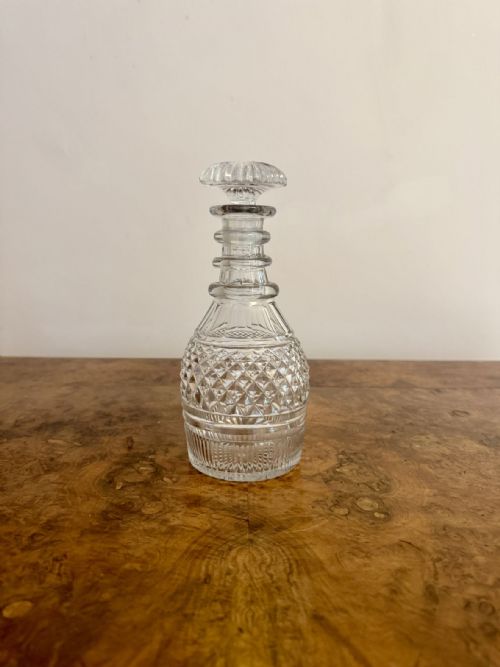
When you search for a glass decanter with stopper, you encounter centuries of serving vessels spanning Georgian, Victorian, Edwardian, and Art Deco periods. The forms range from plain three ring wine decanters and heavy shoulder vessels to novelty items shaped like thistles or winter landscapes.
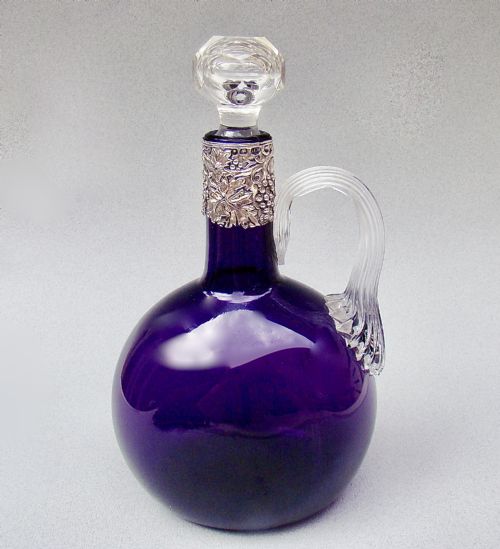
You are most likely to meet clear cut glass and crystal examples alongside coloured variants in amethyst, green, cranberry, amber, and white opaline. These pieces frequently appear singly or as part of matched sets complete with glasses or silver mounts.
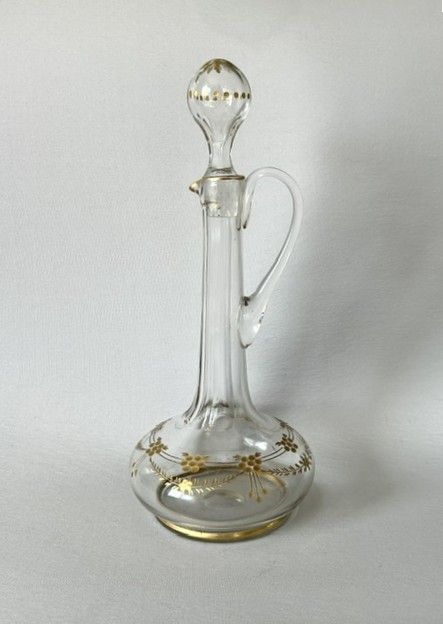
Origins stretch across England, Bohemia, Venice, and Scotland, demonstrating diverse regional aesthetics from Highland Revival to continental enamel work. Each vessel combines functional liquid storage with distinct period decorative arts.
What varies in quality
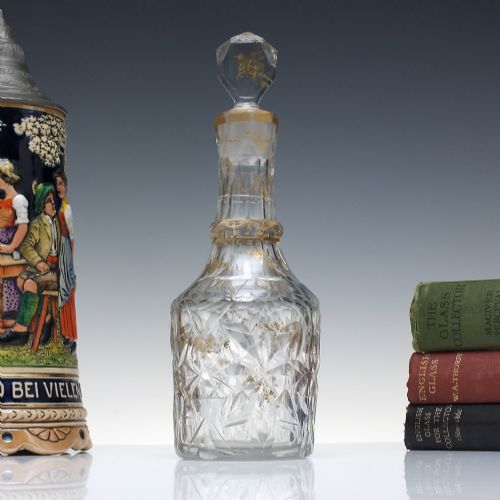
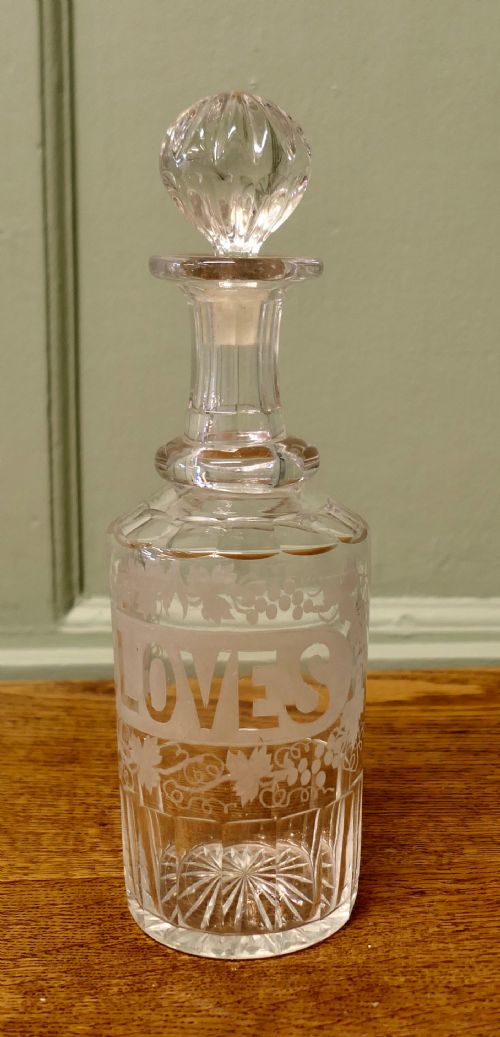
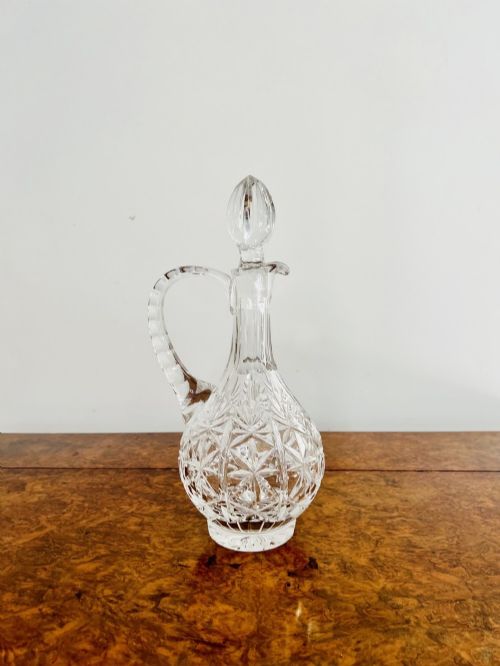
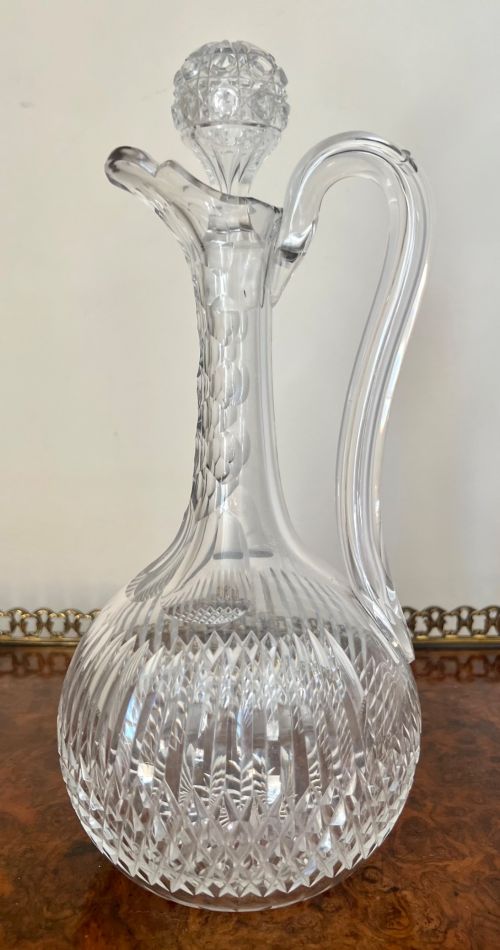
Quality rests upon the clarity of the material and the precision of the hand cut facets. Heavy lead crystal and unblemished clear glass demonstrate superior material selection compared to lighter, simpler blown alternatives.
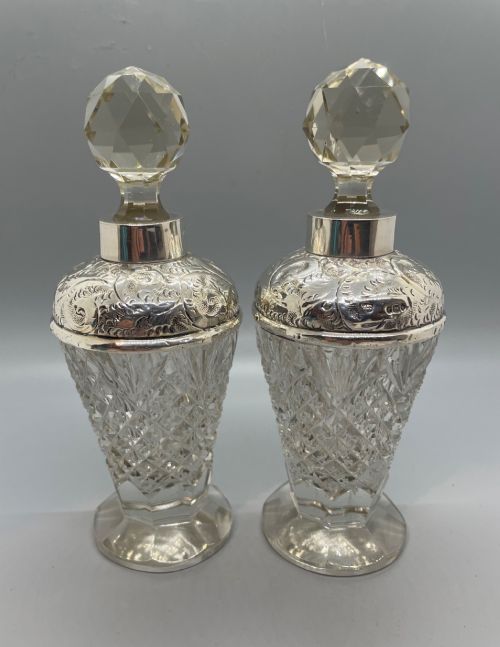
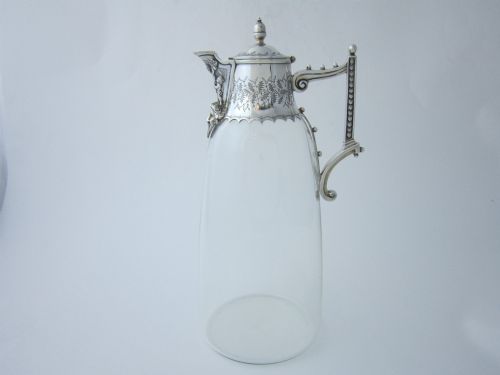
The integration of original matching stoppers and hallmarked silver or plated collars elevates a piece considerably. Finer examples display crisp engraving, balanced proportions, and careful application of enamel or colour.
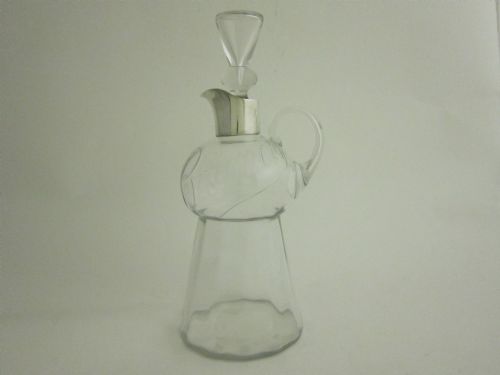
Some Victorian decanters take the cheerful form of a Scottish thistle, complete with silver plating to brighten the sideboard.
CVM Pauly and Co·Hukin and Heath·Daum
The Glass Decanter with Stopper Glossary
- Stopper
- The ground glass or decorative closure fitted to the neck of the vessel to seal the contents. Original matching stoppers substantially complete the historical integrity of the piece.
- Prussian decanter
- A specific Georgian bottle shape featuring a tapering body and multiple neck rings. These stable forms were designed for safe transport on ships and dining tables alike.
- Latticinio
- A Venetian glass technique incorporating white or coloured glass threads within clear glass. This method creates delicate interwoven ribbon patterns.
- Opaline glass
- An opaque, pastel coloured glass popular during the eighteenth and nineteenth centuries. It provides a smooth, porcelain like surface often enhanced with enamel painting.
- Silver collar
- A protective or decorative metal band fitted around the neck of the vessel. They frequently bear hallmarks indicating the specific assay office and date of manufacture.
Glass Decanter with Stopper: Frequently Asked Questions
How do I clean an old decanter?
Resist harsh abrasives and soaking in boiling water, which can thermal shock historic glass.
Use warm water with mild detergent and specialised cleaning beads to gently agitate internal residue.
Are these decanters safe for modern wine?
Most lead glass and crystal vessels safely hold wine for serving during meals.
Avoid storing liquids long term in antique lead vessels to prevent potential leaching.
How can I tell if the stopper is original?
Examine the ground glass mating surfaces on both the stopper peg and the decanter neck for matching wear patterns and identical numbering marks.
An original stopper fits flush and turns smoothly without excessive wobble.
What defines a ships decanter?
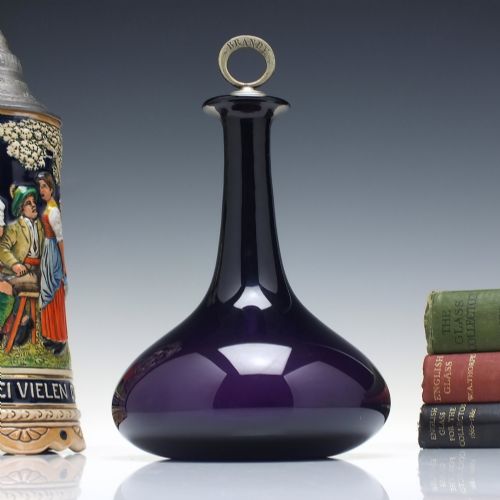
Ships decanters feature a wide, low centre of gravity with a broad base that prevents tipping on rolling vessels.
This practical silhouette made them popular aboard maritime voyages and busy dining rooms.