



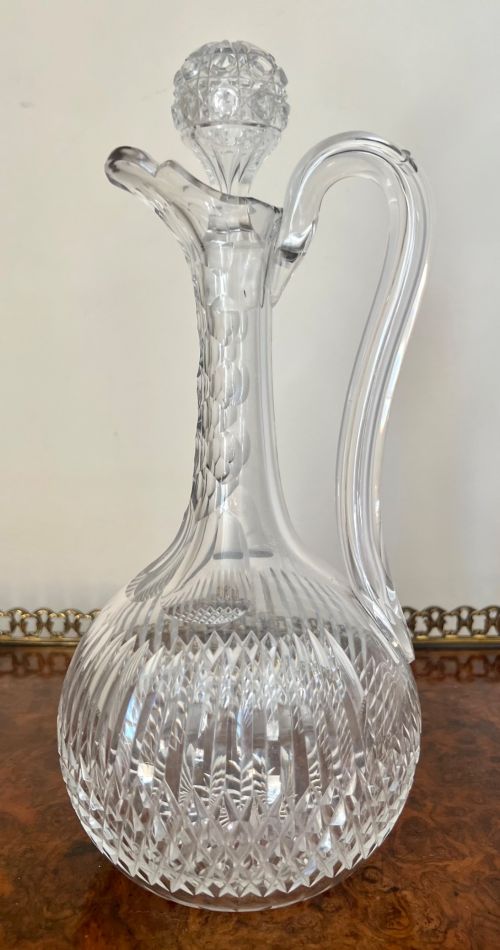
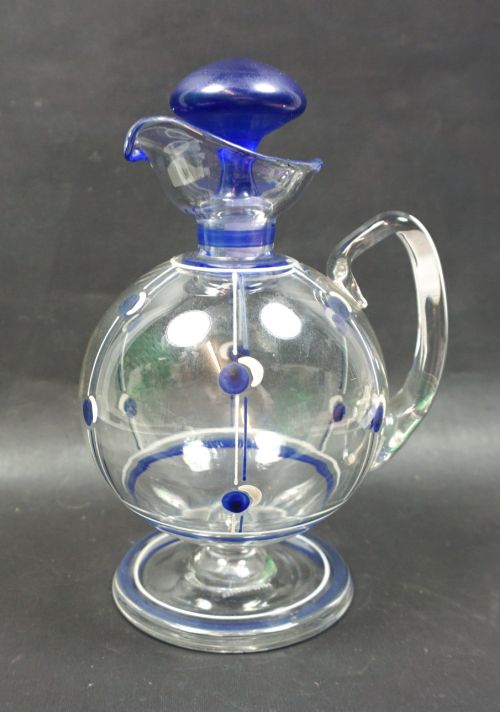
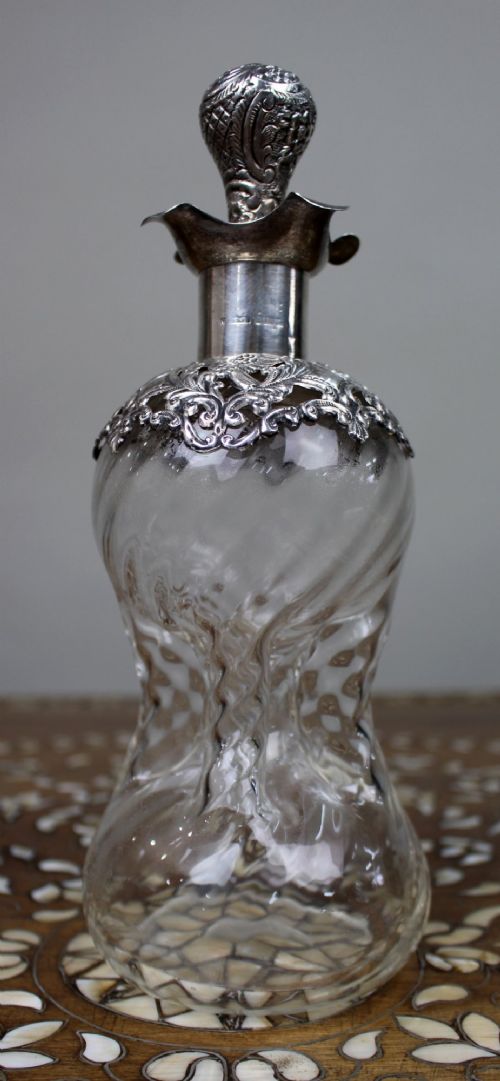
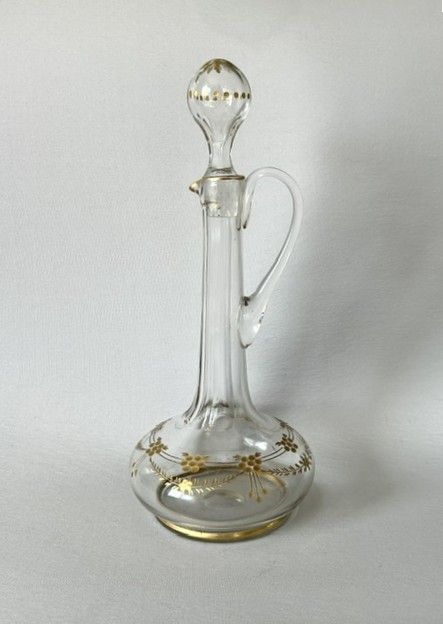
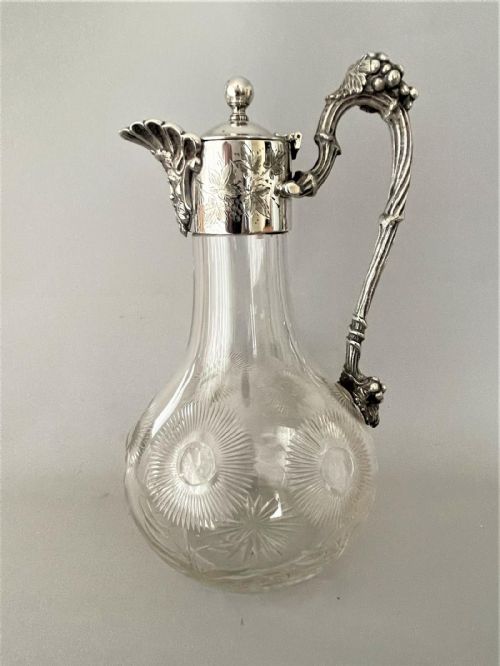
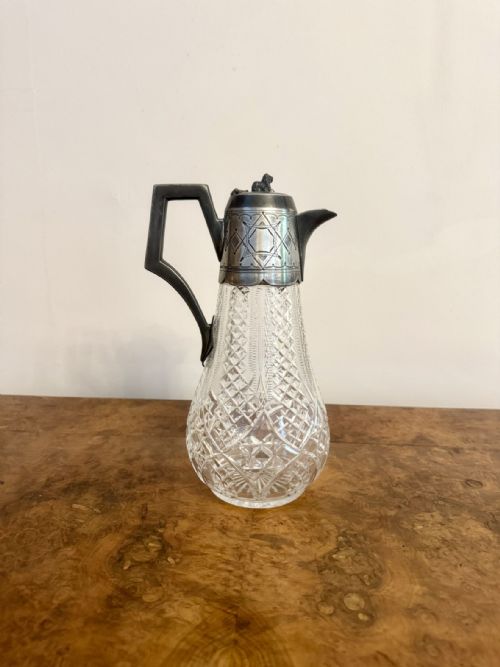
Crystal Glass Claret Jug
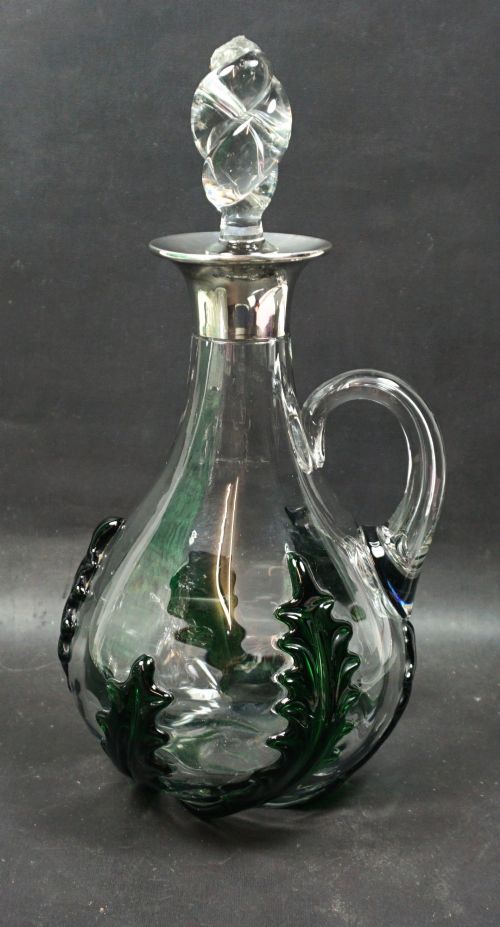
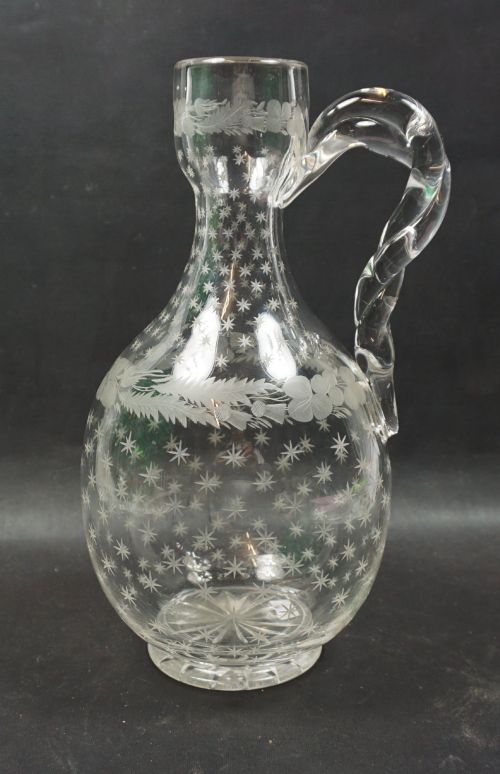
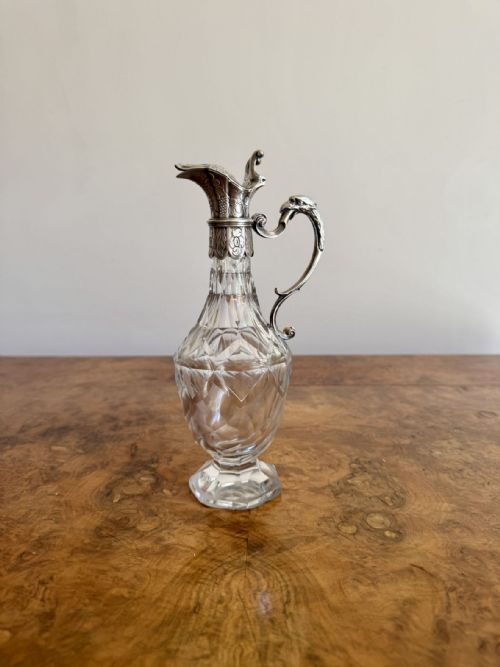
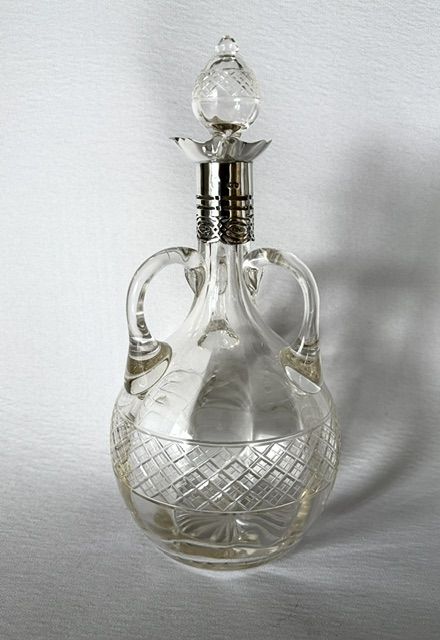
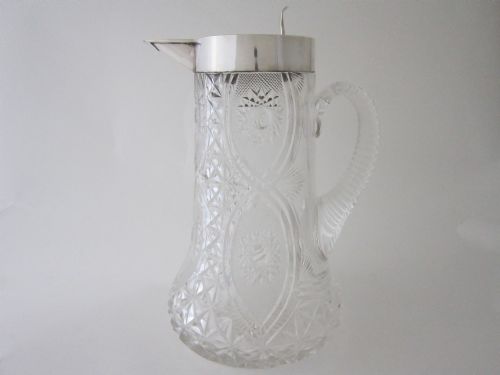
These crystal glass claret jugs combine cut crystal bodies with silver mounts, built for formal dining tables.
Crystal Glass Claret Jug
A crystal glass claret jug is a serving vessel designed for wine, water, or champagne, combining a glass body with a metal pourer, handle, and lid. When searching this phrase, collectors encounter various forms spanning the Victorian, Edwardian, and mid-twentieth-century periods. The most common examples on this page are Edwardian and Victorian pieces featuring cut glass bodies paired with silver or silver-plated mounts.
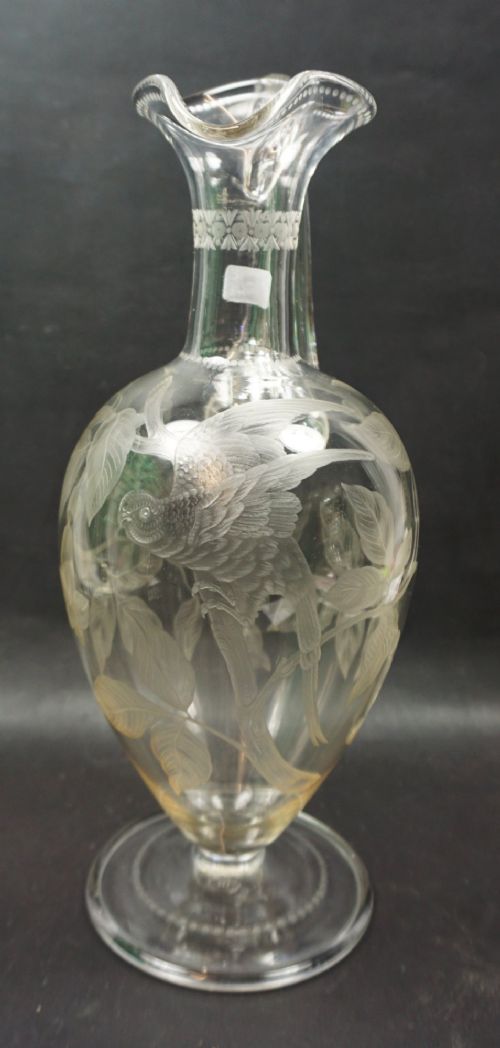
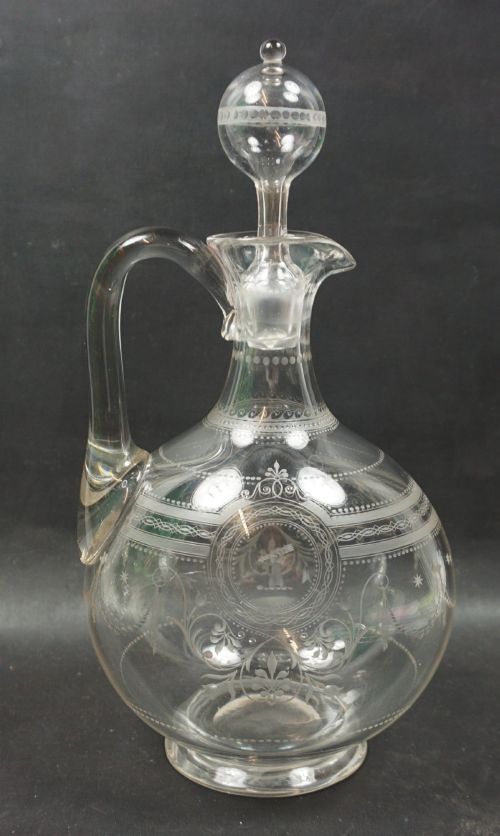
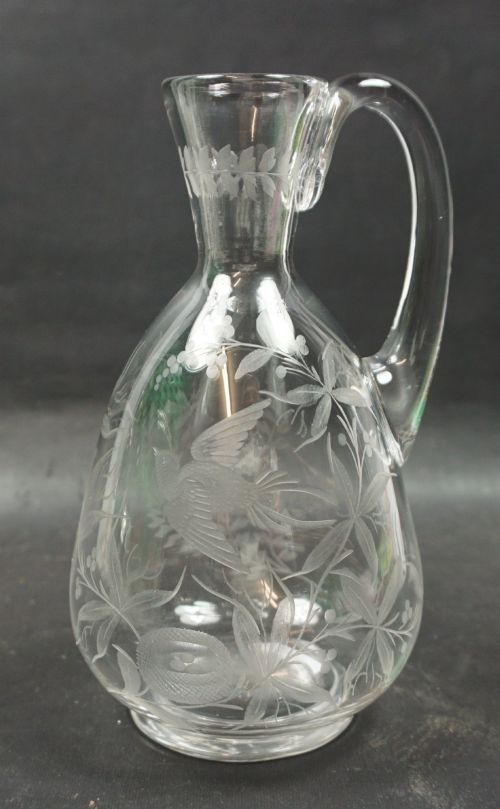
The objects take several related forms, including ewers, decanters, and pitchers, often decorated with engraving, gilding, or enamel. Originating from British workshops, continental makers such as Baccarat and Bohemian glasshouses also appear in these selections. These vessels served to aerate and present wine during formal meals, functioning as both tableware and decorative centerpieces.
Materials and construction methods
The bodies of these vessels are formed from clear glass, crystal, or cut crystal, shaped through blowing and heavy faceting or wheel-cutting. Artisans applied deep pillar and prism cuts, alongside intricate engravings of vines, dolphins, or floral motifs. Some pieces incorporate coloured glass, blue enamel, or white latticinio threads embedded within the material.
Metal mounts in sterling silver or silver plate were secured around the neck and lip, frequently incorporating hinged lids with thumbpieces. Handles are cast or formed from metal, sometimes modelled in figurative shapes such as serpents or Bacchus masks. These mounts were hallmarked in assay offices across London and Birmingham to certify the metal purity.
Crystal Glass Claret Jug Retail Price Guide 2026
Typical asking prices for crystal glass claret jug among the pieces listed under this phrase on Sellingantiques today, from the lower quarter to the upper quarter. They describe what is for sale here now, not the wider market.
Listings feature periods from the nineteenth century up to the 1960s, spanning Victorian, Edwardian, and Art Deco styles.
Distinctions in craftsmanship and design
Maker attribution and documented hallmarks provide further distinction, with named silversmiths or noted factories commanding greater interest. The balance of the vessel, the snug fit of the hinged metal lid, and the fluidity of figural handle modeling separate standard tablewares from exceptional collector pieces.
Asprey and Co. Ltd·Richardsons·Baccarat·Tiffany·Edgar Finley and Hugh Taylor
The Crystal Glass Claret Jug Glossary
- Claret jug
- A pouring vessel specifically intended for serving claret or other red wines at the table. They typically feature a handle and a hinged metal lid to aid pouring.
- Ewer
- A large jug with a wide spout and a bulbous body, derived from classical water-carrying vessels. In this context, it functions interchangeably with wine and water jugs.
- Latticinio
- A glassblowing technique involving opaque white or coloured glass threads twisted within clear crystal. This decorative method creates delicate net or ribbon patterns inside the vessel wall.
- Silver plate
- A base metal, such as copper or Britannia metal, coated with a thin layer of silver. This technique provided the appearance of solid silver at a lower production cost.
- Assay office
- An official body responsible for testing the purity of precious metals and stamping them with hallmarks. London and Birmingham offices appear frequently on these mounts.
Crystal Glass Claret Jug: Frequently Asked Questions
What is a crystal glass claret jug?
A crystal glass claret jug is a vessel made for serving wine, combining a glass or crystal body with a metal handle, collar, and hinged lid. They were designed to hold and pour wine cleanly during dining.
These pieces range from plain cut crystal to heavily engraved examples with silver-plated or solid sterling silver mounts.
How were these jugs used?
These jugs held wine at the dining table, allowing hosts to decant and serve claret or other vintages away from the original bottle. The hinged lid kept the contents covered between pours.
They also served as water jugs or champagne ewers during formal Victorian and Edwardian meals.
How do I care for antique crystal?
Antique crystal requires gentle hand washing in lukewarm water using mild detergent, avoiding harsh scrubbers that might scratch the surface. Metal mounts should be kept dry to prevent tarnish accumulation.
Sudden temperature changes should be avoided to protect the aged glass and secure silver fittings.