


Glass Cased Taxidermy Mount
These glass cased taxidermy mount pieces preserve natural history specimens behind glass for display, offering a glimpse into Victorian and Edwardian domestic interiors.

Glass Cased Taxidermy Mount
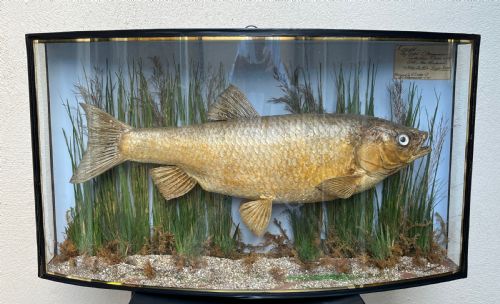
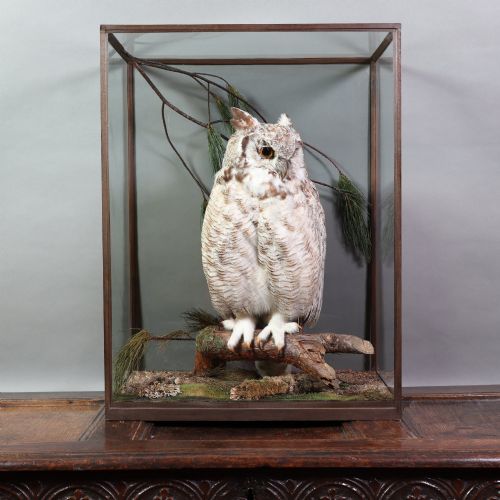
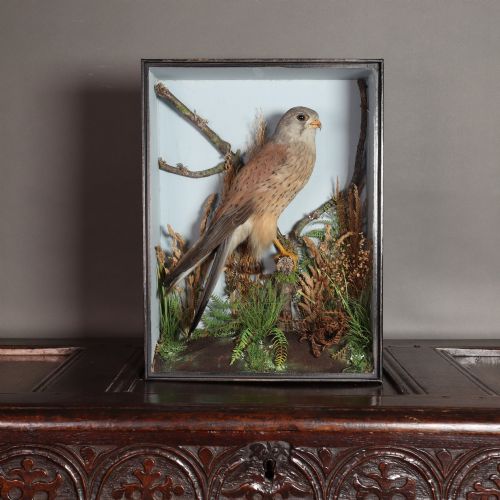
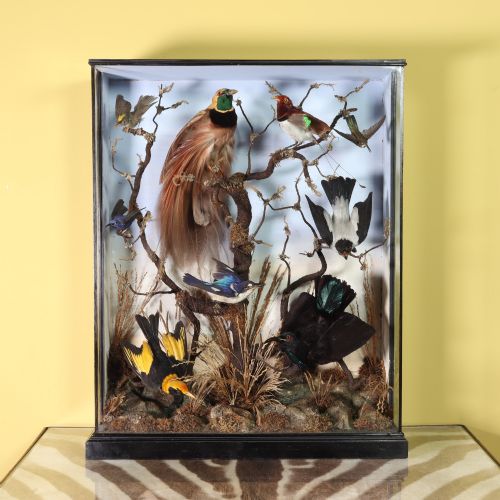
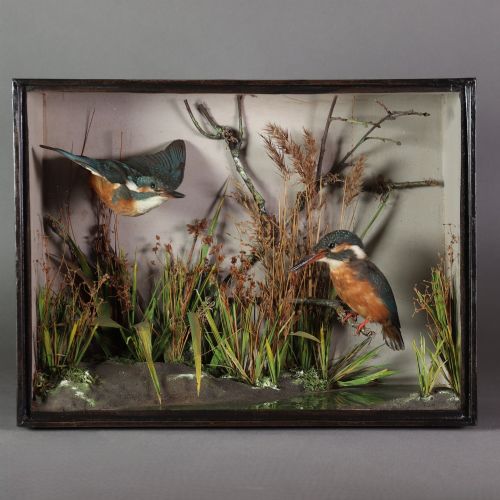
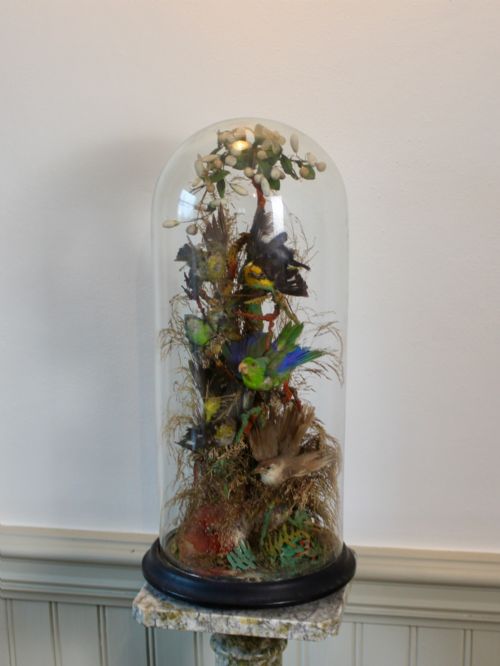
When you search for glass cased taxidermy mount, you encounter preserved specimens housed within wooden and glass enclosures or glass domes. The forms on this page span the Victorian period, Edwardian era, and early twentieth century, originating from British workshops and makers.
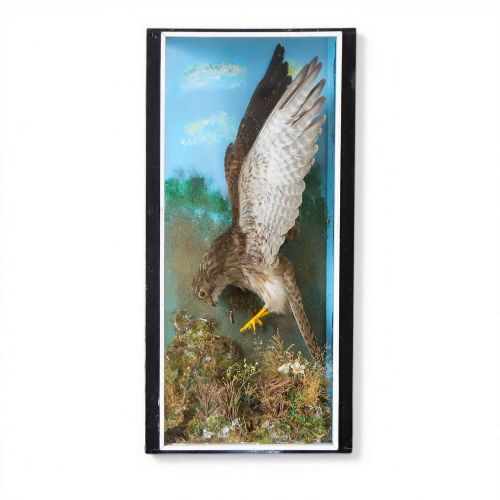
The selections range from single birds like kestrels, owls, and kingfishers to complex dioramas featuring mixed birds from diverse regions or mammals such as otters and badgers. Many of these arrangements incorporate dried vegetation, moss, painted backgrounds, and paper elements to simulate natural habitats.
How glass cased taxidermy mount pieces were made
Makers preserved animal specimens using taxidermy techniques before arranging them inside wooden cases fitted with glass panels or beneath glass domes. These enclosures protected delicate feathers, fur, and natural materials from dust and damage.
Interior settings frequently utilised painted backdrops, paper elements, moss, and dried vegetation to construct convincing environmental scenes for birds and mammals.
What varies in quality in glass cased taxidermy mount pieces
The standard of a piece depends on the anatomical accuracy and posture of the taxidermy specimen, alongside the artistic arrangement of the interior diorama. Master practitioners achieved lifelike poses and balanced compositions that have endured across the centuries.
Construction details of the wooden case and the clarity of the original glass also contribute to the overall execution. Signed works from established taxidermy firms demonstrate distinct craftsmanship in both the preservation of the specimen and the assembly of the display.
Little & Co·Rowland Ward Ltd·T. E. Gunn·James Gardner·J Cooper & Sons·J Dobson
The Glass Cased Taxidermy Mount Glossary
- Taxidermy
- The art of preserving, preparing, and mounting animal skins for display. This practice formed the foundation of nineteenth-century natural history collections.
- Dome
- A curved glass cover set upon a base to enclose and protect a mounted specimen. These circular or oval glass covers allowed all-round viewing.
- Diorama
- A three-dimensional scene depicting wildlife within a simulated natural habitat. Painted backgrounds and dried vegetation frequently augmented these enclosed settings.
- Case
- A wooden enclosure featuring glass viewing panels designed to house taxidermy specimens. These protected displays kept fragile specimens safe in domestic rooms.
Glass Cased Taxidermy Mount: Frequently Asked Questions
What is a glass cased taxidermy mount?
A glass cased taxidermy mount is a preserved animal specimen enclosed within a glass-fronted wooden case or a glass dome for interior display.
These pieces emerged during the nineteenth century as popular items for domestic natural history collections and decorative display.
How should I clean my glass cased taxidermy mount?
Dust the exterior glass surfaces carefully using a soft cloth without applying liquid directly onto the frame or joints.
Keep the enclosure away from direct sunlight and damp environments to protect the preserved specimen and interior materials inside.
How do I identify a Victorian taxidermy mount?
Victorian examples typically feature traditional wooden cabinetry, hand-painted background scenery, and specific construction methods characteristic of nineteenth-century workshops.
Many pieces from this era also include maker labels or paper signatures pasted onto the reverse or interior base of the case.
Where were these taxidermy mounts displayed historically?
Victorian and Edwardian households placed these cased specimens within studies, libraries, and drawing rooms as decorative conversation pieces.
They reflected contemporary fascination with natural history, exploration, and scientific discovery during the nineteenth and early twentieth centuries.