
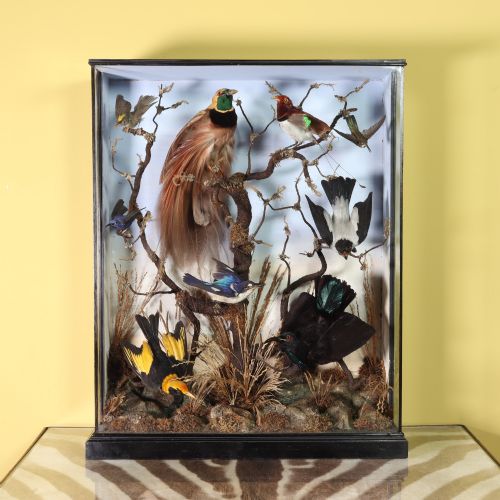
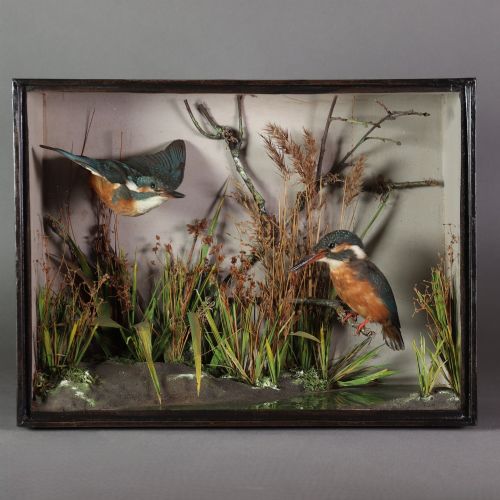


Wooden Glass Taxidermy Case
A wooden glass taxidermy case is a glazed display enclosure designed to house preserved specimens and natural history artefacts.

Wooden Glass Taxidermy Case
A wooden glass taxidermy case protects mounted specimens from dust and handling while presenting them clearly to the viewer. These enclosures range from wall display cabinets to glass domes with wooden bases and rectangular taxidermy cases.
The versions most frequently found date from the Victorian and Edwardian periods, running from the mid nineteenth century into the early twentieth century. They encompass specific pieces like stuffed birds from New Guinea, South America and Australia, pair of kingfishers, taxidermy otters, fan tailed pigeons, pheasants and stuffed badgers.
Many examples are housed under antique display domes or clock domes utilising glass with oak, pine, or ebonised wood bases. Their design reflects the nineteenth century pursuit of natural history collection and display.
What varies in quality
The quality of a wooden glass taxidermy case depends on the crispness of the timber joinery and the clarity of the glass. Hand-blown domes with natural imperfections differ from later machine-drawn sheet glass.
The taxidermy mounting inside dictates the standing of the piece, influenced by the skill of the taxidermist in rendering anatomical form. Attribution to notable makers adds distinction to the surviving work.
The listings on this site span the Victorian and Edwardian eras, incorporating timber species such as oak, mahogany, pine, and ebonised wood alongside glass and fabric.
T. E. Gunn·S. King·Rowland Ward of London·J Dobson
The Wooden Glass Taxidermy Case Glossary
- Ebonised wood
- Timber treated to imitate ebony through a dark staining or finishing process. This dark surface creates a high contrast background for mounted birds and mammals.
- Display dome
- A blown glass cover resting upon a wooden or fabric-covered base. These rounded covers protect specimens while allowing 360-degree viewing.
- Natural specimen
- An animal, bird, or plant preserved through taxidermy or botanical preparation. These form the central subjects housed within the glazed wooden cases.
- Taxidermy showcase
- A fully enclosed wooden and glass box built specifically to contain mounted animals. They protect fragile plumage and fur from light and atmospheric damage.
Wooden Glass Taxidermy Case: Frequently Asked Questions
Where should I place a taxidermy case at home?
Keep wooden glass cases away from direct sunlight to prevent the fading of feathers, fur, and internal fabric backgrounds. Stable room temperatures protect the timber frames and prevent the glue holding old joints from drying out.
Avoid high-humidity locations such as kitchens or unheated rooms, which encourage mould growth on natural specimens.
How do I date a Victorian glass dome?
Examine the glass for slight bubbles, ripples, and thickness variations indicative of nineteenth-century mouth-blown manufacturing techniques. Pine and ebonised wood bases often feature hand-cut fixings and older adhesives typical of the period.
Documentation or taxidermist labels pasted to the underside of the wooden base provide the most reliable dating evidence.
Can I add new specimens to an antique case?
Antique cases are historically complete units tailored to their original contents and mounting styles. Altering the interior disrupts the historical integrity of the piece as a complete natural history artefact.
Preserve the existing arrangement of mixed birds, mammals, or flora exactly as the Victorian or Edwardian taxidermist left it.