
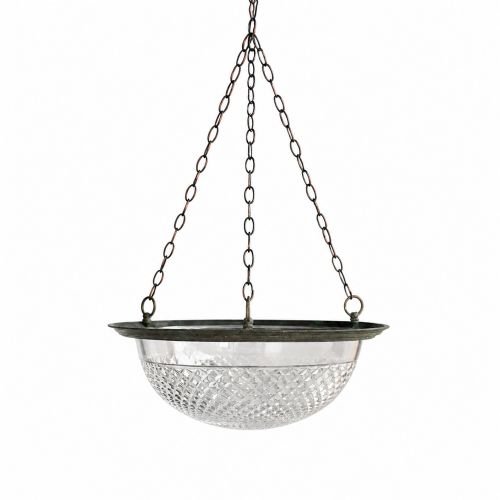
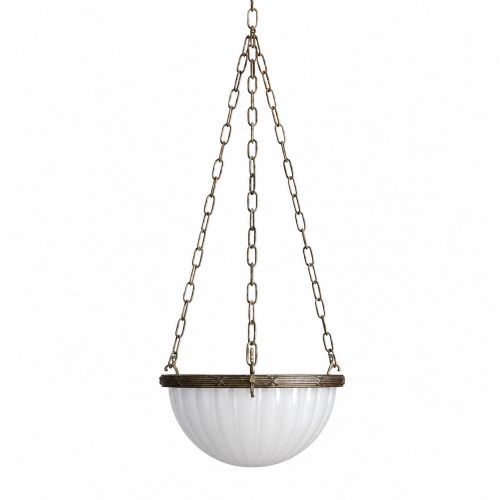


Glass Bowl Pendant Light
A glass bowl pendant light suspends illumination in a room through gathered glass and metal, offering focused downward radiance and decorative character.
Glass Bowl Pendant Light
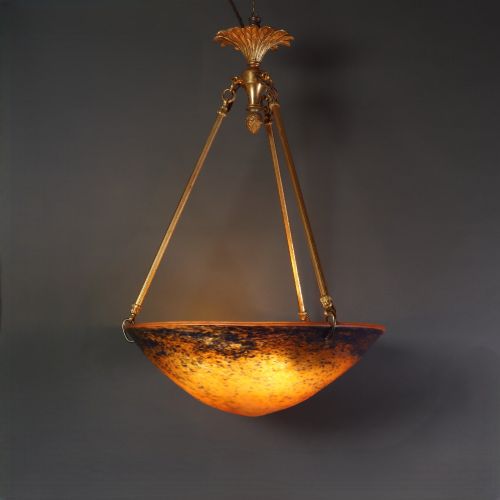
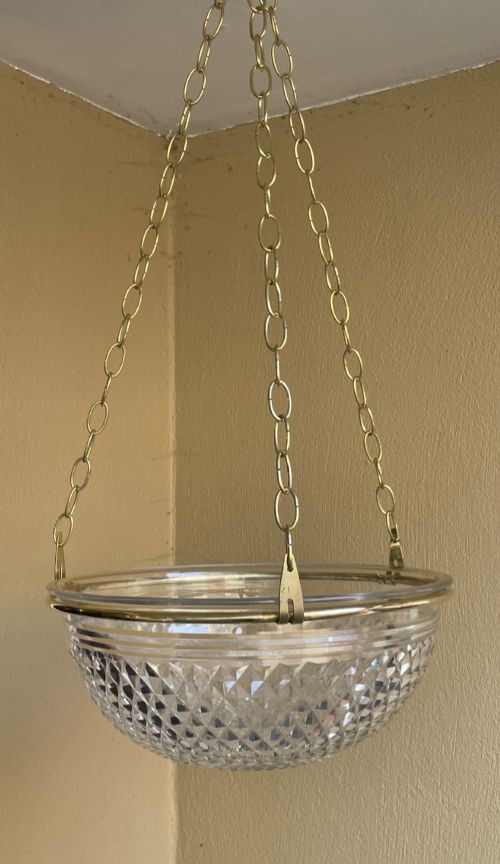
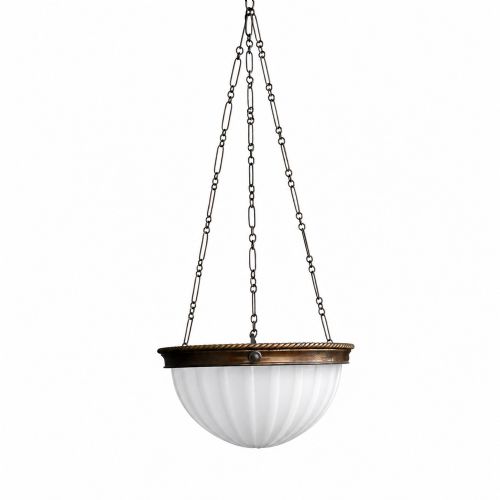
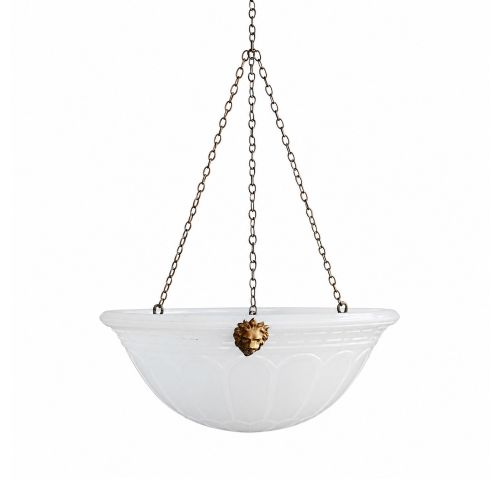
A glass bowl pendant light hangs from ceilings to distribute gentle illumination across a space, taking forms such as plafonniers, dish lights, and suspended bowls. These pieces emerge from periods including the Victorian era, the Edwardian years, and the Art Deco decades, reflecting changing domestic lighting needs.
The selections span simple frosted glass bowls to cut crystal dishes held by brass, bronze, or silver-plated mounts. Formats range from compact Edwardian hall lights to large early twentieth-century moonstone and opalescent chandeliers.
Makers and designers of these fittings employed styles from Arts and Crafts simplicity to Neoclassical and Art Nouveau ornamentation. The resulting variety accommodates both modest chambers and expansive reception rooms with equal suitability.
Materials and construction
Craftsmen shaped glass through blowing, moulding, and cutting, utilising materials like crystal, moonstone glass, opal glass, and mirrored glass to achieve different qualities of light diffusion. Molten metal or sheet brass, bronze, and silver plate were cast and hammered to form the structural suspension rings, rims, and chains.
Decorative elements involve acid etching, enamelling, and hand painting directly onto the glass surface, while metal mounts frequently incorporate cast details such as ram heads or foliage. Individual components are joined securely with screws, collars, and metal pins designed to bear the weight of the heavy glass bowls.
Several bowls take the unexpected form of a pink clam shell, bringing marine architecture into early twentieth-century ceiling illumination.
Evaluating craftsmanship
Quality rests upon the depth and clarity of the glass cutting, the weight and purity of the metal mounts, and the integration of design across the shade and suspension. Heavier gauge brass and bronze fittings combined with deeply faceted crystal or thick opalescent glass indicate superior workshop standards.
Attention to detail in the secondary cast elements, such as refined foliage or well-defined figural mounts on the bronze collars, separates standard commercial production from finer decorative pieces. The harmony between the hanging chains, ceiling suspension, and the glass bowl itself determines the overall aesthetic success of the fixture.
Verrerie Des Vosges
The Glass Bowl Pendant Light Glossary
- Plafonnier
- A ceiling-mounted or closely suspended bowl light designed to direct light downwards while hiding the bulb from direct view. This French term appears frequently in nineteenth and early twentieth-century lighting catalogues.
- Moonstone glass
- A semi-translucent milky glass that diffuses light softly without harsh glares, popular in early twentieth-century interiors. It creates a gentle, ambient glow reminiscent of moonlight.
- Opalescent glass
- Glass containing ingredients that cause it to milky-blue or fire with iridescent colour when light passes through it. It was utilised extensively during the Art Deco and Arts and Crafts movements.
- Dish light
- A shallow bowl pendant suspended by chains or rods, functioning primarily as a ceiling light fixture. These pieces distribute illumination broadly across a room.
- Cut glass
- Glass decorated by grinding facets and patterns into the surface with a wheel, enhancing brilliance and light refraction. Deeper cuts indicate higher skill and time investment.
Glass Bowl Pendant Light: Frequently Asked Questions
How do I hang a glass bowl pendant light?
These ceiling fixtures suspend from electrical points using chains, rods, or fabric-covered flex attached to a ceiling rose. Weight distribution requires fixing directly into ceiling joists or using appropriate structural anchors.
Professional installation is recommended due to the combined weight of the glass bowl and metal mounts, ensuring the electrical connections meet current safety standards.
What rooms suit a glass bowl pendant light?
Pendant bowl lights work well in hallways, dining spaces, and bedrooms where ambient, downward illumination creates a welcoming atmosphere. Their low profile makes them practical for rooms with standard ceiling heights.
Matching the scale of the glass bowl to the dimensions of the room ensures the fixture provides sufficient light without dominating the space.
How do I clean antique glass shades?
Remove the glass bowl from its metal suspension carefully, supporting the base with both hands at all times. Wash the glass in lukewarm water with mild soap, avoiding harsh abrasives that could damage historical surfaces.
Metal mounts should be dusted gently with a dry cloth to preserve their original patination rather than polished to a bright shine.
How do I date a pendant light?
Examine the materials, mounting hardware, and glass characteristics to determine the period of manufacture. Edwardian and Victorian pieces often feature heavy cast bronze or silver-plated brass, while 1930s examples lean towards opalescent glass and streamlined Art Deco lines.
Original wiring methods, screw threads, and maker stamps or registration marks on the metal fittings also offer concrete evidence of age.