



Glass Barware Tray
A glass barware tray holds your bottles and decanters with style, bringing period elegance directly to the modern drinks trolley.
Glass Barware Tray
When you search for a glass barware tray, you encounter serving trays, decanter sets, and drinks trays spanning the Victorian era through the Art Deco period. These pieces originate from Britain, France, Japan, and Czechoslovakia, reflecting international tastes in entertaining across different decades.
The version you are most likely to meet on this page is an Art Deco piece from 1930, often featuring mirror glass or cut glass mounted with chrome or silver plate. Alongside these, earlier Victorian and Edwardian examples appear in silver plate and cut crystal.
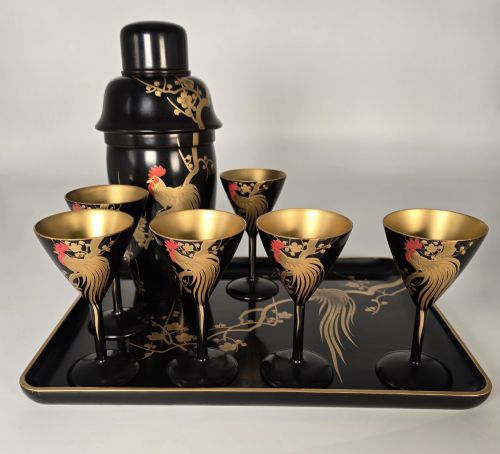
Beyond standard drinks trays, the selection includes related barware items such as decanter sets, novelty trays depicting figures like Charlie Chaplin, and hand painted lacquer cocktail sets from the Taisho period.
How they were made
Maker workshops utilised mirror glass, cut crystal, and ordinary glass alongside structural frames of wood, chrome, and silver plate. Macassar wood and hand painted lacquer also appear on specific period examples.
Techniques combined precision glass cutting and silver plating with decorative arts such as hand painting and gold leaf application. Metal handles in copper or chrome were securely fitted to glass and mirrored bases to create functional serving surfaces.
Glass Barware Tray Retail Price Guide 2026
Typical asking prices for glass barware tray among the pieces listed under this phrase on Sellingantiques today, from the lower quarter to the upper quarter. They describe what is for sale here now, not the wider market.
Charlie Chaplin makes a surprise appearance immortalised on a 1930s novelty barware tray.
What varies in quality
Quality rests upon the execution of materials and the distinction of the design, separating standard production items from exceptional studio or factory pieces. Art Deco items by named makers or specific international origins show superior decorative detail.
The refinement of the metal mounts, whether silver plate, chrome, or copper handles, distinguishes finer examples. Similarly, the depth of cut glass and the preservation of mirror glass or hand painted lacquer dictate the overall standard of the piece.
The Glass Barware Tray Glossary
- Mirror glass
- A reflective glass surface utilised for the base of drinks trays to enhance the visual impact of glassware placed upon it. This material became particularly popular during the Art Deco period.
- Silver plate
- A base metal coated with a thin layer of silver, frequently utilised for the frames, rims, and handles of serving trays and decanter sets. It offers the appearance of solid silver at a different scale of production.
- Taisho period
- The period in Japanese history spanning from 1912 to 1926, known in these listings for hand painted lacquer cocktail sets that blend traditional craft with Western entertaining habits.
- Cut glass
- Glass decorated by abrasive wheel cutting to produce faceted patterns that catch the light. This technique is prominent on Edwardian and Victorian decanter sets and lemon squeezers.
- Macassar
- A distinctive exotic timber with dark brown and black grain patterns utilised for modernist French tray construction. It provides a rich, dark contrast to glass and metal elements.
Glass Barware Tray: Frequently Asked Questions
What is a glass barware tray?
A glass barware tray is a dedicated surface designed to hold decanters, glasses, and cocktail accessories during service or display. These pieces range from mirrored Art Deco cocktail trays to Victorian silver-plated decanter sets.
They function both as practical serving equipment and as decorative centrepieces for a home bar or sideboard.
How do I date an Art Deco tray?
Art Deco trays on this page typically date from around 1930 and are identified by geometric lines, mirrored glass, and materials like chrome, copper, or Macassar wood.
Earlier pieces from the Victorian and Edwardian eras rely on heavier silver plate and cut crystal rather than the streamlined modernity of the 1930s.
Were these trays used for drinks?
Yes, these trays served cocktails, spirits, and cordials in domestic settings, often accompanied by matching decanters and glasses.
Some specialised pieces also functioned as ashtrays or held specific bar accessories like lemon squeezers.
How do I care for a vintage tray?
Care depends entirely on the materials, requiring gentle cleaning for silver plate and avoidance of harsh abrasives on mirror glass and lacquer.
Preserving the original metal finishes and glass surfaces ensures the piece retains its decorative character.