


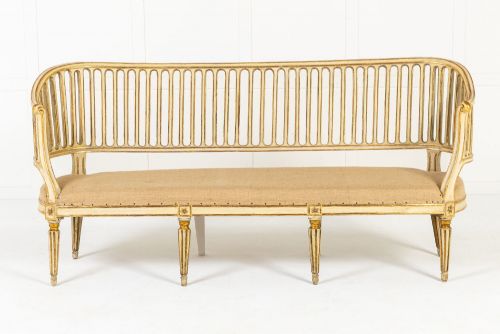


Giltwood Window Bench
A giltwood window bench brings architectural polish to a room, offering a slender seat designed to catch the light beneath a casement.
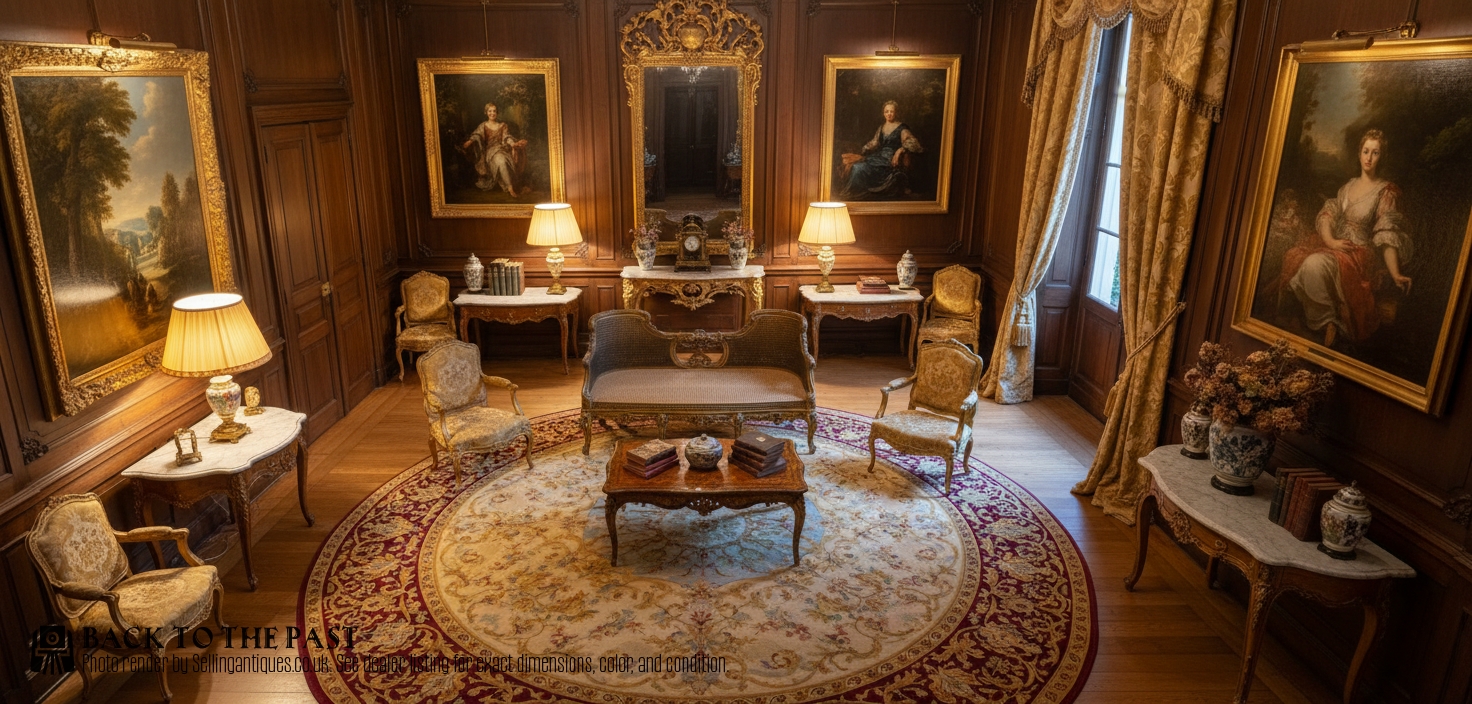
Giltwood Window Bench
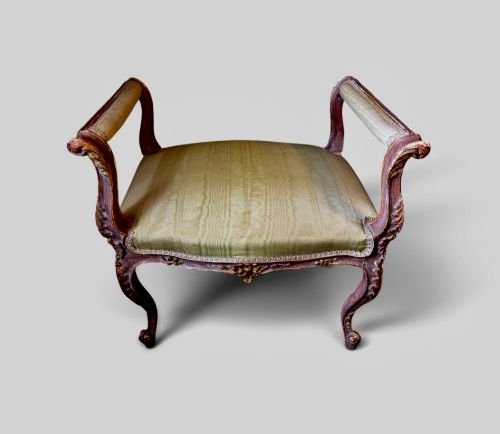
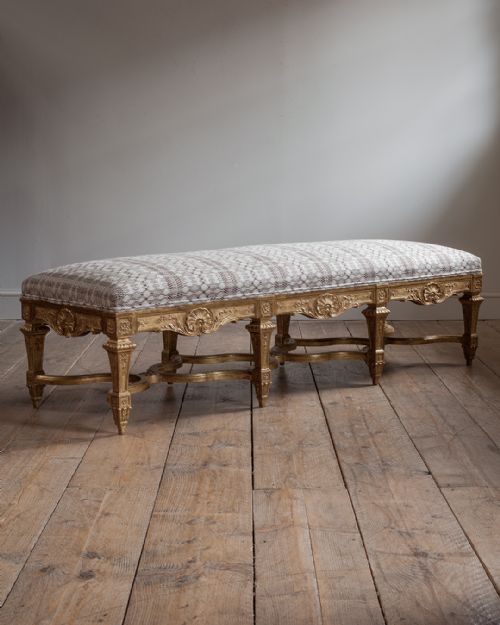
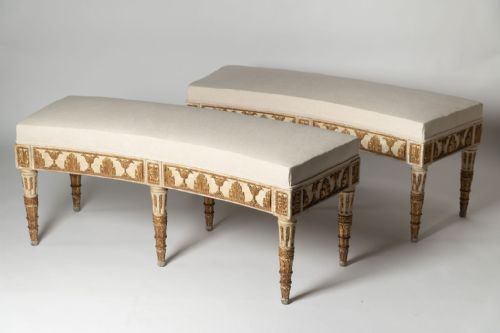
When you search for a giltwood window bench, you find a selection of seating forms that range from long French duet stools to Italian neoclassical curule designs and 19th-century window seats. These pieces are built specifically for placement beneath low windows or in hallways, combining slender proportions with ornamental presence.
The version you are most likely to meet on this page is a French or Italian piece dating from the 19th century or the early decades of the 20th century. Many examples reflect historical revivals, drawing heavily on Louis XVI, Rococo, and Empire styles through gilded frames and carved woodwork.
How they were made
The framework of these seats relies on carved wood or gesso over wood, finished with layers of gold leaf or gilding to create a reflective surface. Artisans shaped these frames by hand, producing intricate details such as fluted legs, X-frames, and classical motifs.
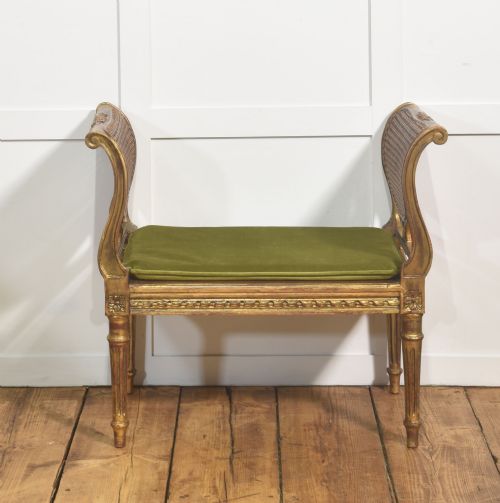
Upholstery forms an integral part of the construction, utilising materials like silk, velvet, linen, and cane. The integration of cane panels or padded textile seats provides both structural lightness and varied surface texture against the metallic frame.
Giltwood Window Bench Retail Price Guide 2026
Typical asking prices for giltwood window bench among the pieces listed under this phrase on Sellingantiques today, from the lower quarter to the upper quarter. They describe what is for sale here now, not the wider market.
Listings span from the 18th century through to the 1930s, encompassing French, Italian, and Adams style influences.
What varies in quality
Quality in these giltwood pieces rests primarily on the depth and crispness of the hand-carved ornamentation on the wooden frame. Finer examples display sharp, well-defined foliage and moulding, whereas simpler pieces show softer, more generalised contours.
The condition and application of the original gilding and the integrity of the underlying woodwork dictate the overall character of the piece. Superior items retain harmonious patination across the gilded surfaces, while lesser examples may exhibit heavy restoration or flattened surface detail.
The Giltwood Window Bench Glossary
- Giltwood
- Wood that has been coated with gold leaf or a metallic substitute. This finish gives the frame a bright, reflective quality characteristic of formal 18th- and 19th-century seating.
- Curule stool
- An ancient Roman chair shape featuring intersecting X-shaped legs. This form was revived during the neoclassical and Empire periods for formal seating.
- Cane
- Woven rattan material used for seat panels and backs. It provides a lightweight, resilient surface that contrasts with solid carved wooden frames.
- Louis XVI style
- A neoclassical design vocabulary characterised by straight lines, symmetry, and classical motifs such as fluting and ribbaned reeds. It experienced widespread revivals in the 19th century.
- Duet stool
- An elongated seat designed to accommodate two people side by side. These forms often appear in music rooms or alongside large windows.
Giltwood Window Bench: Frequently Asked Questions
Where should I place a window bench?
These seats suit narrow spaces such as hallways, landings, or directly beneath low window frames where a traditional sofa would block the light.
Their shallow depth allows them to sit flush against walls without dominating the floor plan of a room.
How do I identify a revival piece?
Revival pieces draw on earlier design languages like Louis XIV, Louis XVI, or the Italian neoclassical style but were manufactured during the 19th or early 20th centuries.
Examining the construction methods, tool marks on the timber, and the ageing of the gesso helps distinguish these later interpretations from original 18th-century furniture.
What is the difference between a stool and a window seat?
Stools generally feature an upholstered or cane top without arms or backs, designed for flexible placement.
Window seats often incorporate side arms or short backs, tailored specifically for sitting comfortably while looking out a window.
How do I care for giltwood frames?
Giltwood requires gentle maintenance to protect the delicate gold leaf finish from moisture and abrasion.
Dusting should be done lightly with a dry, soft cloth, avoiding commercial polishes or liquid cleaners that can strip the metallic surface.