
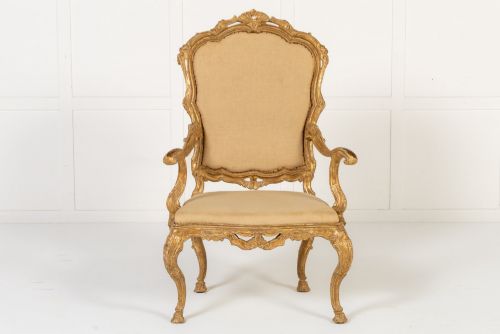


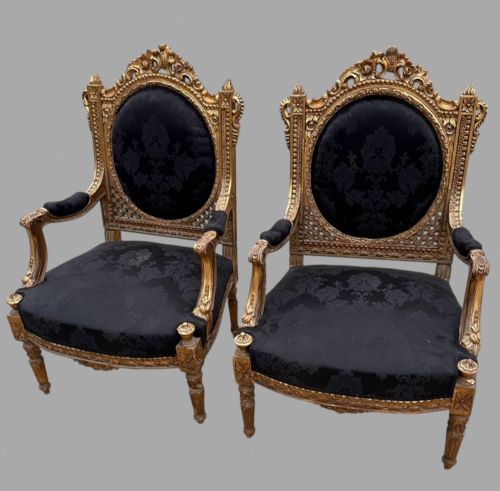


Giltwood Throne Chair
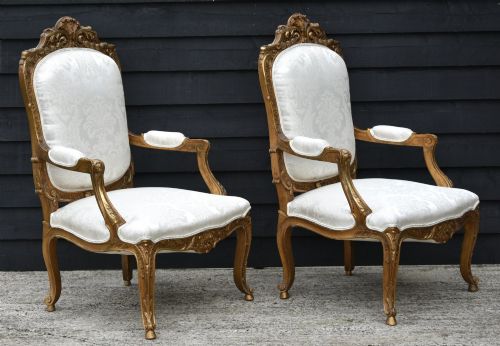
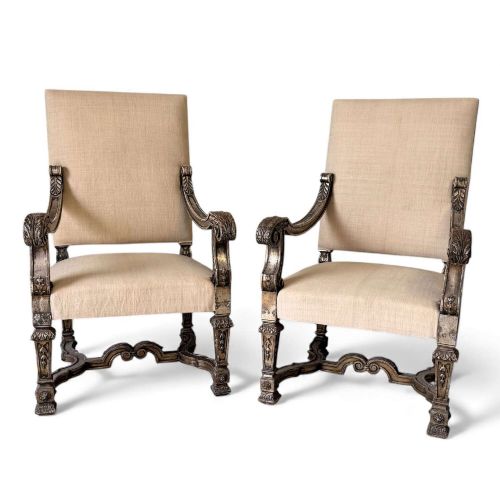
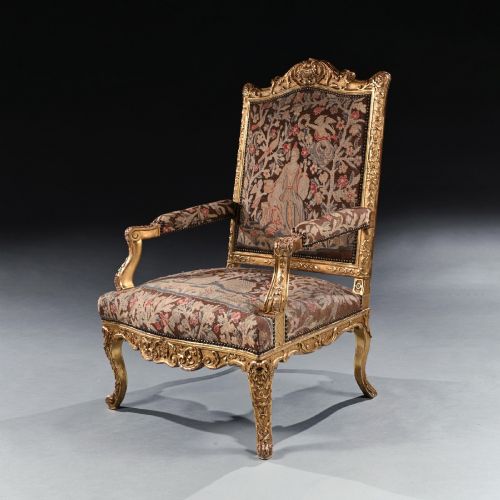
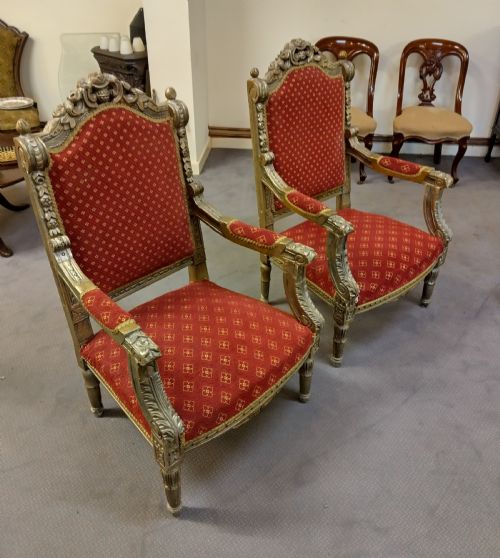
A giltwood throne chair commands a room through sheer presence, offering towering backs and gilded surfaces designed to project authority.
Giltwood Throne Chair
When you search for a giltwood throne chair, you enter a sphere of grand seating defined by prominent scale and heavy gilded framing. The pieces appearing here predominantly span the eighteenth and nineteenth centuries, originating from English, French, and Italian workshops.
You will encounter armchairs and elbow chairs carrying distinct stylistic markers such as Italian Rococo, French Baroque Revival, and Louis XVI Revival. These seats were built to dominate interiors, serving as focal points rather than ordinary domestic seating.
How they were made
The foundation of each piece rests on robust timber, frequently beech, shaped by hand to receive intricate carved ornamentation. Artisans applied thin layers of gold leaf or silver gilt over preparatory grounds to achieve the brilliant metallic finish.
Upholstery completed the construction, utilising traditional materials like damask, linen, tapestry, and heavy fabric secured across large open frames.
Some nineteenth-century makers built these towering seats so high that shorter owners required a matching footstool just to sit down properly.
What varies in quality
The depth and crispness of the hand-carved detailing separate ordinary frames from superior examples, particularly where acanthus leaves, scrolls, and figural elements meet. The application and survival of the original gilding dictate the visual impact of the surface over centuries.
Proportion and scale also govern value, as larger armchairs with harmonious structural lines demand greater skill from the original joiner and carver.
The Giltwood Throne Chair Glossary
- Giltwood
- Timber coated with gold leaf or metal leaf to simulate solid gold. This surface technique defines the bright, reflective appearance characteristic of these grand seats.
- Fauteuil
- An open-armed French armchair featuring exposed wooden framing and upholstered arm pads. This form often forms the basis of lighter revival throne chairs.
- Baroque
- A theatrical European design style spanning the seventeenth and eighteenth centuries, known for exuberant curves and dramatic ornamentation. Revival pieces replicate this heavy grandeur.
- Damask
- A reversible figured fabric traditionally woven on a jacquard loom, frequently utilised for historical upholstery. It provides a subtle sheen that complements gilded frames.
Giltwood Throne Chair: Frequently Asked Questions
Where should I place a throne chair?
These large armchairs demand substantial floor space and high ceilings to look correct in a modern room. They function best as singular focal points in studies, hallways, or spacious living areas.
Avoid crowding them with smaller furniture, as their commanding height and carved frames require breathing room to make their proper visual impact.
How do I care for giltwood?
Gilt surfaces require gentle handling to prevent the delicate gold leaf from flaking or rubbing away over time. Dusting should be done lightly with a dry, soft brush rather than a cloth that might snag on carved edges.
Keep these chairs away from direct sunlight and strong heat sources, which can dry out the underlying timber and crack the gesso foundation.
Are these chairs comfortable?
Historical throne chairs prioritize upright posture and formal presence over deep, cushioned lounging. Their high backs and rigid frames reflect the formal etiquette of the periods in which they were built.
Adding a subtle support cushion can improve daily usability without altering the historic appearance of the original upholstery fabric.
How can I tell the period?
Dating relies on examining the joinery methods, tool marks hidden beneath the frame, and the specific stylistic vocabulary of the carved ornament. Eighteenth-century examples display hand-cut joinery and organic wear patterns distinct from later nineteenth-century revival pieces.
Reference points like Louis XV or Regency styling help narrow down the decade of manufacture when combined with wood analysis.