


Ornate French Armchairs
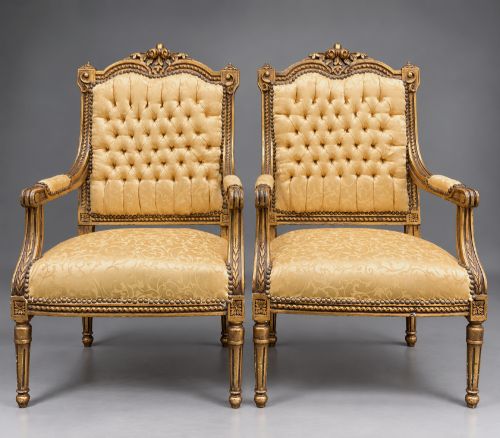
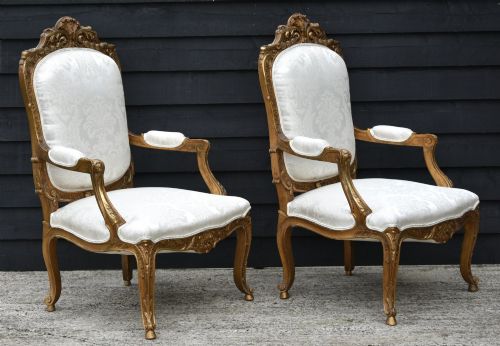
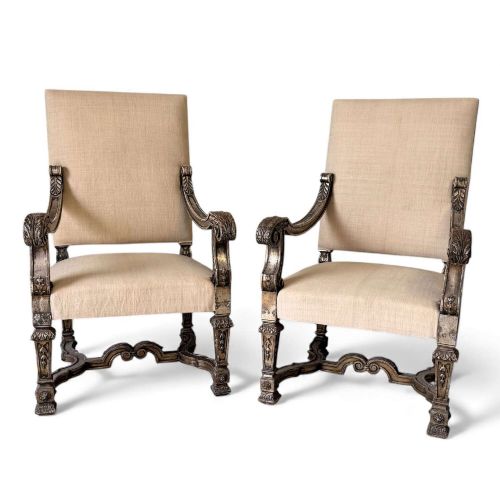
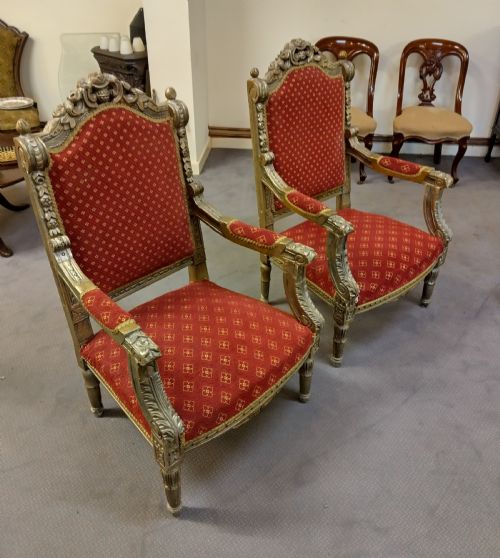
Ornate French armchairs bring undeniable presence to a room, offering carved giltwood frames and rich upholstery that command attention.
Ornate French Armchairs
When buyers search for ornate french armchairs, they look for seating that combines grand scale with intricate surface decoration. These pieces originate primarily from the nineteenth century, including specific periods such as the Victorian era and Napoleon III. The selection frequently includes grand pairs suited for formal rooms.
The forms range from imposing throne chairs and wingback designs to elegant salon chairs and elbow chairs. Styles lean heavily towards Baroque and Rococo revivals, alongside French chateau and Riviera aesthetics. Walnut and wrought iron appear alongside the dominant gilded timber frames.
Most examples hail from continental workshops and embrace extravagant carving techniques. Buyers encounter upholstered backs and seats finished in damask, silk, leather, and patterned fabrics. The overriding character is decorative and theatrical rather than restrained.
How They Were Made
Carvers executed deep relief work by hand to produce the scrollwork, foliage, and architectural motifs seen on the frames. Upholsters completed the work using traditional methods, securing coverings of silk damask, patterned textiles, and leather with brass detailing.
Listings feature pieces spanning the nineteenth century up to 1910, encompassing Victorian, Napoleon III, and revival styles.
What Varies in Quality
The depth and crispness of the carved detail separate the finest examples from standard production. Superior frames display sharp, undercut foliage and confident scrollwork rather than soft, shallow moulding. The handling of the gilt finish also dictates visual success, with burnished gold leaf offering a richer reflection than flat paint.
Structural integrity rests on the quality of the timber beneath the surface treatment, distinguishing solid walnut frames from lighter constructions. The choice of upholstery fabric plays a significant role, where heavy silks and patterned damasks elevate the piece far beyond basic leather or plain textile.
The Ornate French Armchairs Glossary
- Giltwood
- Timber treated with a thin layer of gold leaf or gilt finish. This technique creates a luminous metallic surface that defines much of nineteenth-century seating.
- Damask
- A reversible figured fabric traditionally woven on a jacquard loom. It provides a textured, patterned surface frequently used for formal upholstery.
- Rococo Revival
- A nineteenth-century design movement inspired by eighteenth-century French styles. It is characterised by asymmetrical C-scrolls, shell motifs, and naturalistic curves.
- Baroque Revival
- A theatrical architectural and decorative style favouring grand proportions and heavy ornamentation. Pieces in this idiom display muscular frames and dramatic presence.
- Wingback Armchair
- A seating form featuring protective side panels attached to the backrest. This design guards against draughts while adding vertical presence to the silhouette.
Ornate French Armchairs: Frequently Asked Questions
Where should I place an ornate french armchair?
These chairs demand space and light to showcase their carved giltwood frames and upholstery. They sit comfortably in drawing rooms, large hallways, or as statement pieces in a bedroom.
Because of their strong visual weight, they work best away from clutter where the silhouette can command the room.
How do I identify a Napoleon III armchair?
Napoleon III pieces date from the mid to late nineteenth century and often feature heavy gilding and plush upholstery. They embrace eclectic historical revivals with a focus on extreme comfort and decorative excess.
Look for deep buttoning, rich gilt finishes, and frames that prioritise sumptuous padding alongside elaborate woodwork.
Are these armchairs suitable for daily seating?
Most surviving examples from the nineteenth century function well for gentle daily use provided the internal webbing and padding remain sound. Their solid timber construction offers robust support.
However, delicate gilt surfaces require care to prevent rubbing and knocks from passing foot traffic.
What is the difference between salon chairs and throne chairs?
Throne chairs are larger, higher-backed seats designed to dominate a room and project authority. They feature heavy carved woodwork and imposing proportions.
Salon chairs are lighter, more mobile seating designed for entertaining and conversation in formal reception rooms.