




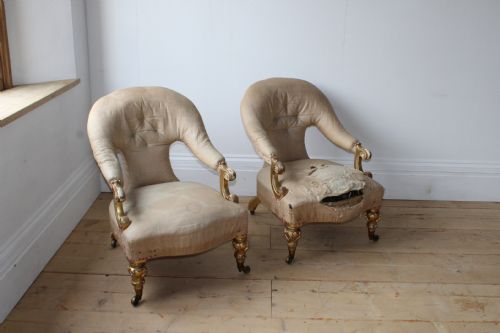

Gold Gilt Lounge Chair
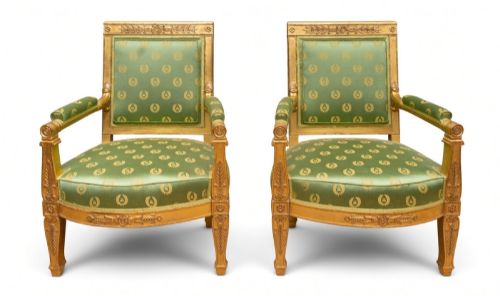
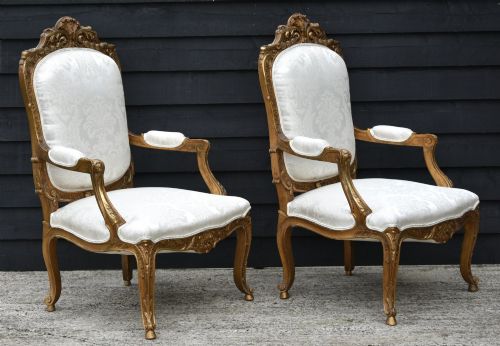
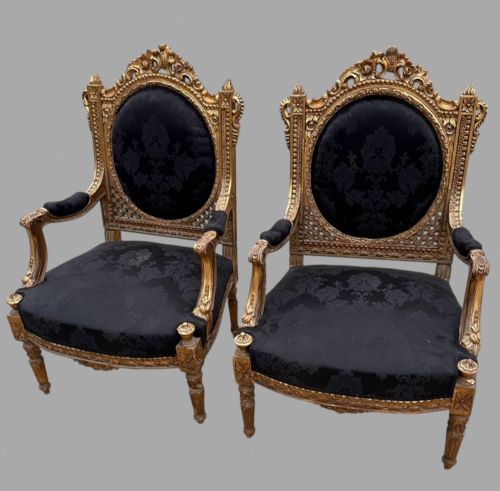
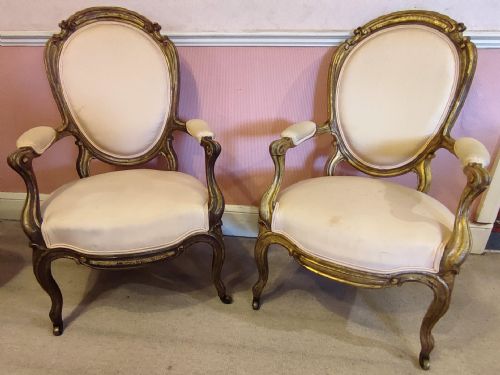
These gold gilt lounge chair examples offer grand seating, combining timber frames with rich textile upholstery and shimmering metallic leaf.
Gold Gilt Lounge Chair
A gold gilt lounge chair brings opulent seating into a room, drawing on historic French and English design traditions. When searching for a gold gilt lounge chair, buyers encounter various seating forms including armchairs, bergere chairs, day beds, and salon suites.
The pieces on this page span several centuries, reaching from the eighteenth century through the nineteenth century and into the twentieth century. Revival movements dominate the selection, showing French Rococo Revival, Louis XVI Revival, and Regency styles alongside Restauration and Napoleon III periods.
Armchairs and fauteuils form the majority of the seating options, often appearing in matched pairs or larger salon suites. Master makers and unknown workshops alike produced these gilt-wood seats for grand interiors.
Materials and construction methods
Craftsmen built the structural frames using timber and wood, applying thin layers of gold leaf or gilding to create a bright metallic surface. Structural integrity relied on traditional joinery techniques suitable for supporting ornate carved arms and backs.
Upholstery completed the seating, utilising textiles such as velvet, damask, and silk to cover padding and springs. Brass elements sometimes appeared in decorative mounts or hardware across the frames.
Materials recorded across the inventory include giltwood, timber, brass, velvet, damask, and silk.
Judging the quality of gilding and carving
Quality rests upon the crispness of the wood carving and the depth of the gilding applied to the frame. Superior pieces display intricate hand-carved details in the giltwood that remain sharp beneath layers of historic finish.
The integrity of the textile upholstery and the preservation of the underlying timber structure distinguish finer examples. Matching pairs and complete salon suites demonstrate higher craftsmanship than solitary or heavily altered seating.
Jacob-Desmalter
The Gold Gilt Lounge Chair Glossary
- Giltwood
- Timber that has been decorated with gold leaf or metallic powder applied over a prepared surface. This finish creates the characteristic bright, reflective appearance seen on historic frames.
- Fauteuil
- An open-armed wooden armchair with upholstered armrests, originating in France. These seats typically feature exposed wooden frames adorned with carving and gilding.
- Bergere
- An enclosed upholstered armchair with solid upholstered sides resting on a wooden frame. The style offers deep, comfortable seating often paired with loose seat cushions.
- Restauration
- A design period spanning the early nineteenth century characterised by refined neoclassical lines and understated ornamentation. Pieces from this era bridge earlier Empire styles and later revivals.
- Canape
- A long decorative settee or sofa designed to match accompanying armchairs in a salon suite. These pieces feature extended seating capacity while maintaining unified carved and gilt frames.
Gold Gilt Lounge Chair: Frequently Asked Questions
What is a bergere armchair?
A bergere is an enclosed upholstered armchair featuring solid upholstered sides and a padded backrest. The wooden frame remains partially exposed, often displaying gilt decoration or fine carving.
These chairs provide a deeper and wider seat than standard open-armed fauteuils. They frequently appear in pairs and serve as prominent seating elements in formal reception rooms.
Are these chairs suitable for daily use?
Historic gilt seating functions well in residential settings when handled with appropriate care. The underlying wooden frames and joinery provide robust support, though antique textiles may require gentle treatment.
Placing chairs away from direct sunlight preserves both the delicate silk or velvet upholstery and the reflective gold leaf finish. Professional conservation ensures the structural integrity remains sound for continued enjoyment.
How do I care for giltwood furniture?
Giltwood requires dusting with a soft, dry cloth to prevent the accumulation of particles on the delicate metallic surface. Avoid using liquid cleaners, polishes, or abrasive cloths that can damage or strip the gold leaf.
Stable room temperatures and humidity levels protect the underlying timber from warping and cracking. Protecting the finish from moisture ensures the historic surface retains its original lustre.